

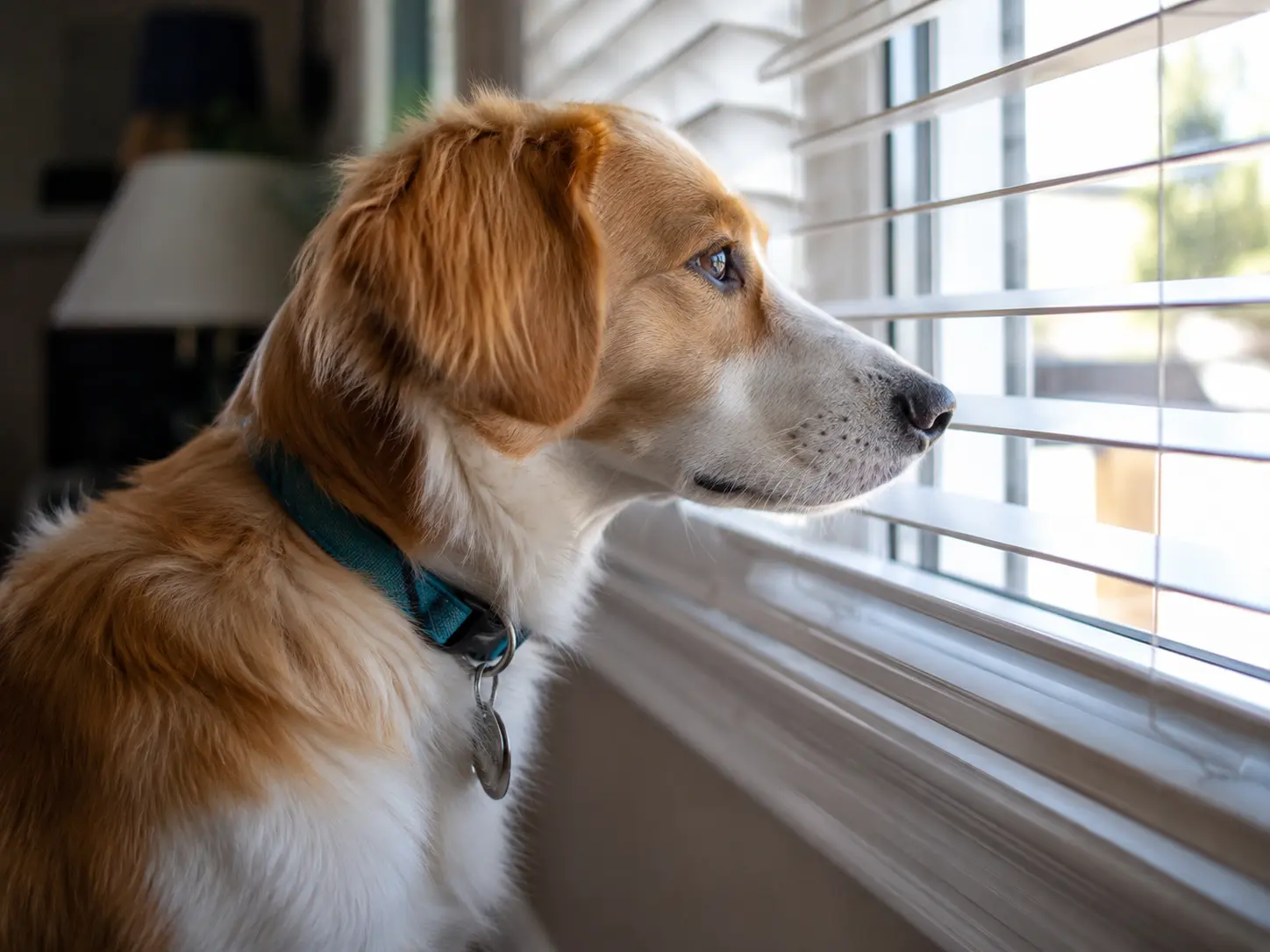
Dog separation anxiety can look different from one dog to another. One dog may bark as soon as the front door closes, while another may pace, refuse food, damage doors, urinate indoors, or become distressed before the owner has even left.
These behaviors do not automatically confirm separation anxiety. Barking, chewing, toileting, and restlessness can also be connected to boredom, outside noise, incomplete training, confinement frustration, health problems, or changes in routine.
The safest starting point is to observe what happens, when it begins, and whether your dog can settle.
Quick Answer: What Should You Do First?
Start by recording the first 15–30 minutes after you leave. Look for the earliest change in behavior, such as scanning the door, following closely, panting, pacing, ignoring food, whining, barking, scratching exits, or attempting to escape.
Next:
- Identify the exact behavior.
- Check whether it happens only when your dog is alone.
- Determine whether confinement, outside noise, or departure cues contribute.
- Avoid absences that repeatedly trigger severe panic where possible.
- Contact a veterinarian when signs are sudden, severe, worsening, or accompanied by medical changes.
For a detailed overview of the behavior patterns to watch, begin with our guide to dog separation anxiety symptoms.
Start Here: What Is Your Dog Doing?
Choose the behavior that most closely matches what you see.
My Dog Barks When I Leave
Barking that starts immediately after departure may be related to separation distress, but the full pattern matters. Some dogs react to hallway sounds, neighboring dogs, closing doors, or frustration rather than the owner’s absence itself.
Read:
- Why Does My Dog Bark When I Leave or Close the Door?
- Dog Separation Anxiety Apartment Barking: What to Do
If apartment sounds or neighbor complaints are part of the problem, later sections of this guide will help you choose an environmental setup.
My Dog Destroys Things While Alone
Chewed cushions, trash, loose objects, or scattered household items may result from boredom, access to tempting objects, or normal chewing behavior.
Damage focused around doors, windows, gates, or crates is more concerning because it may be connected to escape behavior or separation-related distress.
Start with:
- Why Dogs Destroy Things When Left Alone
- Dog Destroys Things When Left Alone? Products That May Help by Damage Type
Remove electrical cords, medications, food, trash, blind cords, fabric that can be swallowed, and unstable objects before testing any product or containment setup.
My Dog Pees or Poops Indoors While Alone
An accident during an unusual schedule does not automatically mean anxiety. Repeated toileting that happens mainly during departures may be related to distress, incomplete house training, urinary urgency, digestive problems, or another medical issue.
Read:
- Dog Peeing When Left Alone: Causes, Signs, and Safer Next Steps
- Products for Dog Peeing When Left Alone: Cleanup and Safer Setup
- Best Enzyme Cleaners for Dog Peeing When Left Alone
A cleaner can remove odor and residue, but it cannot treat anxiety, urinary disease, or incomplete house training.
My Dog Will Not Eat When I Leave
Food refusal can be useful information. A dog that happily eats a favorite treat while you are home but ignores it after departure may be too stressed to engage.
Use these guides to understand the difference:
Do not assume that a more expensive or difficult puzzle will solve the problem. If your dog cannot eat because distress is already high, reduce the difficulty of the absence and review the wider behavior pattern.
My Dog Panics in a Crate
A crate can be a safe resting space for some dogs, but it can increase distress in others.
Warning signs include:
- Biting or bending crate bars
- Heavy drooling
- Frantic scratching
- Repeated escape attempts
- Damaged teeth, nails, or paws
- Barking that escalates rather than settles
Read:
- Leaving a Dog With Separation Anxiety in a Crate: When It Makes Things Worse
- Crate Training vs. Free Roam for Dog Separation Anxiety: Which Is Safer?
- Crate Alternatives for Dog Separation Anxiety: Playpen, Baby Gate, or Safe Room?
Do not continue an unsafe crate setup to see whether your dog will eventually “get used to it.”
Is It Really Separation Anxiety?
No single behavior proves that a dog has separation anxiety. The strongest clue is usually a repeated cluster of behaviors connected to an owner preparing to leave or the dog being left alone.
Possible signs include:
- Vocalizing soon after departure
- Persistent pacing or inability to settle
- Panting or drooling when the room is not hot
- Refusing normally valued food
- Destruction around exits
- Repeated indoor toileting during absences
- Following the owner closely before departure
- Escape attempts or self-injury risk
Learn more in Dog Separation Anxiety Symptoms: What Counts as Real Distress?.
Separation Anxiety vs. Isolation Distress
If your dog settles when another trusted person stays but becomes distressed when nobody is home, complete isolation may be the more important trigger. If distress continues even with another person present, your specific absence may matter more.
Compare the patterns in Separation Anxiety vs Isolation Distress in Dogs.
Mild Behavior vs. Severe Distress
A few barks followed by sleep are different from prolonged howling, heavy drooling, barrier destruction, or attempts to escape through doors and windows.
Review Signs of Severe Separation Anxiety in Dogs when the behavior is intense, begins within minutes, or could cause injury.
Separation Anxiety vs. Boredom
A bored dog may explore, chew available items, or seek activity but may still eat, rest, and respond normally to the environment.
A distressed dog is more likely to show several signs together, such as pacing, vocalization, food refusal, exit-focused damage, panting, drooling, or inability to settle.
Use Separation Anxiety vs Boredom in Dogs: Key Signs to compare the patterns.
Velcro Dog vs. Separation Anxiety
A dog that follows you around the house is not automatically anxious. Some dogs prefer close contact but remain calm when left.
The key question is what happens during actual separation.
Read Velcro Dog vs Separation Anxiety: How to Tell the Difference.
Puppy Crying vs. a Developing Problem
Young puppies may cry because they are adjusting to a new home, need the bathroom, feel isolated, or have not yet learned how to settle independently.
Persistent panic, escape behavior, heavy drooling, or inability to cope with very short separations deserves closer attention.
See Puppy Separation Anxiety: Normal Crying or a Real Problem?.
What Causes Separation Anxiety in Dogs?
There is rarely one simple cause. Separation-related behavior may develop or worsen after:
- A major schedule change
- Moving home
- Loss of another dog or companion pet
- Adoption or rehoming
- A sudden return to office work or longer workdays
- Extended periods of constant human company
- A frightening event while the dog was alone
- Pain, illness, sensory decline, or age-related changes
- Confinement that the dog finds distressing
Read the full guide to what causes separation anxiety in dogs.
Departure Cues Can Become Triggers
Some dogs react before the owner leaves. Picking up keys, putting on shoes, packing a work bag, or applying perfume may predict a long absence.
If your dog becomes distressed during these routines, read Why Does My Dog Panic When I Pick Up My Keys?.
The goal is not to repeatedly perform departure cues until your dog becomes exhausted. Start with small, low-intensity repetitions that do not trigger a full distress response.
Use Timing to Understand the Problem
Video is often more useful than relying on damaged objects or neighbor reports after you return.
Record:
- What happened immediately before departure
- The location of the dog
- Whether the dog was crated, gated, or loose
- The first visible stress sign
- How many minutes passed before it appeared
- Whether the dog accepted food
- Whether outside noise triggered barking
- Whether the dog eventually settled
- Where destruction or toileting occurred
A camera does not treat separation anxiety, but it can help you distinguish noise reactions, boredom, confinement distress, and owner-related departure patterns.
Read Pet Camera for Dog Separation Anxiety: When It Helps and When It Doesn’t.
How Should You Choose a Safer Home Setup?
The best setup is not automatically the strongest crate or tallest gate. It is the environment in which your dog remains safest and shows the least distress.
Crate
A crate may suit a dog that voluntarily rests inside, remains relaxed after the door closes, and does not bite, scratch, drool heavily, or attempt escape.
Free Roam
Free roam may reduce confinement stress but gives the dog access to more hazards. It is not suitable when the dog targets doors, windows, furniture, cords, trash, or objects that could be swallowed.
Playpen
A playpen provides more space than a crate but can shift, tip, or become climbable. It should only be considered after supervised testing.
Compare commercial options in Best Dog Playpens for Separation Anxiety Crate Alternatives.
Baby Gate or Dog-Safe Room
A gate or safe room can work when the dog accepts barriers and settles in a familiar open space.
It is a poor choice when the dog jumps, climbs, chews bars, throws its body at the gate, or becomes more distressed when separated by a barrier.
Door and Window Management
Outside movement, delivery sounds, hallway noise, elevators, neighboring dogs, and people passing a window can combine with alone-time stress.
Use Door and Window Setup for Dog Separation Anxiety to reduce predictable environmental triggers.
What Can You Do for Apartment Barking?
Apartment living adds urgency because repeated barking can lead to neighbor complaints, landlord warnings, or pressure to use quick-fix devices.
Start by identifying whether barking follows:
- Your departure
- Hallway footsteps
- Doors closing
- Elevators
- Deliveries
- Neighboring dogs
- Window movement
- The end of a food toy
- Crate or gate confinement
For management options, read Dog Barking Apartment Products That May Help When Your Dog Is Left Alone.
A white-noise machine may reduce some hallway or environmental sounds, but it will not resolve panic caused by being alone.
Compare available options in Best White Noise Machines for Dogs in Apartments and Travel.
Can Food Toys Help?
Food toys can support dogs that are calm enough to eat. They may provide enrichment, extend a meal, or create a predictable short departure routine.
They are less likely to help when a dog:
- Refuses favorite food after departure
- Begins barking as soon as the toy is empty
- Destroys the toy
- Swallows pieces
- Guards food
- Shows panic before engaging with the toy
Compare toy types in Food Toys for Dog Separation Anxiety: Kong, Lick Mat, or Puzzle Feeder?.
For individual recommendations, see Best Food Toys for Dog Separation Anxiety.
Always select the correct size, supervise several full sessions, inspect the toy after use, and remove damaged items.
Do Calming Aids Work?
Calming beds, wraps, diffusers, background music, and other aids may support a broader management plan, but results vary between dogs.
These products are most appropriate when:
- The dog shows mild stress rather than severe panic
- The environment contains predictable sound triggers
- The dog already rests comfortably on the bed or mat
- The dog tolerates the wrap or product while supervised
- The aid is combined with gradual alone-time practice
They should not replace veterinary assessment when distress is severe or sudden.
See Calming Aids for Dog Separation Anxiety: Wraps, Diffusers, Music, and Beds Compared.
Which Pet Camera Should You Choose?
Choose a camera based on what you need to observe rather than assuming more features are always better.
Useful features may include:
- Clear video
- Night vision
- Local or cloud recording
- Motion alerts
- Bark or sound alerts
- A wide viewing angle
- Pan-and-tilt controls
Two-way audio and treat tossing are not helpful for every dog. Hearing your voice without being able to reach you may increase searching, barking, or frustration.
Compare models in Best Pet Cameras With Bark Alerts for Separation Anxiety.
A Safer Step-by-Step Plan
Step 1: Rule Out Immediate Safety Risks
Stop or change the setup when the dog is:
- Biting crate bars
- Breaking gates
- Damaging teeth or nails
- Chewing electrical cords
- Swallowing fabric or plastic
- Attempting to escape through doors or windows
Step 2: Record a Short Departure
Capture the first 15–30 minutes and identify the earliest stress sign.
Step 3: Reduce the Difficulty
Practice an absence shorter than the point where distress begins. For some dogs, that may initially mean touching the door, opening it, stepping outside briefly, or walking only a few feet away.
Step 4: Change One Variable at a Time
Do not simultaneously introduce a new crate, camera, food toy, sound machine, gate, and training routine. Changing one major variable at a time makes it easier to see what helps or worsens the behavior.
Step 5: Limit Repeated Severe Episodes
When possible, use temporary support such as a trusted family member, sitter, adjusted schedule, suitable daycare, or remote-work arrangement while training progresses. For daily work coverage, see working full time with a dog with separation anxiety. For overnight travel, compare boarding vs an in-home sitter.
Step 6: Review Progress Across Several Sessions
Look for:
- Faster settling
- Softer body posture
- Continued eating
- Less focus on exits
- Reduced vocalization
- Fewer pacing loops
- Successful repetitions at the same duration
One unusually calm day is not enough reason to make a large increase.
What If Separation Anxiety Comes Back?
Regression can follow a schedule change, illness, travel, moving home, a frightening event, reduced practice, or an absence that exceeded the dog’s current coping level.
Do not assume all previous progress has been lost.
Return to a duration your dog can manage and review Dog Separation Anxiety Regression: Why It Comes Back.
What If the Signs Are Not Improving?
Progress may stall when:
- Absences remain longer than the dog can handle
- The earliest stress signals are being missed
- Confinement is contributing
- Outside sounds trigger reactions
- The dog is repeatedly experiencing severe distress
- A medical condition has not been ruled out
- The plan is targeting boredom instead of separation distress
- The dog needs professional behavior support
Use When Dog Separation Anxiety Signs Do Not Improve to review the pattern and choose safer next steps.
When Should You Contact a Veterinarian?
Arrange veterinary support when:
- The behavior started suddenly
- Your dog is older and showing new confusion or sleep changes
- Toileting patterns changed
- Appetite or mobility changed
- Pain or illness may be involved
- The dog risks self-injury
- Distress begins within minutes
- Your dog cannot eat or settle during absences
- The problem is worsening
- You want to discuss medication or supplements
Medication should not be started, stopped, or adjusted without veterinary guidance.
Seek qualified, reward-based behavior support when you cannot safely manage absences or when a careful gradual plan is not producing progress.
Separation Anxiety Resource Library
Understand the Signs
Identify the Trigger
- What Causes Separation Anxiety in Dogs?
- Why Does My Dog Panic When I Pick Up My Keys?
- Why Does My Dog Bark When I Leave or Close the Door?
- Why Won’t My Dog Eat Treats When Left Alone?
- Why Dogs Refuse Kongs and Food Toys When Left Alone
- Dog Peeing When Left Alone
- Why Dogs Destroy Things When Left Alone
- Dog Separation Anxiety Apartment Barking
Life Changes & Care Decisions
Choose a Safer Setup
Compare Management Tools
View Product Buying Guides
Troubleshoot Progress
Frequently Asked Questions
Can separation anxiety go away on its own?
Mild behavior may improve as a dog adjusts to a new routine, but repeated panic, escape behavior, food refusal, prolonged vocalization, or self-injury risk should not be ignored. Early management and a gradual plan are safer than repeatedly testing long absences.
Should I let my dog cry it out?
Repeated distress is not the same as calm learning. If barking escalates, the dog cannot settle, or other stress signs appear, reduce the difficulty rather than waiting for exhaustion.
Will another dog fix separation anxiety?
Not reliably. Another dog may help an animal whose main difficulty is complete isolation, but many dogs remain distressed when a particular person leaves. Review the research and decision factors in Will Getting a Second Dog Help With Separation Anxiety?
Can exercise cure separation anxiety?
Exercise supports physical and mental welfare, but it does not by itself resolve panic, confinement distress, or fear connected to being alone.
Should I punish barking, destruction, or accidents?
No. Punishment after returning does not teach the dog how to feel safe during an absence and may increase fear around departures or reunions.
What is the best product for separation anxiety?
There is no single best product. A camera helps observe behavior, a sound machine may reduce environmental noise, a safe room may reduce confinement stress, and a food toy may support a dog that remains calm enough to eat. Severe distress requires more than a product.
Final Takeaway
Dog separation anxiety should be approached as a pattern, not a single symptom.
Observe when the behavior starts, identify the earliest stress sign, compare confinement and free-space setups, reduce predictable environmental triggers, and practice absences below the point where distress begins.
Products can support safety, monitoring, cleanup, enrichment, or environmental management, but they do not replace veterinary assessment or an individualized behavior plan when a dog is panicking, attempting escape, or risking injury.
More Specific Guides
 ✓
✓