

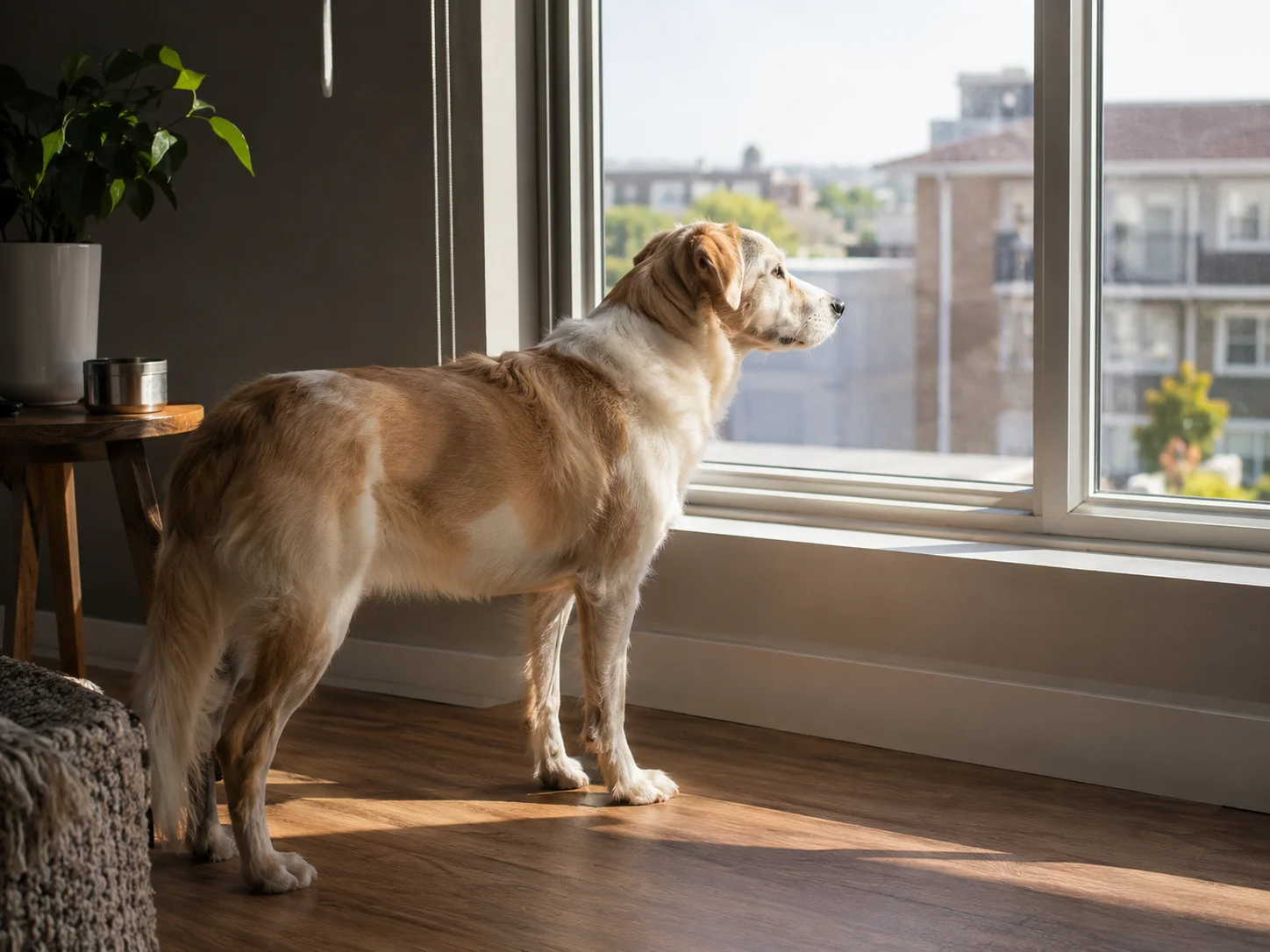
You may have tried more walks, puzzle toys, crate time, shorter departures, or stopping alone-time practice for a while yet the same dog separation anxiety signs keep returning.
That does not automatically mean your dog is stubborn or that you have failed. It usually means the pattern needs a closer look before you increase the difficulty.
When dog separation anxiety signs do not improve, the most likely explanations are that practice is exceeding your dog’s current coping limit, the trigger has been misidentified, confinement or outside noise is adding stress, a health change is involved, or the case needs professional support.
Record the first 15–30 minutes after you leave, identify the earliest sign of distress, shorten absences to a level your dog can handle, and avoid repeated panic or punishment. Sudden, severe, or worsening signs should be discussed with a veterinarian.
See the step-by-step planWhat Should You Check First?
Check when the behavior starts, what happens immediately before it, where your dog is confined, and whether your dog can eat or settle. Timing and context are more useful than any single sign.
| What You Observe | What It May Mean | Safer Next Step |
|---|---|---|
| Barking, howling, pacing, or panting begins soon after departure | The absence may already be above your dog’s coping limit | Shorten practice and review a recording before increasing time |
| Scratching doors, biting crate bars, or forceful escape attempts | Confinement distress or panic may be involved | Stop the unsafe setup and contact a veterinarian or qualified behavior professional |
| Calm with another trusted person present, distressed only when fully alone | The main difficulty may be isolation rather than one person leaving | Use temporary human support while building alone time gradually |
| Barking follows hallway sounds, deliveries, elevators, or activity outside | Noise sensitivity or territorial alerting may be contributing | Compare video and audio timing; reduce visual and sound triggers where practical |
| A normally valued food toy is ignored after departure | Stress may be too high for eating or play | Lower the difficulty rather than offering a higher-value distraction |
| Signs appear suddenly, especially in an older dog | Pain, sensory changes, urinary urgency, cognitive changes, or another health issue may be contributing | Arrange a veterinary examination before treating it only as a training problem |
Use a simple observation log
For each departure, record four points: setup (crate, room, or home), first sign, time the sign began, and whether your dog settled. Add outside noises, toileting, food refusal, or escape behavior. This helps a veterinarian or behavior professional see the pattern instead of relying on memory.
Why Might Dog Separation Anxiety Signs Not Improve?
Progress often stalls when the dog repeatedly experiences more distress than they can currently manage, or when the plan targets the wrong trigger. The following causes can overlap.

1. The practice may be too difficult
If a dog is already barking continuously, pacing, drooling, scratching exits, destroying barriers, or trying to escape, the session is unlikely to be calm learning practice. Veterinary guidance commonly uses gradual exposure and aims to keep the dog below intense distress rather than repeatedly testing how long they can endure.
Start below the point where the earliest stress sign appears. That may be only a few seconds at first. Increase time based on calm behavior, not on a fixed daily target. See the PDSA guidance on gradually building comfortable alone time.
2. The trigger may not be one owner leaving
Some dogs struggle whenever they are fully alone. Others remain calm with any trusted person but become distressed when a particular person leaves. A third group reacts mainly to departure cues such as keys, shoes, a work bag, or a change in routine.
Compare short recordings from different setups. For example, observe what happens when one family member leaves but another stays, versus when everyone leaves. Treat this as a practical comparison not a diagnosis.
3. The crate may be adding stress
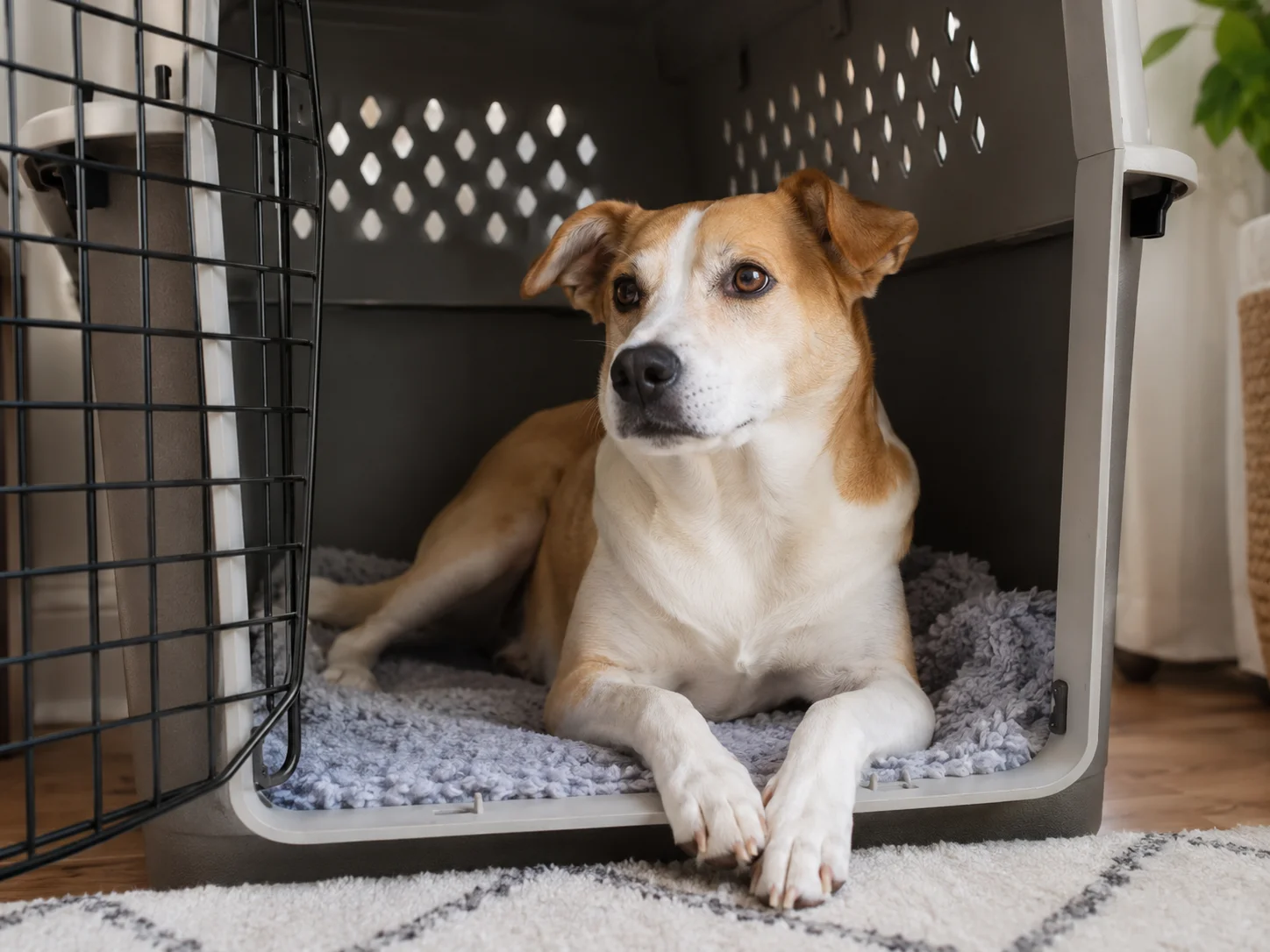
A crate can be a comfortable resting place for some dogs, but it can increase distress for others. Warning signs include frantic biting or scratching, bent bars, heavy drooling, repeated escape attempts, or injury. The ASPCA notes that crate confinement can add stress for some dogs with separation anxiety.
If injury is possible, do not continue using the crate as the main management plan. Ask a veterinarian or qualified, reward-based behavior professional about a dog-safe room, gate, exercise pen, or another setup appropriate for your dog.
4. Noise or visual triggers may be part of the pattern
Hallway footsteps, delivery sounds, elevators, neighboring dogs, vehicles, wildlife, or people passing a window can trigger barking after you leave. In that situation, the behavior may involve both being alone and reacting to the environment.
Use video with sound and note whether the reaction follows an identifiable event. Closing blinds, moving the resting area away from the door, or using steady background sound may reduce triggers, but these changes do not replace a behavior plan when panic is present.
5. A medical or age-related change may be contributing
Pain, illness, hearing or vision changes, digestive discomfort, urinary urgency, altered sleep, and cognitive changes can affect how a dog behaves when alone. The PDSA recommends veterinary assessment because pain and medical problems can contribute to apparent separation anxiety.
Book a veterinary examination when behavior starts suddenly, worsens without an obvious reason, or appears with appetite, mobility, sleep, toileting, confusion, or sensory changes.
Which Signs Are Mild and Which Are More Concerning?
A brief, isolated response followed by settling is usually less concerning than persistent distress, escape behavior, self-injury risk, or signs that begin almost every time the dog is left. The full pattern matters more than one event.

| Lower Concern When Brief or Isolated | More Concerning Pattern |
|---|---|
| One or two barks, followed by resting | Prolonged barking or howling on most departures |
| Short-lived restlessness after a routine change | Persistent pacing, panting, trembling, or heavy drooling |
| Chewing one accessible item without other distress signs | Repeated damage concentrated around doors, windows, gates, or crates |
| Settling within a few minutes | Escalation, escape attempts, or risk of broken teeth, nails, or other injury |
| Eating a safe food toy and then resting | Refusing normally valued food as soon as the owner leaves |
| One accident during illness or an unusual schedule | Repeated toileting that occurs mainly during separation |
Get prompt help when safety is at risk
- Your dog is bending crate bars, breaking barriers, bleeding, or damaging teeth or nails.
- Distress includes collapse, breathing difficulty, repeated vomiting, or another acute medical sign.
- A sudden behavior change appears with confusion, pain, weakness, appetite loss, or repeated accidents.
- You cannot prevent long periods of panic during necessary absences.
What Are the Safest Next Steps?
Use management to prevent repeated severe distress, collect a short recording, lower the training difficulty, and involve a veterinarian or qualified behavior professional when the pattern is severe, sudden, or not improving.
-
Record one representative departure
Use a phone, pet camera, or audio recorder. Capture the first 15–30 minutes if it is safe to do so, because separation-related signs often appear early. Record the departure cue, setup, first behavior change, trigger sounds, food response, and whether your dog settles.
-
Identify the earliest stress sign
Do not wait only for barking or destruction. Earlier signs may include freezing, scanning the door, following closely, panting when not hot, repeated lip licking, inability to settle, or leaving a food toy. Use the earliest consistent change as the point to reduce difficulty.
-
Practice below the distress point
Begin with an action your dog can handle touching the door, opening and closing it, stepping outside briefly, or walking a few steps away. Return before distress begins. Progress is based on repeated calm responses, not on forcing a longer duration every session.
-
Change the environment when needed
If the crate increases distress, discuss a safer alternative. Reduce predictable window or hallway triggers where practical, provide water and a comfortable resting area, and remove hazards. Any food toy or chew left unsupervised should already be known to be safe for that dog.
-
Use temporary support during training
When your dog cannot yet manage a normal workday, consider a trusted sitter, family member, neighbor, suitable daycare, adjusted schedule, or remote-work arrangement where available. The Merck Veterinary Manual advises minimizing unavoidable alone time during treatment because repeated severe episodes can make progress harder.
How to judge whether the plan is working
Look for earlier settling, a softer body posture, willingness to eat, fewer attempts to reach exits, and successful repetitions at the same duration. A single unusually good day is not enough to justify a large jump. Review progress across several comparable sessions.
What Should You Avoid?
Avoid methods that add fear, allow repeated panic, or treat the visible behavior without checking its cause. Punishment may suppress signals without helping the dog feel safer.
When Should You Contact a Veterinarian or Qualified Professional?
Start with a veterinarian when signs are sudden, severe, worsening, or accompanied by health changes. Seek a qualified, reward-based behavior professional when distress begins quickly, safety is difficult to manage, or a careful plan is not producing progress.
Contact a veterinarian when:
- The behavior started suddenly or changed sharply.
- Your dog shows pain, appetite loss, sleep changes, confusion, disorientation, mobility changes, vomiting, diarrhea, or new urinary or fecal accidents.
- Your dog is older and has new nighttime waking, altered social behavior, sensory changes, or restlessness.
- You want to discuss medication, supplements, or whether a medical condition could be contributing.
Contact a behavior professional when:
- Your dog becomes distressed within minutes of departure.
- You cannot leave without prolonged vocalizing, pacing, toileting, destruction, or escape attempts.
- Neighbors, landlords, or building management are reporting repeated noise.
- Your dog may injure themselves or damage exits and barriers.
- Progress has stalled despite consistent, low-difficulty practice.
Titles and certification rules vary by country. Ask your veterinarian for a referral and look for transparent education, reward-based methods, separation-related behavior experience, and willingness to coordinate with your vet. In the United States, the American College of Veterinary Behaviorists directory lists board-certified veterinary behaviorists.
What Is the Bottom Line?
Dog separation anxiety signs that are not improving usually call for better pattern identification not harsher training or longer tests.
Record what happens, find the earliest stress sign, reduce the difficulty, change unsafe confinement, limit repeated severe episodes, and arrange veterinary or qualified behavior support when signs are sudden, severe, or persistent.
What Else Do Dog Owners Commonly Ask?
These answers address common decision points without treating one sign as proof of a diagnosis.
Why are my dog’s separation anxiety signs not improving?
The absences may be longer than your dog can currently manage, the sessions may be inconsistent, or another trigger such as confinement, noise, pain, or full isolation may have been missed. Use a recording and reduce practice to the point before the first reliable stress sign.
Is my dog anxious or simply bored when left alone?
Boredom can lead to activity-seeking or chewing, while separation-related distress more often includes a cluster such as vocalizing, pacing, panting, drooling, exit-focused damage, toileting, or inability to eat or settle. The timing and repetition of the pattern are more informative than one behavior.
Can crate training make separation anxiety worse?
It can for some dogs. A dog who rests comfortably in a crate may be fine, while frantic biting, scratching, heavy drooling, bent bars, or repeated escape attempts suggest the confinement is adding distress and may be unsafe.
Should I punish barking or destruction after I return?
No. Delayed punishment does not teach the dog how to feel safe while alone and may increase fear around departures or reunions. Focus on preventing overwhelming absences and reinforcing calm behavior during gradual practice.
Will getting another dog solve the problem?
Not reliably. Company helps some dogs whose main difficulty is full isolation, but many remain distressed when a particular person leaves. Test the pattern with a trusted person or compatible dog present before assuming a second pet is the solution.
How quickly should alone-time training progress?
There is no universal timetable. Progress should follow your dog’s calm responses and may vary from day to day. Repeat manageable durations, make small increases, and reduce the next session when early stress signs return.
Sources and Further Reading
These resources provide general veterinary, welfare, and humane-training guidance. They do not replace an examination or individualized behavior assessment.
ASPCA Separation Anxiety RSPCA Separation-related Behaviour in Dogs RSPCA How to Train Your Dog to Stay Home Alone PDSA Home Alone: Preventing Separation Anxiety PDSA Separation Anxiety in Dogs VCA Animal Hospitals Separation Anxiety in Dogs VCA Animal Hospitals Signs Your Dog Is Stressed VCA Animal Hospitals Fear of Noises and Places in Dogs Merck Veterinary Manual Behavior Problems of Dogs Merck Veterinary Manual Behavior Modification in Dogs MSD Veterinary Manual Diagnosis of Behavior Problems in Animals American Veterinary Society of Animal Behavior Position Statements AVSAB Humane Dog Training Position Statement (PDF) ✓
✓