

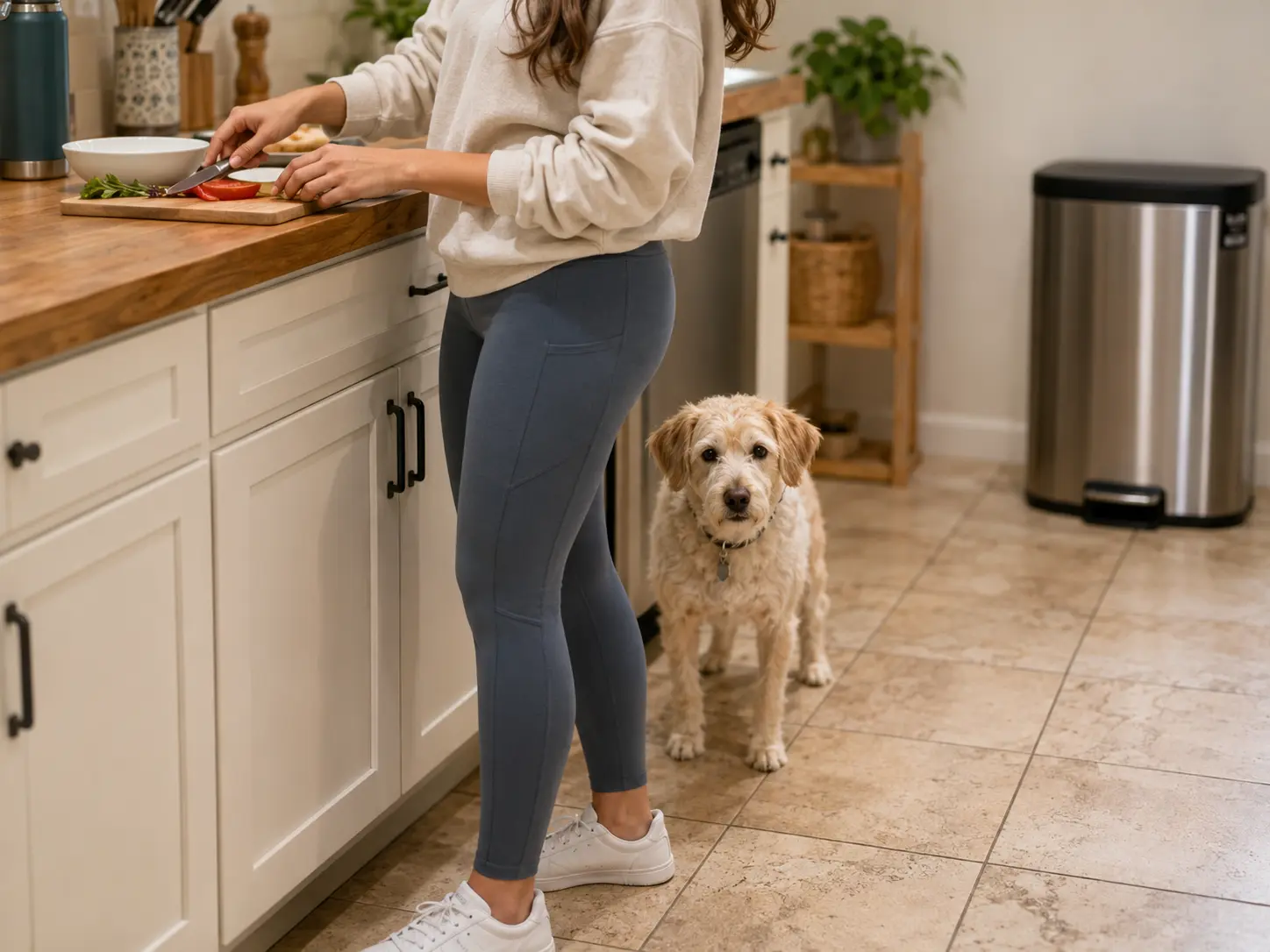
Dog barking while cooking is often caused by food anticipation, learned demand barking, excitement, or barrier frustration. Food smells, kitchen movements, and family mealtimes can become signals that food or attention may be available.
Give your dog a clear place to settle before cooking begins. Teach the mat routine away from real meals, stop rewarding barking with food or attention, and reinforce calm behavior before the first bark occurs.
What to Do at Your Next Meal
- Prepare the mat or resting station before cooking starts.
- Settle your dog on the mat before handling human food.
- Reward calm behavior before barking begins.
- Keep the first practice session short and manageable.
- If barking starts, make the trigger easier or increase distance.
- End the session at a successful, calm point.
Dogs Usually Bark Because Cooking Predicts Food or Attention
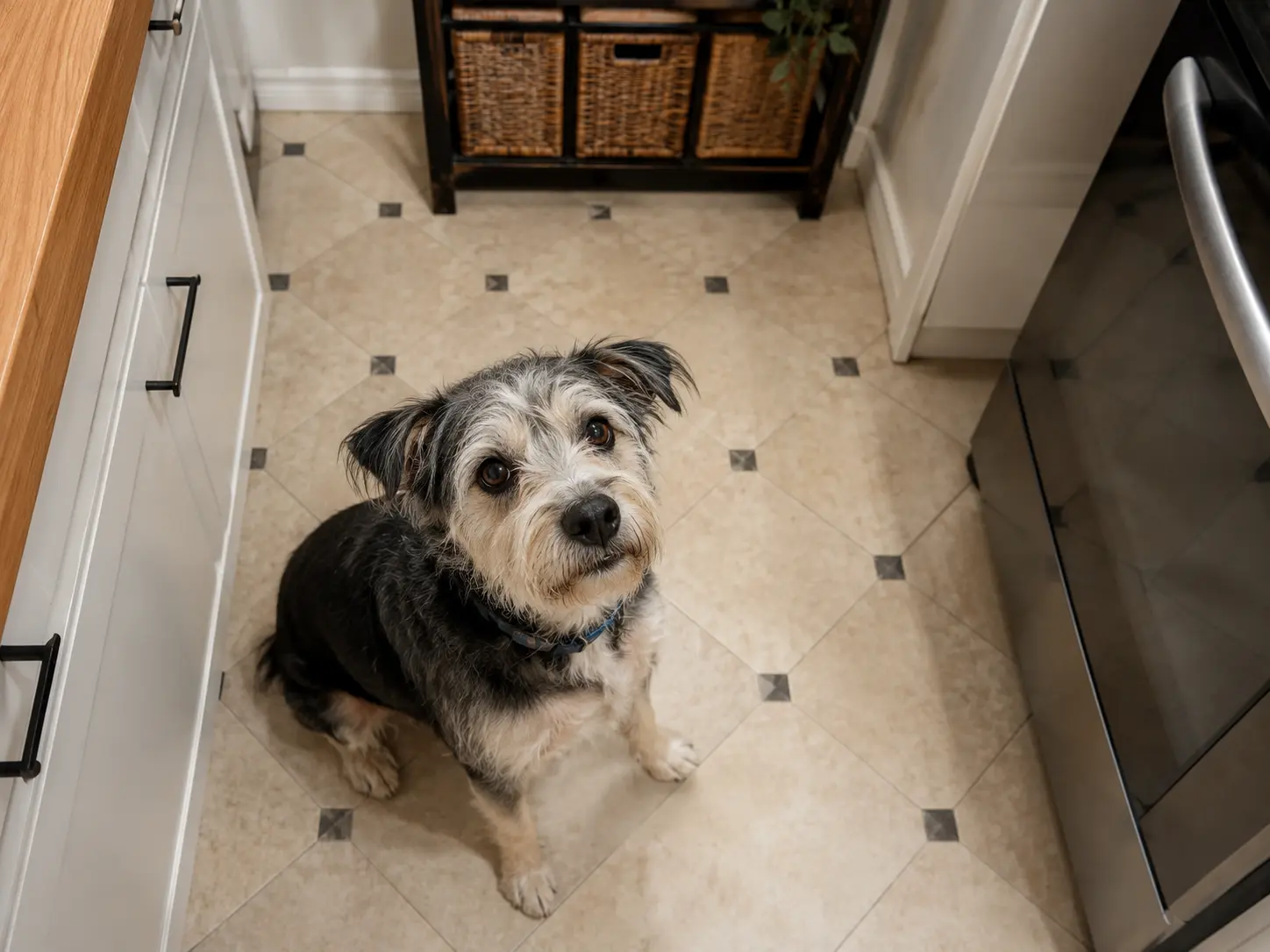
Dogs quickly learn which household activities predict food. Opening the refrigerator, handling pans, unwrapping packaging or sitting at the table can trigger excitement before any food is offered.
If the barking happens around your dog’s own food bowl before or while they eat, that can be a different pattern. See why a dog may bark at the food bowl before or during eating to separate meal excitement from eating discomfort or possible guarding.
Food Anticipation
Cooking smells, kitchen sounds and visible food signal a possible opportunity to eat.
Learned Demand Barking
Barking has previously resulted in food, attention or access to the kitchen.
Excitement
People moving between cupboards, counters and tables can increase arousal.
Limited Impulse Control
Puppies and excitable adult dogs may find it difficult to wait near visible food.
Attention Seeking
Eye contact, touching or repeatedly saying “quiet” may provide the interaction the dog wanted.
Barrier Frustration
A dog behind a gate may bark because food is visible but cannot be approached.
Schedule Prediction
Dogs often learn when their own dinner or the family meal normally begins.
More Than One Cause
Hunger, excitement and a history of receiving scraps can all contribute at the same time.
Watch the Trigger to Tell Hunger, Begging and Demand Barking Apart
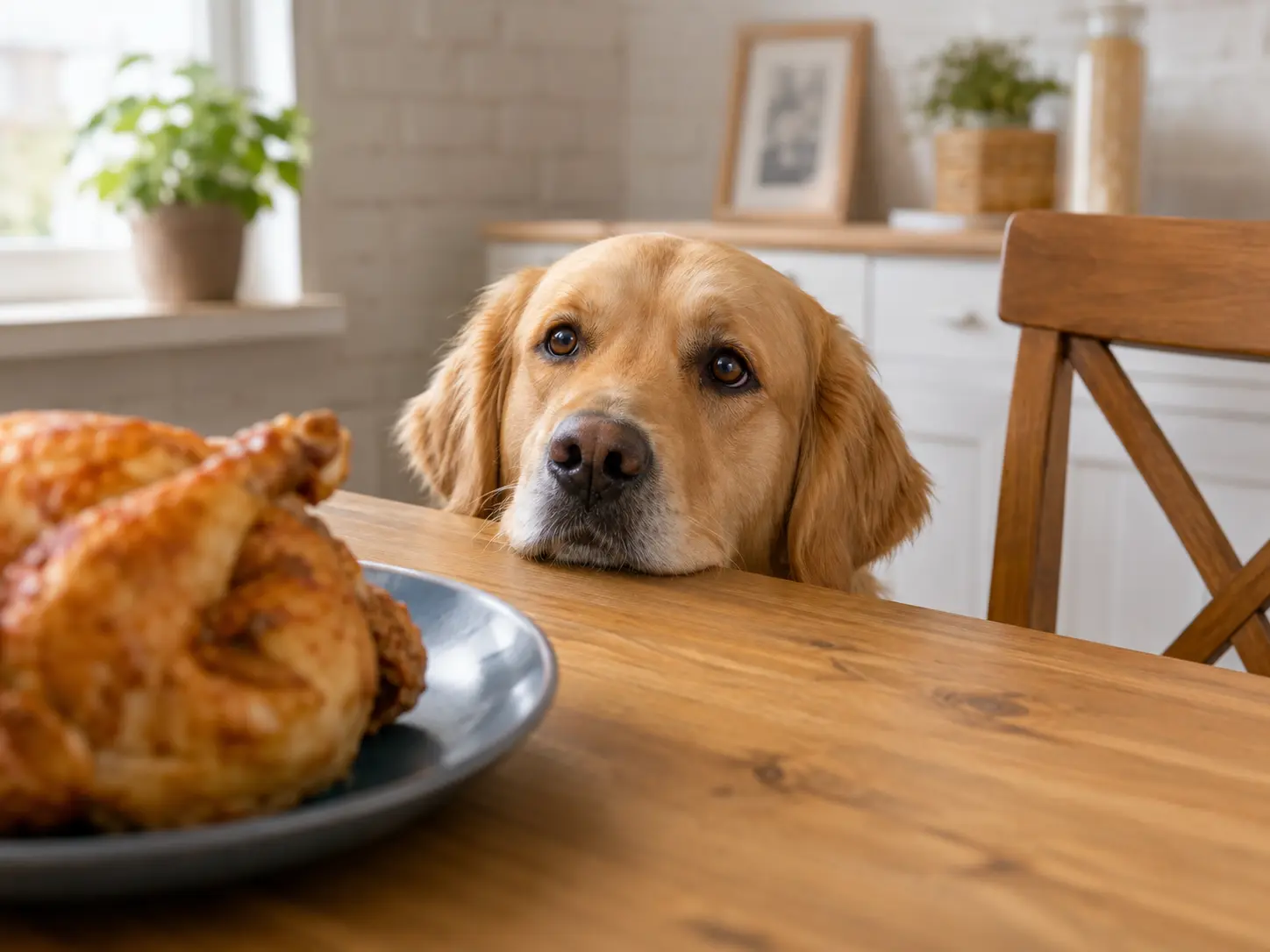
Observe what happens immediately before the barking and what usually makes it stop.
| What You Notice | Possible Explanation |
|---|---|
| Barking starts when pans, plates or food appear | Food anticipation |
| Barking stops after receiving table food | Learned begging |
| The dog stands close and barks directly at one person | Demand for food or attention |
| Barking mainly happens behind a gate | Barrier frustration |
| The dog settles when given a clear resting activity | No established alternative routine |
| Barking begins at the same time every day | Mealtime schedule prediction |
| Food obsession appears suddenly with physical changes | A veterinary assessment may be needed |
These patterns are clues rather than a diagnosis. A dog may be ready for dinner, excited by cooking smells and accustomed to receiving scraps after barking.
Food, Eye Contact and Talking Can Accidentally Reward Barking
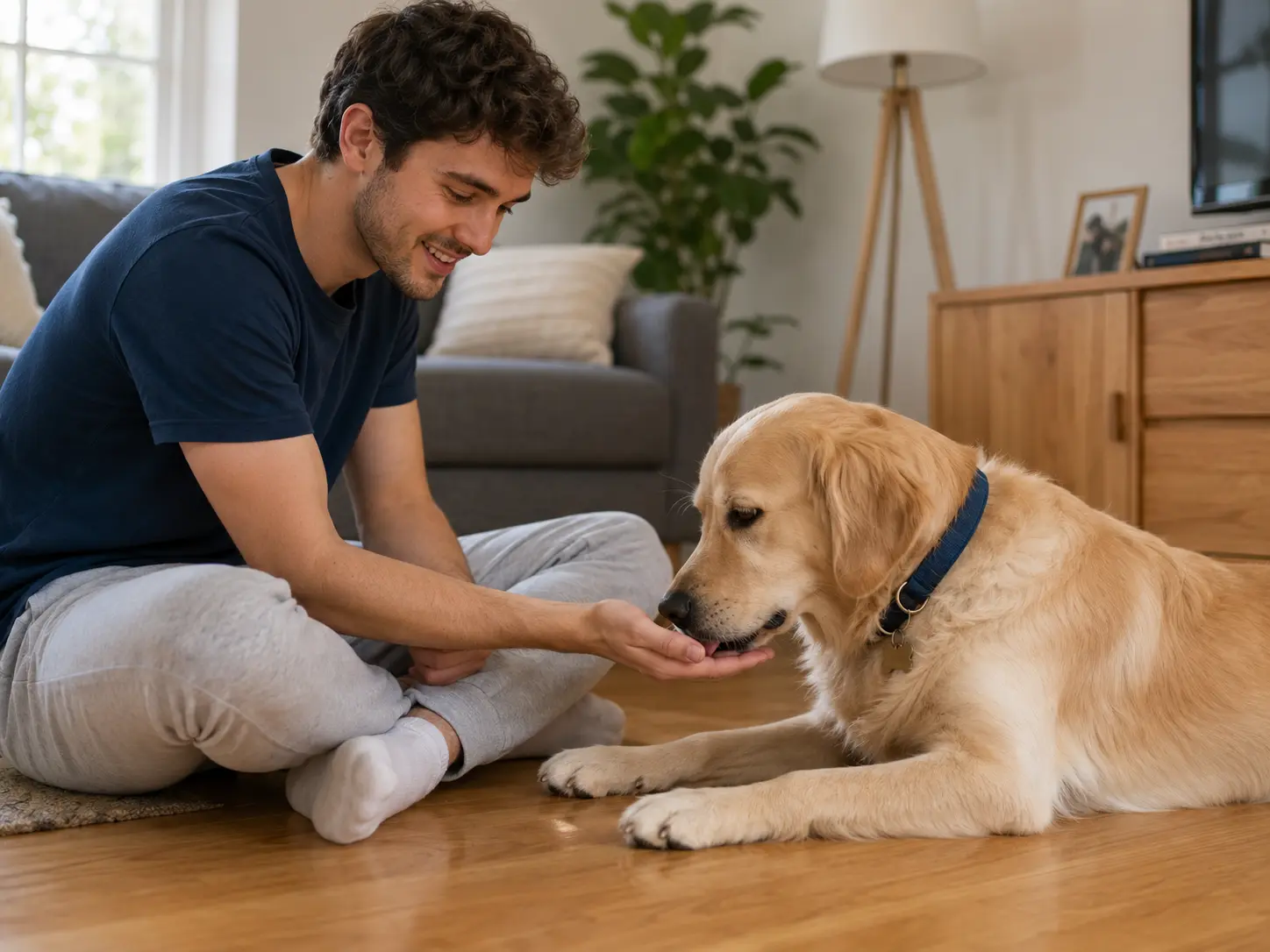
A dog does not need to receive a complete meal for barking to become worthwhile. A small piece of food, brief eye contact or verbal response may reinforce the behavior.
- Feeding directly from the table
- Looking at the dog while they bark
- Repeating the dog’s name
- Saying “quiet” or “stop” repeatedly
- Touching or pushing the dog away
- Giving a treat immediately after a short pause
- Preparing a chew only after barking begins
- Allowing one family member to share scraps
- Letting the dog lick plates after meals
- Leaving dropped food where the dog can collect it
Dogs repeat behaviors that produce useful results. Even occasional rewards can keep demand barking active.
Do Not Turn Barking Into a Bark–Pause–Treat Routine
Rewarding quiet behavior can help, but poor timing may teach the dog to bark before each reward.
Bark → pause briefly → receive food → bark again
The dog may not be learning to remain calm. They may be learning that barking starts the reward process.
- Reward calm behavior before barking begins.
- Reward a specific behavior, such as lying on a mat.
- Avoid creating a repeated bark–pause–treat cycle. Reward settling on the mat, looking away from food or showing a calmer body posture.
- Reset the activity when barking begins.
- Make the next repetition easier.
The reward should be connected to settling, not merely to stopping for a moment.
Ignoring Barking Alone Does Not Teach the Dog What to Do
Ignoring can prevent barking from receiving attention, but it does not automatically teach calm behavior around food.
Ignoring may be ineffective when:
- Another family member continues sharing food.
- Food remains visible and highly stimulating.
- The dog has no alternative behavior.
- The cooking session is too long.
- Training begins after the dog is already excited.
- A gate is increasing frustration.
- Barking has repeatedly worked in the past.
- The dog needs toileting, rest or appropriate activity.
Reduce the difficulty and practise a clear replacement behavior in an easier situation. Do not test how long the dog can bark before someone gives in.
Teach a Mat or Bed Routine Before Practising During Real Meals
Choose one behavior your dog can perform safely while you cook.
- Lie on a mat outside the main cooking area
- Rest on a dog bed in the dining room
- Remain behind a gate at a comfortable distance
- Settle in another room
- Use a familiar crate if the dog is already comfortable there
- Eat part of their meal from an appropriate enrichment toy
A mat or bed provides a visible boundary and helps keep the dog away from hot pans, knives and dropped food.
Do not place the station so close that your dog is overwhelmed by food smells, movement and falling ingredients. Begin where the dog can still respond and settle.
Teach the Mat in a Quiet Room
- Place the mat on the floor.
- Mark and reward your dog for looking at or approaching it.
- Place rewards on the mat instead of feeding beside your body.
- Reward four paws on the mat.
- Gradually reward sitting or lying down.
- Introduce a release cue such as “free.”
- Take one step away and return.
- Increase duration gradually.
If the dog repeatedly leaves, reduce the duration, movement or distraction.
Add Normal Household Movement
Practise simple actions such as:
- Taking one step toward a counter
- Turning your back briefly
- Picking up an empty plate
- Opening and closing a cupboard
- Carrying an empty pan
- Sitting at the table without food
- Walking between two surfaces
Change only one factor at a time. Do not increase duration, distance and distraction together.
Practise Kitchen Triggers Without Cooking
Identify the first event that normally causes barking:
- Opening the refrigerator
- Handling food packaging
- Picking up the dog’s bowl
- Using the chopping board
- Turning on the microwave
- Placing plates on the table
- A particular person entering the kitchen
Practise a smaller version of the trigger when you are not preparing a real meal.
Prepare the Dog’s Setup Before Cooking
- Offer a toilet or short sniff break.
- Allow a calm transition after play or activity.
- Measure part of the dog’s normal food allowance.
- Set up the mat, bed or gate.
- Provide fresh water.
- Cue the station before touching human food.
- Reward the first calm moments.
Reward Calm Behavior Before Barking
Reward your dog for:
- Lying down
- Remaining on the mat
- Looking away from the food
- Resting their head
- Staying quiet while you move
- Relaxing after a kitchen sound
Gradually increase the time between rewards. Avoid using exactly the same interval every time.
When Barking Starts, Reset the Activity Instead of Offering Food
Do not immediately walk toward the dog with a treat. Use a calm reset.
- Pause food preparation when it is safe.
- Secure knives, hot pans and accessible food.
- Avoid arguing or repeatedly giving cues.
- Briefly step away from the food activity.
- Wait until the dog can disengage.
- Ask for an easy behavior the dog already knows.
- Restart with a simpler action.
- Reward earlier during the next repetition.
If fully opening the refrigerator caused barking, the next repetition might involve only walking toward it or touching the handle.
If your dog cannot respond, eat calmly or remain at the station, end the rehearsal and use an easier management setup.
A Gate May Increase Barking When the Dog Feels Frustrated
A gate can improve kitchen safety, but it does not automatically help a dog relax. Some dogs become more frustrated when they can see and smell food but cannot approach it.
Signs the Gate Setup Is Too Difficult
- Jumping against the gate
- Rapid pacing
- Repetitive high-pitched barking
- Biting or pulling at the barrier
- Refusing food that the dog would normally take
- Remaining fixed on the kitchen
Food refusal or food acceptance is not final proof of stress or relaxation. Look at the dog’s full body language and overall behavior pattern.
Practical Adjustments
- Move the resting station farther away.
- Partially block the dog’s view.
- Try settling in the same room at a safe distance.
- Practise calm behavior around the gate outside mealtimes.
The dog may be struggling with the barrier rather than deliberately refusing to cooperate.
Give Chews and Food Toys Before Barking Begins
A chew or food-filled toy can support settling, but prepare it before cooking starts.
If the item appears only after barking, the dog may learn that barking produces enrichment.
- Choose an item suitable for the dog’s size and chewing style.
- Test new items under supervision.
- Include the calories in the dog’s daily intake.
- Give the item at the resting station.
- Remove damaged items that could become a choking risk.
- Do not lure the dog toward hot cooking equipment.
If barking begins as soon as the activity finishes, shorten the cooking rehearsal or provide planned reinforcement before the item ends.
One Consistent Household Rule Helps Stop Table Begging
Training becomes difficult when different people follow different rules.
Human food is not given from the table. Dog-safe rewards are delivered only at the dog’s station.
- Children should not pass food under the table.
- Guests should know the rule before the meal.
- No one should give scraps to stop barking.
- Clear plates before releasing the dog.
- Only place veterinarian-approved, unseasoned and dog-safe food in the dog’s bowl later, and count it toward daily calories.
Occasional table feeding can maintain barking even when most family members ignore it.
Keep the Dog Away From Hot Pans, Knives and Unsafe Foods
Dogs moving around a busy kitchen may be exposed to more than unwanted barking triggers.
Physical Hazards
- Hot pans and liquids
- Knives and utensils
- Broken dishes
- Plastic packaging
Food Hazards
- Raw meat may carry harmful bacteria, while unsuitable bones may cause dental injury, choking or intestinal blockage.
- Greasy or seasoned foods
- Chocolate
- Grapes and raisins
- Onions and garlic
- Xylitol
- Alcohol
- Raw yeast dough
- Macadamia nuts
Contact a veterinarian or animal poison service promptly if your dog consumes a potentially toxic ingredient. Do not wait for symptoms before seeking guidance.
Sudden Food Obsession or Extreme Hunger Needs Veterinary Attention
A dog that has always begged around food is different from a dog that suddenly becomes unusually hungry, restless or food-focused.
- Increased appetite
- Weight loss despite eating more
- Increased thirst
- Increased urination
- Vomiting or diarrhea
- Weakness or fatigue
- A swollen-looking abdomen
- Sudden restlessness
- New scavenging behavior
- A recent medication change
A suddenly swollen abdomen, repeated unsuccessful retching, drooling, weakness or severe restlessness may require emergency veterinary care. Do not delay while waiting to see whether the signs improve.
Also confirm that your dog receives an appropriate complete diet and portion for their age, size, body condition and activity level.
Do not substantially increase food based only on begging behavior.
Match the Training Adjustment to the Specific Barking Pattern
| Problem | Practical Adjustment |
|---|---|
| The dog barks as soon as you enter the kitchen | Practise entering without preparing food. |
| The dog stays quiet only while using a chew | Shorten the session or reinforce before the chew ends. |
| The dog repeatedly leaves the mat | Return to easier mat practice outside the kitchen. |
| The dog barks at one family member | That person may have a history of feeding or responding. |
| The dog barks behind a gate but settles nearby | Barrier frustration may be contributing. |
| The dog succeeds in practice but not during dinner | Introduce shorter and easier meal rehearsals. |
| The dog barks immediately after receiving a reward | The reward may be connected to the bark–pause cycle. |
| The dog cannot respond around food | Increase distance and reduce stimulation. |
| The behavior appeared suddenly | Arrange a veterinary assessment. |
Progress From Quiet Mat Practice to Short Family Meals
Progress according to your dog’s behavior rather than a fixed schedule.
Frequent barking means the current step is too difficult. Move back one stage and rebuild success rather than repeatedly correcting the dog.
Avoid Punishment Because It Does Not Teach Calm Behavior
- Shouting
- Water spraying
- Shaker cans
- Startling noises
- Physical force
- Leash corrections
- Feeding after intense barking
- Forcing the dog onto the mat
Punishment may interrupt barking temporarily without teaching the dog how to settle around food. Use management, distance and reward-based practice to build the replacement behavior.
Later Barking and Faster Settling Are Signs of Progress
Do not measure success only as complete silence.
- Barking begins later than before.
- The dog reaches the mat more quickly.
- Fewer resets are needed.
- The dog tolerates more kitchen movement.
- Barking episodes become shorter.
- The dog settles during more types of meals.
- Rewards can gradually become less frequent.
Progress may vary with visitors, routine changes, missed activity or unusually exciting food.
Get Professional Help for Guarding, Distress or Worsening Behavior
Consult a qualified reward-based trainer, veterinarian or veterinary behavior professional when:
- Barking includes growling, snapping or food guarding.
- The dog becomes highly distressed behind barriers.
- The behavior continues to worsen.
- The dog cannot settle even at a significant distance.
- The dog cannot be managed safely around cooking.
- The behavior began with sudden appetite or health changes.
Severe frustration, anxiety and food guarding require a more individualized plan than ordinary begging.
Frequently Asked Questions
Why does my dog bark when I sit down to eat?
Sitting at the table may predict scraps, dropped food or attention. Cue your dog to their resting station before sitting down and reward calm behavior away from the table.
Should I ignore my dog when they bark for food?
Do not provide food or attention in response to demand barking. However, ignoring alone is usually not enough. Teach the dog to settle on a mat or bed before real meals.
Should I give my dog a treat when they stop barking?
Avoid giving a treat immediately after barking followed by a very brief pause. Reset the situation and reward a specific behavior, such as returning to the mat and settling.
Why does my puppy bark while food is being prepared?
Puppies can become excited by food smells, household movement and predictable feeding cues. They also have limited experience with waiting. Use short sessions and reward calm behavior early.
Should I feed my dog before the family eats?
Feeding the dog’s meal or providing part of it through an appropriate enrichment activity may help. However, it will not replace consistent training or a no-table-feeding rule.
Can hunger make a dog bark during dinner?
Hunger may contribute, but begging alone does not prove that a dog is underfed. Review portions and body condition with a veterinarian. Sudden extreme hunger with weight loss, increased thirst or increased urination needs veterinary assessment.
Final Takeaway
Avoid a repeated bark–pause–treat cycle. Prepare the resting station before cooking, teach the mat away from real meals, and reward settling, looking away from food and calm body posture before barking starts.
When barking occurs, reset the activity and make the next repetition easier. A predictable routine teaches your dog where to settle and what to do whenever food is being prepared.
Sources and References
These references provide background on veterinary behavior, food safety, increased appetite, emergency abdominal signs and reward-based training.
- American College of Veterinary Behaviorists: What Is a Veterinary Behaviorist?
- ASPCA Animal Poison Control: People Foods to Avoid Feeding Your Pets
- Merck Veterinary Manual: Behavior Problems of Dogs
- American College of Veterinary Surgeons: Gastric Dilatation-Volvulus
- American Veterinary Society of Animal Behavior: Humane Dog Training Position Statement
 ✓
✓