

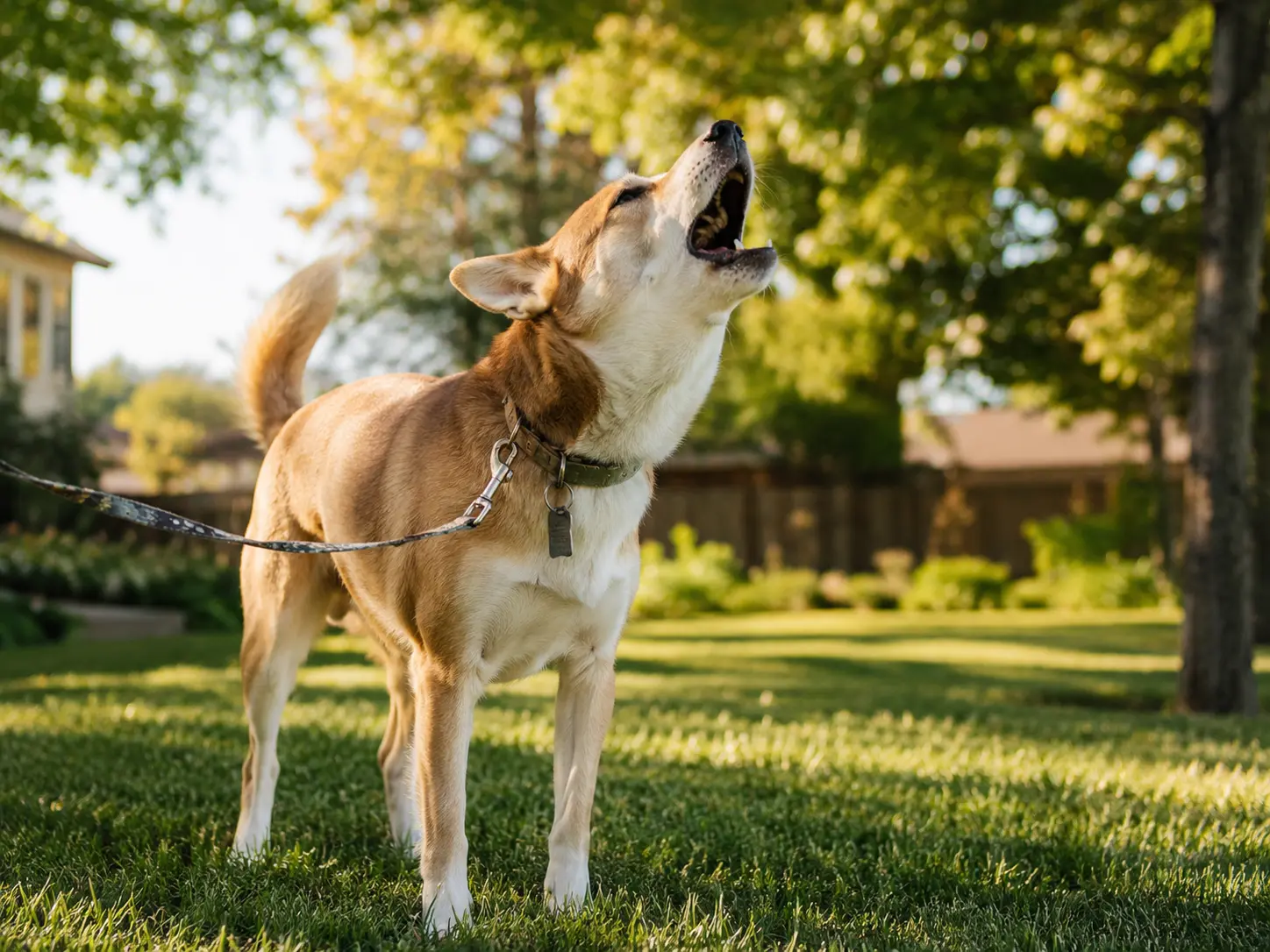
If your dog barks at the window, during work calls, when you leave, around other dogs, while food is being prepared, or for no obvious reason, the first step is not to search for one universal way to stop barking. The first step is to identify what starts the barking and what your dog may be trying to achieve, avoid, or communicate.
Dogs bark for many reasons, including alerting, fear, excitement, frustration, boredom, attention, separation-related distress, discomfort, and age-related changes. The right response depends on the pattern. A dog barking at a delivery driver needs a different plan from a puppy barking in a daytime crate or a senior dog suddenly barking at night.
Quick Answer: Why Do Dogs Bark So Much?
Dogs bark because barking is normal communication and can produce a result. Your dog may be alerting you, asking for attention or access, reacting to a trigger, creating distance from something uncomfortable, releasing excitement or frustration, or responding to physical or emotional distress.
To reduce excessive barking humanely, identify the trigger, check the dog’s immediate needs and health, reduce unnecessary exposure, teach a calmer replacement behavior, and reward that behavior before the dog becomes too worked up.
Dog Barking Problem Finder: Start With the Situation
Use the table below to choose the guide that most closely matches what is happening. These patterns are clues rather than diagnoses. Look at your dog’s full body language, timing, environment, and any recent changes.
| Your dog barks when… | Possible pattern | Best guide to read |
|---|---|---|
| You leave the home or room | Separation distress, frustration, boredom, outside triggers, or learned barking | Dog Barking When Left Alone: Anxiety vs. Habit |
| Another dog appears during a walk | Fear, frustration, excitement, or emotional overload | Dog Barking at Other Dogs on Walks |
| A passing car, truck, or motorcycle approaches on a walk | Movement sensitivity, chase behavior, fear, frustration, or high arousal | Dog Barking and Lunging at Cars on Walks |
| Your dog is riding in the car | Outside visual triggers, anticipation, travel stress, or possible motion sickness | Why Dogs Bark in the Car |
| The doorbell rings or a visitor arrives | Alarm barking, anticipation, territorial context, or overarousal | How to Reduce Dog Barking at the Door |
| People, dogs, cars, or deliveries pass a window | Visual alert barking or location-based reactivity | Dog Barking at Neighbors |
| You cook, eat, or handle human food | Food anticipation, demand barking, excitement, or a reinforced routine | Dog Barking While Cooking or Eating |
| Your dog approaches their own food bowl | Meal anticipation, uncertainty, eating discomfort, or possible resource-related behavior | Dog Barking at the Food Bowl |
| Animals, doorbells, or movement appear on TV | Visual or audio trigger response, excitement, frustration, or high arousal | Why Dogs Bark at the TV |
| Your baby cries | Sound-triggered arousal, uncertainty, or a response that needs whole-body safety assessment | Dog Barking When a Baby Cries |
| Ordinary barking keeps waking your baby from naps | Window, delivery, doorbell, hallway, or separation-related nap-time triggers | Dog Barking Keeps Waking My Baby |
| You sit down, use your phone, or open a laptop | Attention seeking, routine cues, unmet needs, or difficulty settling | Why Dogs Bark When You Sit Down |
| You join Zoom, Teams, or phone calls | Attention, voice changes, notifications, routine cues, or frustration | Dog Barking During Work Calls |
| Your puppy is crated during the day but sleeps there at night | Daytime stimulation, confinement frustration, discomfort, or difficulty being alone | Puppy Barking in the Crate During the Day |
| Sounds happen in an apartment or hallway | Sound sensitivity, alert barking, isolation distress, or limited recovery space | Apartment Dog Barking Management |
| Night begins or the household becomes quiet | Outdoor sounds, routine, discomfort, anxiety, unmet needs, or senior changes | Dog Barking at Night |
| No trigger is obvious to you | Faint sounds, reflections, smells, pests, learned location cues, or a health change | Why Dogs Bark at “Nothing” |
| Your dog wants food, play, access, or attention | Demand barking, anxiety, frustration, or a mixture of motivations | Attention Barking or Anxiety? |
| Your older dog starts barking more or behaves differently | Pain, sensory changes, sleep disruption, anxiety, or cognitive decline | Sudden Excessive Barking in Older Dogs |
Why Dogs Bark: Communication, Emotion, Environment, and Learning
Barking is normal dog behavior. The problem is usually not that a dog can bark; it is that barking has become frequent, intense, difficult to interrupt, unsafe, or disruptive to the household and neighbors.
Most barking problems involve one or more of these four factors:
1. Communication
A dog may bark to alert the household, request a potty break, ask for food or play, communicate discomfort, or signal that something has changed.
2. Emotion
Fear, anxiety, excitement, frustration, and distress can all produce barking. The sound alone does not reliably reveal the emotion, so also look at body tension, movement, recovery time, distance from the trigger, and whether the dog can respond to familiar cues.
3. Environment
Windows, fences, shared apartment walls, doorways, hallway noises, delivery routines, outdoor animals, and household activity can repeatedly expose a dog to triggers. Management is often necessary before training can work.
4. Learning History
Barking may continue because it has worked before. The owner may look, speak, feed, play, open a door, approach the dog, or remove the trigger. Even when the owner is frustrated, the dog may still learn that barking changes what happens next.
How to Identify Your Dog’s Barking Pattern
Before changing the behavior, record several real examples. A simple phone note or pet camera log is often more useful than relying on memory after a stressful barking episode.
Ask These Five Questions
- What happened immediately before the barking? Note sights, sounds, movement, people, dogs, food, departures, doors, or devices.
- Where was your dog? Window, yard, crate, doorway, sofa, hallway, car, or walking on leash?
- What did the dog’s body look like? Loose, wiggly, stiff, crouched, pacing, lunging, scanning, panting, or trying to escape?
- What happened immediately afterward? Did the trigger leave, did you give attention, did a door open, or did the dog get food or access?
- How quickly did the dog recover? A brief alert followed by recovery is different from barking that escalates or continues with distress signs.
Use a Short Barking Log
| Time and place | Trigger | Body language | What happened next | Recovery |
|---|---|---|---|---|
| Example: 2:15 p.m., front window | Delivery driver | Stiff posture, forward movement | Driver left; owner shouted | Settled after several minutes |
This record helps you choose a specific plan instead of treating every bark as the same behavior.
Common Types of Dog Barking
Many dogs show more than one type of barking. For a deeper comparison of alarm, fear, boredom, demand, excitement, frustration, and separation-related barking, see our guide to the main types of dog barking.
Alert or Alarm Barking
The dog notices movement, sound, a person, an animal, or a change in the environment. Common locations include windows, fences, doors, balconies, and apartment entryways.
Demand or Attention Barking
Barking may be used to request food, play, eye contact, access, or interaction. However, barking directed at the owner is not automatically “attention seeking.” Fear, frustration, pain, or anxiety can look similar. Use the attention barking versus anxiety guide to compare the wider pattern.
Fear, Anxiety, or Distress Barking
A dog may bark to create distance, respond to uncertainty, or cope with a situation that feels unsafe. Persistent barking with pacing, panting, drooling, escape attempts, or an inability to settle deserves more careful assessment.
Excitement or Frustration Barking
Some dogs bark because they want to approach a person, dog, toy, food item, or activity but cannot reach it. Excitement and frustration can occur together, especially on leash or behind a barrier.
Boredom or Under-Stimulation
Repetitive barking may occur when a dog has too little appropriate activity, enrichment, social contact, or opportunity to perform normal behavior. Boredom should not be assumed when distress or medical signs are present.
Health- or Age-Related Vocalization
Pain, sensory changes, discomfort, sleep disruption, and cognitive changes may increase vocalization. Sudden or unusual barking should not be treated only as a training problem, particularly in an older dog.
Dog Barking Problems by Situation
Barking at Windows, Neighbors, and Outside Movement
Window barking is often repeatedly rehearsed: the dog notices a person, dog, car, or delivery, barks, and the moving trigger eventually disappears. Start by reducing visual access, changing the dog’s resting location, and rewarding movement away from the window.
Read why dogs bark at neighbors and how to reduce it. When visual access is the main trigger, also see whether window film can help dogs barking at neighbors.
Barking at the Door and Visitors
Door barking can combine alarm, anticipation, territorial context, visitor excitement, and a highly practiced routine. Management may include a gate, leash station, visual barrier, or separate safe area while the dog learns a predictable arrival routine.
Follow the practical plan in How to Stop Dog Barking at the Door Without Shouting “Quiet”.
Barking at the TV
If barking is tied to animals, movement, dog sounds, or doorbells on television, test whether the visual, audio, or both trigger the response. Use Why Does My Dog Bark at the TV? for a screen-specific practice plan.
Barking in the Car or at Cars on Walks
Car-related barking depends heavily on context. Barking from inside a vehicle may involve window triggers, anticipation, travel stress, or motion sickness; barking and lunging at passing cars on foot is a separate traffic-reactivity and safety problem.
Compare dog barking in the car with dog barking and lunging at cars on walks.
Barking in an Apartment
Apartment barking can be intensified by hallway footsteps, elevators, doors, shared walls, neighbors, deliveries, and concern about complaints. First determine whether barking happens while you are home, only when you leave, or in both situations.
Use our apartment dog barking management guide for trigger reduction, neighbor communication, monitoring, and humane next steps.
Barking at Night
Night barking may involve outdoor sounds, wildlife, a changed sleeping location, bathroom needs, discomfort, anxiety, or age-related changes. Do not assume the dog needs stricter discipline when the behavior is new or paired with restlessness.
Read Dog Barking at Night: How to Reduce Triggers Before Training Starts.
Barking at “Nothing”
Dogs can detect sounds, scents, reflections, movement, and environmental changes that people miss. Check repeat locations and times, reflections, vents, outdoor animals, pests, and electronic sounds. A sudden behavior change, confusion, or pain sign should be discussed with a veterinarian.
See hidden triggers that can make a dog appear to bark at nothing.
Barking When Left Alone
Alone-time barking may come from separation-related distress, adjustment barking, boredom, outside triggers, confinement stress, or a learned routine. A camera can help reveal whether the dog settles, reacts to specific noises, or escalates after departure.
Start with Dog Barking When Left Alone: Separation vs. Habit Explained.
Barking at Other Dogs on Walks
Leash barking can be driven by fear, frustration, excitement, or emotional overload. A dog may be social in other settings but struggle when restrained or unable to create distance. Avoid forcing greetings or luring the dog closer to a trigger with food.
Read Why Does My Dog Bark at Other Dogs on Walks? for distance management, turn-away practice, and safer training steps.
Barking Around Food
Food-related barking is not one single pattern. Barking while you cook or eat can be learned demand behavior or anticipation, while barking at the dog’s own bowl deserves a separate look at meal timing, eating comfort, uncertainty, and guarding-related signs.
Compare dog barking while cooking or eating with dog barking at the food bowl.
Barking Around a Baby
If a baby’s crying triggers barking, focus on dog-and-baby safety, distance, and the dog’s whole response. If the baby is asleep and unrelated barking keeps waking naps, focus on predictable household triggers such as windows, deliveries, hallway sounds, and doorbells.
Use Why Does My Dog Bark When My Baby Cries? or Dog Barking Keeps Waking My Baby From Naps depending on the actual trigger.
Barking When You Sit Down or Work
Sitting on the sofa, opening a laptop, using a headset, or picking up a phone can predict reduced access to your attention. Check potty, movement, and enrichment needs, then teach a settle routine before the usual barking cue.
Read why dogs bark when you sit down or start working.
Barking During Work Calls
If barking is closely linked to your meeting voice, notifications, headset, or other call cues, practice those cues outside real meetings at an easier level.
For the call-specific behavior plan, read Dog Barking During Work Calls. For the broader daily routine, boundaries, breaks, and calm setup, use Dog Barking During Work From Home.
Puppy Barking in a Daytime Crate
A puppy sleeping in a crate at night may still struggle there during the day because the home is active, sleep pressure is lower, and confinement may feel harder. Check bathroom, temperature, comfort, fear, and overtiredness before deciding how to respond.
Use Puppy Barking in the Crate During the Day but Fine at Night to compare mild frustration with possible distress and build calmer daytime sessions.
Senior Dog Barking
Older dogs may bark more because of pain, hearing or vision changes, disrupted sleep, anxiety, disorientation, or cognitive decline. New nighttime barking, staring, pacing, getting stuck, or a sudden behavior change should prompt veterinary attention.
For a broad overview, read Senior Dog Barking: Behavior Change or Cognitive Dysfunction?. For a newly developed or rapidly worsening pattern, read Sudden Excessive Barking in Older Dogs.
When the Barking Is Overwhelming You
Repeated barking can affect sleep, work, relationships, neighbor stress, and confidence. Feeling frustrated does not make you a bad owner. Create distance when safe, protect your hearing, write down the pattern, and work on one trigger at a time instead of trying to solve everything during a barking episode.
Read Why Dog Barking Feels Overwhelming: Puppy Blues, Regret, and Owner Burnout.
A Humane Step-by-Step Plan to Reduce Excessive Barking
Step 1: Check Immediate Needs and Safety
Before treating barking as a learned behavior, check whether your dog needs a bathroom break, water, rest, relief from heat or cold, distance from a frightening trigger, or veterinary attention. Sudden barking, pain signs, confusion, appetite changes, sleep changes, or unusual behavior deserve extra care.
Step 2: Identify the Trigger and the Result
Write down what happened before and after several barking episodes. This reveals whether barking is linked to windows, departures, food, attention, another dog, a specific time, or a physical change.
Step 3: Prevent Unnecessary Rehearsal
Use curtains, window film, gates, closed doors, distance, background sound, or a different resting area to reduce repeated exposure while training. Management does not teach the final behavior by itself, but it makes learning possible.
Step 4: Meet Predictable Needs Before Difficult Times
Schedule bathroom breaks, sniffing, age-appropriate exercise, chewing, food enrichment, and rest before calls, meals, evening trigger periods, or planned alone time. More exercise is not a universal cure, and an overtired puppy may need sleep rather than additional activity.
Step 5: Teach a Replacement Behavior
Choose a behavior the dog can perform instead of barking, such as moving away from a window, going to a mat, checking in with you, following a “this way” turn, resting behind a gate, or bringing a toy. Practice when the trigger is absent or mild before expecting success in a difficult real-life moment.
Step 6: Reward Calm Early
Reinforce the first signs of the behavior you want: looking away from the window, staying on the mat, hearing a sound without rushing to the door, or noticing another dog and turning back to you. Waiting until the dog is already highly aroused usually makes training harder.
Step 7: Work Below the Dog’s Threshold
Start at a distance, volume, duration, or intensity where your dog can still eat, move, respond, and recover. Food acceptance alone does not prove a dog is relaxed, so consider the full body-language pattern.
Step 8: Review Progress, Not Perfection
Look for shorter barking episodes, faster recovery, lower intensity, and more successful replacement behaviors. If barking is worsening, causing safety risks, or showing signs of panic, change the plan and seek qualified help.
Tools and Products That May Help Based on the Trigger
A product cannot diagnose or cure barking. The most useful tools reduce a specific trigger, improve observation, support a calm routine, or make reward-based training easier.
| Situation | Tool role | Informational guide | Comparison or buying guide |
|---|---|---|---|
| Visible people, dogs, cars, or deliveries | Reduce the view that repeatedly triggers alert barking | Does Window Film Help? | Best Window Films for Dog Barking |
| Unknown barking while the dog is alone | Observe timing, triggers, recovery, and distress signs | Are Pet Cameras With Bark Alerts Worth It? | Best Pet Cameras With Bark Alerts |
| Hallway, neighbor, door, or nighttime sounds | Mask or soften unpredictable background noise | Apartment Barking Setup Guide | Best White Noise Machines for Dog Barking |
| Attention barking or difficulty settling | Create a predictable calm station and reinforce quiet behavior | Products for Attention Barking and Calm Settling | Best Dog Settle Mats and Calm-Spot Products |
| Work-from-home calls and owner-busy periods | Support boundaries, enrichment, mat training, and planned breaks | Work-From-Home Barking Behavior Guide | Work-From-Home Dog Barking Setup |
| Considering an anti-bark gadget | Understand limitations, welfare concerns, and safer alternatives | Anti-Bark Devices: When They Help and When They Don’t | Best Humane Bark-Collar Alternatives |
What Not to Do When Your Dog Barks Excessively
Do Not Assume the Dog Is Being Spiteful
Barking may be inconvenient, but it usually reflects communication, emotion, environmental triggers, or learned consequences rather than a plan to upset the owner.
Do Not Shout Over the Barking
Yelling can add noise and arousal, frighten an anxious dog, or become attention that keeps the interaction going. Read why bark collars, yelling, and punishment can backfire.
Do Not Use a Device Without Understanding the Cause
A device may interrupt sound without changing fear, frustration, isolation distress, pain, or the environmental trigger. Some dogs also habituate to an interruption or continue barking when motivation is high.
If a gadget has already stopped helping, see why anti-bark devices stop working for some dogs. Before buying any device, review when anti-bark devices may help, when they do not, and safer options.
Do Not Force the Dog Closer to a Trigger
Forcing greetings, trapping a dog near a window or visitor, or using food to lure a reactive dog closer can increase difficulty. Use food at a safe distance to reward calm choices or support movement away.
Do Not Ignore Sudden or Severe Changes
New barking, escalating distress, self-injury risk, pain signs, disorientation, appetite changes, and major sleep changes need assessment rather than a stricter “quiet” command.
When to Contact a Veterinarian or Qualified Behavior Professional
Contact a Veterinarian When:
- Barking starts suddenly or becomes much worse without an obvious reason.
- Your dog shows pain, sensitivity to touch, limping, appetite changes, or sleep changes.
- An older dog paces, seems confused, gets stuck, stares, or becomes restless at night.
- Barking appears with hearing, vision, urinary, digestive, or neurological changes.
- Your dog cannot settle enough for a behavior plan to begin safely.
Contact a Qualified Reward-Based Trainer or Behavior Professional When:
- Barking includes lunging, snapping, redirected biting, or serious safety concerns.
- Your dog panics, attempts to escape, damages doors or crates, or risks self-injury.
- Neighbor, landlord, building, or local authority complaints are escalating.
- The trigger cannot be safely recreated or managed without professional support.
- A consistent humane plan is not producing meaningful improvement.
Frequently Asked Questions
Why does my dog bark so much?
Dogs may bark to alert, request something, create distance, express excitement or frustration, respond to boredom, cope with separation, or communicate discomfort. Track when the barking happens and what changes afterward to identify the most likely pattern.
How do I stop excessive dog barking?
Start by checking health and immediate needs, identifying the trigger, reducing unnecessary exposure, teaching a replacement behavior, and rewarding calm choices early. There is no single method that fits every barking problem.
Should I ignore my dog when they bark?
Not automatically. First check safety, bathroom needs, discomfort, fear, and distress. With clear demand barking, removing the reward for barking may be one part of the plan, but the dog should also be taught and rewarded for a quieter way to ask.
Why does my dog bark at nothing?
The dog may hear, smell, or see something you do not notice, or may react to a learned cue connected to a place or time. Repeated barking at empty spaces, especially with confusion or a sudden behavior change, should be discussed with a veterinarian.
Can more exercise stop barking?
Appropriate physical activity and mental enrichment can help some boredom- or frustration-related barking, but exercise does not cure fear, pain, separation distress, sound sensitivity, or cognitive changes. Match activity to the dog’s age, health, and individual needs.
Do bark collars or ultrasonic devices work?
Some devices may interrupt barking temporarily, but interruption does not necessarily change the cause. Effectiveness can fade, and aversive tools can create welfare concerns or worsen fear and anxiety. Trigger management and reward-based training are safer foundations.
When is barking a medical concern?
Contact a veterinarian when barking is sudden, unusual, worsening, linked with pain or disorientation, or accompanied by appetite, mobility, sleep, hearing, vision, or elimination changes.
How long does it take to reduce a barking problem?
Progress depends on the cause, how often the behavior is rehearsed, the dog’s emotional state, health, environment, and consistency of the plan. Track shorter episodes, easier interruption, faster recovery, and more calm behavior rather than expecting complete silence immediately.
Quick Summary
Dogs bark for different reasons, so the most effective plan begins with the pattern rather than the noise. Identify what happens before and after barking, reduce preventable triggers, meet the dog’s needs, teach an appropriate replacement behavior, and reward calm choices before arousal becomes too high.
Use the situation-specific guides in this hub for door barking, window barking, apartment noise, night barking, alone-time barking, leash reactivity, car and traffic barking, TV barking, food-related barking, baby-related barking, work calls, puppy crates, senior changes, and humane product support.
Sources and Further Reading
More Specific Guides
 ✓
✓