


Quick Answer: Is Your Dog Barking for Attention or Anxiety?
Your dog may be barking for attention if it usually happens during:
- work calls
- meals
- laptop time
- sofa time
- phone conversations
- moments when you stop interacting with your dog
Your dog’s barking may be linked with distress if it happens when you:
- leave the room
- close a door
- pick up keys
- put on shoes
- grab a bag or coat
- walk toward the exit
Attention Barking vs Anxiety-Related Barking
Why Dogs Bark

Dogs bark for many reasons, including excitement, boredom, frustration, alerting, fear, loneliness, over-arousal, or the desire to get something.
A dog barking for table food needs a different plan from a dog panicking behind a closed door. That is why the situation around the bark matters more than the bark itself.
Signs Your Dog May Be Barking for Attention
Attention barking often happens when your dog can see you, but you are not giving the response they want.
Your dog may:
- bark while looking directly at you
- bring toys
- paw at your leg or chair
- jump, nudge, or stand in front of you
- bark when you eat, work, talk, or sit down
- stop when you respond
- repeat the barking because it has worked before
This is often called demand barking. Your dog has learned that barking can make something happen.
Common rewards include food, play, eye contact, talking, touch, opening a door, or standing up.
Signs Barking May Be Linked With Anxiety or Distress
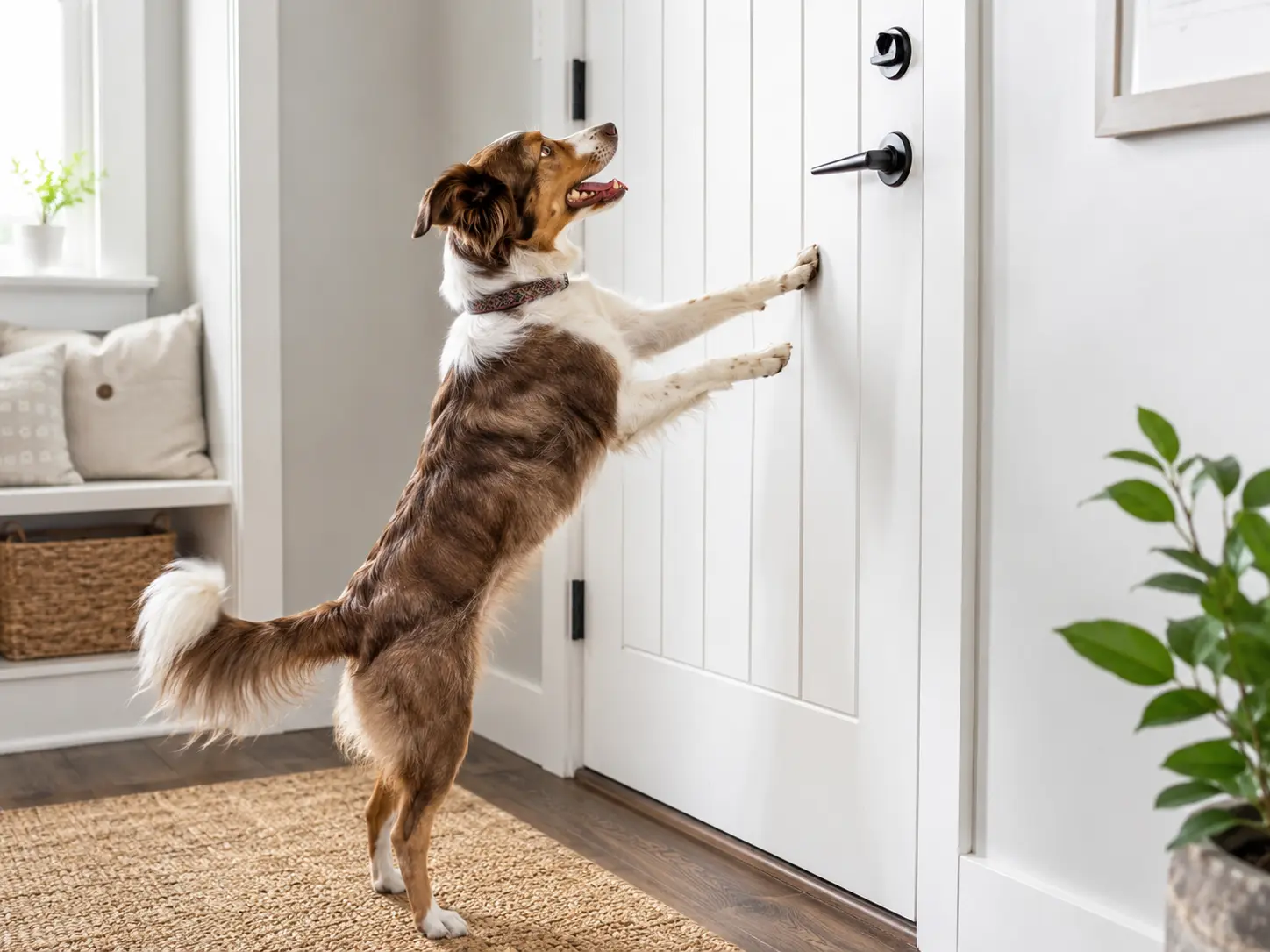
Distress-related barking is more concerning because the dog may not be asking for attention. They may be struggling to cope.
Your dog may:
- bark when you leave or close a door
- react strongly to keys, shoes, coats, or bags
- pace, pant, whine, tremble, or drool
- scratch doors or chew exit points
- refuse food when alone
- bark before you leave, not only after
- take a long time to calm down
- struggle to rest even after you return
These signs do not prove separation anxiety, but they do mean you should avoid treating the barking as simple demand barking.
Leaving Cues and Closed Doors Matter
Some dogs start barking before the owner actually leaves. This can happen because they have learned the signs that usually come before separation.
Common leaving cues include:
- picking up keys
- putting on shoes
- grabbing a bag
- putting on a coat
- closing the bathroom door
- closing the office door
- walking toward the front door
A single bark at a closed door is not the same as panic. But if your dog scratches, paces, refuses food, or cannot settle whenever separated, use a slower plan.
Boredom and Under-Stimulation Can Look Like Attention Barking
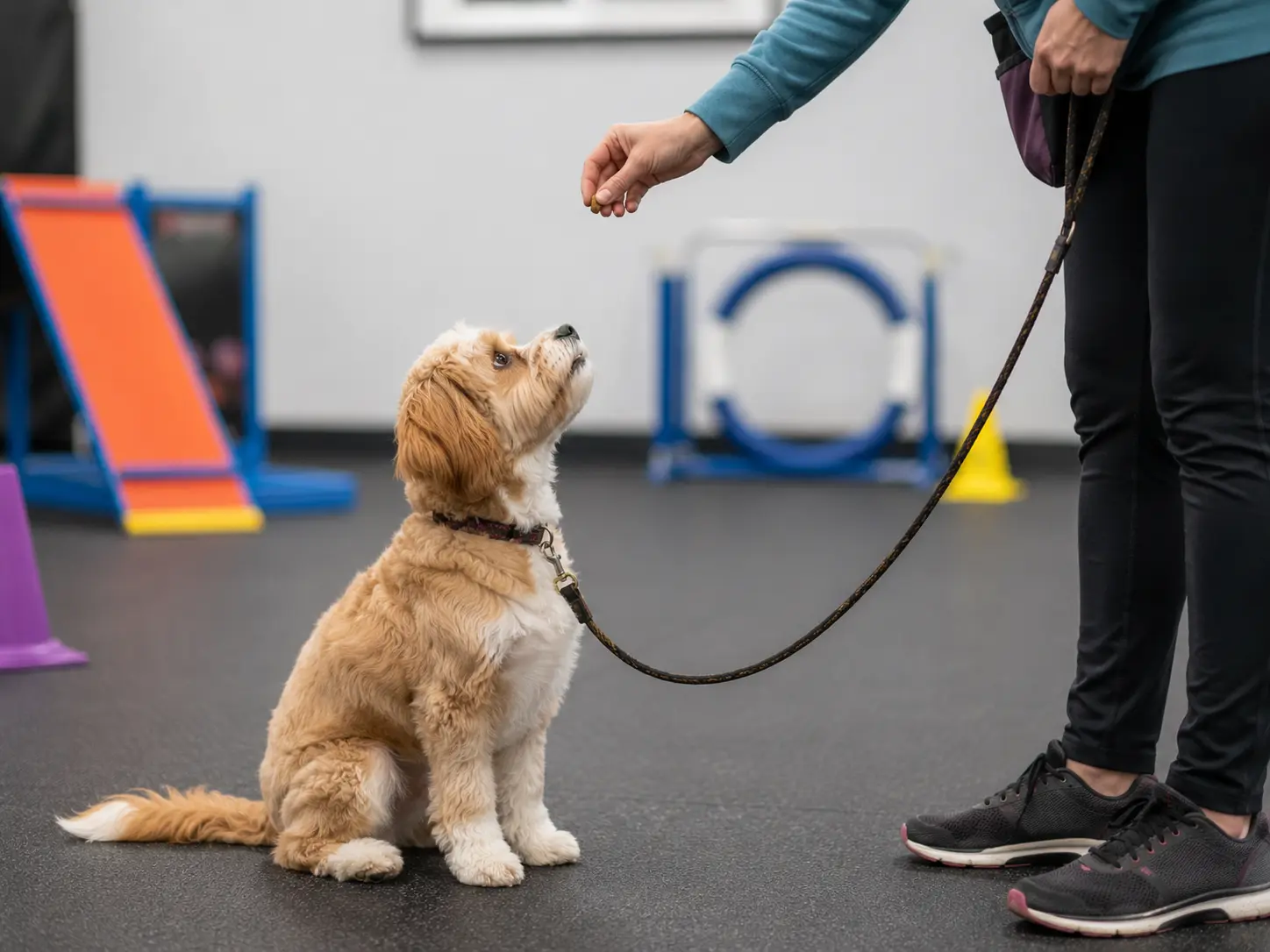
Boredom barking is more likely when:
- walks were skipped or shortened
- your dog had little sniffing time
- your dog has not chewed, played, or trained
- your dog slept while you were busy
- your dog lives in a small home or apartment
- rainy days disrupted the normal routine
If your dog had no real outlet all morning, barking during your work call may simply be the moment that unused energy comes out.
Over-Arousal Barking
Over-arousal barking may happen:
- before walks
- before meals
- when guests arrive
- when you stand up
- when the laptop closes
- when the workday ends
A loose, bouncy dog who can settle afterward is different from a stiff, frantic, pacing dog who cannot calm down.
Real-World Scenarios
Scenario 1: Dog Barks During Work Calls
Your dog may be quiet most of the morning, then start barking as soon as you join a video call. This may be attention barking, frustration, boredom, or a learned routine.
A better plan is to prepare before the call starts. Give a potty break, a short sniff activity, a settle spot, and a safe chew or food puzzle before barking begins.
Scenario 2: Dog Barks When the Bathroom Door Closes
If your dog follows you around the home and barks when a door separates you, look for the bigger pattern. A dog that gives one short bark is different from a dog that panics, scratches, refuses food, or cannot settle.
Scenario 3: Dog Barks When You Pick Up Keys
This barking may be excitement, worry, routine prediction, or separation stress. If it happens with pacing, whining, door scratching, or panic, avoid quick punishments and use slow practice.
Scenario 4: Dog Barks While You Eat
This is more likely to be attention or demand barking, especially if table barking has worked before.
Step-by-Step Solutions
1. Track the Barking Pattern
Track these details:
- time of day
- where you were
- where your dog was
- what happened 30 seconds before barking
- your dog’s body language
- what stopped the barking
- whether your dog seemed calm, frustrated, excited, or distressed
This prevents you from using an attention-barking plan on a dog that is actually distressed.
2. Stop Rewarding Attention Barking by Accident
First check basic needs such as toilet, water, food timing, safety, pain, illness, fear, and distress.
If those are not the issue, avoid these during active barking:
- talking
- staring
- touching
- tossing food
- opening the door immediately
- starting play
Wait for a short quiet moment. Then reward the calmer behavior with attention, a treat, or a cue such as “go to mat.”
3. Teach a Work Call or Meal Routine
Before work calls, meals, or laptop time:
- offer a toilet break if needed
- give a short sniff walk or simple training session
- set up a mat, bed, crate, or resting spot
- prepare a chew, lick mat, or food puzzle
- reward calm behavior before barking starts
The timing matters. Reward quiet behavior before the barking begins.
4. Build Door and Separation Tolerance Slowly
If barking happens around doors, exits, or leaving cues, practice small steps before your dog reaches panic level.
- Touch the door handle, then return.
- Open and close the door without leaving.
- Step behind the door for one second.
- Return calmly.
- Increase the time only if your dog stays relaxed.
Do not jump from one second behind the door to leaving for 30 minutes. That jump is too big for many dogs.
5. Give Better Outlets Before Problem Times
Before work calls, meals, crate time, night settling, leaving the house, or long laptop sessions, try:
- sniff walk
- safe chew
- food puzzle
- short training game
- calm play
- rest break in a quiet space
- scatter feeding
- lick mat
6. Reward Calm Behavior You Want Repeated
Reward your dog when they:
- lie down quietly
- watch calmly without barking
- choose their bed
- stay quiet when you sit down
- hear a sound and do not bark
- wait quietly before access
Use small treats, calm praise, gentle attention, or a chew after quiet behavior.
Simple 5-Day Barking Pattern Plan
Day 1: Track the Barking
Focus on what happened 30 seconds before the barking started. This is often the strongest clue.
Day 2: Separate the Barking Into Two Groups
- Group 1: Barking when you are present but unavailable, such as laptop time, work calls, meals, or sofa time.
- Group 2: Barking around doors, exits, or leaving cues, such as keys, shoes, bags, bathroom doors, office doors, or the front door.
This helps you see whether the barking looks more like attention, frustration, distress, or a mix.
Day 3: Stop Accidentally Rewarding Attention Barking
Keep your response calm and boring during barking. When your dog gives even a short quiet pause, reward that calmer behavior.
Day 4: Set Up a Routine Before the Trigger
Pick a common trigger such as a work call, dinner time, laptop time, or bathroom door closing. Before it begins, use a mat, chew, food puzzle, lick mat, or calm settle cue.
Day 5: Practice Tiny Door or Leaving-Cue Steps
- Touch keys, then put them down.
- Touch the door handle, then return.
- Open the door, close it, and stay inside.
- Step behind the door for one second.
Only increase the difficulty if your dog stays relaxed.
What Not to Do
Do Not Assume All Barking Is Manipulation
Calling every bark “manipulation” can lead to the wrong plan, especially when barking is linked with fear, panic, pain, or separation distress.
Do Not Use “Bark It Out” for Every Barking Problem
If your dog is panicked, frightened, in pain, confused, or unable to cope, ignoring may make the situation worse.
Do Not Yell Over the Barking
It adds more noise and does not teach your dog what to do instead.
Do Not Punish Fear-Based Barking
When barking is linked with fear or panic, punishment can make the emotional problem harder to solve.
Do Not Rely Only on Quick Fixes
Focus on what starts the bark, what your dog does during it, and what your dog learns from the result.
When to Contact a Vet or Qualified Trainer
Speak with a veterinarian if your dog’s barking starts suddenly, gets worse quickly, or appears with pain, confusion, appetite changes, disorientation, restlessness at night, sudden fear, or new sensitivity to sound or touch.
Contact a qualified reward-based trainer or behavior professional if barking is intense, linked with separation, causing neighbor complaints, or making your dog frantic behind closed doors.
Get help sooner if your dog:
- barks when left alone
- damages doors, crates, or windows
- cannot settle after you leave
- barks during every work call
- causes neighbor complaints
- seems panicked behind closed doors
- has a history of severe fear or distress
A good professional should look at triggers, timing, body language, environment, and what happens after the bark. They should not only tell you to ignore or punish the barking.
Quick Summary
- Attention barking often happens during laptop time, meals, work calls, sofa time, or phone conversations.
- Distress-related barking often appears around keys, shoes, closed doors, exits, pacing, scratching, panic, or food refusal.
- The best first step is to track the trigger, stop accidental rewards, build calm routines, and get help if panic or sudden behavior changes appear.
FAQs
Why does my dog bark during work calls?
Your dog may have learned that barking during calls gets a fast response. It may also happen because you are home but unavailable. Set up a call routine before the meeting starts with a toilet break, mat, chew, food puzzle, or calm settle cue.
Is demand barking the same as anxiety barking?
No. Demand barking usually asks for attention, food, play, or access. Anxiety-related or distress-related barking may be linked with fear, separation, closed doors, or panic signs.
Should I ignore my dog when they bark for attention?
Sometimes, but only after checking safety, toilet needs, hunger, fear, pain, and distress. If the barking looks attention-based, wait for a quiet moment and reward calm behavior. Do not ignore barking that looks like panic, confusion, pain, or fear.
Does a wagging tail mean my dog is happy?
Not always. Look at the whole body, not just the tail. Loose, relaxed movement is different from stiff, frantic, tense, or unable-to-settle behavior.
How do I stop my dog barking when I leave the room?
Start with very short door practice. Touch the door, open it, close it, step away for one second, and return calmly. Build slowly. Get help if your dog panics, damages things, refuses food when alone, or cannot settle.
How can I tell if barking is boredom or attention-seeking?
Boredom barking often happens after too little exercise, sniffing, chewing, training, or rest. Attention barking usually happens when your dog is trying to make you respond. Many dogs have a mix of both, so prevention and calm-behavior training can help.
 ✓
✓