

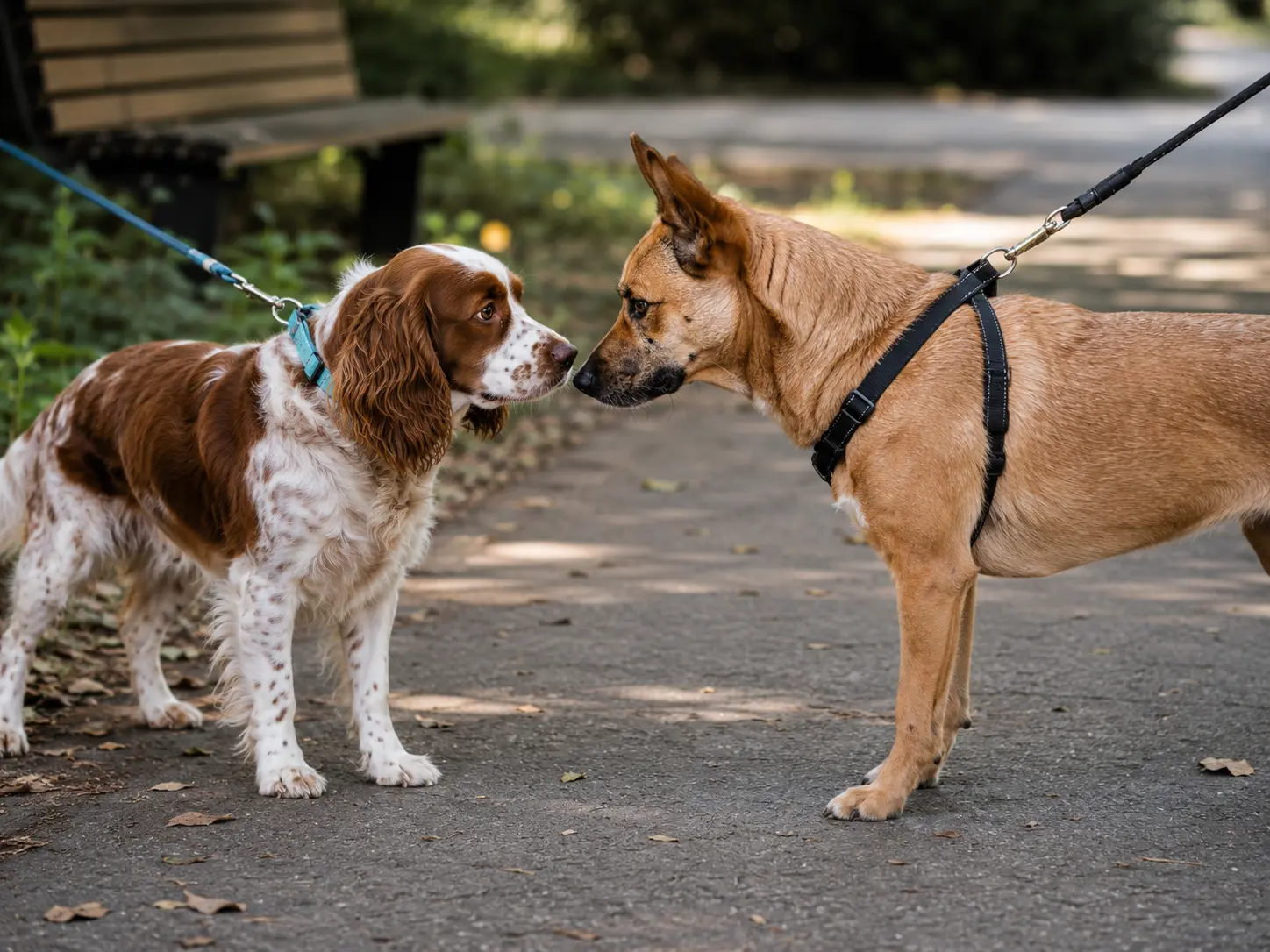
Dog barking at other dogs on walks is commonly linked to fear, frustration, excitement or emotional overload. Your dog may also pull, whine or lunge when another dog appears. This behavior can look aggressive, but barking alone does not prove that your dog wants to fight.
A leash can prevent a dog from approaching, retreating or creating space. A fearful dog may bark to make another dog leave, while an excited dog may bark because it cannot reach the other dog.
Understanding the likely motivation can help you manage walks more safely without increasing fear, frustration or physical risk.
Why Does My Dog Bark at Other Dogs on Walks?
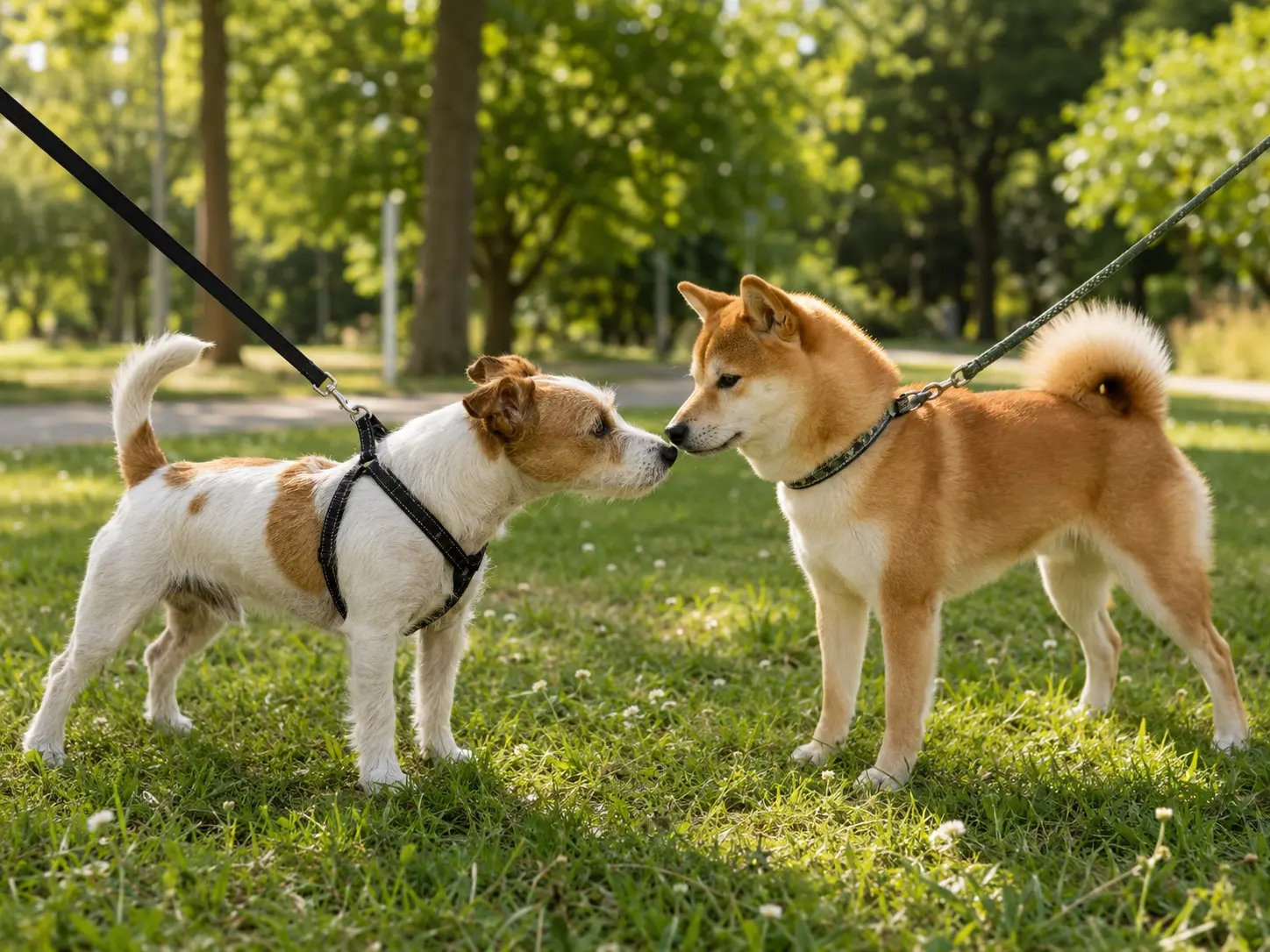
Your dog is most likely reacting because another dog creates fear, frustration, excitement or too much stimulation. Less commonly, pain, location-related guarding or another medical or behavioral change may contribute.
Barking is often the final part of the reaction. Earlier signs may appear several seconds before the dog begins vocalizing.
- Staring at the approaching dog
- Closing the mouth suddenly
- Slowing down or stopping
- Leaning forward or shifting backward
- Stopping normal sniffing
- Ignoring familiar cues
- Becoming physically stiff
Quick Behavior Comparison
| What You Observe | Possible Reason | Possible Need or Context |
|---|---|---|
| Barking while backing away | Fear or discomfort | More distance |
| Pulling and whining toward the dog | Greeting frustration | Access to the other dog |
| Bouncing, spinning or moving rapidly | Excitement, frustration or distress | Interaction, movement or more space |
| Freezing and staring | High arousal or uncertainty | Time, space or an escape route |
| Stronger reactions near home | Location-related sensitivity | Location association, territorial context or limited escape space |
| Sudden reactivity in a previously calm dog | Possible pain or medical discomfort | Avoidance of movement or contact |
Is My Dog Barking Because of Fear?
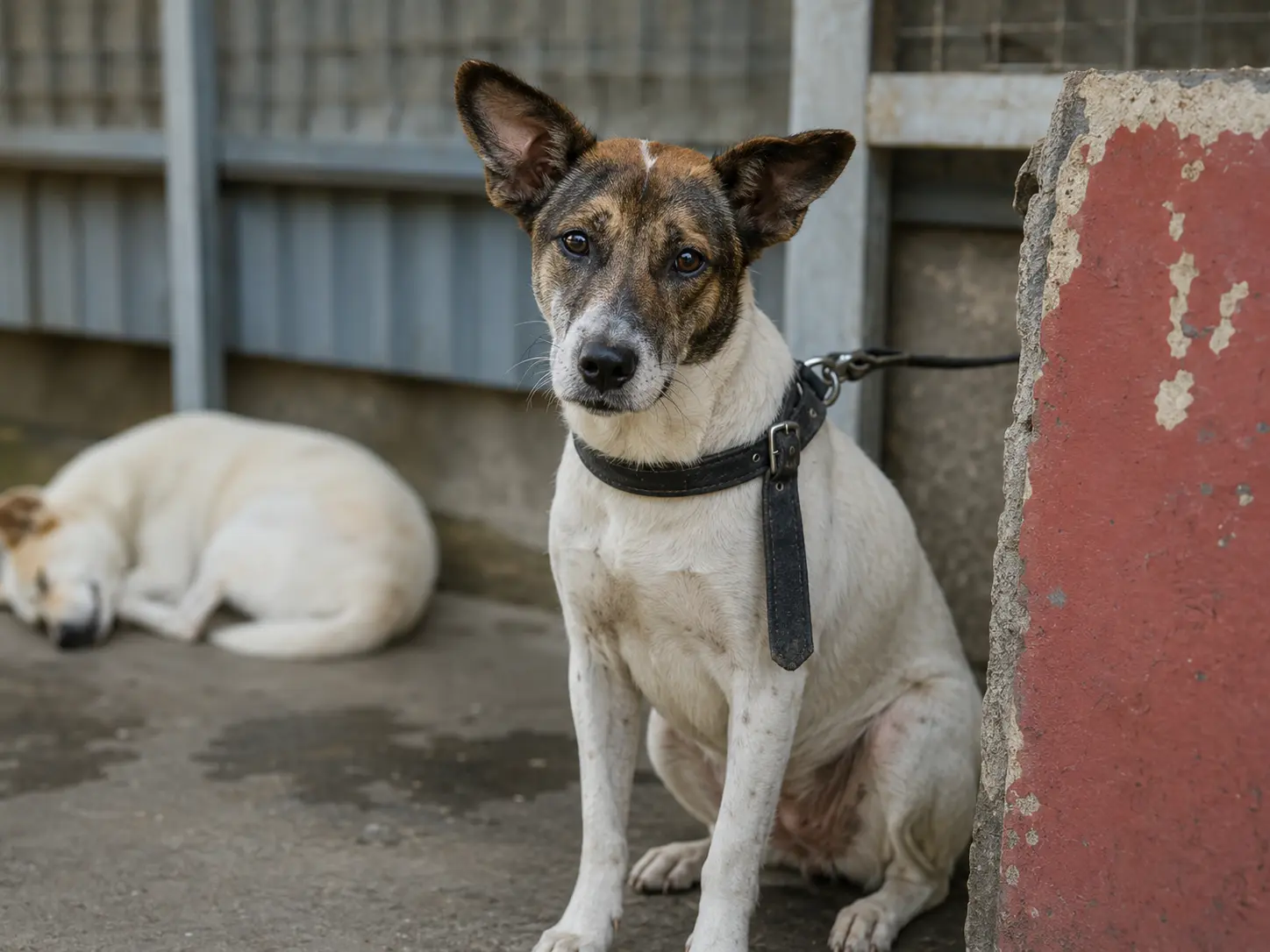
A fearful dog usually barks because it wants the other dog to stay away. The leash may intensify that fear because the dog cannot retreat freely.
Barking, growling or lunging may cause the other dog and its handler to cross the street, turn away or pass more quickly. From the dog’s perspective, reacting may appear to work because the uncomfortable situation ends.
Possible Signs of Fear
- Moving or leaning backward
- Lowering or tucking the tail
- Pulling the ears back
- Crouching or lowering the body
- Freezing as the other dog approaches
- Looking for an escape route
- Turning the head away before barking
- Refusing food that is normally accepted
- Reacting more strongly as distance decreases
Is My Dog a Frustrated Greeter?
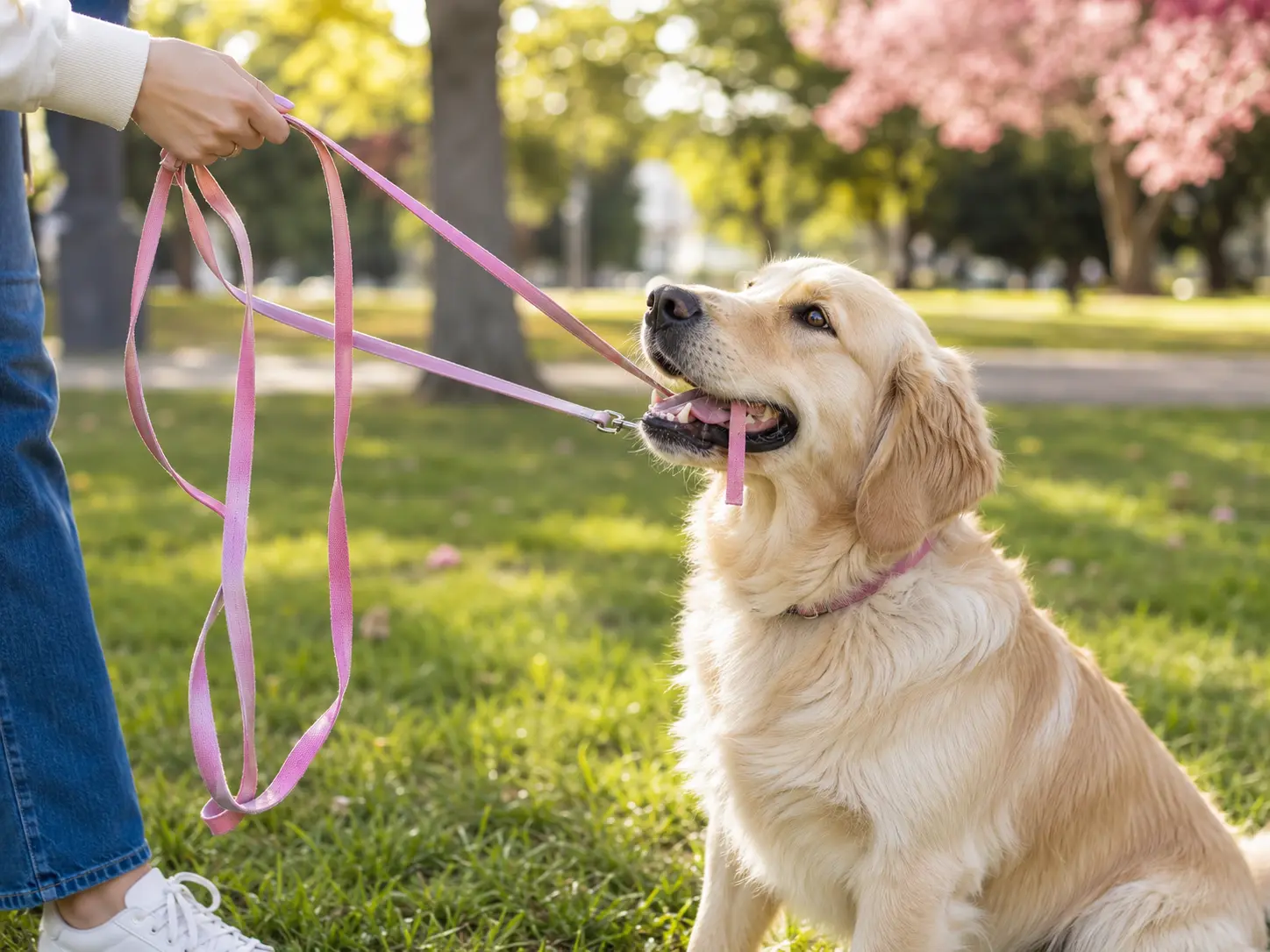
A frustrated greeter usually wants to approach another dog but becomes upset when the leash prevents it.
These dogs may behave appropriately in some controlled social situations. Their barking can come from blocked access rather than an intention to harm the other dog.
Signs of Greeting Frustration
- Pulling directly toward the other dog
- High-pitched barking or whining
- Bouncing, hopping or spinning
- Rapid tail and body movement
- A loose body between bursts of barking
- Looking between the dog and the handler
- Calming relatively quickly after the dog disappears
Allowing a dog to greet nearly every dog can create an expectation that seeing another dog always leads to interaction. When a greeting is not allowed, that expectation may turn into pulling, whining or barking.
Can Overexcitement Cause Barking and Lunging?
Yes. Some dogs bark because they become too excited to think, disengage or respond normally.
An overexcited dog may notice another dog, speed up, pull, vocalize and lose the ability to turn away. The reaction may become stronger when the dog is already stimulated by the environment.
Common Sources of Additional Stimulation
- Traffic and loud street noise
- Squirrels, cats or other wildlife
- Visitors or exciting activity before the walk
- Fast-paced walking
- Dogs barking from behind fences
- Several dogs appearing close together
- Busy, narrow or unfamiliar environments
Excitement and frustration often overlap. The dog wants to move closer, becomes overwhelmed when access is blocked and then begins barking or lunging.
This pattern is often seen in adolescent dogs, high-energy dogs and dogs that have had little practice calmly observing other animals.
Why Is My Dog Friendly Off Leash but Reactive on Leash?
A dog may be friendly off leash but reactive on leash because the two situations provide very different choices.
Without leash restriction, a dog may be able to:
- Approach in a curved path instead of head-on
- Pause before getting closer
- Move away when uncomfortable
- Sniff the environment instead of interacting
- End the greeting
- Adjust its speed and body position
On leash, those choices may disappear. A worried dog cannot retreat easily, while an excited dog cannot reach what it wants. Both situations can produce barking and lunging.
Can Repeated Leash Greetings Make the Problem Worse?
They can. When a dog regularly greets other dogs, the sight of a dog may begin predicting social access.
- Another dog appears.
- Your dog becomes excited.
- Your dog pulls toward it.
- The greeting occurs.
If pulling repeatedly leads to interaction, pulling can become part of the learned pattern. On a day when the greeting is not possible, frustration may increase.
Can Handler Tension Affect the Reaction?
Owners often shorten the leash, stop suddenly or pull the dog close when another dog appears. The dog can feel this change in movement and leash pressure.
This does not mean the handler caused the original behavior. However, sudden leash tension can increase physical restraint and may make some dogs feel trapped.
The practical goal is to notice the approaching dog early enough to create space without a sudden physical struggle.
Why Does My Dog React to Some Dogs but Ignore Others?
Dogs may react differently depending on another dog’s size, movement, approach, distance and previous associations.
Possible Dog-Specific Triggers
- Very large or very small dogs
- Fast-moving or running dogs
- Dogs pulling directly forward
- Dogs staring without changing direction
- Dogs appearing suddenly from doors or behind vehicles
- Dogs approaching head-on
- Dogs with unfamiliar shapes, coats or movement
- Dogs connected with a previous unpleasant encounter
Distance and Available Space Matter
The same dog may be tolerated across a wide road but trigger barking on a narrow sidewalk.
Narrow paths, apartment hallways, blind corners and parked vehicles can reduce escape options. Your dog may react when it feels unable to create enough distance.
Can Stress Build During the Walk?
Yes. Several smaller stressors can accumulate until the dog reacts strongly.
Reactions may be stronger:
- Near the end of a walk
- After poor sleep
- Following visitors or exciting play
- On crowded routes
- After several close encounters
What Should I Do When My Dog Starts Barking?
During an episode, the immediate goal is not obedience, correction or socialization. The goal is to prevent closer contact and help your dog leave the situation safely.
Stop Moving Toward the Other Dog
Do not continue approaching once your dog begins staring, stiffening or slowing down.
- Cross the street.
- Turn around.
- Step into a driveway.
- Move behind a parked vehicle.
- Use a hedge, wall or vehicle as a visual barrier.
Early movement is usually easier than controlling the dog after barking and lunging have started.
Use a Practiced Turn
Teach a simple phrase such as “This way” and practice turning during quiet walks.
Avoid repeatedly pulling backward against a dog that is lunging forward. Continuous pressure can increase physical resistance and frustration.
Increase Distance Until Your Dog Can Respond
You may have created enough space when your dog can:
- Turn its head away
- Relax its face and body
- Resume sniffing
- Respond to a familiar cue
- Take food normally
- Walk without repeatedly looking back
Eating one treat does not always mean the dog has fully recovered. Continue watching the whole body.
Do Not Force a Greeting
Do not arrange a greeting immediately after barking to prove that the dogs are friendly.
For a fearful dog, forced contact may increase discomfort. For a frustrated dog, gaining access after barking may teach that reacting eventually leads to a greeting.
Use Food Before Full Escalation
Food can help your dog move away or focus at a safe distance. Use it when your dog notices the trigger but can still think and respond. Do not use a treat to lure your dog closer to the trigger; use food at a safe distance to reward calm behavior or support moving away.
Watch for early signs such as:
- The mouth suddenly closing
- Normal sniffing stopping
- Walking slowing down
- The body becoming stiff
- Weight shifting forward or backward
- Prolonged staring
- Ignoring an easy cue
Shorten the Walk When Recovery Is Difficult
Your dog does not need to complete the planned route after a stressful reaction.
- Return home.
- Move to a quieter area.
- Allow calm sniffing.
- Replace part of the walk with indoor enrichment.
- Choose a shorter potty walk on difficult days.
Simple In-the-Moment Plan
See the dog → create space → block the view → move away → allow recovery.
How Can I Practice Calm Behavior Around Other Dogs?
Long-term practice should begin where your dog can notice another dog without barking, lunging or becoming too tense to respond. The goal is gradual improvement, not forcing your dog closer.
Practice “This Way” in a Quiet Area
Practice the turn when no dogs are nearby. Say “This way”, turn smoothly and reward your dog for moving with you. Build the response before using it around real triggers.
Find Your Dog’s Safe Trigger Distance
Begin far enough away that your dog can notice the other dog, keep a relatively loose body, take food and turn away. If your dog freezes, stares continuously or cannot respond, increase the distance.
Reward Calm Observation
Reward your dog for calmly noticing the other dog and then looking away, sniffing, checking in with you or continuing to walk. Do not use food to lure your dog closer to the trigger.
End After Three Successful Repetitions
Keep sessions short. After three calm, successful repetitions, leave the area or finish the exercise. Stop sooner if your dog becomes tense, stops eating or struggles to recover.
Measure Distance and Recovery Time
Track whether your dog can stay calm at a slightly shorter distance over time and how quickly normal sniffing, movement and attention return after seeing another dog. Faster recovery is meaningful progress even when the working distance has not changed.
What Can Make Leash Barking Worse?
Punishment, forced greetings and repeated close exposure may intensify the fear, frustration or excitement behind the barking.
Yelling and Leash Corrections
Shouting or jerking the leash can add more tension to an already difficult situation.
Punishing growling is particularly concerning because growling communicates discomfort. Stopping the sound does not necessarily remove the reason behind it.
Walking Directly Toward the Trigger
Do not wait for barking before creating space. Move away when you first notice fixation, stiffness, slowing down or another early warning sign.
Random Leash Greetings
Occasionally allowing greetings may keep your dog guessing about whether it will be permitted to approach.
Forced Exposure
Repeatedly taking a frightened dog close to other dogs does not guarantee that it will become comfortable. The dog may instead practice fear, barking and lunging.
Work at a distance where your dog can notice the other dog without becoming overwhelmed.
Equipment Used Only to Suppress Barking
Equipment that causes pain, discomfort or fear may interrupt the noise without resolving why the dog is reacting.
Management should focus on safety, suitable distance and calm behavior rather than simply suppressing warning signals.
Avoid These Common Mistakes
- Forcing the dogs to meet
- Waiting for full barking before moving away
- Walking directly toward a visibly tense dog
- Allowing pulling to lead to greetings
- Dragging a frightened dog closer
- Punishing growling or retreat attempts
- Testing friendliness by releasing the leash
Why Is My Puppy Barking at Dogs on Walks?
A puppy may bark because of excitement, uncertainty, fear or limited experience.
Do not assume the behavior will automatically disappear with age. Repeated pulling, forced greetings and frequent barking can become established habits.
What to Do With a Barking Puppy
- Create enough distance for calm observation.
- Reward voluntary attention toward you.
- Do not require greetings with every dog.
- Choose calm and suitable social partners.
- Avoid dragging the puppy toward another dog.
- Leave when the puppy cannot recover.
When Should I Contact a Veterinarian or Behavior Professional?
Professional help is appropriate when the behavior is sudden, escalating, difficult to control or creating a bite risk.
Contact a Veterinarian When:
- The behavior appeared suddenly.
- Your dog shows stiffness or limping.
- Touching the neck, back or hips causes discomfort.
- Sleep, appetite or normal activity has changed.
- An older dog develops new reactivity.
- Your dog is less willing to exercise or play.
- General irritability has increased.
Seek Qualified Behavior Support When:
- Snapping or biting has occurred.
- Your dog redirects toward the leash, clothing or handler.
- Your dog cannot recover after the trigger leaves.
- Normal walks feel unsafe.
- Reactions happen at very large distances.
- The behavior is becoming more frequent or intense.
- Children or vulnerable adults may be exposed.
- Physical control is becoming difficult.
A professional can help determine whether your dog is primarily seeking distance, seeking access, guarding space, experiencing pain or becoming overwhelmed by general arousal.
How Can a Seven-Day Trigger Log Help?
A trigger log can reveal patterns that are difficult to notice during a stressful encounter.
Record the following information for seven days:
| What to Record | Example |
|---|---|
| Trigger | Large dog walking quickly |
| Location | Narrow sidewalk near home |
| Approximate distance | About 35 feet |
| First visible sign | Mouth closed and walking slowed |
| Reaction | Barked and pulled forward |
| Movement direction | Forward, then sideways |
| Food response | Ate after crossing the street |
| Recovery time | About two minutes |
| Earlier stressors | Dog barking behind a fence |
| Outcome | Relaxed behind a visual barrier |
What Patterns Should You Look For?
- Pulling and whining across several encounters may suggest greeting frustration.
- Moving backward, crouching or tucking the tail may suggest fear.
- Stronger reactions near home may indicate a location pattern.
- Reactions that worsen throughout the walk may reflect accumulated stress.
- A sudden change across different settings may justify a veterinary examination.
A written log can also give a veterinarian or behavior professional more useful information than the general statement, “My dog hates other dogs.”
Sources and Further Reading
The safety and training guidance in this article is consistent with veterinary and behavior resources that emphasize trigger management, reward-based training, safe distance and professional support when bite risk or sudden behavior change is present.
Frequently Asked Questions
1. Does barking at other dogs mean my dog is aggressive?
No. The underlying emotion may be fear, frustration or excitement, but a highly aroused dog may still snap or bite. Manage the situation carefully and create distance before the reaction escalates.
2. Why does my dog bark at some dogs but not others?
Your dog may react to particular sizes, movements, approach styles, distances or previous experiences. The available space, location and your dog’s existing stress level can also influence the reaction.
3. Can my dog be friendly off leash but reactive on leash?
Yes. Off leash, a dog has more freedom to approach, pause or move away. Leash restriction may increase fear in a worried dog or frustration in a dog that wants to approach.
4. Should I let my dog greet other dogs to stop the barking?
Not during or immediately after a reactive episode. Forced greetings may worsen fear, while gaining access after barking may reinforce frustrated pulling and vocalizing. Calm neutrality is generally a safer goal.
5. Will my puppy grow out of barking at dogs?
Possibly, but it should not be assumed. Puppies that repeatedly practice barking and pulling may continue the behavior as they mature. Calm observation, suitable distance and appropriate social experiences are more helpful than forced interaction.
6. Should I stop walking my reactive dog?
Not necessarily. Walks may need to be shorter, quieter and more predictable. Choose routes with good visibility, enough space and easy escape options. On difficult days, short potty walks combined with rest and enrichment may be safer.
Final Takeaway
A dog barking at other dogs on walks is not automatically trying to start a fight.
Your dog may be communicating:
- “Stay away.”
- “Let me get closer.”
- “I am too excited.”
- “I do not know what to do.”
- “I am uncomfortable.”
- “I need more space.”
Look at whether your dog moves forward or backward, whether the body is loose or stiff, how close the other dog is and how long recovery takes.
During an episode, create distance instead of forcing a greeting or punishing the warning. Arrange veterinary or qualified behavioral support when the reaction appears suddenly, becomes more intense, involves biting or makes normal walks unsafe.
 ✓
✓