


What should you buy for attention barking?
For a dog that barks when you sit on the couch, open your laptop, or take a call, the most practical starting setup is a clearly defined settle mat plus fast access to small rewards. The mat gives the dog an alternative job; the treat pouch helps you reinforce quiet before barking earns attention. Add a clicker only when your timing is unclear. A LickiMat or stuffed KONG is better for predictable short sessions, but it manages the moment rather than teaching calm by itself.
VCA advises reinforcing calm and quiet behavior instead of accidentally rewarding attention-getting barking.
Quick product matches by barking trigger
How we researched
Product details and changing availability were checked in July 2026 using official manufacturer pages, major retailer listings, recurring customer-feedback patterns, independent demonstrations, and Reddit discussions about couch-time, work-call, and rapid-repeat demand barking. Behavioral and safety guidance was cross-checked with VCA, AKC, AVSAB, ASPCA, and Cornell University College of Veterinary Medicine. We did not personally test every product in this guide.
Quick comparison
| Product | Strongest match | Decision-useful feature | Main limitation |
|---|---|---|---|
| Kurgo Loft Wander Dog Bed | A portable, visible place cue | Non-slip waterproof base; rolls up | More bed than needed for some homes; not chew-proof |
| PetSafe Treat Pouch Sport | Faster reward delivery | Stays open, divided pocket, belt or clip attachment | Hinged opening may be awkward one-handed |
| Karen Pryor i-Click Original | Marking very brief quiet pauses | Soft click and press-anywhere design | Still requires food reinforcement and practice |
| LickiMat Tuff Soother | Short, predictable owner-busy periods | Freezer and dishwasher friendly | Management only; supervise chewers and food guarders |
| KONG Classic | Longer food-stuffed enrichment | Stuffable natural rubber in multiple sizes | Classic rubber is for average, not extreme, chewers |
Amazon stock and model availability can differ between the US, UK, Canada, and Australia. Confirm the exact size, seller, and return terms before ordering.
Product recommendations for attention barking
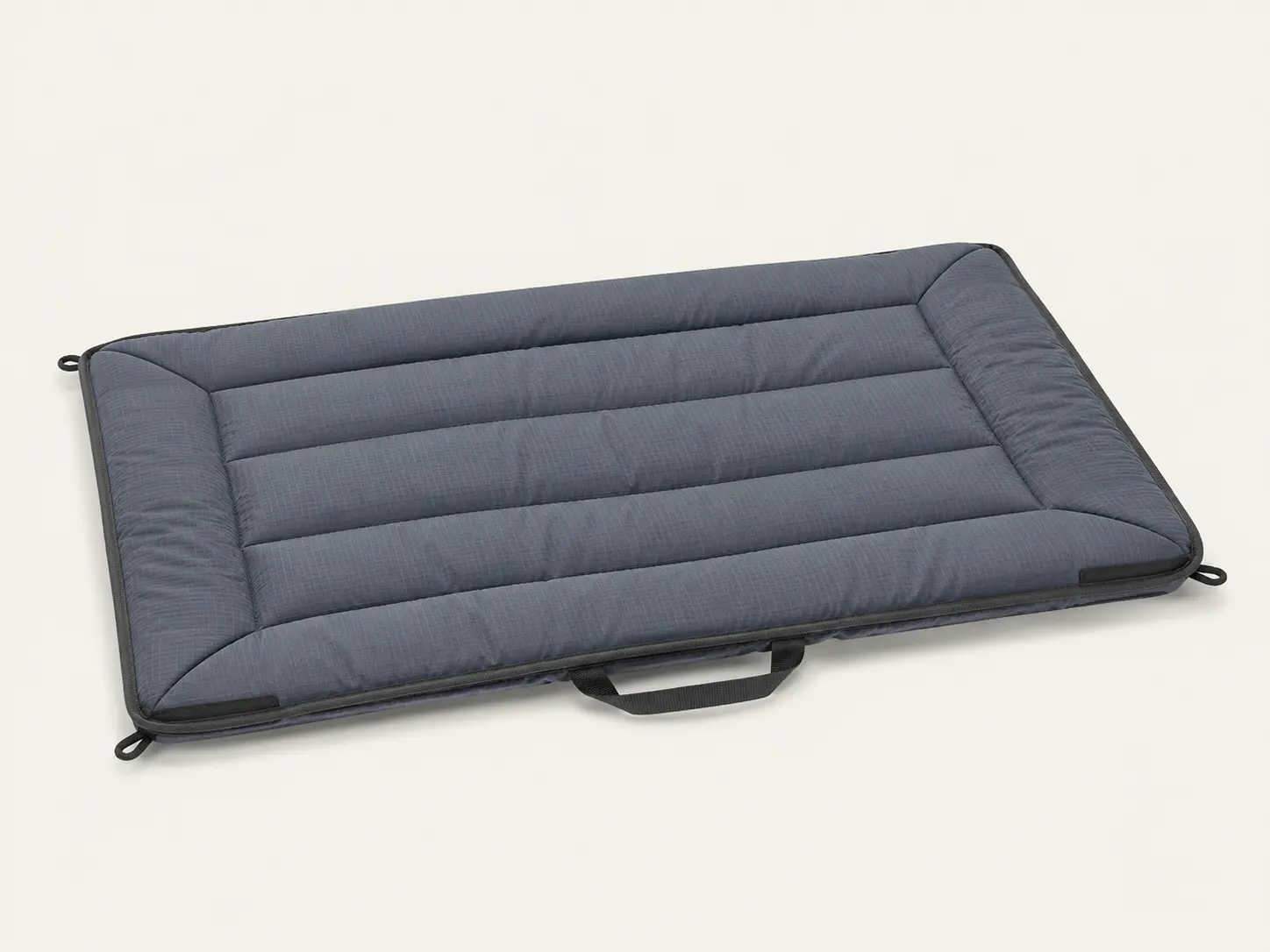
Kurgo Loft Wander Dog Bed
Suitable for: dogs that need an obvious, repeatable place beside the couch, desk, or dining area. The bed is not sold as a behavior cure, but its defined shape, non-slip waterproof bottom, and roll-up design make it practical as a portable “place” target.
Kurgo lists medium at 27 × 36 inches (69 × 91 cm) and large at 36 × 48 inches (91 × 122 cm). The ripstop top, polyfill, carry handle, and gentle-cycle washability are useful when the same cue needs to travel between rooms or locations.
Main limitation: it will not create calm without gradual training. Avoid it for dogs that shred bedding, guard resting spaces, or need a supportive orthopedic bed.
Setup tip: place rewards on the mat, add duration slowly, and use a clear release word.
Check Availability on Amazon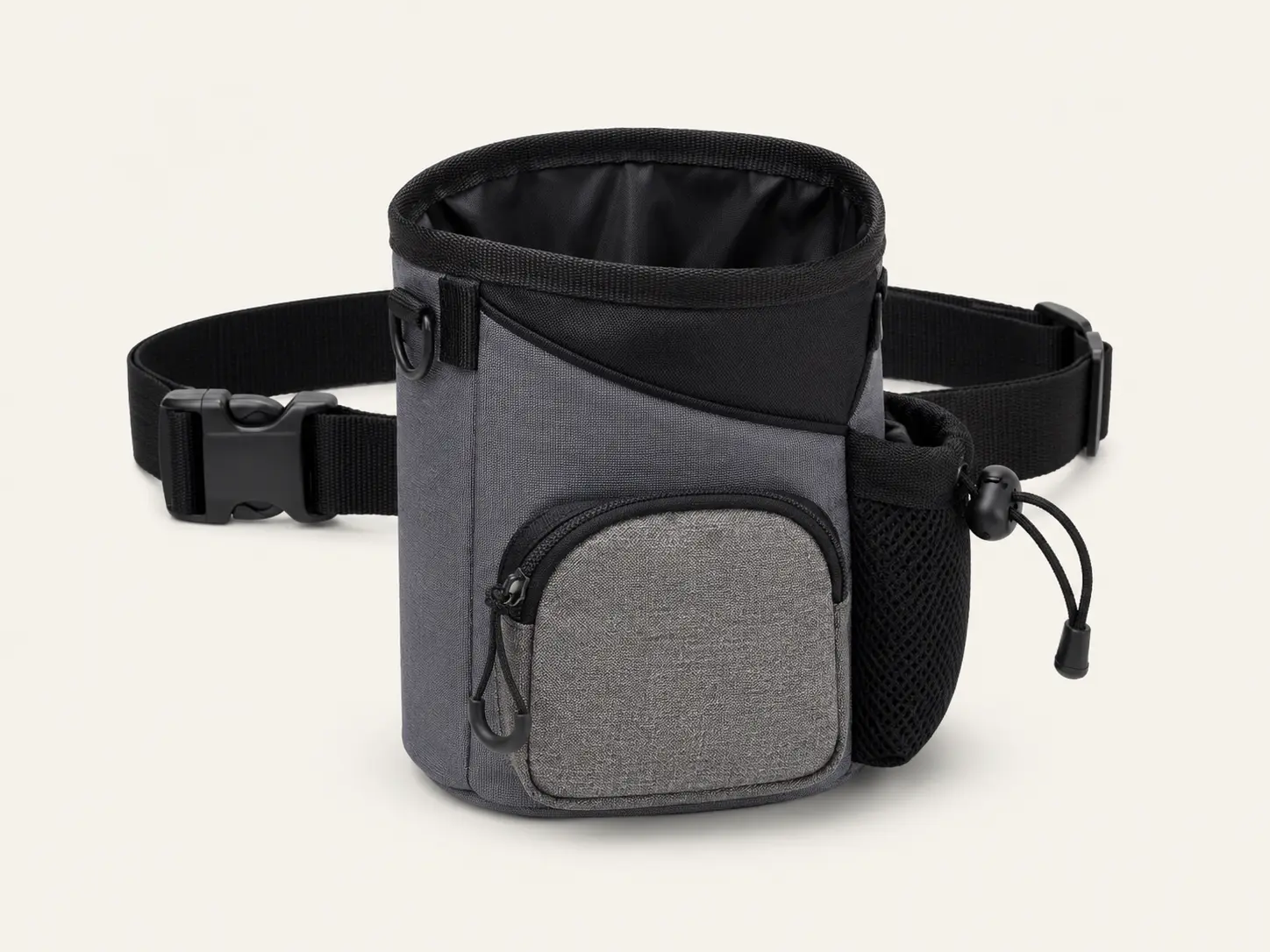
PetSafe Treat Pouch Sport
Suitable for: owners who notice a quiet pause but lose it while reaching for treats. PetSafe lists a compartment that stays open during training and closes with a touch, an internal divider, a belt clip, an adjustable belt, and cold-cycle machine washing.
At 7.5 × 6.5 inches (19 × 16.5 cm), it is large enough for two reward values and basic walk items. That makes it more useful than a pocket when you are repeatedly reinforcing calm beside a desk or sofa.
Main limitation: independent testing has found the hinged mouth difficult to open one-handed. The pouch also does nothing by itself; poor timing can still reinforce barking.
Who should avoid it: dogs that jump, paw, or bite at a visible pouch unless it can be positioned safely behind the hip.
Check Current Price on Amazon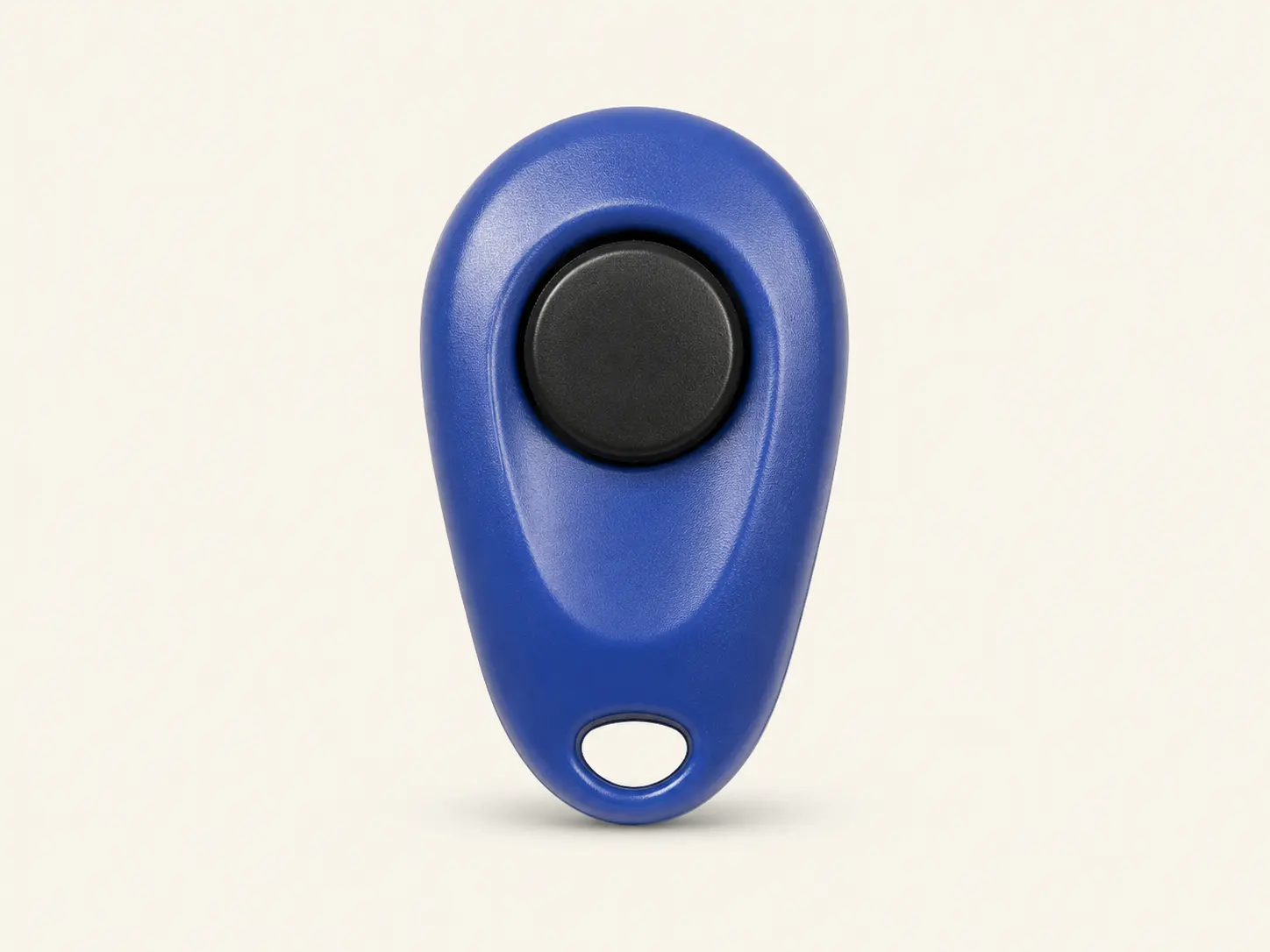
Karen Pryor i-Click Original Clicker
Suitable for: dogs that offer only a split-second pause and owners who need a consistent marker. The manufacturer describes the i-Click as softer than a traditional box clicker, small enough to hide in the palm, and clickable regardless of how it is held.
That design is useful indoors, where a loud marker can be unnecessary. It can also help separate the exact calm moment from the treat that follows.
Main limitation: a click is not a reward. You must first pair it with food, and very sound-sensitive dogs may still prefer a quiet verbal marker such as “yes.”
Buying caution: confirm the seller and product identity; users have reported inconsistent third-party versions of popular clickers.
View Latest Price on Amazon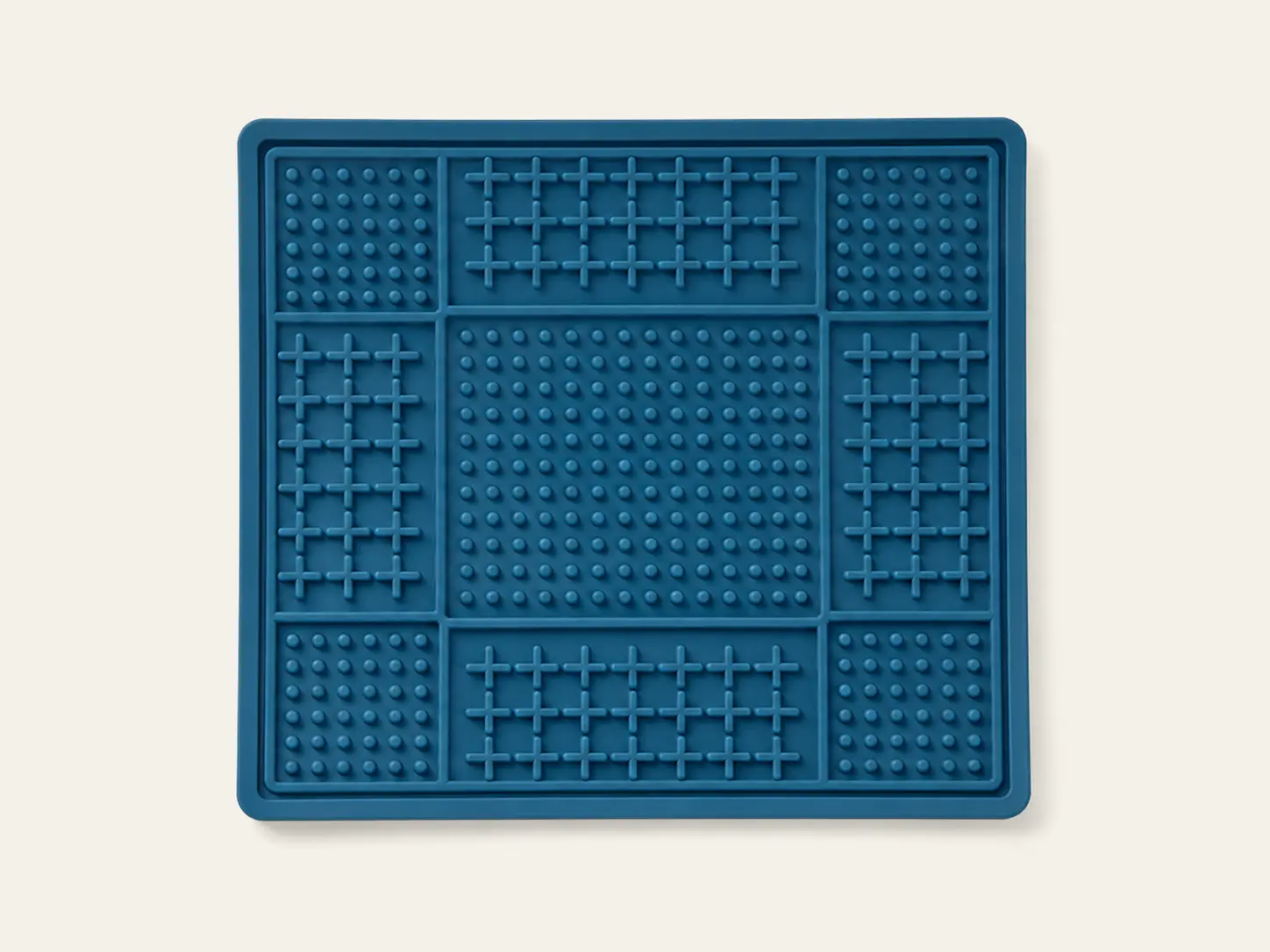
LickiMat Tuff Soother
Suitable for: food-motivated dogs that need a quiet task during a scheduled call, meal, grooming session, or short TV period. LickiMat says the Tuff range handles wet, raw, dry, liquid, and spreadable foods and can be used in the dishwasher, microwave, or freezer.
The Soother texture is most relevant for soft or runny food. Preparing it in advance can reduce frantic last-second handling when you know the trigger is about to start.
Main limitation: it manages a period of owner inattention; it does not teach a durable settle cue. Giving it immediately after barking can also make barking part of the reward sequence.
Who should avoid it: dogs with food guarding, relevant allergies, strict calorie limits, or a habit of chewing and swallowing mat material. Supervise the first introductions.
Check Availability on AmazonOfficial model, material, cleaning, and supervision guidance
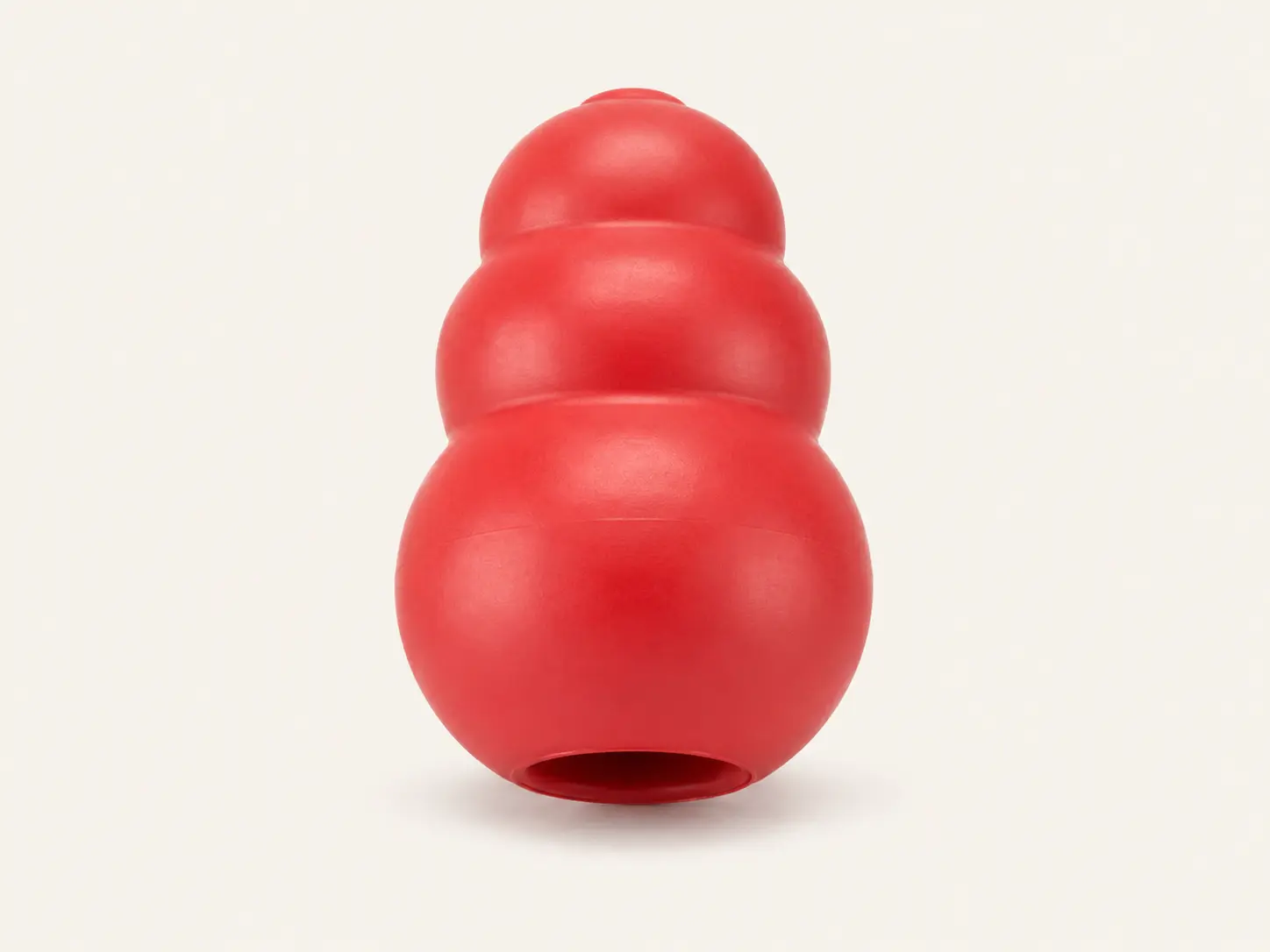
KONG Classic
Suitable for: average chewers that stay engaged with a food-stuffed rubber toy longer than with a flat lick mat. KONG lists the red Classic as natural rubber for average adult chewers and designed for stuffing and freezing.
It is the more practical management option when a dog needs a mouth-and-brain task through a longer laptop session. KONG offers six sizes and advises sizing up when the dog falls between sizes.
Main limitation: the red Classic is not the strongest version. Power chewers may need KONG Extreme, and a damaged or undersized toy should be removed.
Who should avoid it: dogs that guard food toys, swallow rubber pieces, or need dietary ingredients tightly controlled. Count stuffing toward daily calories.
Check Current Price on AmazonOfficial KONG Classic features and safety warning · Official size and rubber-strength guide
Before you buy: four questions that prevent the wrong purchase
- Is the barking truly for attention? Barking only when alone, panic, pacing, escape attempts, or sudden behavior change points to a different problem.
- Does your dog need training or temporary management? Choose a mat and reward tools for learning; choose a food toy for a predictable short period.
- Can your dog safely use fabric, rubber, and food items? Consider chewing strength, food guarding, allergies, calories, and multi-dog separation.
- Will you use the item before barking starts? A toy repeatedly delivered after barking can become the reason the dog barks.
Skip correction-first products. AVSAB’s current position recommends reward-based methods and advises against aversive tools for behavior modification. Read the humane training position.
A short setup plan
- Meet basic needs first: toilet break, water, appropriate exercise, and a brief check for discomfort.
- Place the mat near the usual trigger location and reward looking at, stepping on, then lying on it.
- Build duration in small increments. AKC recommends adding duration, distance, and distraction separately rather than all at once. See the place-cue steps.
- Prepare any LickiMat or KONG before the call or TV session. Reward spontaneous calm at other times so the dog does not learn a bark-then-treat routine.
When another product is unlikely to solve it
Book a veterinary check when barking or clinginess begins suddenly, especially with panting, touch sensitivity, irritability, sleep changes, or reduced mobility. Cornell lists increased neediness and uncharacteristic irritability among possible pain-related behavior changes. Review Cornell’s pain signs.
Barking that occurs mainly during absence especially with pacing, destruction, house-soiling, or escape attempts may be separation-related rather than attention barking. ASPCA explains the common signs. Growling, snapping, resource guarding, or escalating distress deserves help from a qualified reward-based trainer or veterinary behavior professional.
Frequently asked questions
Why does my dog bark again immediately after I reward quiet?
The reward may be arriving so close to the bark that the dog learns a bark–pause–treat sequence. Reward calm before the usual trigger, mark spontaneous quiet, and increase the required quiet duration gradually rather than waiting for a full barking episode.
Should I completely ignore attention barking?
First confirm the dog does not need the toilet, water, medical help, or relief from fear. For genuine demand barking, avoid eye contact, talking, touching, toys, or treats during barking, then reinforce a calm alternative. Do not use “ignore it” as a plan for panic, aggression, or separation distress.
Is a LickiMat better than a KONG for work calls?
A LickiMat is usually simpler for a short, supervised period and soft spreads. A stuffed and frozen KONG can last longer for dogs that enjoy extracting food. Choose by chewing style, food safety, cleanup, and the length of the quiet period not by which product is more popular.
What should I use if my dog destroys settle mats?
Do not leave a fabric mat available for chewing. Practice with a supervised towel, a durable raised platform, or another clearly defined surface, and remove it after the session. If destruction reflects panic or inability to settle, address the underlying behavior instead of repeatedly replacing mats.
How long does place training take?
There is no reliable fixed timeline. A dog may learn to step onto a mat quickly but need much longer to remain relaxed while you work or watch TV. Progress is more useful when measured by quiet duration and lower prompting, not by a promised number of days.
Final recommendation
Start with one clear settle surface and the PetSafe Treat Pouch Sport. Add the i-Click only when you need more precise timing. Use the LickiMat Tuff Soother or a correctly sized KONG Classic before predictable calls or TV sessions, while continuing to reward calm outside those moments. Do not buy another barking gadget when the pattern is sudden, separation-related, painful, aggressive, or driven by distress.
 ✓
✓