

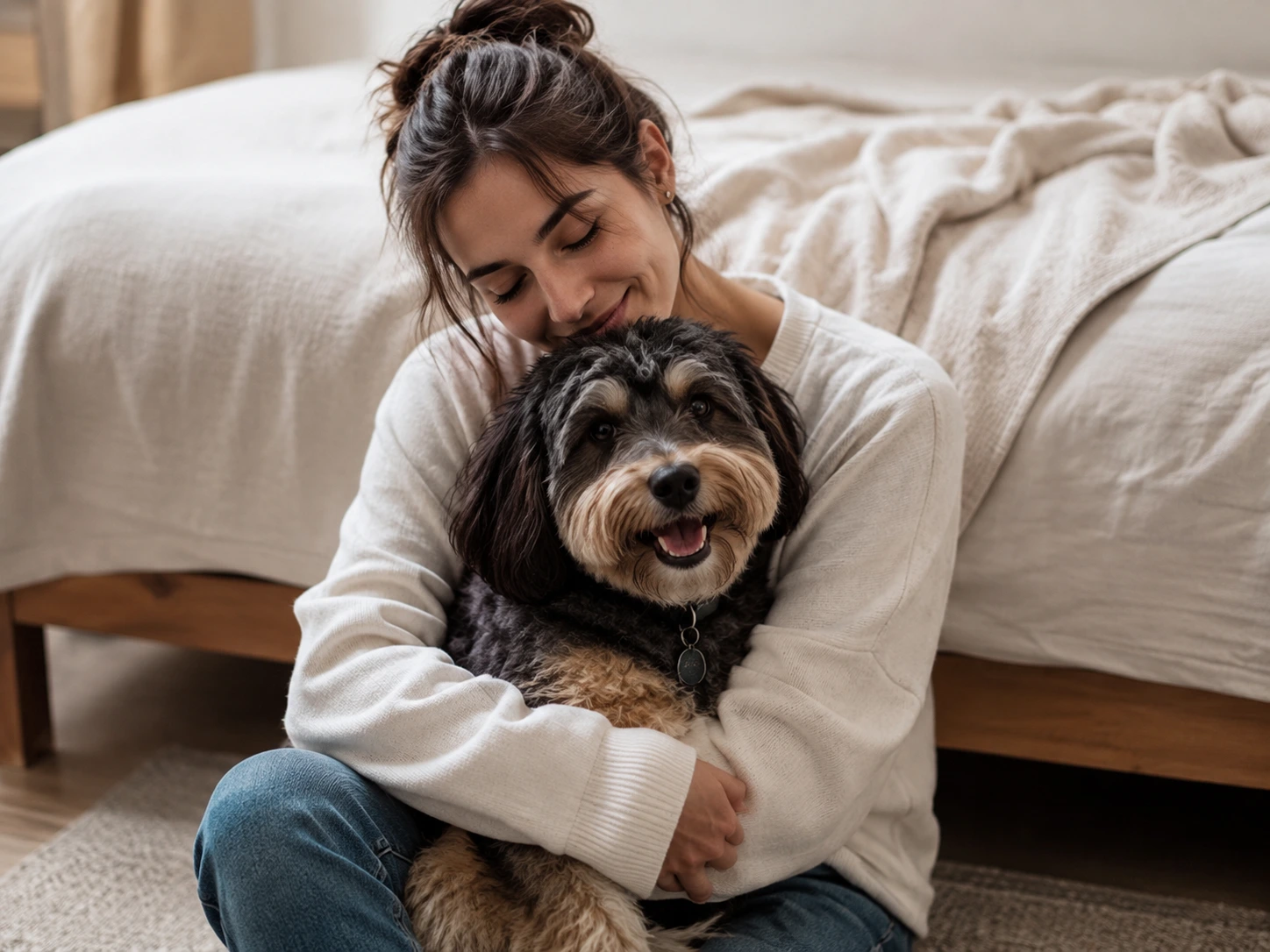
Daycare is usually the better starting option for a dog that enjoys compatible dogs and can rest in a group environment. An in-home sitter is usually better for a dog that prefers familiar surroundings, dislikes unfamiliar dogs, or stays calm when another trusted adult is present. If another person’s presence is the key difference, see separation anxiety vs isolation distress.
Working full time with a dog with separation anxiety does not make you an irresponsible dog owner. A dog that struggles when left alone is not being destructive or noisy on purpose.
Which option is better for your dog?
Choose the option where your dog can eat, drink, rest, and remain physically safe.
| Your dog’s behavior | Better starting option | Reason |
|---|---|---|
| Enjoys compatible dogs and rests in group settings | Short daycare trial | The dog may be comfortable with supervised group company. |
| Stays calm at home when a trusted adult remains | In-home sitter | Familiar surroundings and human company may reduce distress. |
| Remains calm for several hours before becoming restless | Timed walker or drop-in | A visit may prevent the dog from exceeding the duration they currently tolerate. |
| Panics within minutes of departure | Continuous coverage and professional guidance | A short midday visit leaves most of the distress period uncovered. |
| Dog-reactive but comfortable with familiar people | In-home sitter | Standard group daycare may add fear or conflict. |
| Cannot settle with unfamiliar dogs or people | Familiar caregiver plus veterinary support | Both ordinary daycare and a new sitter may add stress. |
This table is a practical decision guide, not a diagnostic test.
If you must go to work tomorrow
Arrange temporary coverage instead of using a full workday to test whether your dog will eventually settle.
- Test a trusted adult. Leave briefly while someone your dog already knows remains in the home.
- Record a short absence. Watch whether your dog rests, paces, vocalizes, refuses food, or attempts to escape.
- Request a daycare assessment. Do not place your dog directly into a full group day without an evaluation.
- Confirm sitter hours in writing. Ask exactly when the sitter arrives, leaves, and whether the dog will be left unattended.
- Contact a veterinarian if your dog may be injured. Broken nails, damaged teeth, heavy drooling, or frantic escape attempts require professional help. [1]
How can you tell whether your dog is distressed when left alone?
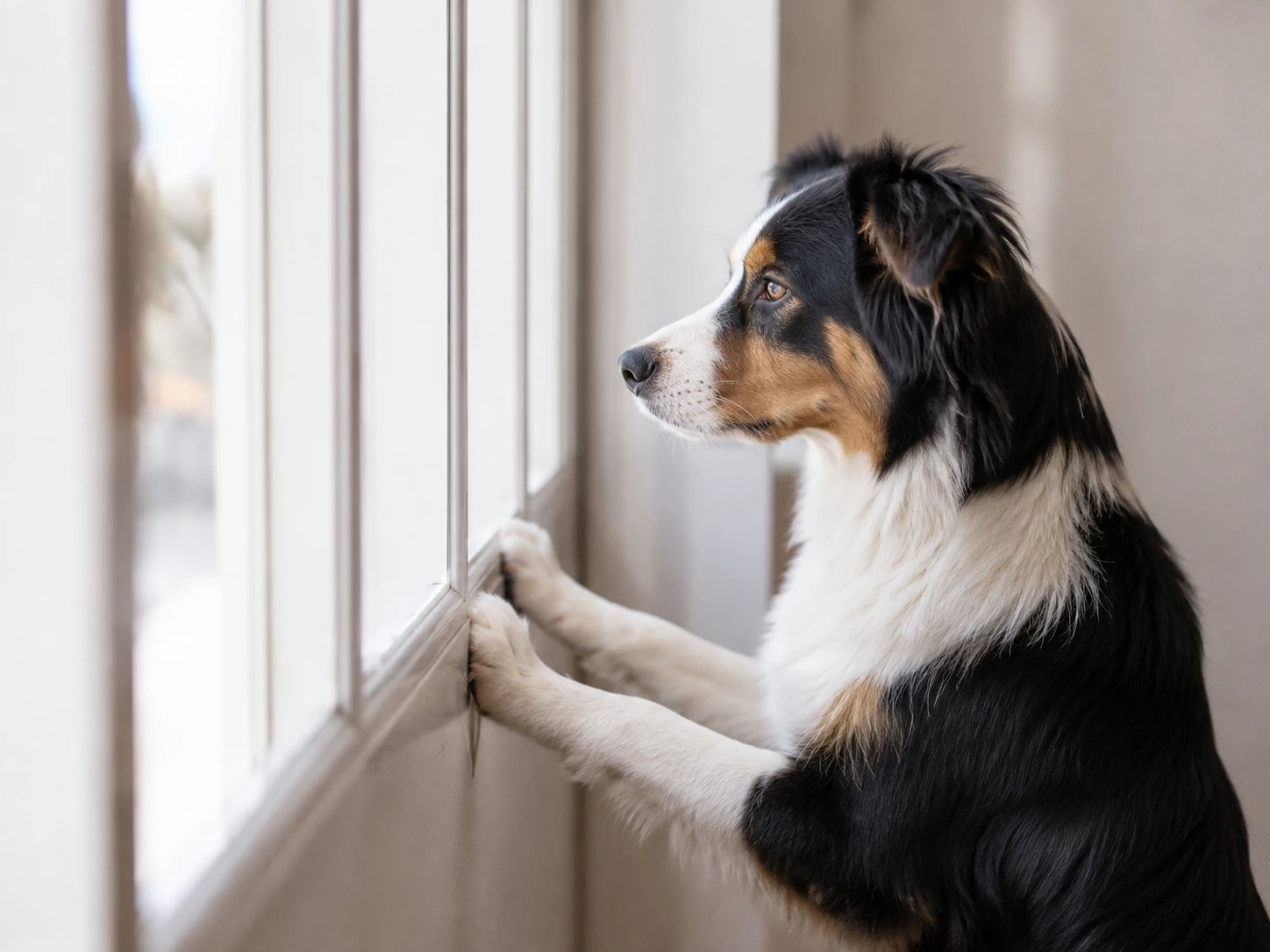
Common warning signs include persistent barking, pacing, panting, drooling, escape attempts, exit-focused damage, food refusal, and toileting mainly during absences. [1] [2] [3]
One bark, one damaged object, or one accident does not prove separation anxiety. Outside noise, boredom, incomplete house training, pain, age-related changes, and confinement distress can produce similar behavior. The separation-anxiety symptoms guide can help you compare the overall pattern.
Use a camera instead of guessing
A short recording can show whether your dog settles after a few minutes or continues pacing, panting, vocalizing, and watching the exit. Video can also reveal whether hallway noise, window activity, or confinement is contributing to the behavior. [3]
Test whether another person’s presence helps
If your dog remains calm when a trusted person stays, an in-home sitter is more likely to help.
The American Society for the Prevention of Cruelty to Animals notes that some dogs remain comfortable as long as another person is present, although this does not apply to every dog. [2]
Dog daycare vs pet sitter: what is the practical difference?
Daycare usually suits dogs that enjoy group activity, while an in-home sitter usually suits dogs that prefer quiet, routine, and individual attention.
| Decision factor | Dog daycare | In-home pet sitter |
|---|---|---|
| Environment | Facility with unfamiliar dogs, staff, sounds, and routines | The dog remains in the familiar home |
| Human attention | Shared among several dogs | Individual or household-specific care |
| Dog interaction | Usually part of the service | Can usually be avoided |
| Potential benefit | Supervised company for dogs that enjoy groups | Human company without changing the dog’s environment |
| Potential drawback | Transport stress, overstimulation, illness exposure, or group conflict | High continuous-care cost or insufficient coverage |
| Does it treat separation anxiety? | No; it manages the owner’s absence | No; it manages the absence while company is present |
Daycare and pet sitting can prevent repeated full-day distress while gradual alone-time training continues. Neither option automatically teaches a dog to stay home alone. [2] [4]
How much do daycare, dog walking, and pet sitting cost?
Published commercial planning figures place daycare near $40 per day, a 30-minute dog walk near $21.45, and pet-sitter starting rates in many US cities at roughly $13–$20 per hour. [9] [10] [11]
These are planning figures from commercial platforms, not guaranteed local prices or independent national standards.
| Service | Example rate | Five office days | Actual coverage |
|---|---|---|---|
| Dog daycare | About $40 per day | About $200 | Facility care during booked hours |
| One 30-minute walk daily | About $21.45 per walk | About $107.25 | One short visit only |
| Hourly sitter at $20 per hour | $20 × required hours | $800 for eight hours per day | Depends on agreed continuous-care hours |
Weekly totals are simple calculations from the listed example rates. Booking fees, tips, holidays, transportation, medication, extra pets, cancellations, and late-pickup charges are not included.
Ask about possible additional charges
- Booking or platform fees.
- Holiday pricing.
- Additional-dog fees.
- Puppy or medical-care charges.
- Transportation or daycare pickup.
- Late daycare collection.
- Cancellation fees.
- Continuous-care premiums.
Could a midday dog walker be enough?
A walker may be enough only when your dog remains calm before and after the visit.
A walk provides exercise and a bathroom break. It does not help a dog that panics for several hours before the walker arrives and resumes panicking after the walker leaves.
Use camera footage to estimate when your dog first stops resting and begins pacing, barking, panting, or watching the exit. Arrange a visit before that point rather than after the dog has already spent hours distressed.
This is a planning framework, not a validated clinical assessment.
How do you choose a suitable dog daycare?
Choose daycare only when your dog enjoys compatible dogs, accepts unfamiliar staff, travels calmly, and can rest in the facility.
VCA Animal Hospitals states that standard group daycare is unlikely to suit dogs that are aggressive toward other dogs or are shy and prefer being alone. [5]
Questions to ask the daycare
- How is each new dog assessed?
- How are dogs grouped by size, temperament, and play style?
- How many dogs does each staff member supervise?
- How much time is active play versus structured rest?
- Is a quiet area available?
- What training or interruption methods are used?
- Are staff trained in canine body language and first aid?
- How are injuries and dog conflicts documented?
- Which emergency veterinary clinic is used?
Health and illness questions
Ask the facility and your veterinarian which vaccination and disease-prevention requirements apply to your dog.
The American Animal Hospital Association recommends adjusting non-core vaccination decisions according to lifestyle and exposure risk. [7]
- Which vaccination records are required?
- What is the policy for coughing, vomiting, diarrhea, or contagious illness?
- When can a dog return after being sick?
- How are rooms, bowls, crates, and rest areas cleaned?
- How are owners notified about a possible disease outbreak?
Avoid the daycare if:
- No behavior assessment is performed.
- Staff cannot explain supervision ratios.
- No quiet area or rest period is provided.
- Dogs are forced directly into a group.
- Punishment or intimidation is used.
- Vaccination and illness policies are unclear.
- Staff refuse to discuss incidents or injuries.
- Your dog repeatedly refuses to enter and the concern is dismissed.
A tired dog is not automatically a relaxed dog
Also watch whether your dog enters willingly, rests during the visit, behaves normally afterward, and remains comfortable before the next visit.
How do you choose a suitable in-home pet sitter?
Choose a sitter who can provide the exact hours your dog needs and who understands the dog’s behavior, medical routine, and safety risks. If you are also considering travel or overnight care, use the boarding vs in-home sitter comparison.
Confirm the actual coverage
- Exact arrival and departure times.
- Maximum time the dog may be left unattended.
- Whether the sitter leaves for other clients or errands.
- What “continuous care” means in the written agreement.
- Who provides backup care if the sitter is unavailable.
Check home security and professional standards
Pet Sitters International recommends written agreements, appropriate insurance, secure handling of keys and client information, emergency procedures, and backup-care planning. [8]
- Has the sitter completed a background check?
- Is pet-care-specific liability insurance available?
- How are keys and alarm codes stored?
- Can a substitute enter your home without approval?
- Will a substitute sitter be introduced first?
- Are camera use and privacy expectations written down?
- What is the cancellation or no-show policy?
- Who can authorize emergency veterinary treatment?
Disclose important behavior
Tell the sitter about escape attempts, door-dashing, resource guarding, reactivity, bite history, medication, confinement panic, food refusal, and the longest period your dog currently tolerates.
Avoid the sitter if:
- A meet-and-greet is refused.
- Exact coverage hours cannot be confirmed.
- No written agreement or insurance information is available.
- The sitter ignores bite, escape, or reactivity risks.
- An unknown substitute may be sent without approval.
- No emergency or backup plan exists.
What can you do if daycare is unsuitable and full-day sitting is too expensive?
Combine shorter periods of paid care with household scheduling, trusted caregivers, and temporary work flexibility.
Office worker with a commute
An eight-hour shift plus a 45-minute commute each way creates a 9.5-hour absence. A walker is useful only when the dog tolerates both long blocks.
Hybrid employee
Two daycare days and one sitter day may cover office days, while shorter training sessions happen on remote-work days.
Shift worker
A 10–12-hour shift may extend beyond daycare hours. Extended sitting or early and late caregiver coverage may be needed.
Two-adult household
Staggered start and finish times may reduce the paid-care period to the middle of the day.
Other practical options
- Alternate office days between household adults.
- Use a trusted family member, friend, or neighbor.
- Book an extended sitter block instead of a full day.
- Pay for care only on the longest office days.
- Request temporary hybrid or adjusted working hours.
- Ask whether a facility offers individual care without group play.
- Keep a second screened caregiver as backup.
Can a home setup or training replace daycare or a sitter?
A home setup is appropriate only when video confirms that your dog can remain calm for the planned duration.
- Provide water and a safe resting area.
- Avoid confinement that causes panic or injury.
- Reduce confirmed hallway or window triggers.
- Remove cables, trash, food, and escape hazards.
- Do not exceed the dog’s demonstrated calm duration.
A camera, gate, food toy, or sound machine cannot replace human company for a dog that panics whenever left alone.
Related guide: Pet Camera for Dog Separation Anxiety.
How should alone-time training begin?
Begin with an absence short enough to avoid intense distress, then increase the duration gradually according to the dog’s response.
ASPCA guidance and a peer-reviewed review describe gradual desensitization as starting with easier departures before attempting longer absences. [2] [4]
- Identify the earliest stress sign on video.
- Practice a shorter and easier absence.
- Keep training departures separate from required work absences.
- Practice keys, shoes, bags, and door movements without always leaving.
- Check what happens after any food enrichment ends.
- Increase duration according to behavior rather than a fixed calendar.
Contact a veterinarian if your dog:
- Breaks nails, teeth, or skin while trying to escape.
- Bends crate bars or seriously damages exits.
- Shows prolonged panting, drooling, trembling, or panic.
- Cannot settle even when another caregiver stays.
- Refuses food or water during most absences.
- Shows sudden pain, confusion, or new house-soiling.
- Has a bite history involving caregivers.
- Continues worsening despite management changes.
The American Animal Hospital Association recommends veterinary support when the behavior is severe, causes injury, begins suddenly, or does not improve. [1] For injury-risk patterns, see the signs of severe separation anxiety.
Final recommendation
Choose daycare when your dog enjoys compatible dogs, accepts staff, rests at the facility, and remains willing to return.
Choose an in-home sitter when your dog prefers familiar surroundings, needs individual company, dislikes unfamiliar dogs, or follows a detailed routine.
Use a walker only when your dog tolerates the periods before and after the visit. For severe or immediate panic, prioritize continuous temporary coverage and professional support.
Frequently asked questions
Can I leave my dog for 8–10 hours if a walker comes at noon?
Only if your dog remains calm during both periods before and after the walk. A noon visit does not solve distress that begins soon after you leave.
Does house sitting mean the sitter stays all day?
No. A house sitter may still leave for errands, work, or other clients. Confirm the exact daytime hours and maximum unattended period in writing. [8]
Is home daycare the same as a dog daycare facility?
No. Home daycare may involve fewer dogs in a residential property, while a facility may have larger groups, dedicated staff, separate rooms, and different safety procedures.
What vaccines does a dog need for daycare?
Requirements vary by facility, location, age, and veterinary risk assessment. Ask your veterinarian about core vaccines and lifestyle-related risks such as Bordetella, parainfluenza, or canine influenza. [7]
How can I tell if daycare is overstimulating my dog?
Watch for inability to rest, increasing reluctance to enter, prolonged panting, agitation, withdrawal, stomach upset, or unusually slow recovery. Do not judge suitability only by how tired your dog appears afterward.
What if my dog is reactive and I cannot afford a full-day sitter?
Use a layered plan. Combine staggered schedules, familiar caregivers, shorter paid-care blocks, temporary work flexibility, and veterinary guidance. Ask whether individual care without group play is available.
Sources
Veterinary and research sources
- American Animal Hospital Association — Separation Anxiety in Pets. Used for signs, routine changes, video monitoring, injury warnings, and veterinary-support guidance. View source
- American Society for the Prevention of Cruelty to Animals — Separation Anxiety. Used for symptoms, alternative care arrangements, human-company management, and gradual departures. View source
- American Veterinary Society of Animal Behavior — How to Tell if Your Dog Has Separation Anxiety. Used for video observation and behavior patterns during absences. View source
- Sargisson, R.J. — Canine Separation Anxiety: Strategies for Treatment and Management. Peer-reviewed review used for gradual desensitization and temporary management during treatment. View research paper
- VCA Animal Hospitals — How to Choose a Doggy Daycare. Used for daycare suitability and cautions for shy or dog-aggressive dogs. View source
- American Kennel Club — How to Choose the Best Doggy Daycare. Used for daycare assessment, grouping, staffing, and facility-selection questions. View source
- American Animal Hospital Association — Canine Vaccination Guidelines. Used for lifestyle- and exposure-based vaccination planning. View guidelines
- Pet Sitters International — Professional Pet-Sitting Standards. Used for insurance, written agreements, home security, emergency procedures, and backup care. View standards
Commercial pricing references
These sources provide planning figures and are not independent national pricing authorities.
- Rover — Doggy Daycare Costs. Used for the approximately $40-per-day planning figure. View source
- Rover — National Dog Walking Rates. Used for the reported average cost of a 30-minute walk. View source
- Care.com — Pet Sitting Rates. Used for example posted sitter rates and common pricing factors. View source
Medical disclaimer: This article provides general educational information and cannot diagnose or treat an individual dog. Sudden, severe, worsening, or injury-producing behavior should be discussed with a veterinarian.
 ✓
✓