


If your dog barks when the laptop opens, your headset goes on, or your meeting voice starts, buy for the trigger—not for the word “calming.”
For most attention- or routine-based work-call barking, start with a clearly defined settle station and a treat pouch. The station tells your dog where to rest; the pouch helps you reward quiet behavior before barking begins. An elevated Kuranda bed is useful when a flat mat is too vague, but it takes floor space and still requires training. Add a LickiMat for short supervised calls or a stuffed KONG for longer meetings. Choose a gate only when your dog stays relaxed behind barriers; frustration or panic means it is the wrong tool.
Which product matches the barking trigger?
Use a settle station plus fast, planned rewards before the first bark.
Use a LickiMat for short calls or a correctly sized stuffed KONG for longer ones.
Consider a walk-through gate only if visual separation does not create frustration.
Skip another product purchase and involve a veterinarian or qualified behavior professional.
We checked official product specifications, sizing, care instructions, and safety warnings in July 2026. We also compared veterinary behavior guidance with recurring owner concerns about barking during calls, food dependence, and barrier frustration. We did not personally test every product in this guide. Amazon availability was not assumed to be identical in the US, UK, Canada, and Australia, so use each CTA to check your local listing.
Quick comparison
| Product | Suitable for | Key advantage | Setup | Main limitation |
|---|---|---|---|---|
| Kuranda Standard PVC Dog Bed | A highly visible “place” station | Defined raised boundary; multiple sizes | Assembly and place-cue practice | Bulky and not a barking fix by itself |
| PetSafe Treat Pouch Sport | Reward timing during practice calls | One-hand opening and divided pocket | Wear before the trigger starts | Poor timing can reinforce barking |
| LickiMat Tuff Buddy | Short, supervised meetings | Freezer- and dishwasher-safe 8-inch mat | Add a thin layer of dog-safe food | Not suitable for unsupervised chewers |
| KONG Classic | Longer food-based enrichment | Stuffable natural-rubber design in six sizes | Select by weight and chewing style | Classic rubber is for average chewers |
| Regalo Easy Step Safety Gate | Keeping the dog outside the desk area | Walk-through pressure-mounted boundary | Measure the opening and install wall cups | Can worsen barrier frustration |
Product recommendations for work-call barking
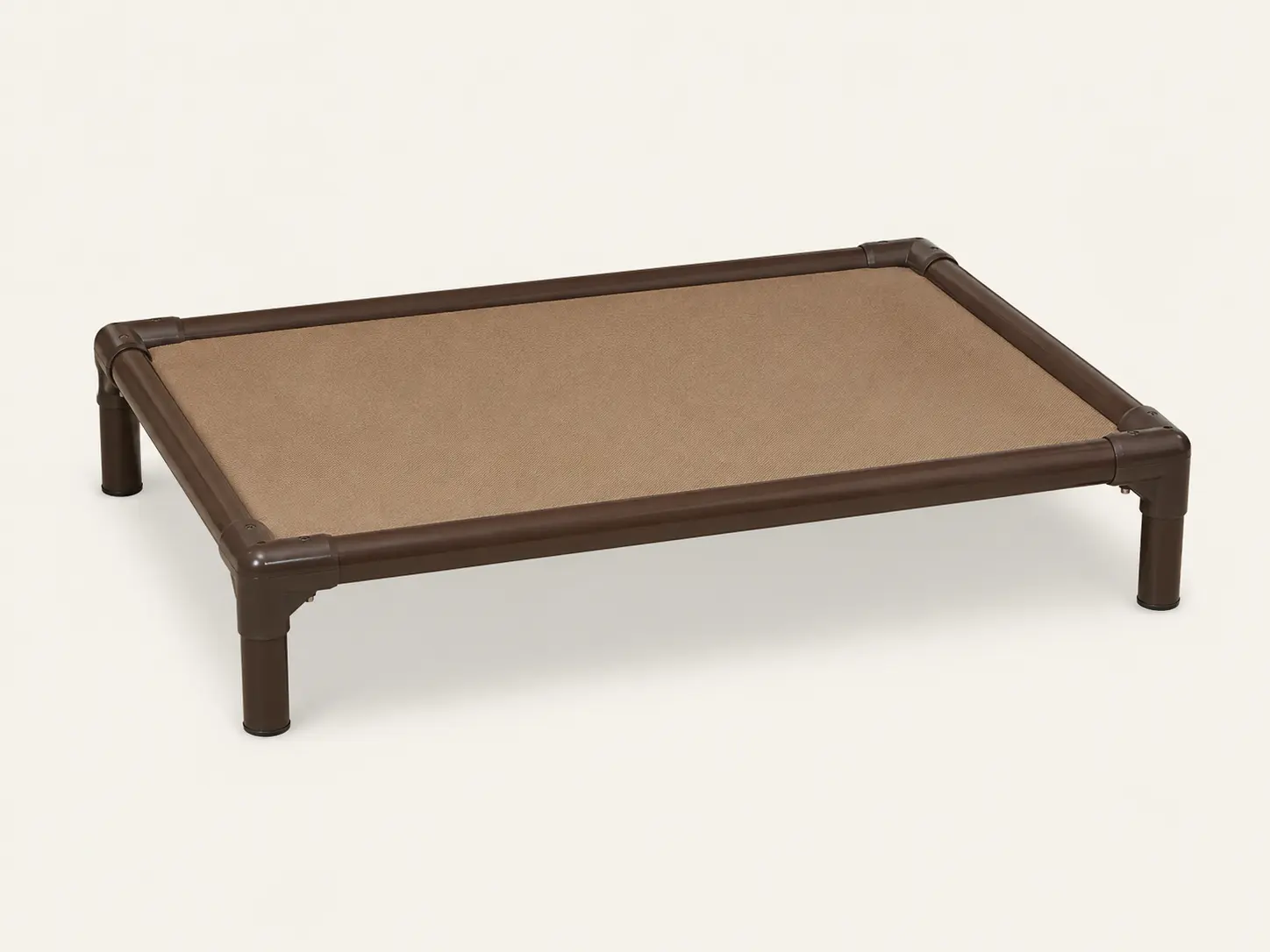
Kuranda Standard Walnut PVC Dog Bed
This elevated bed is a practical match when your dog needs a visually obvious “work-call spot” rather than a soft mat that blends into the floor. Kuranda lists six sizes from 25 × 18 to 50 × 36 inches, indoor use, support for dogs up to 100 lb (45 kg), and a one-year warranty.
Main advantage: The raised frame creates a clear physical boundary that can support place training.
Main limitation: It needs assembly, practice, and more office space than a flat mat.
Avoid it if: your dog dislikes elevated surfaces, needs a softer orthopedic setup, or aggressively destroys PVC beds; Kuranda directs heavy destroyers toward its aluminum model.
Setup tip: Practice short fake calls first and reward lying down before introducing real meetings.
Official facts: Kuranda product page.
Check Current Price on Amazon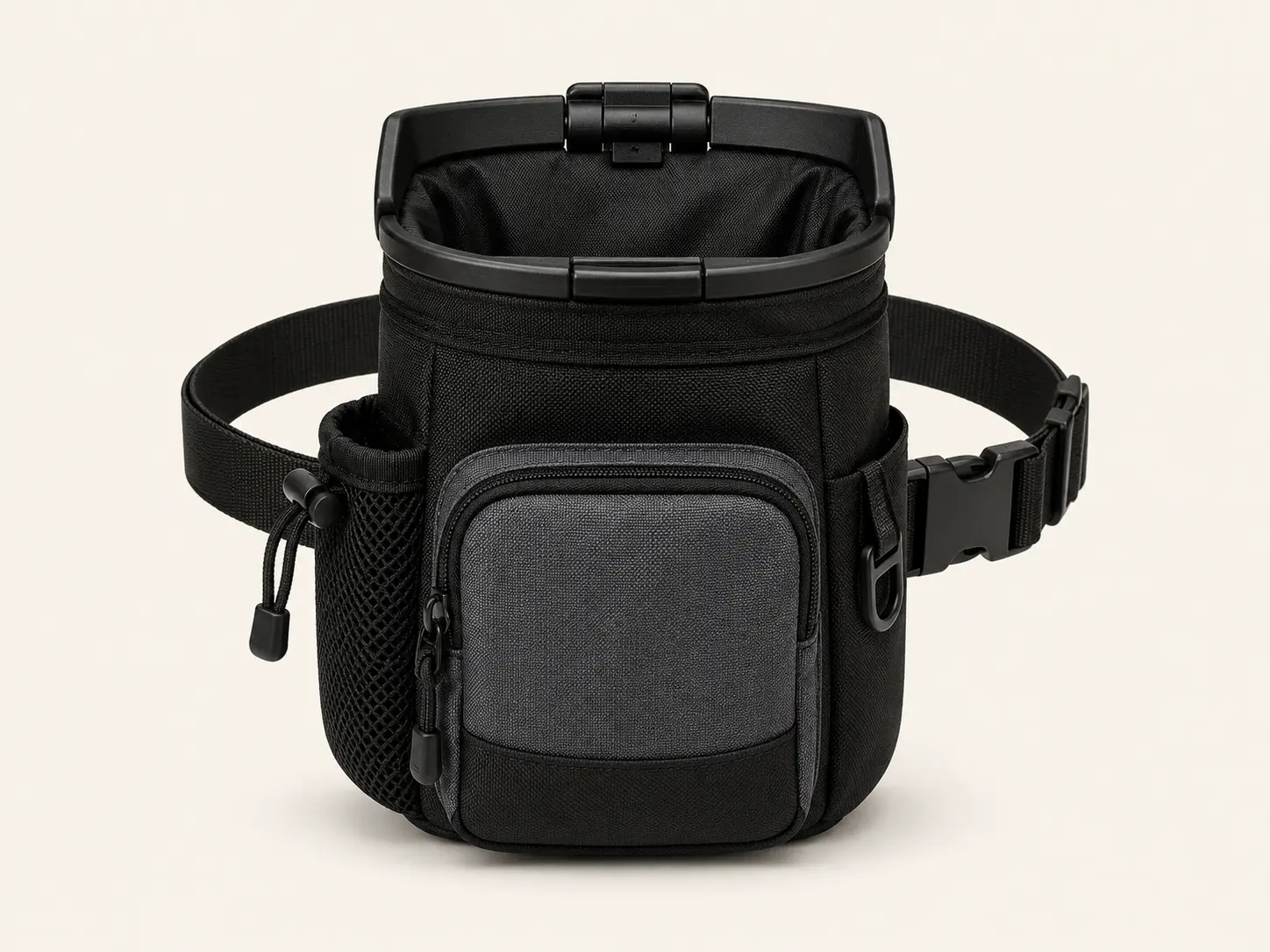
PetSafe Treat Pouch Sport
This is the useful companion to a mat or bed, not a standalone barking solution. Its hinge-style opening stays open for one-hand access, while the divided inner pocket lets you separate ordinary treats from higher-value rewards. PetSafe lists a 7.5 × 6.5-inch size, belt clip, adjustable belt, front pocket, and cold-cycle machine washing.
Main advantage: Rewards are ready when your dog is quiet, so you are less likely to miss the moment.
Main limitation: Reaching for food immediately after barking can accidentally strengthen the behavior.
Avoid it if: the visible pouch makes your dog jump, stare, or become too food-focused to settle.
Setup tip: Put it on before opening the laptop and reward calm behavior during the trigger sequence, not after a barking burst.
Official facts: PetSafe product page.
Check Availability on Amazon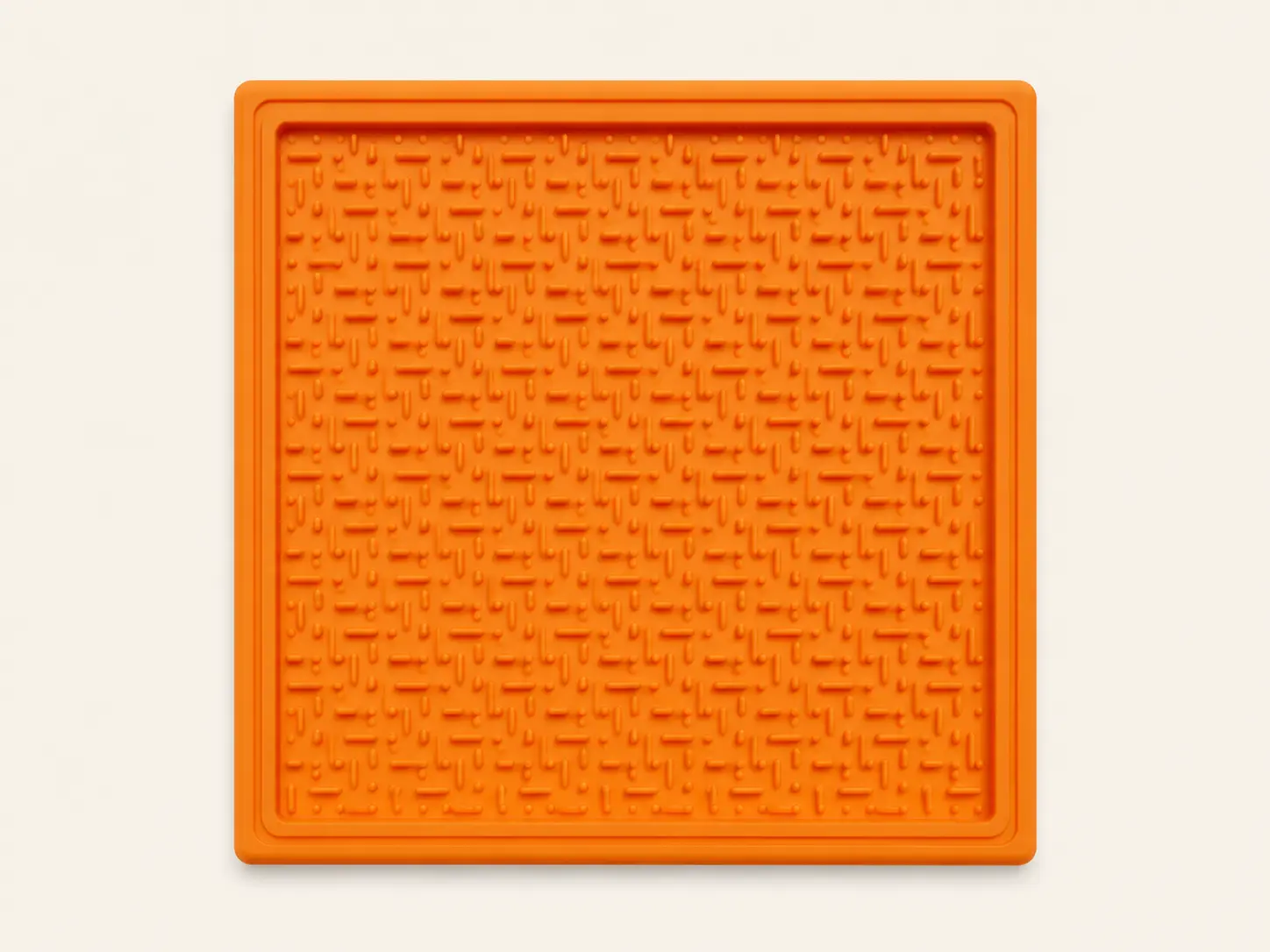
LickiMat Tuff Buddy
The Tuff Buddy suits dogs that reliably settle while licking and need a quiet activity for a shorter meeting. The official page lists an 8 × 8-inch (20 × 20 cm) polypropylene-backed mat made with food-grade TPR. It is freezer, microwave, and dishwasher safe, which makes preparation and cleanup straightforward.
Main advantage: Freezing a thin food layer can extend a quiet licking activity without loose treats rolling around the office.
Main limitation: Barking may return as soon as the food is finished.
Avoid it if: your dog chews mats, guards food, swallows non-food items, or cannot be supervised.
Setup tip: Offer it on the settle station before the call. Check every spread for dog-safe ingredients; the FDA warns that xylitol can be dangerous to dogs.
Official facts: LickiMat product page and FDA xylitol guidance.
View Latest Price on Amazon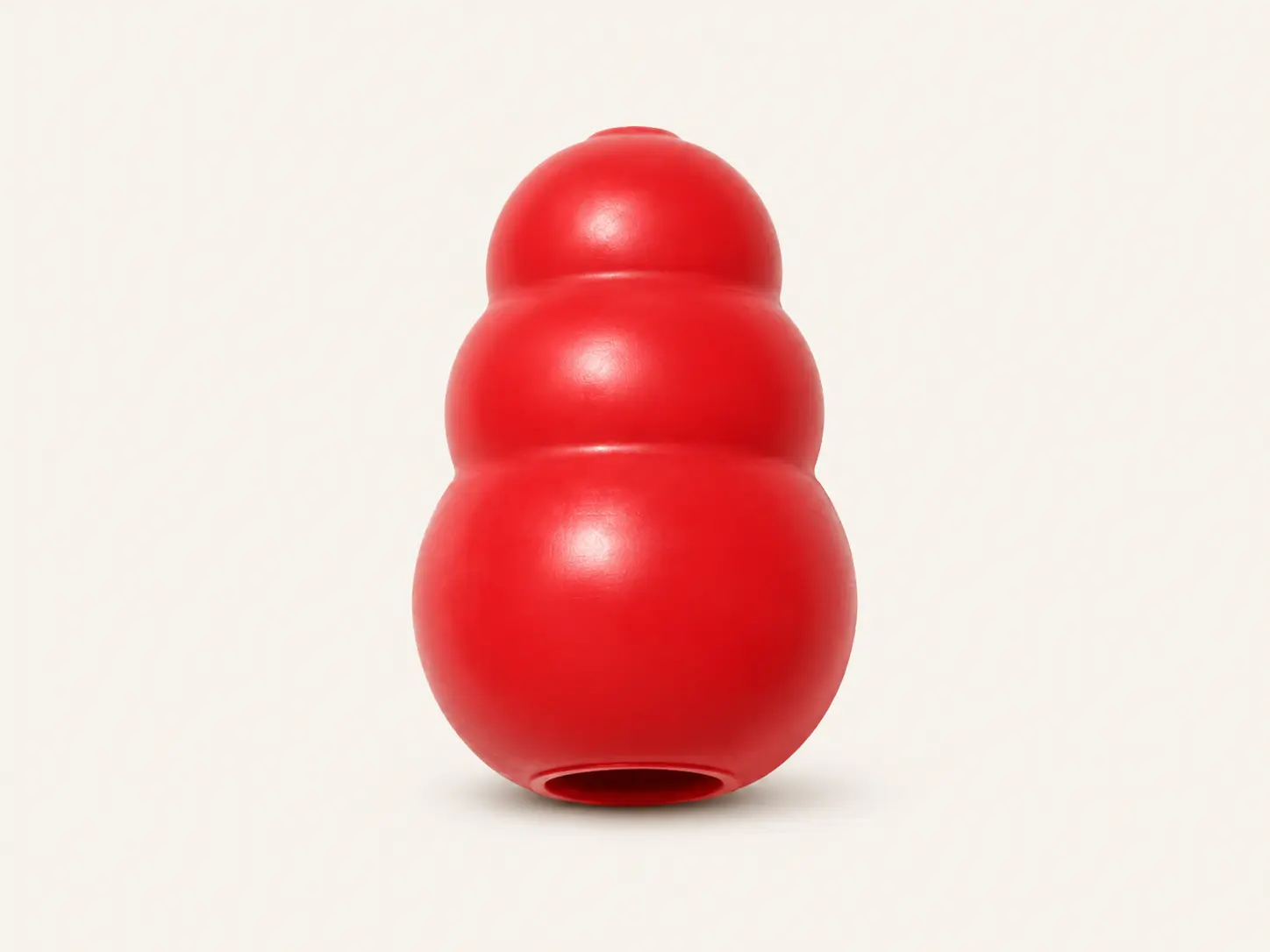
KONG Classic
A stuffed KONG can last longer than a lick mat for dogs that calmly work food out of a rubber toy. KONG describes the Classic as natural rubber for average chewers and provides six weight-based sizes, from XS for dogs up to 5 lb (2.3 kg) to XXL for dogs 85 lb (38.6 kg) and over.
Main advantage: The hollow design can hold part of a meal and be prepared before a longer meeting.
Main limitation: Some dogs empty it quickly, carry it noisily, or become more excited instead of settling.
Avoid it if: your dog resource guards, has dietary restrictions, or is a power chewer using the standard red formula.
Setup tip: Size up when uncertain, supervise initial use, and stop using a damaged toy. KONG directs power chewers toward larger sizes or the Extreme line.
Official facts: KONG Classic product page.
Check Current Price on Amazon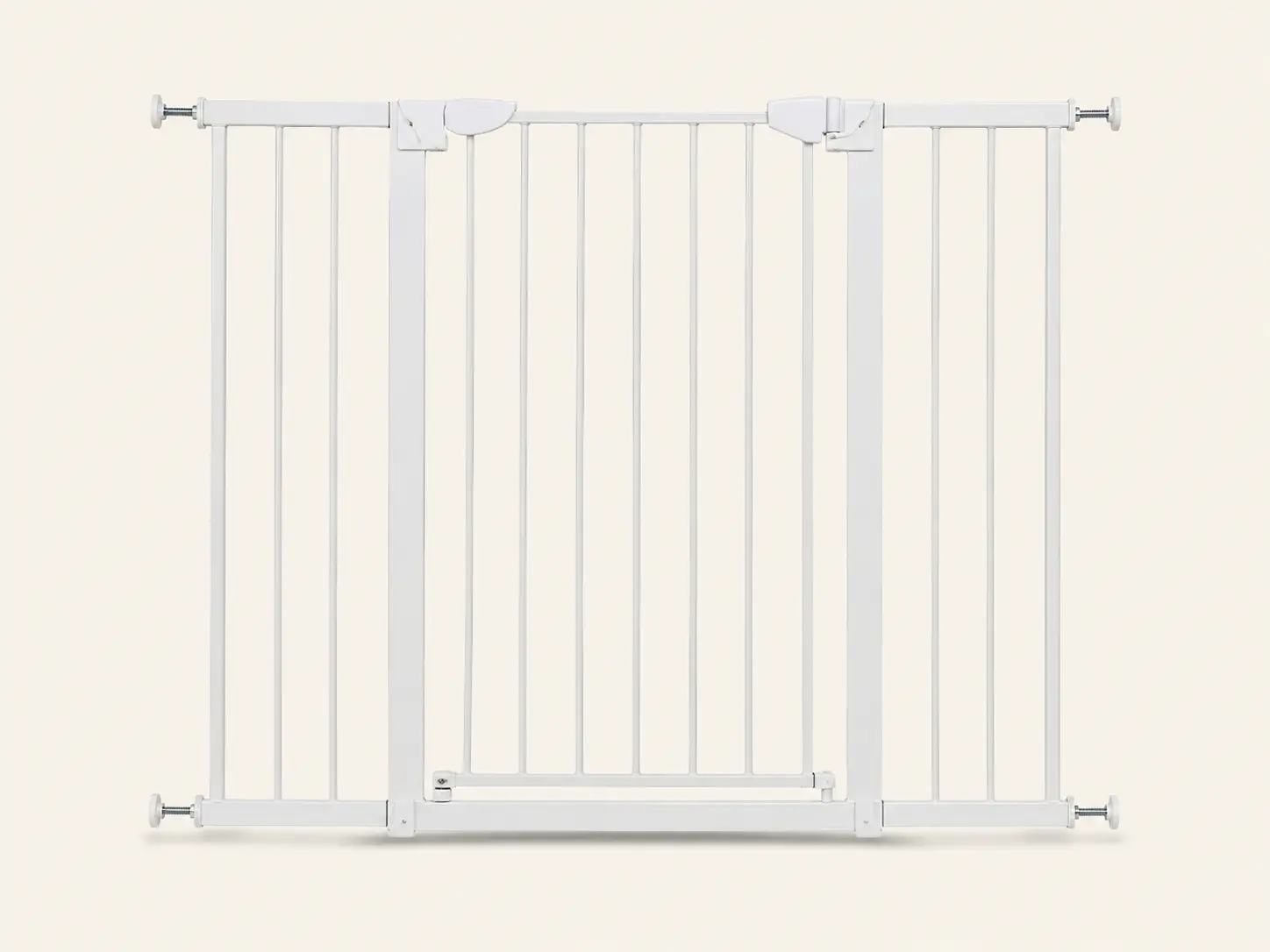
Regalo Easy Step Safety Gate
This gate is relevant when the problem is physical access to the desk, cables, or camera area—not when your dog is distressed by separation. Regalo lists a 30-inch (76 cm) height, 16-inch walk-through door, pressure-mount setup, wall cups, and a fit range of 29–38.5 inches (73.7–97.8 cm). The included extension leaves a 32–35-inch gap that needs a separate 4-inch extension.
Main advantage: It creates a visible boundary while preserving sight of the owner.
Main limitation: Confinement can trigger frustration barking, jumping, pawing, or escape attempts.
Avoid it if: barriers make your dog panic, climb, chew metal, or throw their body at the gate. Never use this model at the top of stairs.
Setup tip: Measure first, install every required part, and rehearse calm gate time outside real calls.
Official facts: Regalo product page.
Check Availability on AmazonWhat should you check before buying?
- What happens immediately before the bark?Laptop movement, your speaking voice, boredom, outside noise, or blocked access require different plans.
- Can the product be introduced before the trigger?A food toy delivered only after barking can become part of the barking routine.
- Is the setup safe for this dog?Check chewing style, food guarding, allergies, toy size, gate fit, jumping risk, and available office space.
- Is a purchase actually necessary?A washable household mat and planned quiet-reward routine may be enough before buying a premium bed.
- Meet basic needs first. Give your dog a toilet break, water, appropriate exercise, and a few minutes of calm interaction before the work block.
- Rehearse the trigger. Open the laptop, put on the headset, or say a few meeting phrases without joining a real call. Reward staying on the mat or bed.
- Add enrichment early. Place the LickiMat or KONG on the station 5–10 minutes before a longer meeting so your dog is already settled.
- Reduce food gradually. Once the routine is reliable, vary rewards and include calm praise or rest periods rather than feeding continuously through every call.
Behavior guidance: VCA’s antecedent-behavior-consequence approach emphasizes identifying what happens before barking and reinforcing quiet behavior.
Frequently asked questions
Why does my dog bark only when I start talking on Zoom?
Your meeting voice may predict that attention is becoming unavailable, or the change in tone and energy may be exciting. Rehearse short fake calls and reward your dog for remaining on the settle station before barking begins.
Will I have to give my dog food during every meeting?
No. Food is most useful while building the routine. Begin with frequent rewards for calm behavior, then gradually space them out and use part of the dog’s normal meal when appropriate. If five daily calls require five high-calorie extras, the setup needs adjustment.
Why does a baby gate make my dog bark more?
The barrier may block access while keeping you visible, which can create frustration. Stop treating the gate as the solution when barking, jumping, pawing, or escape behavior intensifies; use a nearer settle station or professional plan instead.
Is a LickiMat or KONG better for a one-hour meeting?
A correctly sized stuffed KONG is usually the more relevant starting point for a longer meeting because it can hold more food. A LickiMat is better for shorter supervised calls. Duration still depends on the dog and preparation.
Should I reward my dog immediately after barking stops?
Rewarding a genuine quiet pause can be useful, but prevention is clearer: cue an alternative behavior and reward it before barking starts. Repeatedly producing food after a bark-pause sequence can accidentally teach the dog to begin the sequence.
Build the first version of the setup with a settle station and treat pouch. Choose the Kuranda bed when a raised, obvious boundary helps; use an existing washable mat when it does not. Add the LickiMat for short supervised calls or the KONG Classic for longer food-based enrichment. Buy the Regalo gate only for a dog that remains calm with visual separation. The correct product supports a rehearsed routine; it does not replace trigger identification or behavior help when distress is present.
 ✓
✓