

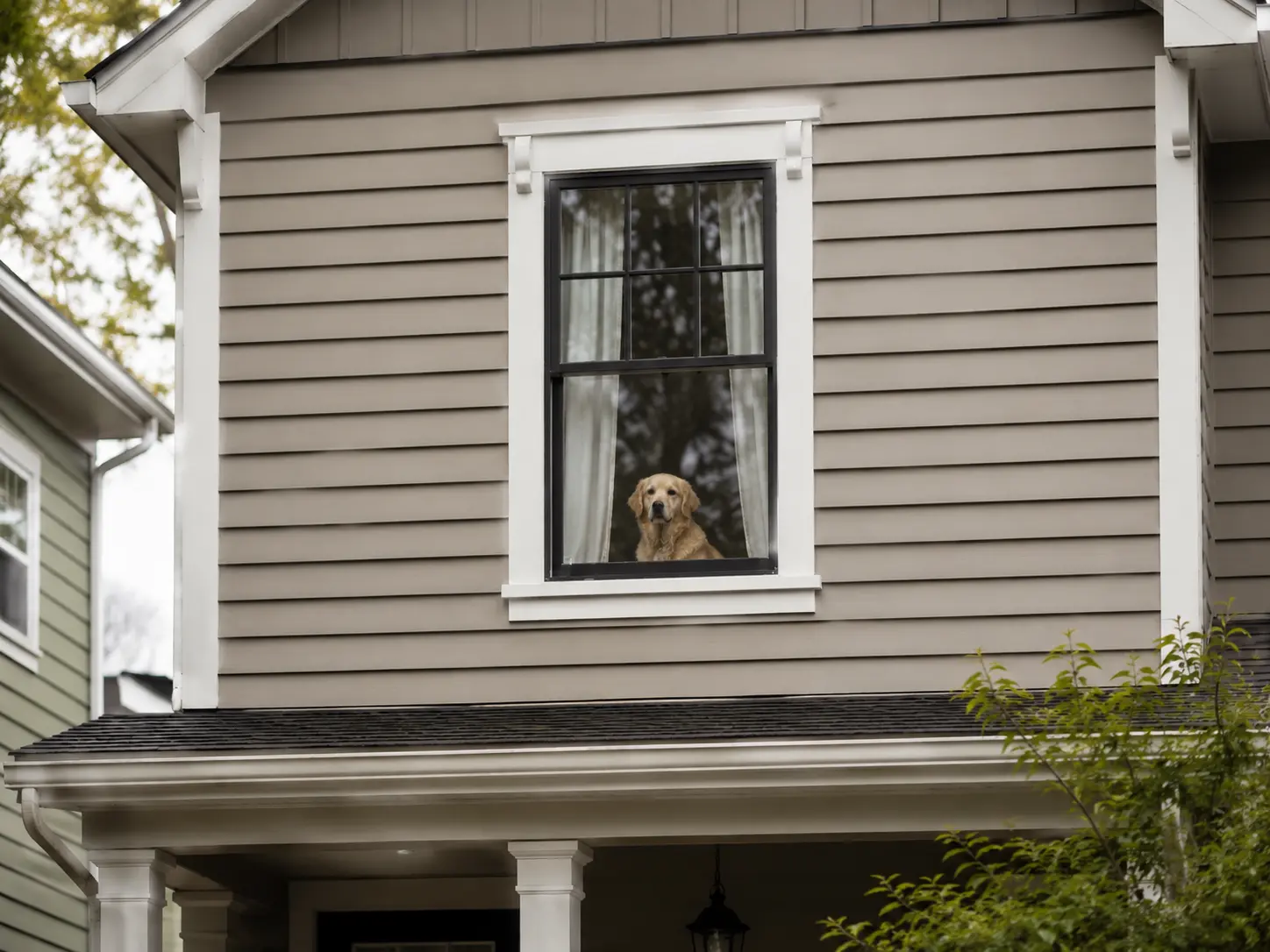
Start with rabbitgoo Frosted Static-Cling Window Film when your dog mainly barks at visible neighbors, dogs, cars, or delivery drivers. For a side-by-side shortlist, compare the best window films for dog-barking triggers. It blurs the lower-window view, keeps more daylight than a full blackout covering, and can be removed without adhesive. Its main limitation is that silhouettes and blurred movement may still trigger highly reactive dogs. Choose blackout curtains when stronger visual blocking is needed, or add a securely fitted gate when your dog rushes, jumps at, or chews around the window.
Blocking the view is a management step, not a cure for every type of barking. It is unlikely to solve barking driven mainly by sound, panic when alone, pain, or severe fear. Guidance from AKC and Tufts University supports reducing access to visible passersby when those sights trigger territorial barking.
Quick Product Matches
How We Researched
Product specifications and current listings were checked in July 2026 using manufacturer pages, retailer listings, installation information, recurring retailer-review patterns, independent demonstrations, Reddit questions, and professional behavior and safety guidance. Official sources were prioritized for dimensions and installation requirements; user discussions were used only to identify practical concerns. We did not personally test every product in this guide.
Which Option Should You Try First?
| Product | Suitable for | Key advantage | Installation | Main limitation |
|---|---|---|---|---|
| rabbitgoo Frosted Static-Cling Film | Clear visual triggers; renters | Removable, no-glue view blurring | Wet static-cling application | Blurred movement may remain visible |
| Gila Privacy Control Frosted Film | Longer-term window coverage | Large adhesive sheet with a stable finish | Wet adhesive installation | Harder to reposition or remove cleanly |
| NICETOWN 100% Blackout Drapes | Strong visual triggers; nighttime barking | Full-window removable blocking | Curtain rod required | Dog may push behind the panels |
| Regalo Easy Step Safety Gate | Window rushing, jumping, or chewing | Creates physical distance from glass | Pressure mount with wall cups | Does not block the view or sound |
Product Recommendations for Window-Triggered Barking

rabbitgoo Frosted Static-Cling Window Film
Suitable for: renters and households where the dog reacts to a clear view of neighbors, dogs, vehicles, or delivery activity.
The current listing describes a no-glue static-cling film that uses water for installation and can be removed or repositioned. One common size is 17.5 × 78.7 inches (about 44.5 × 200 cm), making it practical for covering the lower portion of narrow windows or glass doors. This is the most useful starting option because it reduces the trigger without permanently changing the glass.
- Main advantage: removable view blocking with more daylight than blackout fabric.
- Main limitation: some dogs still react to silhouettes, shadows, or sound.
- Avoid it when: your dog scratches or chews reachable film edges, unless access is also blocked.
- Setup tip: cover above the dog’s eye line, not only the bottom few inches.
Listing details checked July 2026.
Check Current Price on Amazon
Gila Privacy Control Frosted Window Film
Suitable for: homeowners who want a durable frosted finish and are comfortable with an adhesive installation.
Gila’s official product page describes an adhesive privacy film that obscures the view while allowing light into the room. The PFW486 roll is listed at 48 × 78 inches (about 122 × 198 cm), so one sheet can cover a larger pane than many narrow static-cling rolls. It is a practical option when you already know permanent-looking lower-window coverage helps your dog.
- Main advantage: broad coverage with a stable frosted appearance.
- Main limitation: adhesive film is less renter-friendly and less forgiving during placement.
- Avoid it when: you are uncertain about the coverage height or need frequent removal.
- Setup tip: use the recommended wet-install method and recruit a second person for large panes; recurring retailer feedback mentions bubbles and alignment difficulty.
Official Gila product details.
Check Availability on Amazon
NICETOWN 100% Blackout Thermal Insulated Drapes
Suitable for: dogs that continue reacting to movement through frosted film, especially at night or during predictable busy periods.
NICETOWN lists this lined pair as two 52 × 84-inch panels (about 132 × 213 cm each) with rod-pocket and back-loop hanging options. Closing both panels can remove more visual information than translucent film, while still letting you reopen the window during quiet hours. This makes curtains a stronger but less “always on” management tool.
- Main advantage: full-window coverage without applying material to the glass.
- Main limitation: side and top gaps can show movement, and determined dogs may nose behind the fabric.
- Avoid it when: your dog chews fabric, pulls rods, or cannot be safely supervised around hanging panels.
- Setup tip: mount the rod wider than the window and use enough fullness for overlapping coverage.
Official NICETOWN specifications.
View Latest Price on Amazon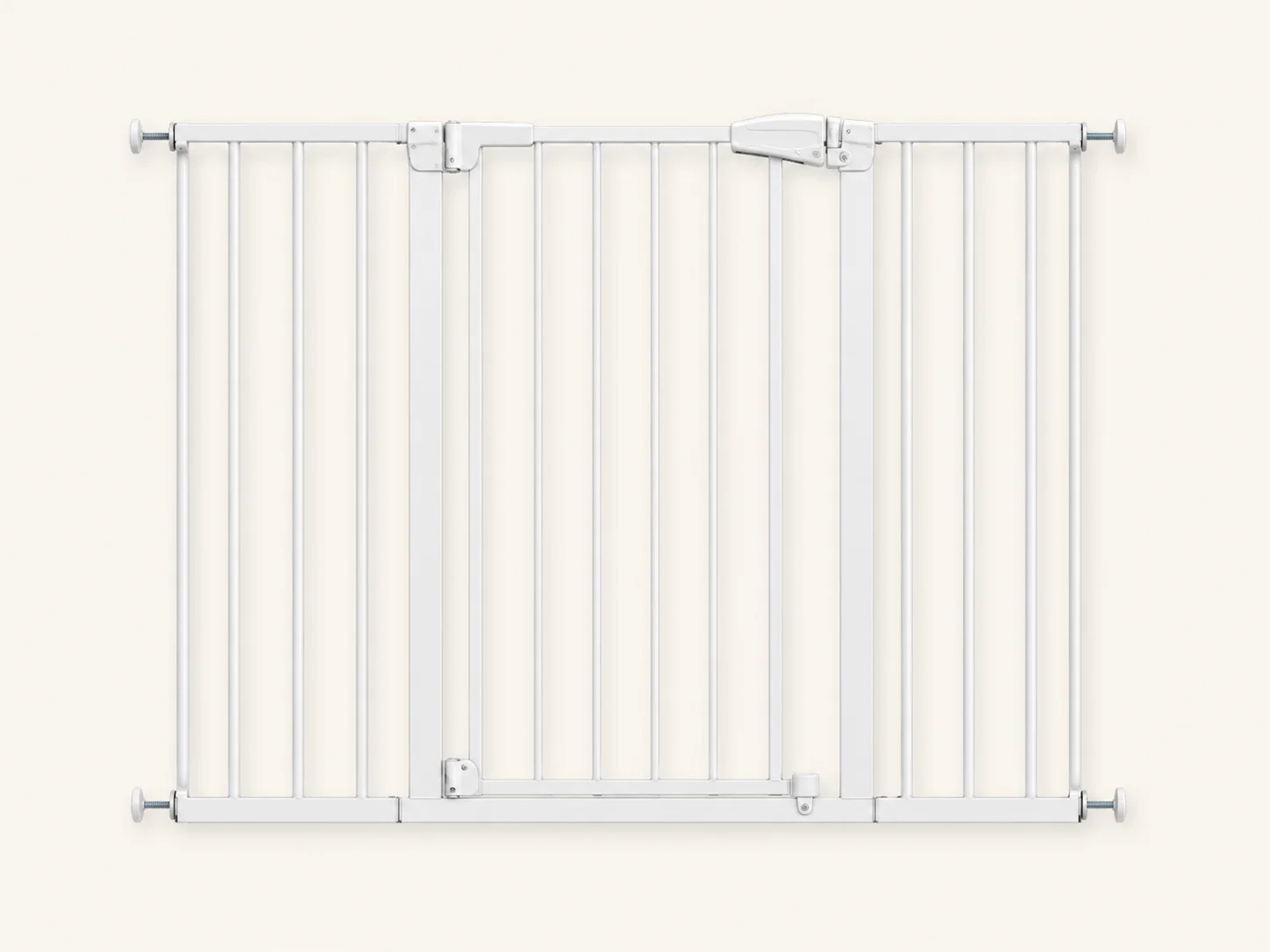
Regalo Easy Step Safety Gate
Suitable for: dogs that patrol the window, jump at the glass, push behind curtains, or reach film edges.
Regalo lists the gate at 30 inches (76.2 cm) tall with a 16-inch (40.6 cm) walk-through door, pressure mounts, wall cups, and a 6-inch extension. The standard configuration covers selected openings from 29 to 38.5 inches (about 73.7 to 97.8 cm), but it does not fit every width within that range; the manufacturer specifically flags a gap around 32–35 inches unless another extension is used.
- Main advantage: keeps the dog away from glass, curtains, and film edges.
- Main limitation: it does not block sight or sound, so barking may continue behind the barrier.
- Avoid it when: your dog climbs gates, pushes through barriers, or becomes intensely frustrated when confined.
- Setup tip: place it far enough back that the dog cannot reach the entire window area.
Official Regalo specifications. Never use this pressure-mounted model at the top of stairs.
Check Current Price on AmazonBefore You Buy
- What starts the barking? Confirm whether it is the visible person or dog, an outside sound, being left alone, or access to the window.
- How high is your dog’s sight line? Measure from every usual viewing position, including sofas and window seats.
- Will blurred movement be enough? Use frosted film first for clear visual triggers; choose blackout coverage when silhouettes still cause a reaction.
- Can your dog reach the covering? Chewing, scratching, curtain pulling, and gate climbing can make an otherwise suitable product unsafe or ineffective.
- Does the product fit the surface or opening? Check glass compatibility, window dimensions, curtain width, and gate fit before removing packaging.
Short Setup Plan
- Observe the dog for several trigger events and identify the exact windows and viewing height.
- Test one lower pane first. Extend the coverage upward if the dog can still see over it from furniture.
- For film, clean the glass thoroughly, follow the product’s wet-application instructions, remove bubbles, and trim edges so the dog cannot lift them.
- For curtains, cover side gaps. For a gate, use the required wall cups and leave enough distance from the glass.
- Pair management with calm, reward-based training rather than waiting for the dog to rehearse barking. AVSAB’s current position recommends reward-based methods for behavior modification. Read the AVSAB position statements.
When Another Purchase Is Not Enough
Speak with a veterinarian or qualified behavior professional when barking is sudden, severe, linked to panic, accompanied by lunging or snapping, or followed by attempts to break through doors or windows. Barking that occurs mainly after you leave—especially with pacing, destruction, drooling, or escape attempts—can be consistent with separation distress and needs more than a window covering. ASPCA separation-anxiety guidance.
New nighttime vocalization, confusion, or pacing in an older dog also warrants a veterinary check. Cornell notes that cognitive dysfunction can cause age-related behavioral changes and nighttime restlessness. Cornell canine cognitive dysfunction overview.
Choose cordless window coverings where children live or visit; the U.S. Consumer Product Safety Commission warns that accessible window-covering cords create a strangulation hazard. CPSC cordless-window guidance.
Frequently Asked Questions
Will frosted window film completely stop barking at neighbors?
No. It is most likely to help when the clear view is the main trigger. Continued barking usually means the dog can still detect movement, hears the trigger, or has developed a broader alarm or frustration response.
How high should I place window film for my dog?
Cover slightly above the highest point from which your dog watches, including sofas, chairs, and window seats. Lower-half coverage works only when the dog cannot see over it from another position.
Can blocking the window make barrier frustration worse?
It can for some dogs, especially when a gate restricts access but the trigger remains visible or audible. Increase distance, block the view more fully, and introduce the setup gradually while rewarding calm behavior. Stop and seek professional guidance if agitation escalates.
Is static-cling or adhesive window film better?
Static-cling film is the safer first trial because it is easier to remove and reposition. Adhesive film is better suited to confirmed, longer-term coverage but requires more careful installation and may not suit rentals.
Should I use one-way mirror tint instead of frosted film?
Usually not for this problem. Reflective privacy film can lose its concealment effect at night when the room is brighter than outdoors, so it may still allow a dog to watch outside. Frosted or blackout coverage is more predictable.
Why does my dog still bark after I cover the window?
The trigger may also include footsteps, doors, voices, vehicle sounds, or being left alone. Add distance, appropriate sound management, and reward-based behavior work rather than layering unrelated anti-bark products onto an unidentified cause.
Final Recommendation
For a dog barking at visible neighbors or street movement, begin with removable frosted static-cling film placed above the dog’s full viewing height. Move to blackout curtains when blurred motion still triggers barking. Add a correctly fitted gate only when you also need distance from the glass or window covering. If barking continues with the view fully blocked, reassess the trigger instead of buying another visual barrier.
 ✓
✓