


When a dog barks, howls, chews, scratches, or damages things while home alone, the most useful clues are when the behavior starts, what triggers it, and whether the dog can settle. One damaged cushion or one barking episode cannot diagnose the cause.
The main difference between separation anxiety vs boredom in dogs is the pattern around your departure. Separation-related distress often begins as you prepare to leave or within the first few to 30 minutes, and it may include persistent vocalizing, pacing, drooling, escape attempts, toileting, or refusing food. Boredom or unmet activity needs are more likely when a dog settles first, becomes active later, and improves consistently with suitable exercise, routine, and safe enrichment.
These are screening clues, not a diagnosis. The VCA Animal Hospitals notes that similar behavior can also come from outside sounds, confinement distress, medical problems, or being left longer than the individual dog can comfortably manage.
| Clue | More Consistent With Boredom or Unmet Needs | More Consistent With Separation-Related Distress | Other Possibility to Check |
|---|---|---|---|
| When it starts | After the dog has rested, wakes up, or has had a long period with nothing suitable to do | During departure cues or within minutes of the owner leaving | Hallway noise, deliveries, storms, construction, or other outside triggers |
| Type of damage | Varied, accessible items such as shoes, cushions, rubbish, or household objects | Doors, windows, crate bars, owner belongings, or the area used to leave | Confinement or barrier distress if damage happens only in a crate or closed room |
| Food and toys | The dog eats, works on the toy, and later settles | The dog may ignore a normally valued food toy until the owner returns | Low appetite, dental pain, nausea, or an unsafe or unfamiliar toy |
| Vocalizing | Intermittent, often linked to activity or visible and audible triggers | Persistent barking, whining, or howling linked closely to separation | Alert barking, fear of noises, frustration, or territorial behavior |
| Body language | Restless or seeking activity without clear panic signs | Pacing, panting, drooling, trembling, withdrawal, or frantic escape attempts | Pain, illness, cognitive changes, or another anxiety problem |
| Response to changes | Improves reliably when daily needs and safe enrichment are better matched | Continues despite exercise or food enrichment because the separation itself is difficult | A mixed problem may need more recording and professional assessment |
Do not rely on one row alone. Look for a repeated cluster of signs across several departures, then discuss concerning patterns with a veterinarian or qualified behavior professional.
Why Dogs Bark or Chew When Left Alone
Barking, chewing, and scratching are outcomes, not diagnoses. The same visible behavior may come from unmet needs, separation-related distress, sound triggers, confinement, fear, frustration, or a health problem.

1. Your Dog May Need More Suitable Activity
A dog may look for their own activity when daily exercise, sniffing, training, social contact, rest, and safe chewing opportunities do not match their individual needs. This can lead to exploratory chewing, rubbish raiding, digging, or intermittent barking.
Clues that unmet needs may be contributing include:
- The dog settles at first and becomes active later.
- The behavior is worse after unusually inactive days.
- The dog readily uses a safe food toy or chew and then rests.
- The damage is spread across varied, easy-to-reach items rather than concentrated at an exit.
Appropriate enrichment can provide outlets for normal behavior, but it should match the dog and be introduced under supervision first. The VCA enrichment guide explains how food-dispensing and activity toys can support behavioral needs.
2. Your Dog May Be Distressed by Separation
Separation-related distress is more likely when behavior is closely tied to the owner preparing to leave or being absent. According to the Royal Society for the Prevention of Cruelty to Animals (RSPCA), signs can begin before departure or within the first few to 30 minutes.
Possible signs include:
- Persistent barking, whining, or howling
- Pacing, panting, drooling, trembling, or appearing withdrawn
- Scratching or chewing doors, windows, frames, or crate bars
- Toileting indoors despite otherwise reliable house training
- Ignoring food or a normally valued food toy while alone
- Frantic escape attempts or self-injury
The American Society for the Prevention of Cruelty to Animals (ASPCA) also advises monitoring crate use carefully because confinement can increase distress in some dogs.
3. Your Dog May Be Reacting to Sounds or Movement
Some dogs bark while alone because they hear or see people, dogs, vehicles, lifts, doors, or deliveries. This is especially relevant in an apartment or flat, a townhome or terrace house, or any home with shared walls or a busy street.

A recording may show the dog resting until a specific sound occurs. Closing curtains, moving the resting area away from the door or window, and using steady background sound may reduce triggers. These changes can help alert barking, but they do not treat distress caused by separation itself.
4. Confinement May Be the Main Trigger
If the behavior happens only in a crate, behind a gate, or inside a closed room, confinement or barrier distress may be involved. Compare recordings of the dog in the same area while you are home and when you are away. Do not continue using a setup that leads to frantic escape attempts, heavy panting, excessive salivation, or injury risk.
5. A Routine or Health Change May Be Contributing
A new work schedule, longer absences, moving home, a family change, reduced activity, pain, sensory loss, or cognitive changes can alter how a dog copes. A new or rapidly worsening behavior should not automatically be labelled boredom or separation anxiety.
Real-World Scenarios
These hypothetical examples show how patterns can guide the next step. They are not clinical diagnoses and a dog may fit more than one pattern.

Scenario 1: Barking Starts Within Minutes
A camera shows the dog following the owner to the door, then pacing and howling continuously after departure. The dog does not touch a familiar food toy.
What this may mean: Separation-related distress is more concerning than simple boredom. Record several departures and contact a vet or qualified behavior professional if the pattern repeats.
Scenario 2: The Dog Sleeps, Then Chews Later
The dog rests for an hour, wakes, explores the room, and chews an accessible shoe. There is no panting, pacing, or exit-focused damage.
What this may mean: Unmet activity needs, access to tempting objects, or excessive alone time may be contributing. Improve management and safe enrichment, then compare later recordings.
Scenario 3: Barking Follows Hallway Noise
The dog is calm until a lift opens or a person passes the front door, then barks for a short period and settles again.
What this may mean: Sound-triggered alert barking may be more important than separation. Test a quieter room, visual barriers, and steady background sound.
Scenario 4: Distress Happens Only in the Crate
The dog bites the bars and scratches when crated alone but settles more easily in a safely dog-proofed room.
What this may mean: Confinement may be part of the problem. Stop using the crate for unsupervised absences if there is escape or injury risk, and seek professional guidance.
Scenario 5: The Behavior Appears Suddenly
An older dog who previously rested alone begins pacing, vocalizing, and toileting after a recent change in sleep, appetite, mobility, or awareness.
What this may mean: A medical or age-related contributor should be checked by a veterinarian before treating the problem as a training issue.
Step-by-Step: How to Tell the Difference
Use recordings and a simple log rather than guessing from the mess you find later. Change one factor at a time so you can see what actually affects the pattern.
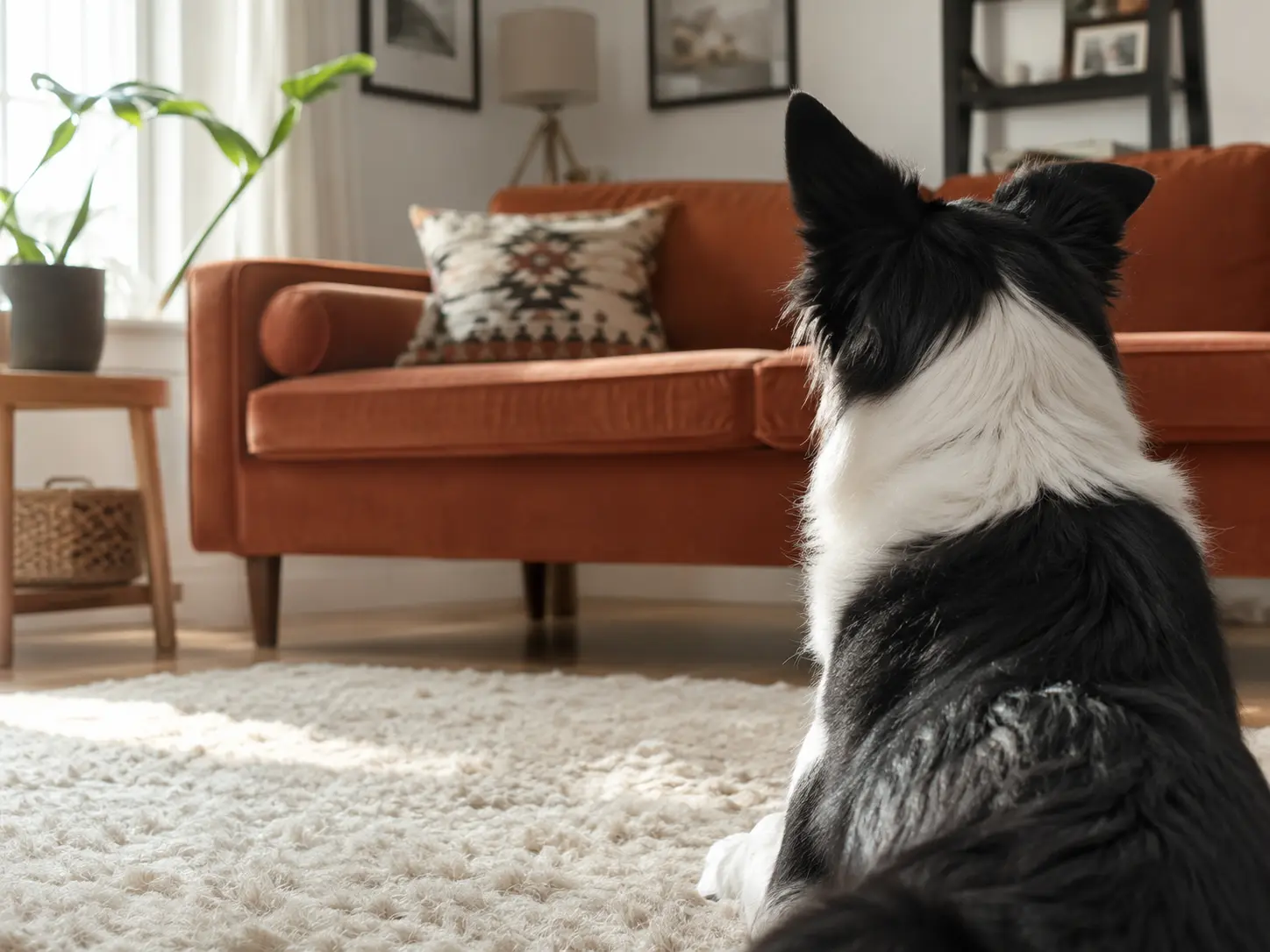
Step 1: Record the Departure
Use a pet camera, phone, laptop camera, or audio recorder. Capture the departure cues and at least the first 30–60 minutes. On some days, record the full absence because a dog may settle initially and react later.
The RSPCA recommends videoing dogs when they are left alone because subtle signs such as trembling, pacing, and whining can otherwise go unnoticed.
Step 2: Mark the First Change in Behavior
Note the exact time and what happened immediately before it:
- Keys, shoes, coat, work bag, or another departure cue
- The owner closing the door
- A hallway sound, vehicle, delivery, storm, or construction noise
- The dog waking from sleep
- The food toy becoming empty
- Being placed in a crate or behind a barrier
Step 3: Track the Whole Pattern for One Week
Use the same headings for each departure. A simple log makes it easier to compare days and gives a vet or behavior professional more useful evidence.
| Date and Duration | Activity Before Leaving | First Sign and Start Time | Likely Trigger | Food Used? | Settled? | Damage or Safety Concern |
|---|---|---|---|---|---|---|
| Example: Monday, 45 minutes | 20-minute sniff walk | Barked at 8 minutes | Door slammed in hallway | Yes | Yes, after 3 minutes | None |
Step 4: Run Low-Risk Checks One at a Time
- Meet basic needs: provide a suitable toilet break, sniffing, movement, and calm interaction before departure.
- Test safe enrichment: use a familiar food toy or chew that your dog has already handled safely under supervision. Count food toward the daily allowance.
- Reduce outside triggers: close curtains, move the resting area, and use steady background sound.
- Compare confinement: only where safe, compare a crate or gated area with a dog-proofed room. Stop any setup that causes panic or injury risk.
A food toy that helps the dog settle suggests enrichment may be useful. A toy that remains untouched only during absences may be a worry signal, but it is not proof of separation anxiety.
Step 5: Build Alone Time Below the Distress Point
Practice absences short enough that the dog remains calm. Increase duration in small, flexible steps rather than jumping from seconds to hours. If the dog shows distress, return to an easier duration instead of repeatedly allowing a full panic response.
The RSPCA advises increasing alone time gradually and not leaving a dog long enough to become distressed. Severe cases may need a veterinarian-led plan rather than a do-it-yourself schedule.
What Your Results May Mean and What to Do Next
Use the repeated pattern across several recordings to choose the next action. Mixed or severe signs deserve professional assessment rather than more home experiments.
| Repeated Result | What It May Mean | What to Do Next |
|---|---|---|
| Settles first, later seeks activity, eats normally, no panic signs | Unmet activity needs, access to tempting objects, or an absence that is too long | Improve dog-proofing, routine, appropriate enrichment, and the schedule; record again |
| Barks only after identifiable outside sounds and settles between triggers | Alert or sound-triggered barking | Reduce visual and sound triggers and compare recordings from a quieter location |
| Persistent distress begins around departure and food is ignored | Separation-related distress may be involved | Limit unavoidable distress where practical and speak with a veterinarian or qualified behavior professional |
| Frantic behavior occurs only in a crate or closed area | Confinement or barrier distress may be involved | Stop unsafe confinement and get help choosing a safer management and training plan |
| Behavior starts suddenly or appears with pain, confusion, appetite, sleep, or toileting changes | A medical or age-related factor may be contributing | Arrange a veterinary assessment before treating it as boredom or a training problem |
| The pattern is inconsistent or combines several rows | More than one trigger may be present | Bring the log and videos to a vet or qualified professional for a fuller assessment |
What Not to Do
Avoid methods that hide the noise without addressing the cause, increase fear, or create injury risk. The goal is to understand the trigger and teach safe, calm behavior.
Do Not Diagnose From One Sign
Exit damage, barking, or an untouched food toy can be useful clues, but none proves separation anxiety on its own. Review timing, body language, triggers, and several recordings.
Avoid Punishment and Aversive Tools
Do not use yelling, shock collars, harsh corrections, intimidation, or punishment after you return home. These approaches do not explain what caused the behavior and may add fear or stress.
The American Veterinary Society of Animal Behavior (AVSAB) recommends reward-based methods for training and behavior modification and advises against aversive methods.
Do Not Force a Crate or Use “Cry It Out”
A crate can be comfortable for some dogs and distressing for others. Do not leave a dog to bite bars, claw exits, drool heavily, or panic in the hope that they will simply get used to it.
Do Not Change Everything at Once
If you add a long walk, move rooms, use a new toy, close curtains, and change the departure routine on the same day, you will not know which change helped. Test one safe variable at a time and keep notes.
Do Not Leave an Untested Chew Unsupervised
Introduce toys and chews while you are present. Remove any item the dog can break into unsafe pieces, swallow, or become trapped in. Product size and safety should match the individual dog.
Do Not Get a Second Dog as a Quick Fix
Another dog may provide company but does not reliably resolve distress caused by separation from a particular person. Adding a pet also creates new welfare, cost, and management responsibilities.
When to Contact a Vet or Qualified Trainer
Contact a veterinarian when the behavior is sudden, worsening, severe, or linked with physical or cognitive changes. Seek help promptly when there is escape or self-injury risk.
The Merck Veterinary Manual states that medical causes and contributing factors should be ruled out when assessing behavior problems, with pain being an important consideration.
Choosing Qualified Behavior Support
A veterinarian can assess health contributors and may refer you to a veterinary behaviorist, clinical animal behaviourist, or another appropriately qualified professional. Credentials and professional titles differ across the US, UK, Canada, and Australia, so ask the person to explain:
- Their education, certification, and experience with separation-related cases
- Whether they use reward-based, non-aversive methods
- How they coordinate with your veterinarian
- How progress and welfare will be measured
- What to do when unavoidable absences are longer than the dog can currently manage
Quick Summary
Separation anxiety vs boredom in dogs cannot be decided from barking or damage alone. Timing, triggers, body language, food use, and the ability to settle provide a more useful picture.
- More consistent with unmet needs: the dog settles first, becomes active later, eats normally, and improves with appropriate routine, management, and enrichment.
- More consistent with separation-related distress: signs begin around departure, continue persistently, include clear stress behavior, or create escape and injury risk.
- Best next step: record several departures, log the first trigger and timing, make one safe change at a time, and involve a vet for sudden, severe, or unclear cases.
FAQs
These answers cover common decision points that are not fully resolved by a single symptom.
Can a long walk rule out separation anxiety?
No. Suitable exercise may help a dog settle and is part of meeting normal needs, but a tired dog can still experience separation-related distress. Compare the dog’s behavior across recordings rather than using exercise as a diagnostic test.
How long should I record my dog when left alone?
Capture the departure and at least the first 30–60 minutes. Also record the full absence on some days because boredom, outside triggers, or distress related to a longer duration may appear later.
What if my dog is calm at first but becomes distressed later?
Check what changed immediately before the behavior: a sound, waking from sleep, an empty food toy, confinement, or the length of the absence. Later onset does not automatically mean boredom.
Does ignoring a stuffed food toy confirm separation anxiety?
No. Refusing a normally valued food toy only while alone can support a wider distress pattern, but appetite, familiarity, safety, and health also matter.
Should I crate a dog that barks when left alone?
Only if the dog is already comfortable and can remain relaxed in the crate. If crating causes heavy panting, drooling, bar biting, frantic scratching, or escape attempts, use a safer plan and speak with a vet or qualified behavior professional.
Can a radio, television, or white noise solve the problem?
Steady background sound may reduce barking triggered by outside noises. It is unlikely to resolve separation-related distress by itself.
Is this guide a diagnosis?
No. It is an observation and decision guide. A veterinarian or appropriately qualified behavior professional should assess persistent, severe, sudden, or safety-related cases.
− Sources
ASPCA — Separation Anxiety in Dogs ASPCA — Barking ASPCA — Howling VCA Hospitals — Separation Anxiety in Dogs VCA Hospitals — Enrichment and Foraging Toys RSPCA — How to Train Your Dog to Stay Home Alone RSPCA — Separation Anxiety in Dogs AVSAB — Humane Dog Training Position Statement PDF AVSAB — Position Statements Page Merck Veterinary Manual — Behavior Problems of Dogs Merck Veterinary Manual — Diagnosing Behavior Problems in Dogs AKC — Does Your Dog Bark Out the Window? ✓
✓