

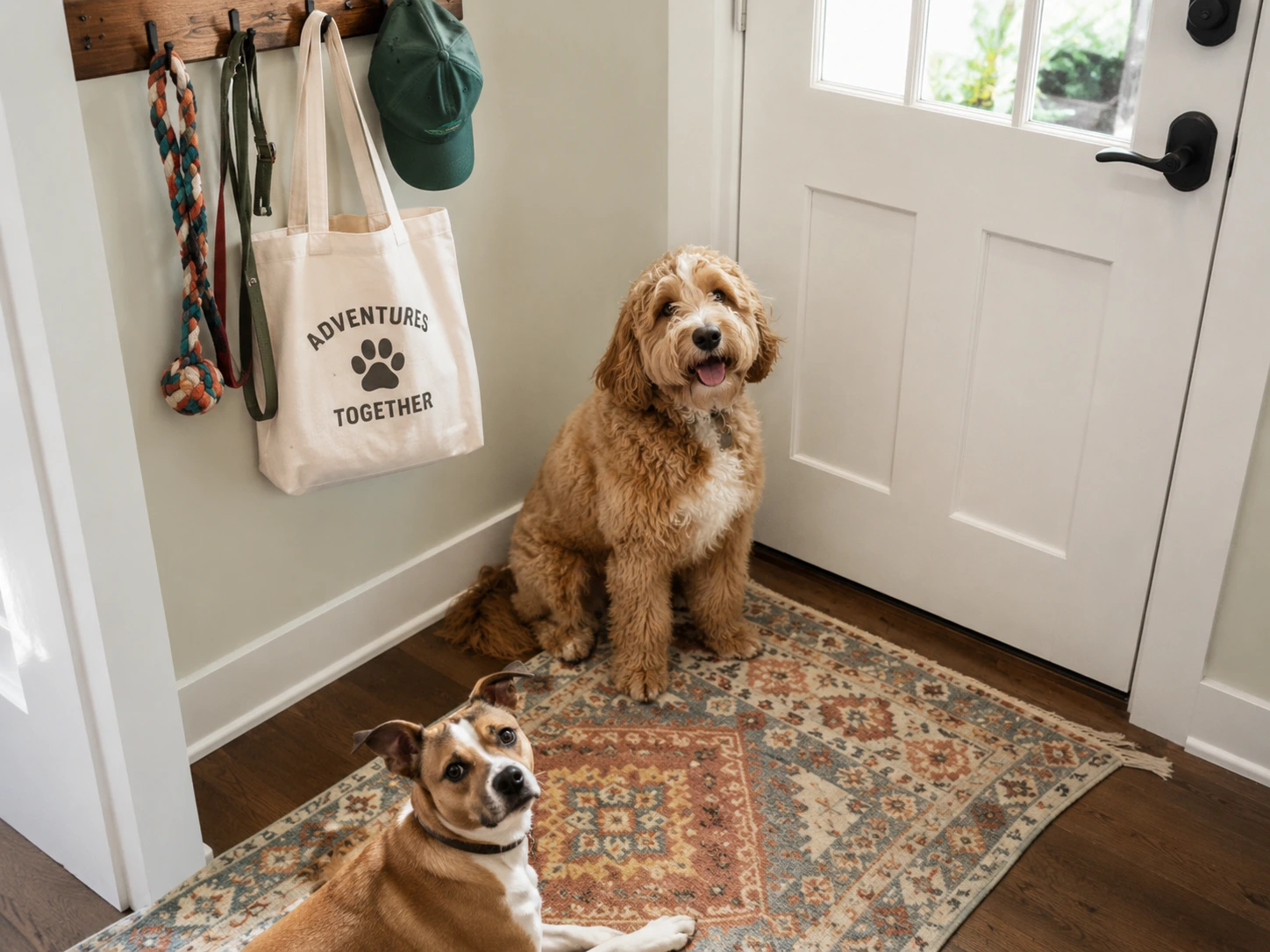
Your dog may react to keys because they have learned that keys predict you leaving. The same reaction can happen with shoes, a coat, a work bag, a laptop closing, or a particular morning routine. These are called departure cues.
Quick answer: The keys are usually not the real problem. They are a signal. If your dog starts pacing, panting, whining, barking, blocking the door, or refusing food as soon as the cue appears, work on the complete departure pattern and not only the sound of the keys.
Why Keys Become a Trigger
Dogs notice repeated sequences. If picking up keys is regularly followed by the owner leaving, the sound and movement can predict an absence. A dog that worries about being alone may become stressed before the door even opens.
Some dogs react to one clear cue. Others respond to a chain:
- alarm clock
- shower or work clothes
- breakfast routine
- shoes
- keys or bag
- lights turning off
- the front door
Stress Signs to Watch For
- following you closely from room to room
- panting when the room is not hot
- pacing or circling
- whining, barking, or howling
- trembling or hiding
- refusing treats
- standing between you and the door
- scratching at the exit after you leave
Compare these signs with the broader dog separation anxiety symptoms guide. One reaction does not confirm a diagnosis, but repeated patterns deserve attention.
How to Tell Excitement From Anxiety
A dog expecting a walk may become energetic when you pick up keys, but usually remains flexible. They may wag, bring a leash, eat treats, and settle when they learn they are not going out.
A worried dog may look tense, breathe quickly, pace, keep checking the exit, refuse food, or remain distressed after the cue is put away. Body language and recovery time are more useful than excitement alone.
What to Do First
Observe the full sequence
Write down which cues cause the earliest reaction. A pet camera can help you see what happens after you leave, including how quickly barking, pacing, or settling begins.
Break the prediction in small ways
During normal home life, occasionally pick up the keys and then do something ordinary: sit down, make tea, or move them to another location. Keep the exercise brief and calm. The goal is to make the cue less reliable, not to repeatedly tease the dog with a fake departure.
Practice below the dog’s stress threshold
If your dog is already panicking, a full departure is too difficult for training. Work with very small steps that the dog can handle, such as touching the keys, lifting them, or walking toward the door without escalating distress.
Keep exits neutral
A calm exit does not mean ignoring your dog’s needs. It means avoiding long emotional goodbyes that increase the contrast between together-time and absence. Make sure exercise, toileting, water, temperature, and comfort needs are handled first.
A Simple Departure-Cue Log
| Cue | Dog’s response | Recovery time |
|---|---|---|
| Keys moved | Looks up, follows, pants | Record how long until calm |
| Shoes put on | Whines or waits by door | Record whether food is accepted |
| Door opened | Barks or scratches | Record intensity and duration |
What Not to Do
- Do not repeatedly jingle keys until the dog shuts down or stops responding.
- Do not punish barking, pacing, or following.
- Do not suddenly test a long absence after one calm practice.
- Do not assume a crate will solve the problem; confinement can worsen distress for some dogs.
- Do not rely on treats if your dog is too stressed to eat.
When to Get Professional Help
Contact a veterinarian or qualified reward-based behavior professional if departure cues lead to severe panic, escape attempts, self-injury, heavy drooling, prolonged barking, destruction around exits, or house-soiling. Sudden behavior changes also deserve a veterinary check.
For a broader explanation of why this develops, read what causes separation anxiety in dogs. If distress is not improving, use the guide on what to do when separation-anxiety signs continue.
Frequently Asked Questions
Should I hide my keys from my dog?
Changing where you keep them may reduce one cue temporarily, but the dog may begin reacting to shoes, clothing, or the door instead. Address the complete sequence.
How long does departure-cue training take?
There is no fixed timeline. Progress depends on the dog’s stress level, history, health, environment, and how carefully practice stays below the point of panic.
Can I give a KONG when I pick up my keys?
You can offer food if your dog is relaxed enough to eat, but food should not be used to mask severe distress. Refusing the toy can itself be useful information.
Sources
 ✓
✓