

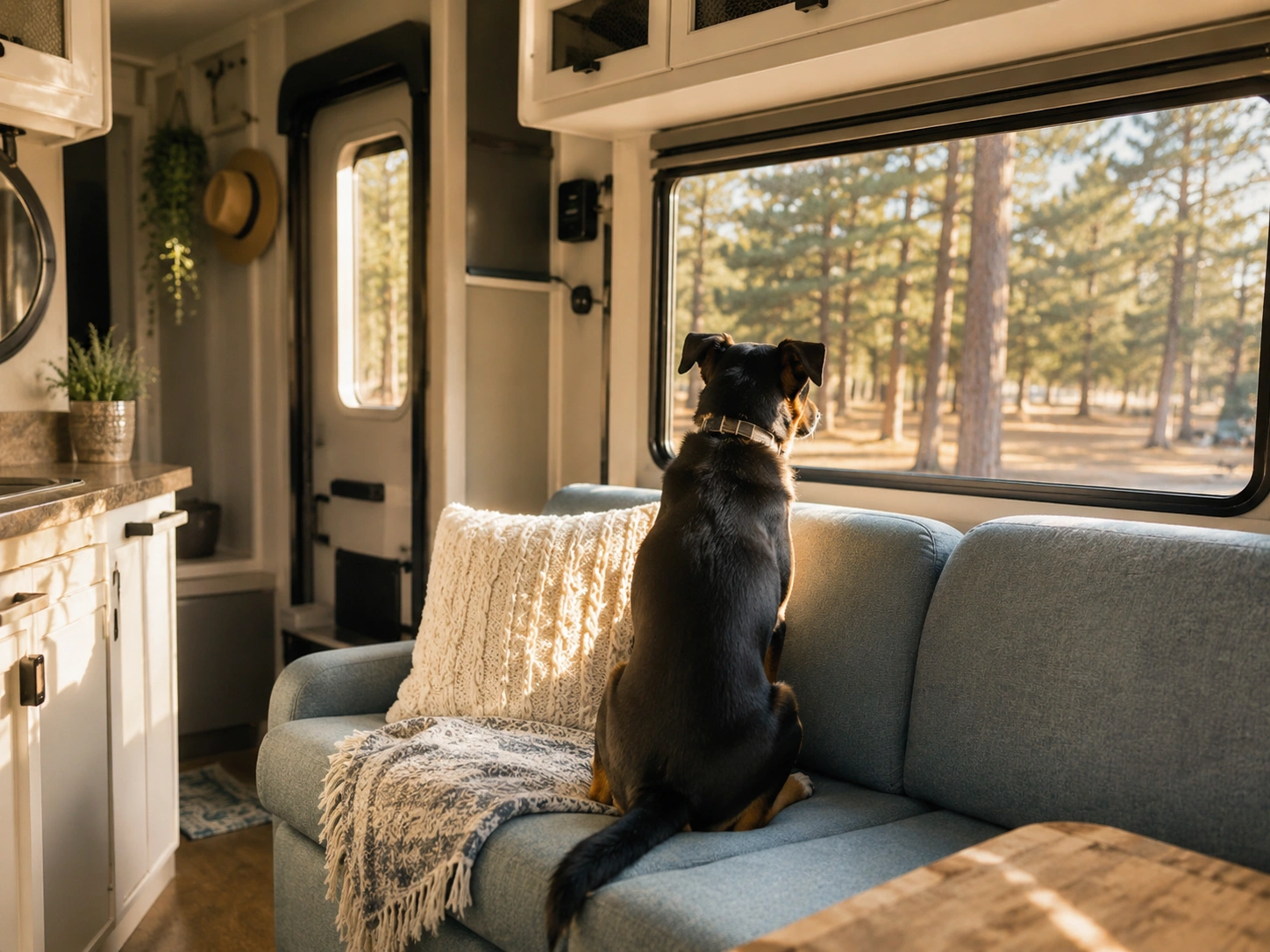
Your dog may bark, howl, scratch a door, soil indoors, or panic in a crate after you leave. These behaviors are stressful, but they do not automatically prove separation anxiety. The useful first step is to identify the timing, trigger, intensity, and repeatability of the pattern.
What causes separation anxiety in dogs? It usually develops from a combination of vulnerability and triggers rather than one single event.
Possible contributors include an abrupt routine change, limited experience being alone, moving or rehoming, the loss of a familiar person, a frightening event during an absence, distress focused on one person, or anxiety made worse by confinement. Veterinary references describe separation distress as fear or anxiety that occurs in anticipation of, or during, an attachment figure’s absence—not as spite or deliberate misbehavior. Merck Veterinary Manual explains the clinical pattern.
- Look for: signs tied repeatedly to departure or being left.
- Do not assume: one bark, accident, or chewed item confirms a diagnosis.
- Check context: outside noise, boredom, pain, toileting needs, and crate distress can look similar.
- Act early: use video, reduce panic-level absences, and seek professional help for severe signs.
Why Can Separation Anxiety Happen in Dogs?
A dog may become distressed because being alone predicts loss of access to a person, feels unsafe, or occurs in a setting the dog cannot tolerate. The exact pathway differs between dogs.
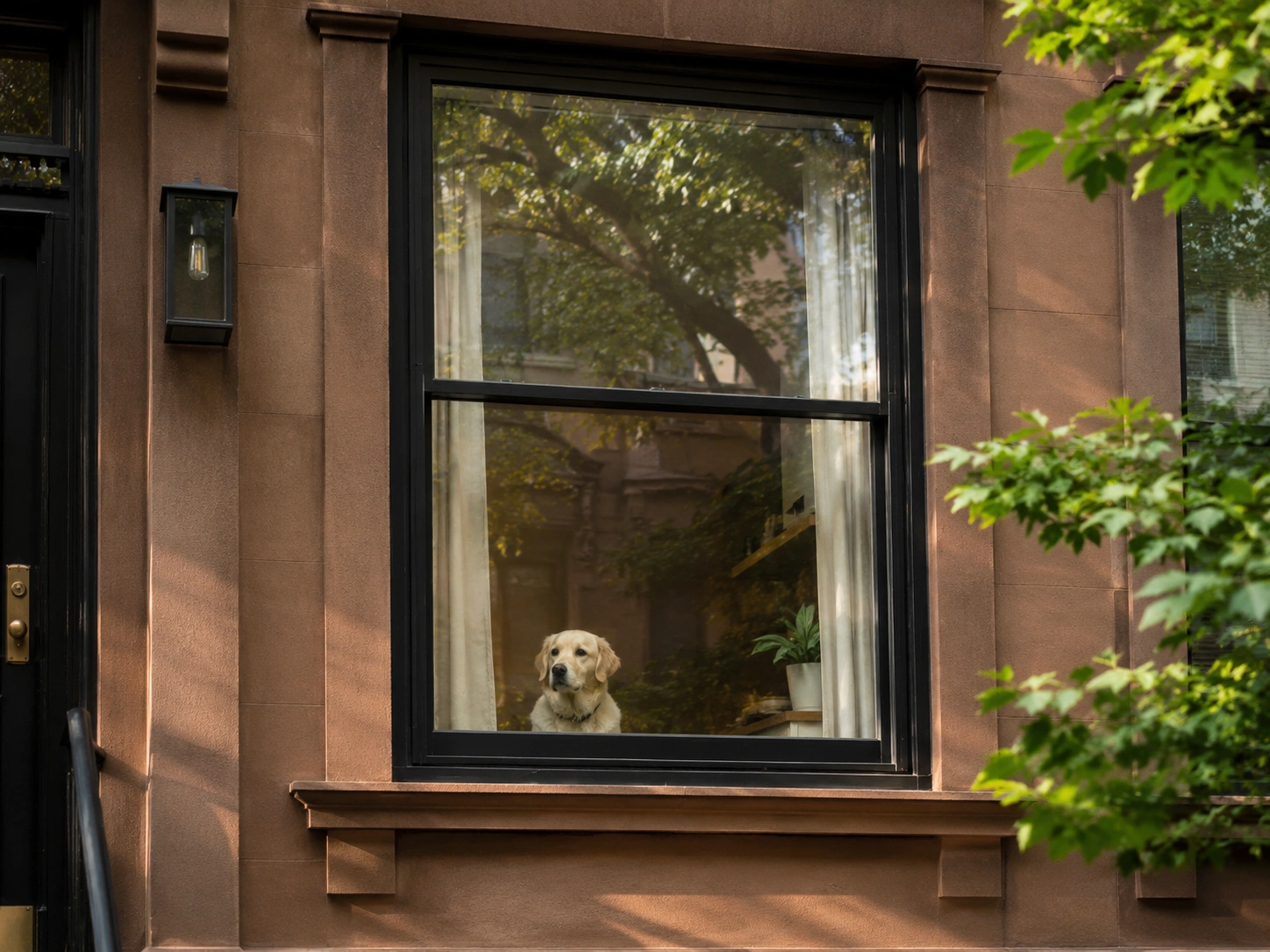
Separation anxiety is one form of separation-related distress. Some dogs struggle whenever no person is home. Others react mainly when one particular person leaves. A dog may also be comfortable in a room but panic when confined in a crate, which means the separation and the confinement both need to be assessed.
Signs can begin before departure because keys, shoes, a coat, or a work bag, or a familiar sequence already predicts that the owner is leaving. The ASPCA describes pre-departure distress and absence-related behavior, while the RSPCA uses the broader term separation-related behavior.
There is rarely enough information to identify the cause from one incident. A repeated pattern recorded across several departures is more useful than a single damaged object or complaint.
What Does Your Dog’s Pattern Suggest?
The behavior alone is not diagnostic. Compare when it starts, what else happens, and whether it appears mainly during departure, confinement, or outside stimulation.
| Observed pattern | Could have another explanation | More concerning for separation distress | Useful next step |
|---|---|---|---|
| Barking or howling | Responds to hallway noise, people, dogs, deliveries, or window activity. | Starts around departure and happens during most absences, often with pacing or inability to settle. | Record audio and video; block visual triggers during a separate test. |
| Chewing or scratching | Puppy exploration, boredom, teething, or access to tempting objects. | Targets doors, windows, crate bars, or other exit areas after the owner leaves. | Dog-proof the area and check for escape-related injury risk. |
| Crate crying | Brief protest, an unmet toileting need, or incomplete crate training. | Heavy panting, drooling, frantic escape attempts, or escalating vocalization. | Compare a crate with a gated, dog-proofed room when safe. |
| Indoor accident | Medical issue, schedule delay, incomplete house training, or digestive upset. | Occurs repeatedly during absences despite normal toileting opportunities. | Discuss sudden or repeated house-soiling with a veterinarian. |
| Following one person | Social preference, curiosity, habit, or normal proximity seeking. | The dog cannot settle, eat, or remain with another familiar person when that individual leaves. | Test short out-of-sight periods without forcing distress. |
| Refusing food | The item is unfamiliar, unsafe, or not valuable to the dog. | The dog takes the same food when the owner is present but consistently ignores it during absences. | Treat refusal as a possible stress clue, not proof by itself. |
What Are the Main Causes and Triggers?
Common triggers involve change, insufficient preparation for alone time, loss of predictability, attachment-specific distress, frightening experiences, or an unsuitable confinement setup.
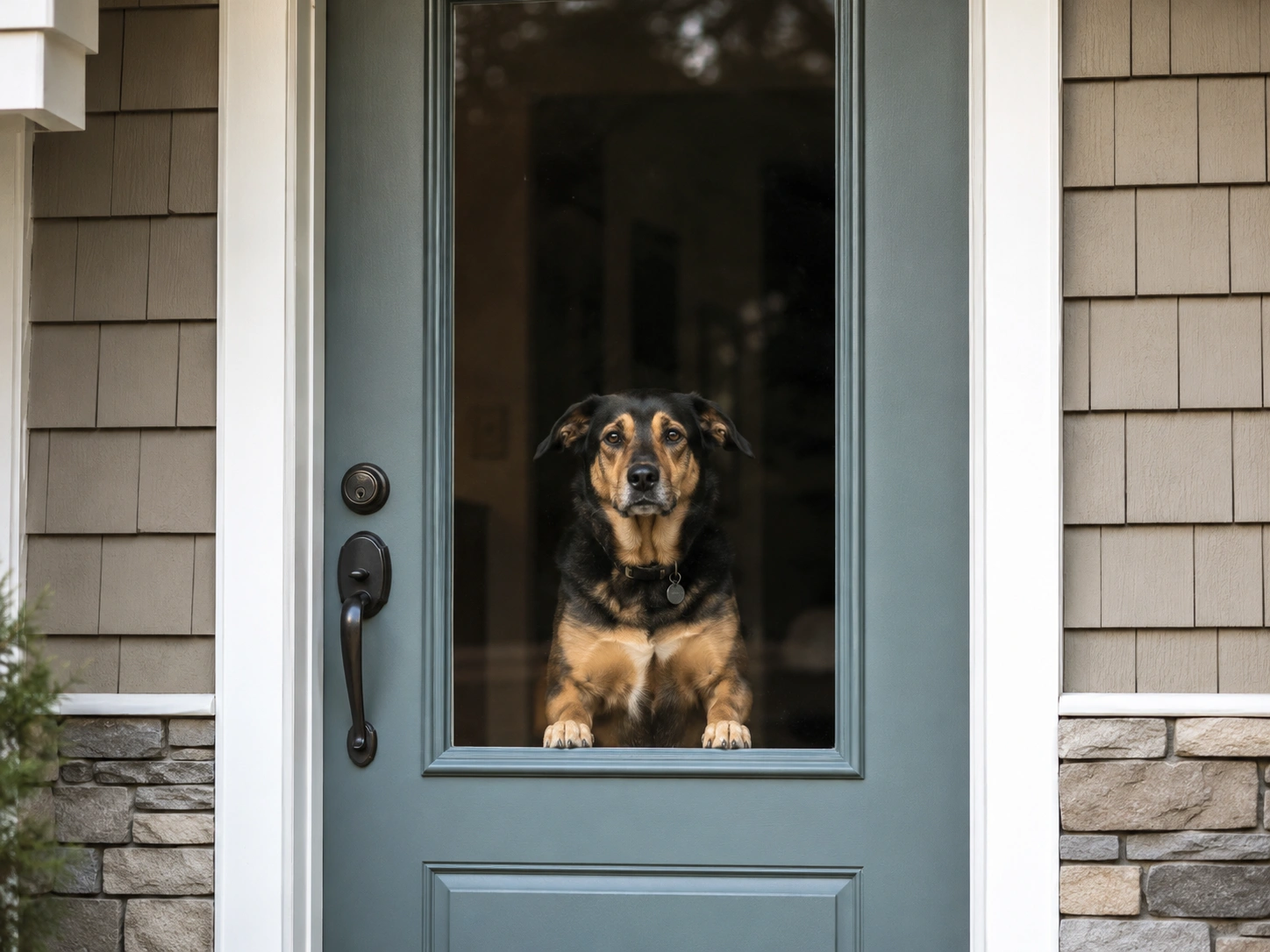
1. Sudden routine or household changes
A dog that previously coped may struggle after daily life changes. Possible triggers include:
- an owner returning to on-site work after spending more time at home
- a large change in work, walk, meal, or sleep schedules
- a family member or familiar caregiver moving away
- a move to a new apartment, flat, or house
- illness, recovery, travel, or a long period with few absences
This is sometimes described by owners as a separation anxiety “regression.” It does not necessarily mean prior training failed; the dog may need alone-time skills rebuilt at an easier level.
2. Limited experience with calm alone time
Puppies, newly adopted dogs, and dogs from households where someone is usually present may have had little opportunity to learn that short separations are safe and temporary.
A puppy crying when a person leaves the room is not enough to diagnose separation anxiety. The puppy may need age-appropriate toileting, rest, security, and very brief practice that ends before distress escalates.
3. Rehoming, adoption, or moving
A new home changes people, smells, sounds, routines, sleeping areas, and expectations at the same time. A newly adopted dog may follow closely, vocalize behind a closed door, or struggle with confinement while learning what is predictable.
These signs may improve as the environment becomes familiar, but repeated panic still deserves a structured plan rather than a “wait and see” approach.
4. Distress focused on one person
Some dogs remain unsettled even when another person or pet is present because the departure of one attachment figure is the relevant trigger. Constant following by itself is not proof; the stronger clue is an inability to settle when that person becomes unavailable.
5. Confinement-related fear or frustration
Crate distress and separation anxiety can overlap, but they are not identical. A dog may rest in a crate at night yet panic when crated during a daytime departure. In that case, time of day, departure cues, isolation, and physical confinement may all matter.
A crate should not be treated as a universal cure. A gated room, playpen, or dog-proofed space may be safer for some dogs, provided the setup is tested while the owner is nearby and the dog cannot escape or injure themselves.
6. A frightening event during an absence
Thunder, fireworks, alarms, construction, or frightening activity near a door or window may make a particular absence or location feel unsafe. This does not prove separation anxiety, but it can contribute to a new or worsening pattern.
How Can You Tell Normal Barking From Concerning Distress?
Normal barking is usually linked to a specific event and stops when the event passes. Separation-related distress is more likely to repeat around departure and appear with additional signs of anxiety or escape behavior.
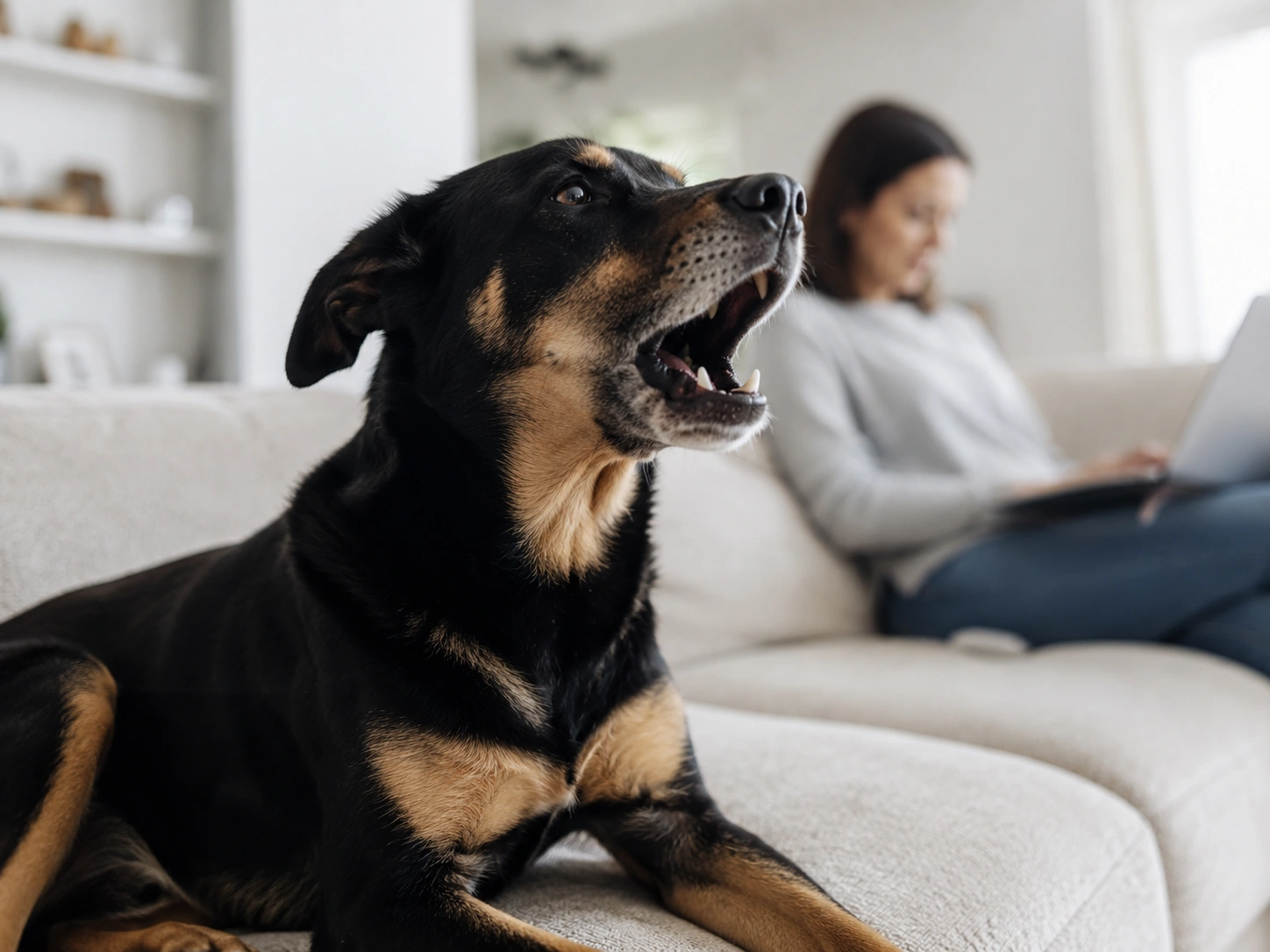
Dogs bark for many reasons, including excitement, frustration, boredom, fear, territorial responses, and outside noise. The RSPCA notes that barking is normal communication, but a change in frequency or intensity can indicate an underlying problem.
Signs that deserve closer attention
- vocalizing during most departures or absences
- pacing, panting, shaking, or drooling before or after departure
- scratching or chewing at doors, windows, walls, floors, or crate bars
- frantic escape attempts or injuries to teeth, nails, paws, or skin
- repeated house-soiling mainly during absences
- ignoring food the dog normally values when a person is present
- an inability to settle with another familiar person
Timing is the strongest owner-observable clue. A camera can show whether signs begin with departure cues, immediately after the door closes, after an outside noise, or only after a longer period. Video is useful evidence for a veterinarian or behavior professional, but it does not replace their assessment.
What Might Different Patterns Mean?
The following are hypothetical examples, not diagnoses. They show how the same behavior can point to different triggers depending on timing and context.
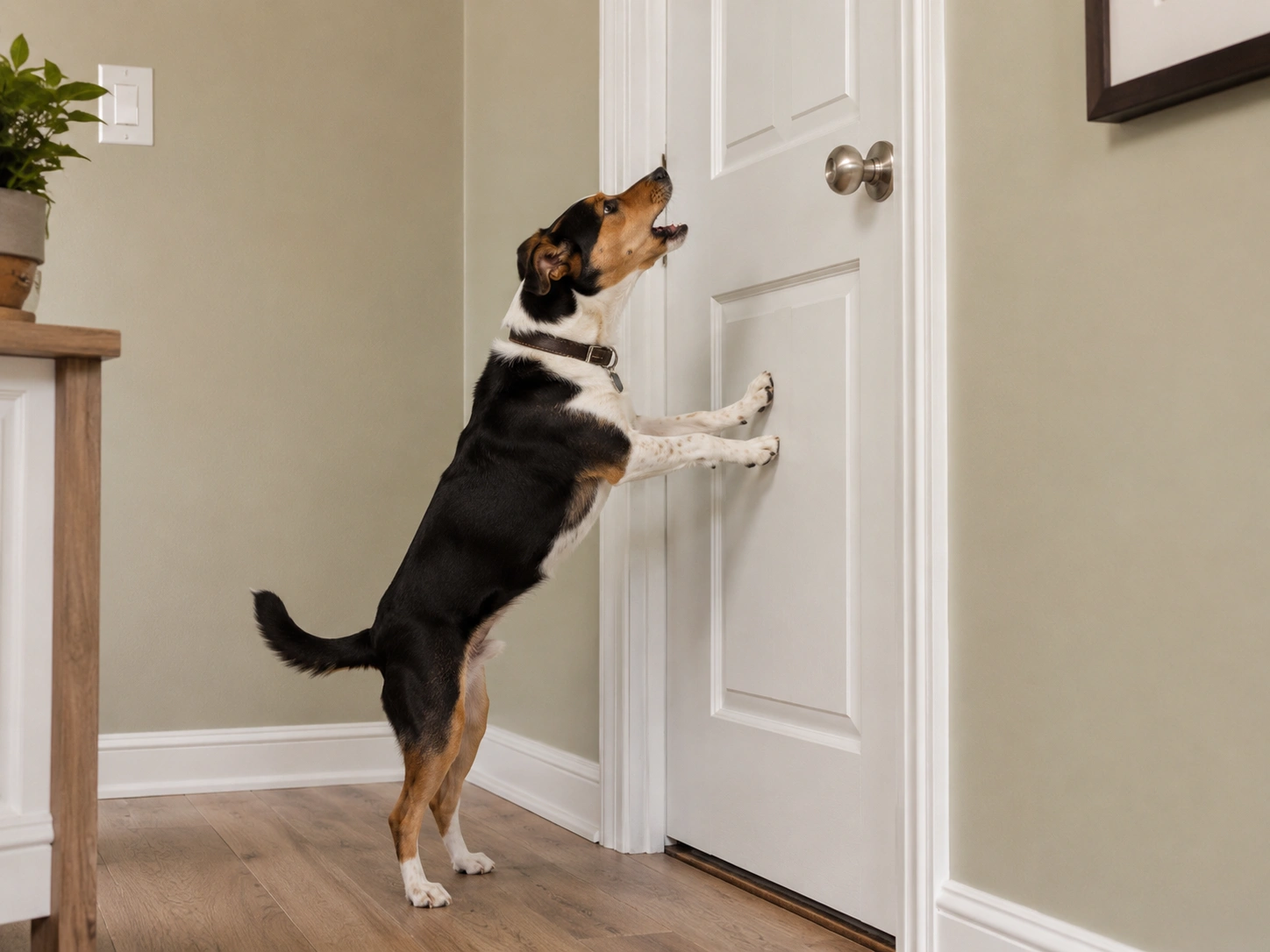
Example: barking after an apartment departure
A dog begins howling within two minutes of the owner leaving and continues despite no visible hallway activity. This pattern may be more consistent with separation-related distress than alert barking. A camera, shorter test absence, and neighbor-safe management are appropriate next steps.
Example: calm at night but distressed in a daytime crate
A dog sleeps comfortably in the crate at night but pants, drools, and claws the door when crated before work. The relevant problem may involve daytime departure, confinement, or both. Repeating the same setup to “get the dog used to it” could increase risk.
Example: chewing around the front door
A dog damages trim near the exit only after the owner leaves. That location-specific pattern may reflect an attempt to reach the owner or escape the situation rather than revenge. Immediate priorities are injury prevention and reducing unsupported absences.
Example: a newly adopted dog follows everywhere
A rescue dog shadows the owner and whines behind an interior door during the first week. Close following may be part of adjustment, but the owner can begin with seconds-long, low-stress separations while also building predictable meals, rest, walks, and safe places.
Example: a dog was fine, then struggled after a change
A dog that stayed home calmly begins barking after a move or a major schedule shift. This may indicate that new sounds, a new exit routine, or reduced recent practice has changed the dog’s coping threshold. The plan should restart below the level that triggers distress.
What Are the Safest First Steps for Dog Owners?
First document the pattern, prevent panic-level rehearsals where practical, and practice absences shorter than the dog’s current distress threshold. Do not begin by forcing a long absence.
-
Track what happens before, during, and after departure
Record a short, safe absence and note:
- the first sign and the minute it begins
- the departure cue that came immediately before it
- whether the dog is loose, gated, penned, or crated
- whether outside noise or window activity occurs
- whether the dog eats, lies down, or becomes more distressed
- how quickly the dog recovers after the owner returns
-
Reduce repeated high-stress absences
When feasible, use temporary management such as a trusted family member, pet sitter, dog walker, an appropriate daycare, staggered household schedules, or shorter absences. Management does not replace training; it reduces repeated panic while the dog learns.
-
Start below the dog’s distress threshold
The first exercise might be standing up and sitting down, touching the handle, opening and closing the door, or stepping out for only a few seconds. Return before the dog escalates. Increase difficulty gradually rather than following a fixed timetable.
-
Separate departure cues from actual departures
At calm times, pick up keys and stay home, put on shoes and prepare food, or carry a bag to another room. Keep sessions brief. The goal is to make these cues less reliable predictors of a long absence.
-
Choose the safest resting setup
Compare a crate, gated room, playpen, or dog-proofed area only when it is safe to do so. Stop using a setup that causes frantic escape behavior. The best space is the one in which the dog can remain physically safe and show the lowest level of distress.
-
Use enrichment as support, not as a test
A stuffed food toy, safe chew, or scent activity may help boredom or mild stress. A highly distressed dog may ignore food. Do not leave an item unless you already know the dog uses it safely without supervision.
-
Review progress from the video, not from duration alone
An absence is not successful merely because it lasted longer. Look for a loose body, normal breathing, willingness to eat, and the ability to lie down or disengage from the exit. Short calm repetitions are more informative than one long, difficult trial.
What Common Mistakes Can Make the Problem Harder?
The most common errors are assuming intent, increasing absence time too quickly, using confinement without checking the dog’s response, and treating enrichment as a complete solution.
“My dog is doing it out of spite.”
Exit scratching, vocalizing, house-soiling, and destructive behavior can reflect fear, frustration, boredom, medical needs, or an unsuitable setup. Punishing the dog after returning does not explain what to do differently during the next absence.
“The dog must learn to cry it out.”
A few seconds of mild protest is not the same as escalating panic. If the dog becomes more distressed, the step is too difficult and should be shortened or redesigned.
“A crate will solve separation anxiety.”
A crate can be a comfortable resting place for some dogs, but it can add confinement distress for others. Evaluate the dog’s behavior rather than assuming one setup fits every case.
“A food toy proves the dog is fine.”
Eating can be a reassuring sign, but it does not rule out distress later in the absence. Review the full recording after the food is finished.
“More exercise will cure it.”
Appropriate physical activity and enrichment support general well-being, but they do not by themselves treat panic associated with separation. An exhausted dog can still be anxious.
What Should You Avoid?
Avoid punishment, fear-based tools, unsafe confinement, and repeated absences that trigger frantic escape behavior. These approaches do not teach the dog that separation is safe.
Do not use these responses to separation distress
- yelling or punishment after returning home
- shock, spray, prong, or other aversive collars to suppress vocalizing
- forcing a panicking dog to remain in a crate
- deliberately extending distress to make the dog “give up”
- giving human anxiety medication or sedatives without veterinary direction
The American Veterinary Society of Animal Behavior recommends reward-based methods and advises against aversive methods for training and behavior treatment.
Do not ignore a sudden behavior change. Pain, illness, urinary or digestive problems, sensory decline, and cognitive changes can alter behavior and should be considered by a veterinarian.
When Should You Contact a Vet or Qualified Professional?
Contact a veterinarian when the behavior begins suddenly, appears with physical or cognitive changes, or creates injury risk. Seek behavior support when the dog cannot tolerate even brief absences or the problem is disrupting safety, housing, or daily life.
Contact a veterinarian promptly if you notice:
- self-injury, bleeding, broken nails, damaged teeth, or wounds from escape attempts
- sudden onset or rapid worsening
- pain, appetite change, vomiting, diarrhea, coughing, or altered movement
- new house-soiling, excessive thirst, or changes in urination
- confusion, sleep changes, staring, disorientation, or other senior-dog changes
- collapse, breathing difficulty, or another urgent medical sign
A veterinarian can assess medical contributors and discuss whether a behavior plan, environmental management, or prescription medication is appropriate. Medication is not a do-it-yourself solution; in some cases it is used alongside behavior modification. VCA Animal Hospitals describes gradual treatment and veterinary support, and Cornell University discusses desensitization and veterinary-guided medication.
Behavior help is especially useful when your dog:
- cannot remain alone for even a very short period
- vocalizes or paces during most departures
- tries to escape or damages doors, crates, walls, or windows
- refuses food during every absence
- has triggered neighbor, landlord, housing, or welfare concerns
- shows no progress despite careful, low-stress practice
Look for a reward-based professional with relevant behavior credentials. The American College of Veterinary Behaviorists directory lists board-certified veterinary behaviorists, and the IAABC consultant locator can help identify credentialed behavior consultants and trainers in multiple countries.
What Is the Practical Bottom Line?
Separation anxiety in dogs is not diagnosed from one damaged item or one noisy absence. A repeated, departure-linked pattern and the dog’s level of distress are more informative.
- Possible triggers include routine changes, limited alone-time experience, rehoming, a frightening absence, attachment-specific distress, and confinement problems.
- Record several safe departures to identify timing, triggers, and intensity.
- Use management to reduce panic-level absences while practicing below the dog’s threshold.
- Choose the safest setup based on the dog’s response, not a fixed rule about crates or rooms.
- Avoid punishment and aversive tools.
- Contact a veterinarian for sudden changes, possible medical signs, or injury risk; seek qualified behavior help for severe or persistent distress.
Frequently Asked Questions
These answers address common owner questions without treating a single sign as a diagnosis.
What causes separation anxiety in dogs suddenly?
A sudden change may follow a move, new work schedule, household loss, illness, pain, a frightening event, or age-related change. Because medical and behavioral causes can overlap, arrange a veterinary check when the onset is sudden or accompanied by other changes.
Is barking when left alone always separation anxiety?
No. A dog may bark at outside activity, from frustration, through habit, or because of unmet needs. Separation distress becomes more plausible when barking repeats around departure and occurs with pacing, escape behavior, drooling, house-soiling, or inability to settle.
Can crate crying be separation anxiety?
It can be, but the crate itself may also be the problem. Compare the dog’s response in a safe, dog-proofed room or behind a gate. Frantic escape attempts, heavy drooling, or injury risk mean the setup should be changed and professional advice obtained.
Why did my dog’s separation anxiety come back?
A return of signs can follow illness, travel, a move, reduced recent practice, a new schedule, or a frightening event. Restart at an easier duration and check for medical or environmental changes rather than immediately returning to the previous training level.
Should I punish my dog for barking when I leave?
No. Punishment can add fear or confusion and does not teach calm alone time. Focus on identifying the trigger, preventing unsafe rehearsals, and using gradual reward-based practice.
How long should alone-time practice last?
There is no universal starting duration. Begin with a step the dog can complete without escalating distress—even if that is only a few seconds or a pre-departure cue. Increase duration based on calm behavior in the recording, not on a preset schedule.
Sources and Further Reading
- ASPCA — Separation Anxiety
- VCA Animal Hospitals — Separation Anxiety in Dogs
- Merck Veterinary Manual — Behavior Problems of Dogs
- RSPCA — Separation-Related Behavior in Dogs
- RSPCA — How to Train Your Dog to Stay Home Alone
- Cornell University College of Veterinary Medicine — Anxious Behavior in Dogs
- American Veterinary Society of Animal Behavior — Humane Dog Training Position Statement
- International Association of Animal Behavior Consultants — Credentials
- American College of Veterinary Behaviorists — Find a Veterinary Behaviorist
- IAABC — Consultant Locator
Sources were selected for veterinary, animal-welfare, behavior, or professional-credential guidance. This article summarizes general information and does not claim veterinary review of this page.
 ✓
✓