

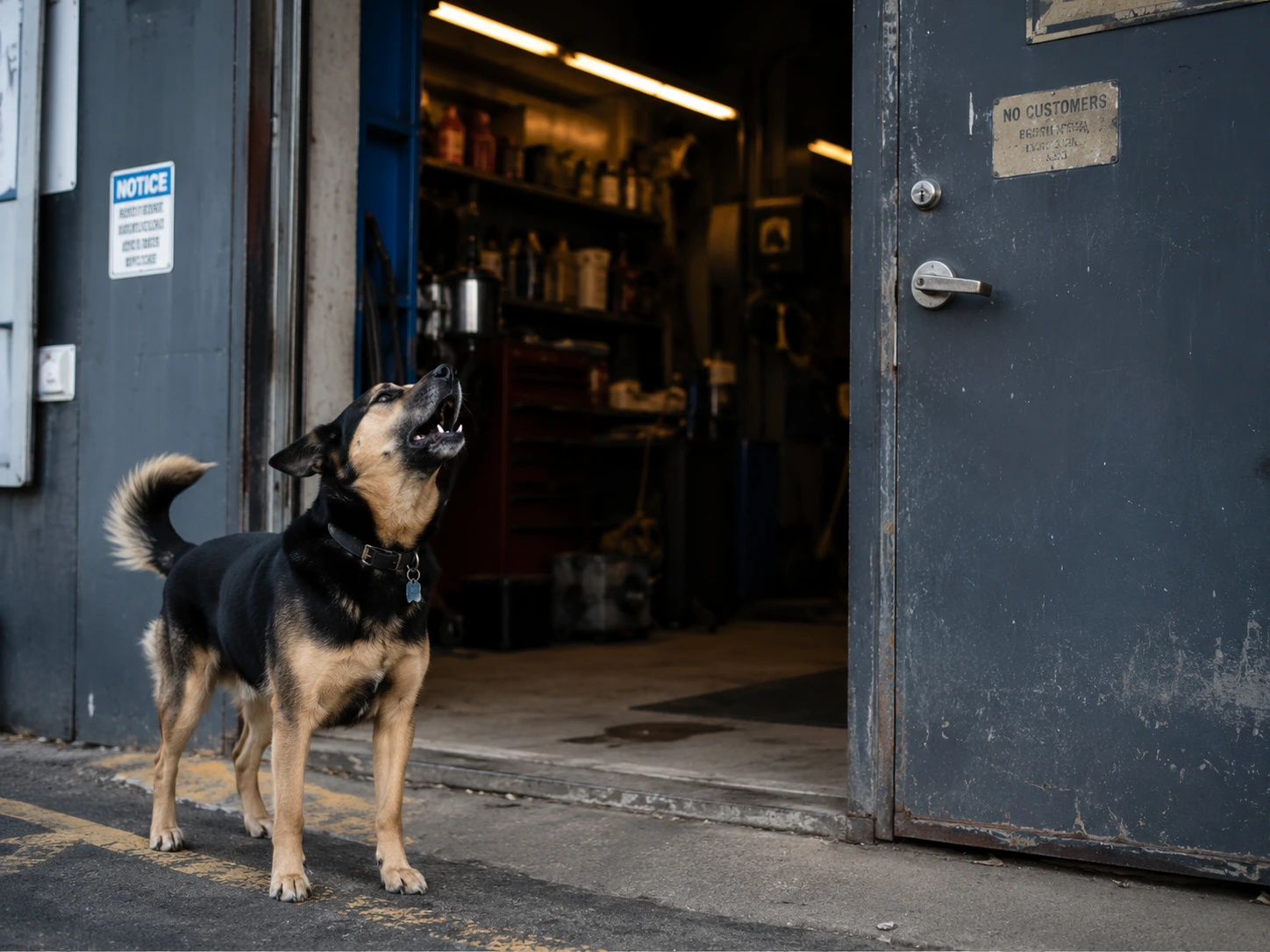
Your dog follows you down the hall. You close the bathroom or bedroom door, and barking, whining, pawing, or scratching starts almost immediately.
If your dog barks when owner leaves room, the behavior does not automatically mean separation anxiety. The trigger may be a closed barrier, frustration about losing access to you, a learned way to reopen the door, or genuine separation-related distress. Dogs bark for different emotional and practical reasons, so the full pattern matters more than one noisy moment. The RSPCA explains that barking can be linked to frustration, boredom, fear, excitement, or distress.
The key distinction
A dog who barks at an inside door may be reacting to the barrier not simply to being alone.
Watch what happens before, during, and after the door closes. Brief barking that stops when access returns may fit barrier frustration or a learned response. Persistent vocalizing with pacing, drooling, escape attempts, refusal of food, or inability to settle deserves a veterinary or qualified behavior assessment.
Why Your Dog Barks When You Leave the Room
The most useful question is not “Is my dog being difficult?” It is “What changes for my dog when this door closes?” The answer may involve blocked access, worry, learning history, unmet needs, or more than one factor.
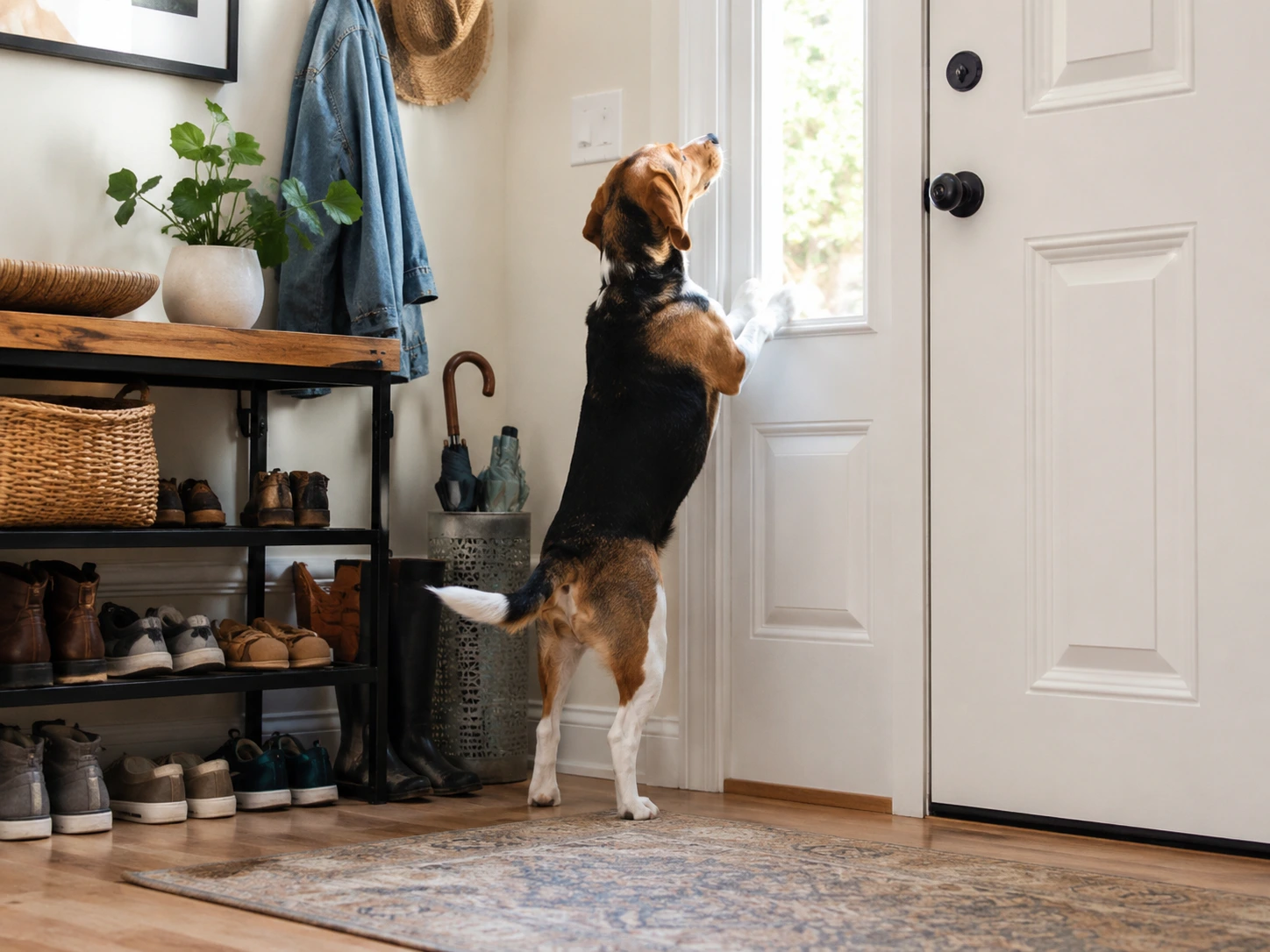
Closed-door frustration
Your dog can hear or smell you nearby but cannot follow. The ASPCA describes frustration-induced barking as barking that occurs when a dog cannot access something or has restricted movement. Read the ASPCA barking guidance.
Separation-related distress
The barking is part of a broader distress pattern: pacing, panting, drooling, destructive behavior near exits, escape attempts, house soiling, or an inability to eat or settle.
A learned door-opening response
If barking repeatedly makes the door open or brings attention, the behavior can become more likely. This is learning not spite, revenge, or manipulation.
1. The closed door blocks access
Some dogs are calm while you move around an open-plan space but react as soon as a solid door removes visual contact and access. They know you are close, yet they cannot reach you. That combination can create frustration or uncertainty.
This pattern is often easiest to recognize when barking begins at the exact moment the latch clicks and stops quickly when the door opens. It is a clue, not a diagnosis.
2. It may be barrier frustration rather than separation anxiety
Barrier frustration is more plausible when the response is tightly linked to one doorway or type of barrier and your dog can otherwise relax when genuinely alone for an appropriate period.
- The barking begins only after the door fully closes.
- Your dog paws, noses, or pushes at the blocked doorway.
- The response is brief and recovery is quick.
- Your dog remains calm during other short separations.
- A gate, glass door, or open doorway produces a different response.
These observations do not rule out anxiety. A dog can experience both frustration and distress, and the response may change as the situation becomes harder.
3. It may be separation-related distress

Consider a wider separation-related problem when barking is persistent or appears with multiple distress signs. The ASPCA lists persistent vocalizing, pacing, destructive behavior, escape attempts, and house soiling among possible signs. The MSD Veterinary Manual also notes salivation, restlessness, inability to settle, and loss of appetite.
- Persistent barking or howling during separation
- Pacing, heavy panting, shaking, or drooling
- Destruction focused on doors, frames, or exits
- Escape attempts or self-injury risk
- House soiling that occurs specifically during separation
- Refusing a normally valued food item when separated
One sign alone does not confirm separation anxiety. A veterinarian or qualified behavior professional should consider the dog’s medical history, environment, triggers, and behavior across different situations.
4. Barking may have become the reliable way to reopen the door
If barking is followed by the door opening, conversation, eye contact, touching, or access to you, those consequences may reinforce the behavior. Tufts University’s veterinary behavior guidance explains that attention-seeking behaviors can be maintained by accidental rewards. See the Tufts explanation of learned attention-seeking behavior.
The solution is not to label the dog “manipulative.” Teach and reward a calmer alternative before the barking starts, while also making sure you are not overlooking fear or panic.
5. Following you closely is a clue, but not proof of anxiety
A so-called “velcro dog” may follow you from room to room, rest beside you, and wait outside doors. That description is not a diagnosis. In fact, the MSD Veterinary Manual notes that close following by itself does not mean a dog is at greater risk of separation anxiety.
Look instead at recovery: Can your dog settle on a bed, engage with food, rest while you move away, and remain calm during ordinary short separations?
6. Timing, arousal, and unmet needs can make the response louder
Barking can be more intense when a dog is already excited, overtired, under-stimulated, or expecting an activity. Common high-arousal moments include busy mornings, pre-walk routines, visitor departures, evening “witching hours,” and periods with too little rest or appropriate enrichment.
This context does not explain every case, but it helps you choose an easier time for training.
| Observed pattern | What it may suggest | Practical next step |
|---|---|---|
| Starts at one closed interior door and stops quickly when it opens | Barrier frustration, a following habit, or a learned access response may be contributing. | Practice easier, very short door movements below the barking threshold. |
| Occurs across several types of separation with pacing, drooling, or escape behavior | Separation-related distress may be more likely and should not be treated as simple demand barking. | Reduce difficult separations and contact a veterinarian or qualified behavior professional. |
| Appears suddenly, especially with pain, confusion, sleep, appetite, or toileting changes | A medical or age-related contribution may need to be ruled out. | Arrange a veterinary check rather than relying only on training. |
Use a simple observation log for three to seven days
A short log can reveal whether the trigger is the door, the duration, the time of day, or a wider separation pattern. RSPCA Australia recommends recording the setting, triggers, and daily context when investigating excessive barking. Review its barking diary guidance.
- Which door or barrier was involved?
- How many seconds passed before barking?
- What did the dog’s body look like?
- How long did barking continue?
- Could the dog take food or use a toy?
- How quickly did the dog recover?
- What happened immediately before the event?
- Did the same response occur when truly home alone?
When safe and lawful in your home, a short phone or pet-camera recording can show details that are easy to miss. Video is especially useful for behavior that occurs out of view, but it does not replace professional assessment.
Real-World Scenarios
The same bark can mean different things in different settings. These examples show how context changes the next step; they are illustrations, not diagnoses.
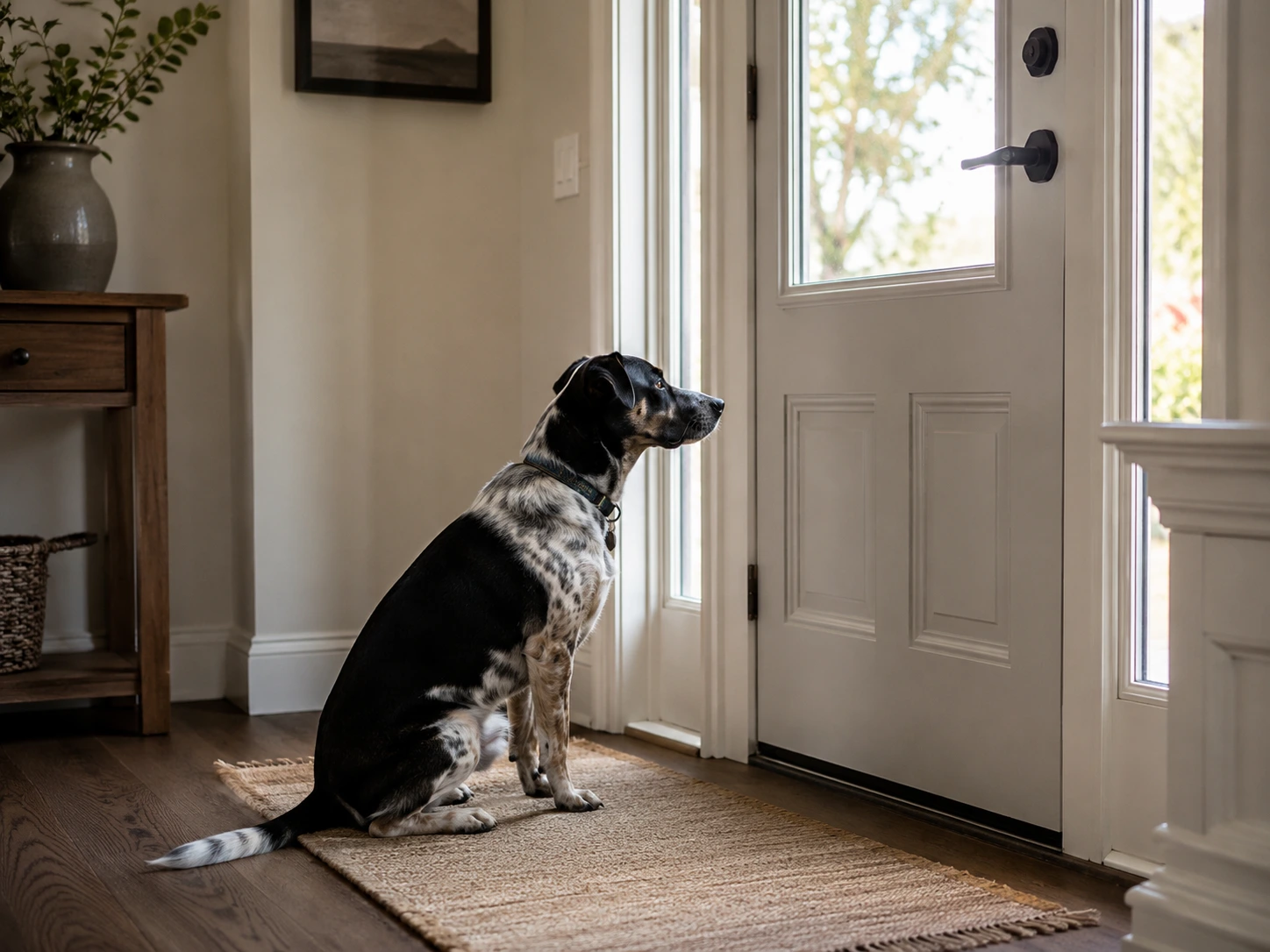
Bathroom-door barking
The dog barks as soon as the solid door closes but lies quietly outside an open door. Start with partial door movement and one-second closes at a calm time.
Calm home alone, upset by inside doors
The dog can rest during a short, recorded home-alone period but protests when a person is visibly nearby and inaccessible. The barrier itself may be an important trigger.
Apartment or shared-wall pressure
Noise quickly affects neighbors, housemates, or a landlord. Use management to prevent long rehearsals, practice at quieter daytime periods, and progress in very small steps.
How to Help a Dog Who Barks When You Leave the Room
Begin below the point where barking or panic starts. Reward calm behavior, change only one difficulty at a time, and shorten the exercise whenever your dog cannot stay relaxed.
-
Choose an easier starting point
Do not begin with a shower, work call, or long bathroom break. Choose a low-pressure doorway and find the easiest action your dog can watch calmly: walking toward the door, touching the handle, moving it a few inches, or stepping across the threshold.
-
Teach a calm station away from the door
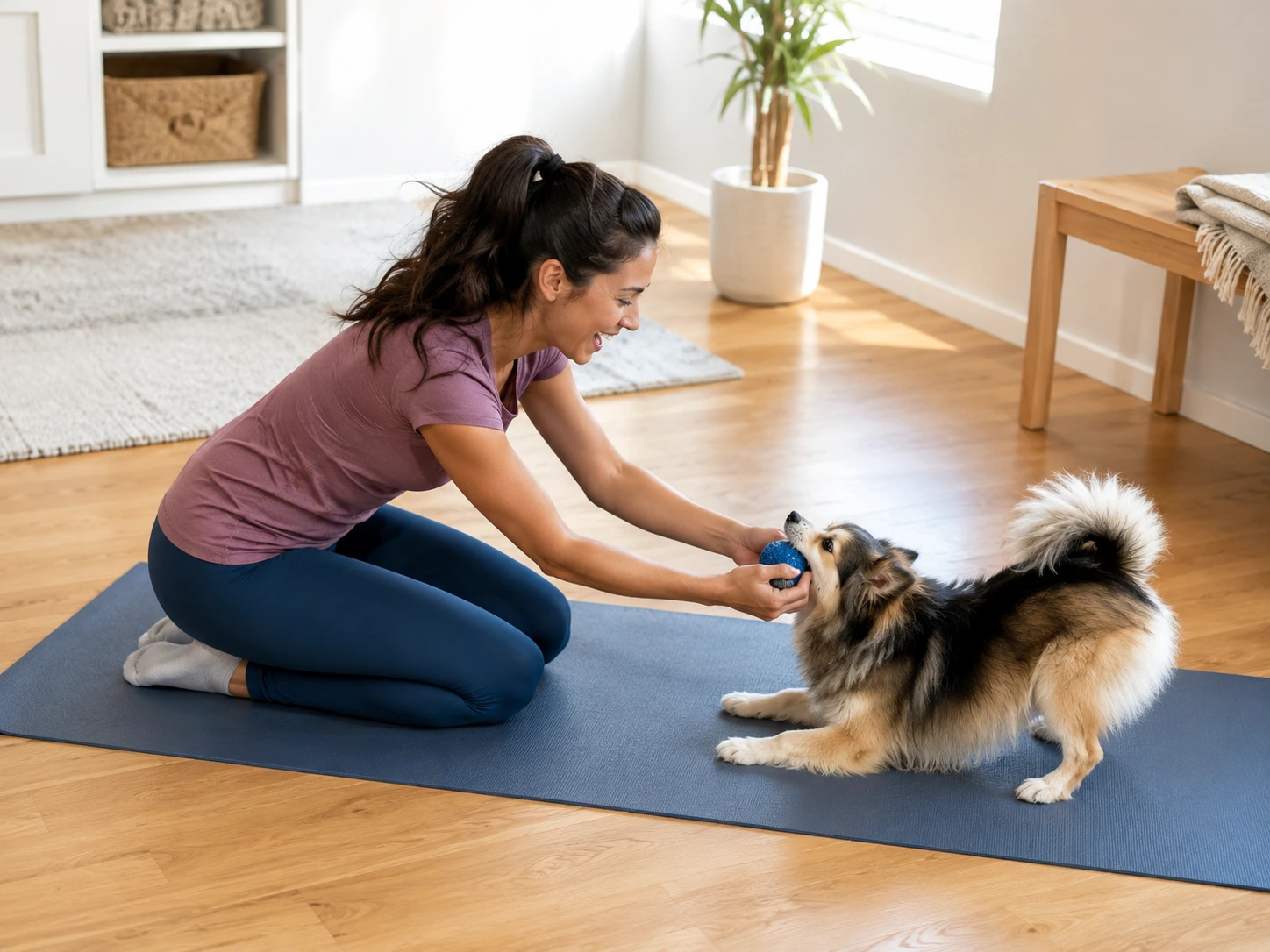
Use a bed, mat, or blanket. Reward your dog for stepping onto it, then for sitting or lying down. Practice while you remain nearby before adding distance. The station should predict calm, safe activities not forced isolation.
-
Practice micro-separations before barking starts
- Move the door slightly, then return to neutral.
- Close it halfway and reopen it.
- Close it for one second, then reopen it calmly.
- Repeat only while your dog remains loose-bodied and able to take food.
The goal is not to test how much barking your dog can tolerate. The goal is to create successful repetitions without distress.
-
Increase one variable at a time
Change either door position, your distance, or duration not all three together. Move from one second to two or three seconds only after several calm repetitions. If barking appears, return to the last easy version at the next session.
-
Reward the behavior you want to replace barking
Reinforce staying on the mat, looking away from the door, relaxing, or engaging with a safe food toy. Reward-based training is recommended by animal-welfare and veterinary behavior organizations. See RSPCA Victoria’s reward-based training overview.
-
Generalize calm independence during ordinary life
Practice brief, easy distance when nothing urgent is happening: sit in another chair, step through an open doorway, move around while your dog rests, or use a gate only when the dog stays comfortable behind it. Keep sessions short enough that the dog succeeds.
How to know whether the plan is working
Track behavior rather than expecting instant silence. Useful signs of progress include a longer delay before vocalizing, softer or fewer barks, less door-focused movement, willingness to eat, faster recovery, and the ability to settle at a slightly greater distance.
If the dog becomes more distressed, stops eating during separation, or needs increasingly long recovery time, the exercise is too difficult or the problem may need professional support.
What Not to Do
Avoid methods that increase fear, allow panic to continue, or accidentally turn barking into the most reliable way to gain access.
Common mistakes that can slow progress
- Do not assume the dog is barking out of spite, revenge, or stubbornness.
- Do not yell through the door; shouting can add noise, arousal, and conflict.
- Do not use long “cry it out” sessions for a dog showing distress.
- Do not jump from one-second practice to a long closed-door absence.
- Do not repeatedly crack the door open if that makes pawing and pushing more intense.
- Do not rely on punishment tools to suppress behavior without addressing the cause.
- Do not assume getting another dog will resolve distress focused on losing access to you.
Important distinction: Waiting briefly for a pause may help with mild, learned demand barking, but it is not appropriate when a dog is escalating into panic, scratching hard, drooling, shaking, or risking injury. In that situation, end the exercise safely and make the next repetition much easier.
When to Contact a Vet or Qualified Behavior Professional
Seek help when the behavior is sudden, severe, physically risky, difficult to interrupt with easier practice, or accompanied by broader medical or distress signs.
Contact a veterinarian promptly when you notice:
- Sudden onset or a clear increase in barking
- Pain signs, hearing changes, confusion, or disorientation
- Changes in appetite, sleep, toileting, or night waking
- New fearfulness or restlessness, especially in an older dog
- Self-injury, damaged nails or teeth, or forceful escape attempts
Medical problems can contribute to vocalization, and health causes should be ruled out before treating a sudden behavior change as a training issue. VCA Animal Hospitals discusses medical and behavioral contributors to barking.
A behavior professional is especially useful when your dog:
- Panics during very short separations
- Pants, drools, shakes, paces, or cannot settle
- Scratches or bites barriers hard enough to risk injury
- Cannot remain below threshold despite easier practice
- Creates serious housing, neighbor, or welfare concerns
- Shows the same distress across multiple separation situations
Look for a qualified, reward-based trainer or behavior consultant who takes a detailed history and is willing to coordinate with your veterinarian. Moderate or severe separation-related distress may require an individualized behavior plan and, in some cases, veterinary treatment.
Quick Summary
A closed door can trigger frustration, learned barking, uncertainty, or separation-related distress. The safest plan depends on which pattern your dog shows.
What to do next
- Record the trigger, delay, body language, duration, and recovery.
- Start with an easier doorway and practice below the barking threshold.
- Reward calm alternatives such as resting on a mat.
- Increase only one difficulty at a time.
- Stop treating the issue as simple demand barking if distress signs appear.
- Contact a veterinarian for sudden changes, medical signs, panic, or injury risk.
FAQs
These answers cover common follow-up questions without assuming every closed-door bark has the same cause.
Why does my dog bark when I go to the bathroom?
The solid door may suddenly block access and visual contact. Your dog could be frustrated, uncertain, following a learned habit, or showing separation-related distress. Compare bathroom behavior with other barriers and short separations.
Is bathroom-door barking the same as separation anxiety?
No. A dog may react specifically to an interior barrier while remaining calm during other appropriate separations. Separation anxiety is more concerning when barking is persistent and appears with wider distress signs such as pacing, drooling, destruction near exits, escape attempts, or inability to settle.
What are signs of separation anxiety in dogs?
Possible signs include persistent barking or howling, pacing, panting, drooling, house soiling, destructive behavior near exits, escape attempts, and refusal of food during separation. A veterinarian or qualified behavior professional should assess the full pattern and rule out other causes.
Why do dogs develop separation-related distress?
There is no single cause for every dog. Changes in household membership, schedule, residence, routine, previous experiences, medical factors, and individual temperament may contribute. Avoid assigning a cause without evidence from the dog’s history and behavior.
Should I let my dog bark it out?
Not when the dog is distressed. Long barking sessions can rehearse the behavior and may increase fear or arousal. Use shorter practice that ends before barking begins. Seek professional help if your dog cannot stay calm even during very easy separations.
Why does my dog cry when I leave the room for one second?
One second may already be above your dog’s current comfort level, especially when a solid door closes. Start with an easier cue such as touching the handle or moving the door slightly, then build duration gradually.
Will getting another dog stop this behavior?
Not reliably. Another dog may provide company, but it may not change distress or frustration focused on access to a particular person. Adding a pet should be a separate household decision, not a treatment shortcut.
How long should each closed-door training session be?
Keep it brief enough to produce several calm repetitions often only a few minutes at first. End while your dog is still successful. Session quality matters more than reaching a fixed duration.
 ✓
✓