
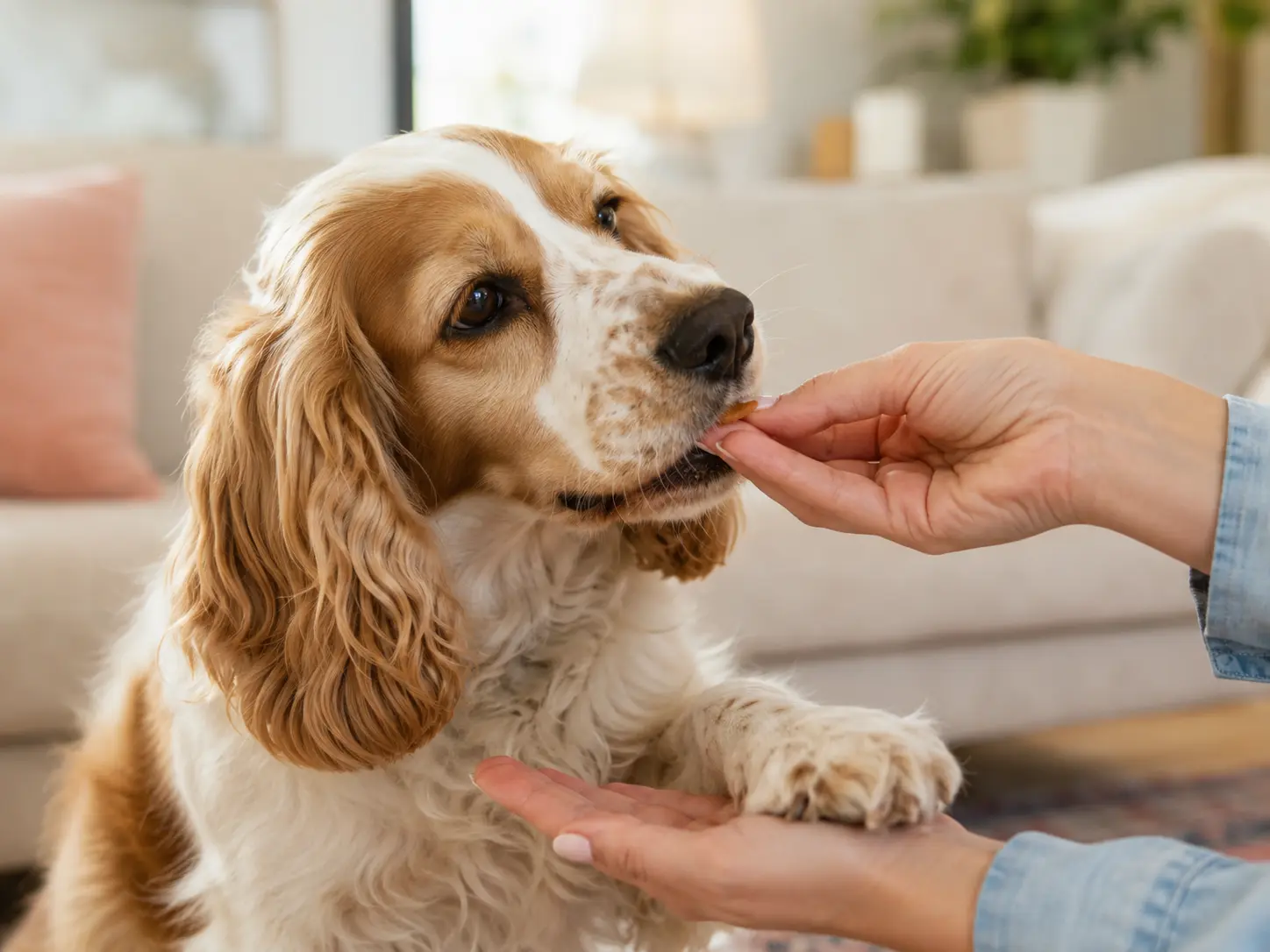
Your dog eats chicken, cheese, peanut butter, or a stuffed food toy while you are nearby but leaves the same food untouched after you walk out. That pattern can be confusing, especially when your dog starts eating as soon as you return.
Why this may happen
If your dog won’t eat treats when left alone, stress may be making it difficult for them to eat.
Food refusal by itself does not prove separation anxiety. However, an untouched treat combined with barking, pacing, panting, drooling, scratching exits, escape attempts, or distress around departure cues can point to separation-related distress. The RSPCA includes not eating meals, treats, or food toys while alone among possible signs.
Follow the 7-step action planWhy Dogs May Ignore Treats When Left Alone
The most likely explanation is not that the treat suddenly became less appealing. Your dog’s emotional state may have changed when alone time began.
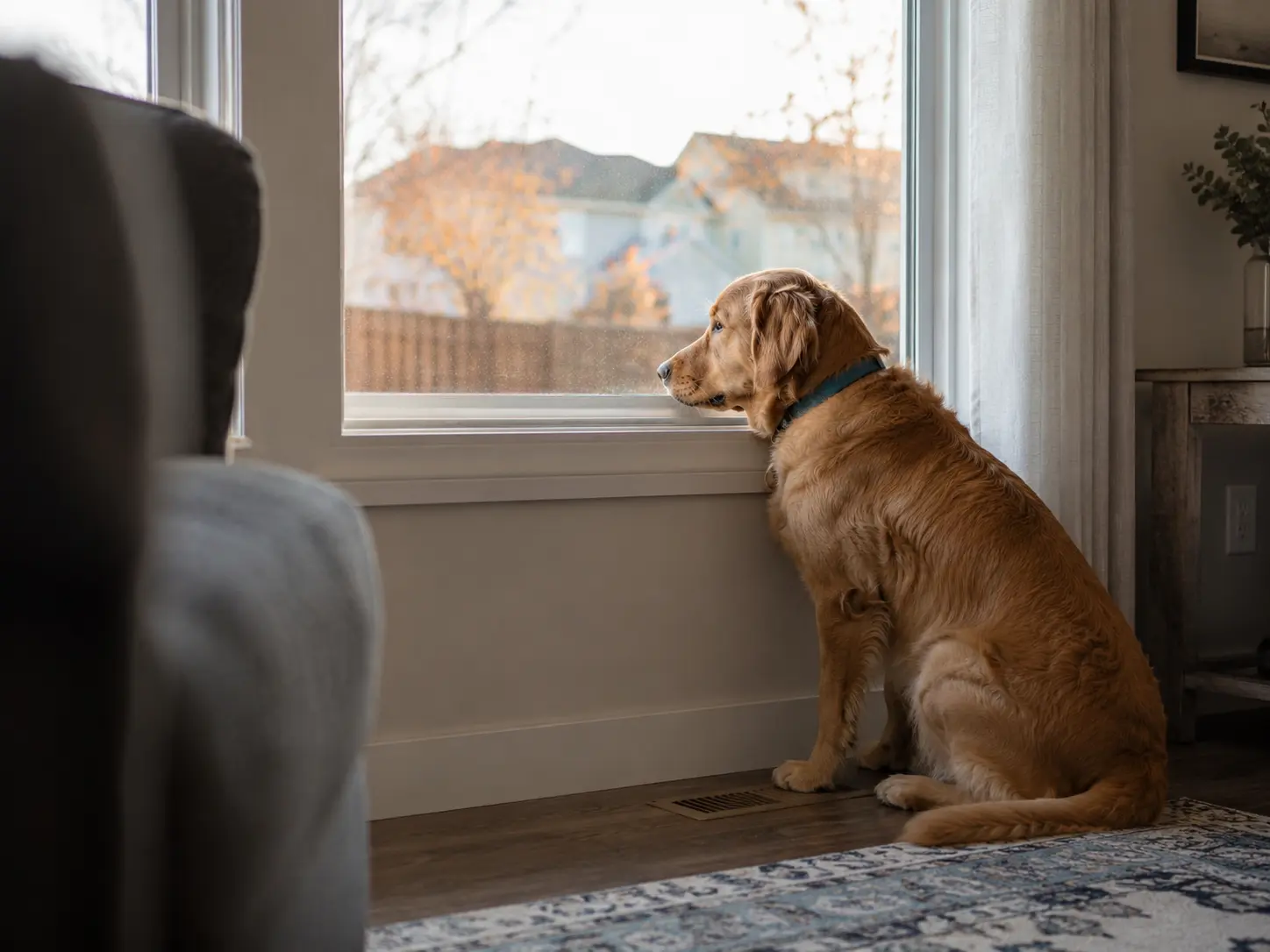
1. Stress can interrupt normal eating
A worried dog may focus on the door, your location, outside sounds, or escape rather than food. This is why a dog may ignore a favorite chew or stuffed toy during an absence and eat it after you return.
2. The training step may already be too difficult
Food can support behavior work only while a dog is calm enough to notice, take, and eat it. VCA describes desensitization as beginning with very low-intensity exposure and increasing difficulty gradually. If your dog stops eating, freezes, pants, drools, or vocalizes, reduce the difficulty rather than waiting for them to push through.
For mild cases, Merck Veterinary Manual notes that relaxation training and counterconditioning with food, chews, puzzle feeders, and special toys may help. Dogs showing stronger distress usually need a more individualized plan.
3. Departure cues may start the stress before you leave
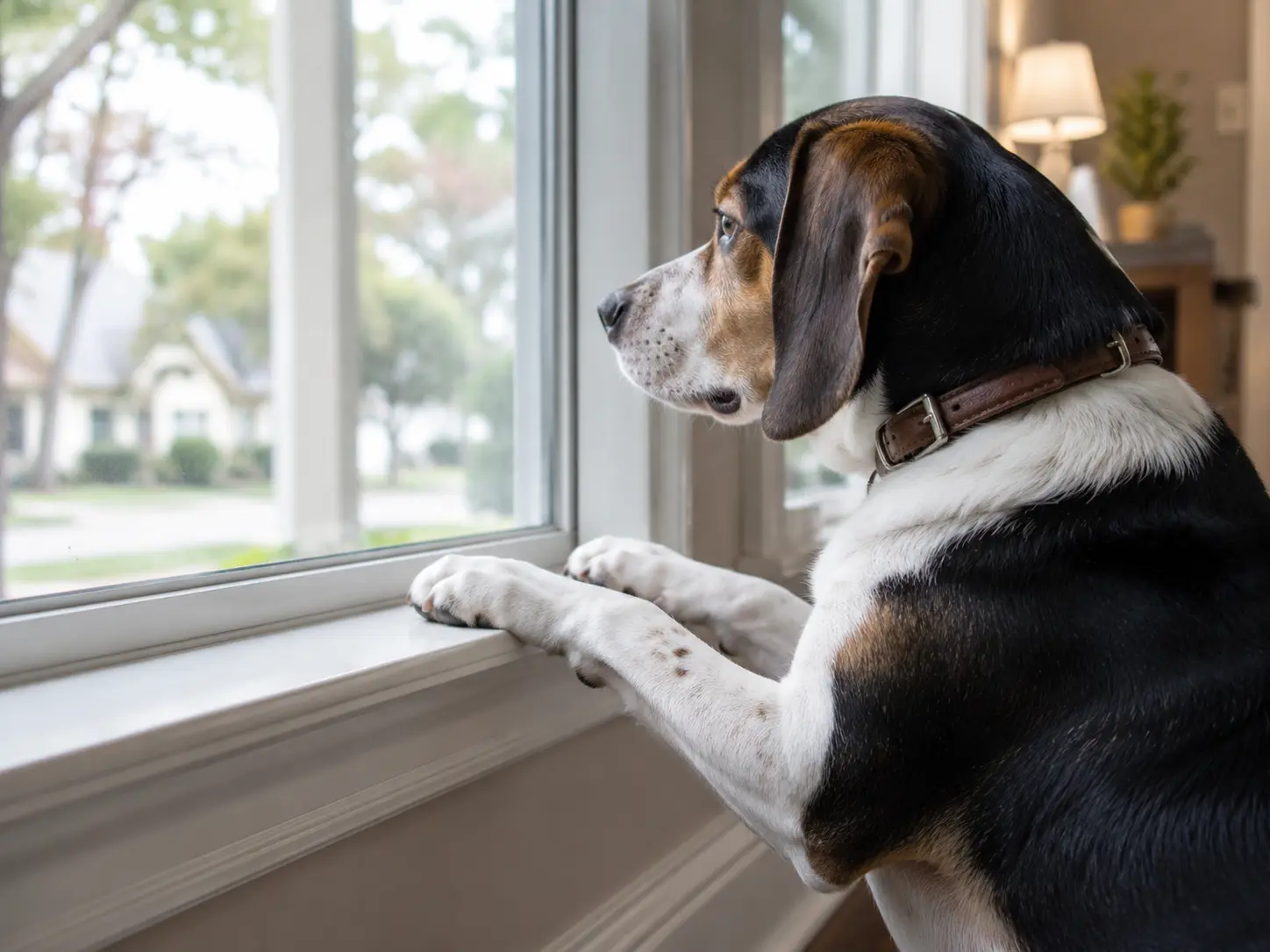
Keys, shoes, a coat, a work bag, lights turning off, or movement toward the front door can become predictors of alone time. Some dogs stop eating before the owner has left. The ASPCA describes predeparture distress as one possible part of separation anxiety.
- Picking up keys or a bag
- Putting on shoes or a coat
- Closing curtains or turning off lights
- Walking toward the exit
- Moving the dog into a crate or separate room
4. Being in another room is not the same as being home alone
A dog may relax in another room while you shower or work because they can still hear, smell, or locate you. The front door closing can be a separate and more difficult trigger. This is why a dog may tolerate distance inside the apartment, flat, or house but still struggle when everyone leaves.
5. Confinement or the environment may add stress
The treat may be ignored because the dog is focused on a crate door, baby gate, hallway noise, people passing a window, or another trigger in the alone-time setup. Compare safe setups rather than assuming every dog feels calmer in a crate.
- Scratching or biting a crate or door
- Barking toward windows or shared hallways
- Repeatedly checking exits
- Trying to climb or push through a barrier
- Settling in one room but panicking in another
Real-World Scenarios
Timing is the clearest clue. Notice when eating stops, what happens next, and whether eating restarts immediately after you return.
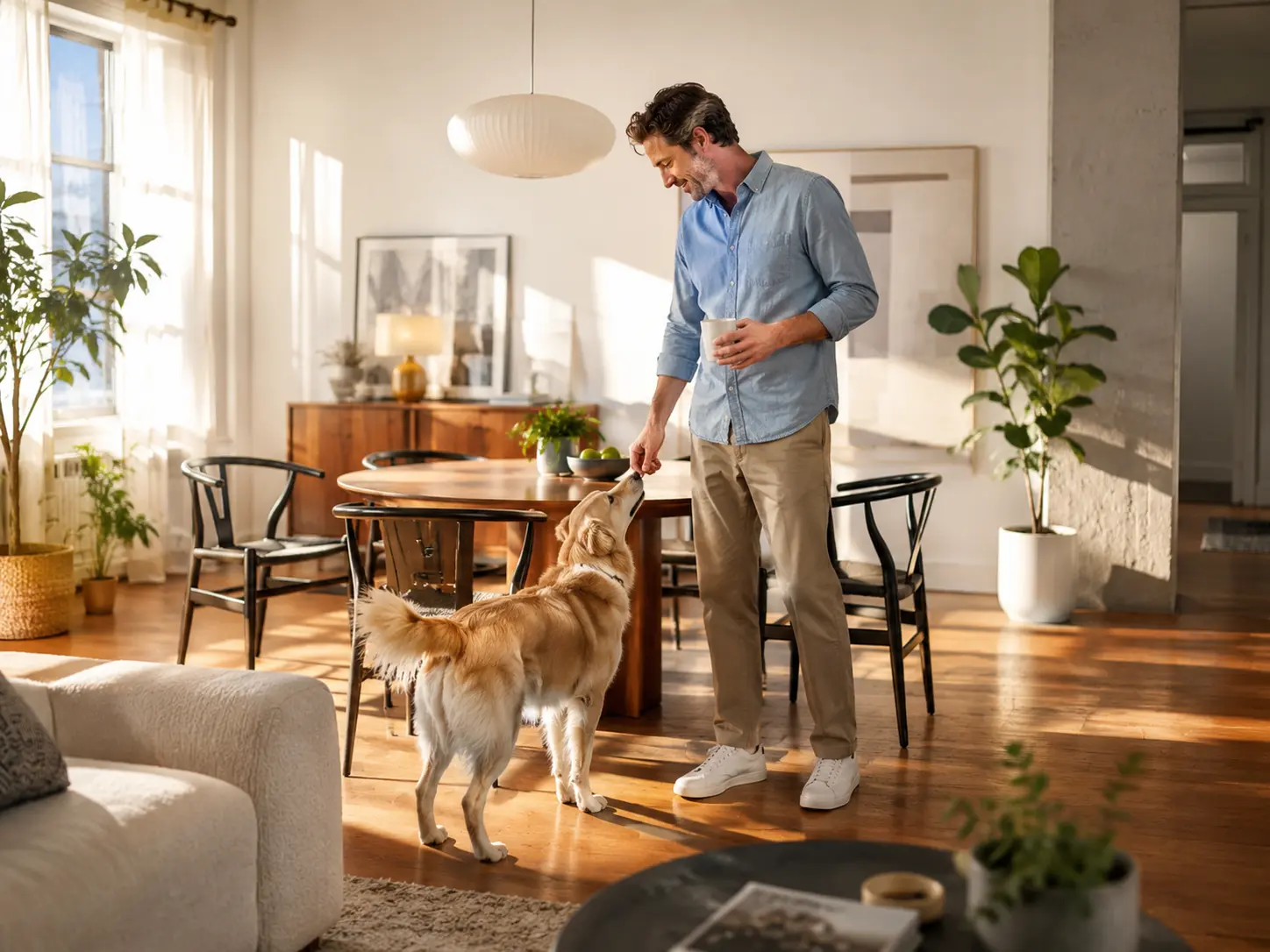
The untouched stuffed toy
The dog investigates a frozen food toy while the owner is home, ignores it after the door closes, and starts eating after the owner returns.
What it may mean: The food is probably not the whole problem; the absence may be changing the dog’s ability to eat.
The keys stop the meal
The dog is eating normally, then stops and begins pacing when the owner picks up keys.
What it may mean: Stress may begin with a learned departure cue rather than the actual absence.
Apartment or flat barking
The dog leaves treats untouched and barks near the front door or at sounds in a shared hallway.
What it may mean: Separation, environmental noise, or both may be involved. Camera footage can help separate the triggers.
The crate struggle
The dog ignores a chew and scratches, bites, pants, or drools inside the crate.
What it may mean: The dog may be over their comfort limit, and confinement could be increasing the distress.
What To Do If Your Dog Won’t Eat Treats When Left Alone
Start by recording the pattern, then make alone-time practice easier than the point where your dog stops eating or shows distress.
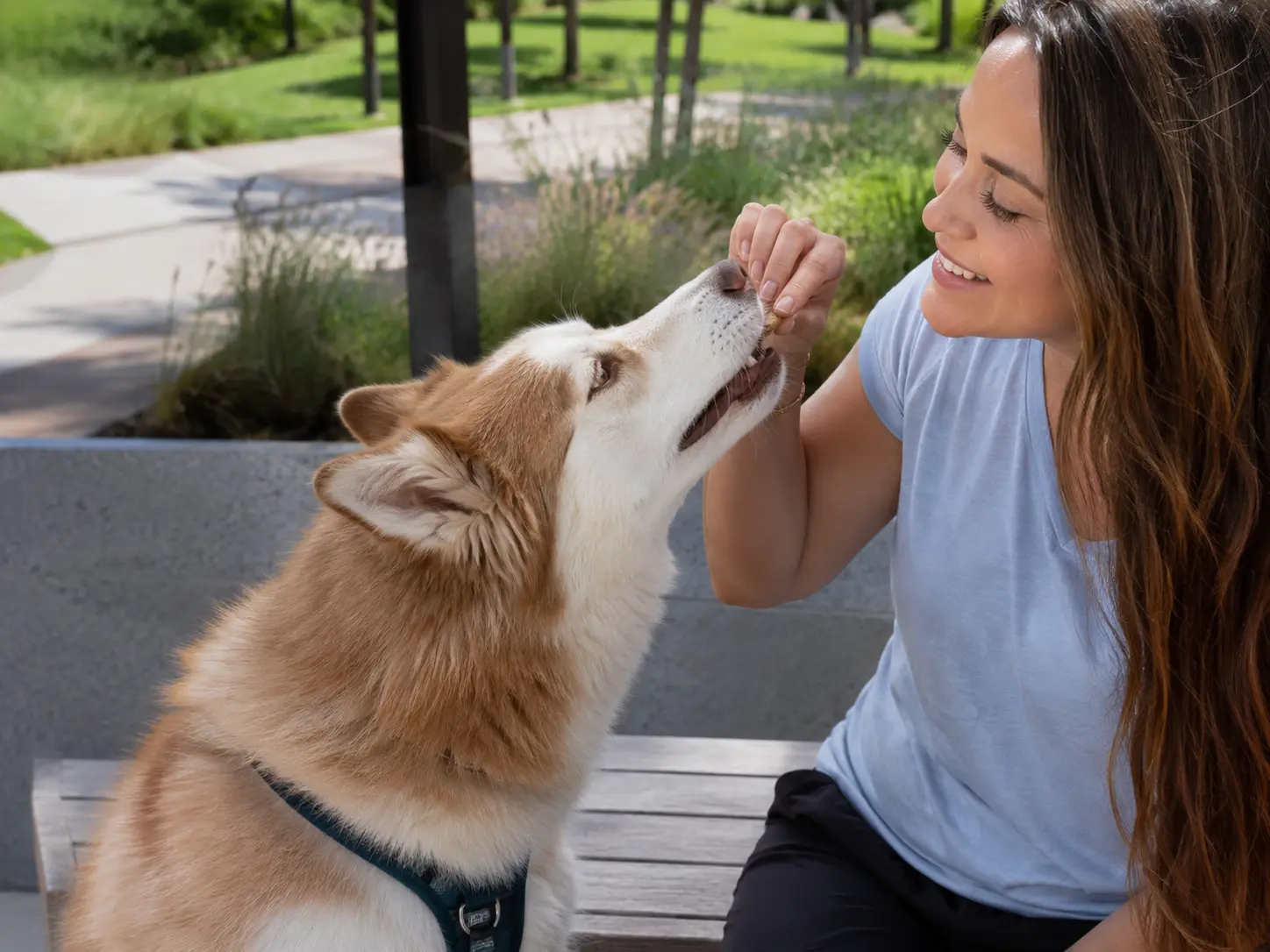
Check the pattern before changing the treat
Use a pet camera, phone recording, or audio recording to watch the first 15–30 minutes after you leave. The RSPCA also recommends occasional camera checks because some signs of distress are easy to miss.
- Does your dog eat normally while you remain in the room?
- What exact cue makes eating slow or stop?
- How soon do barking, pacing, panting, drooling, or scratching begin?
- Does your dog settle, or does distress continue?
- Does eating restart only after you return?
What the recording may show
- Eats until the door closesThe actual departure may be the main trigger.
- Stops at keys or shoesStress may begin during predeparture cues.
- Ignores food only in a crateConfinement or barrier stress may be contributing.
- Stays calm but does not eatHunger, preference, timing, or routine may matter more than anxiety.
Avoid long test absences
Do not extend an absence simply to see whether a distressed dog eventually eats or becomes quiet. Repeated high-stress departures can make it harder to identify a workable starting point.
When practical, use temporary management while training: a trusted family member, sitter, dog walker, suitable daycare, or a schedule that reduces unavoidable long absences. The goal is to limit repeated panic, not to make your dog permanently dependent on company.
Make departure cues less predictive
Practice ordinary departure actions without always leaving:
- Pick up your keys, then sit down.
- Put on your shoes, then make tea or continue working.
- Touch the door handle, then walk away.
- Carry your bag to another room and remain home.
Keep the practice brief and neutral. If a cue already causes intense distress, work with a qualified professional rather than repeating it at full intensity.
Start below your dog’s stress limit
Begin with a version of separation your dog can handle comfortably. Depending on the dog, that might be walking toward the door, opening it, stepping outside for one second, or closing it briefly.
Return before barking, frantic following, escape behavior, or food refusal begins. Increase only one part at a time such as distance, door movement, or duration so you can tell what changed.
Use food as feedback, not as a test
If your dog calmly takes and eats a small treat during an easy practice step, the difficulty may be manageable. If the dog refuses food or shows distress, make the next repetition easier.
High-value food can help some dogs, but a stronger-smelling treat is not a substitute for reducing fear. Avoid repeatedly offering richer foods if appetite changes also occur when you are home.
Adjust the alone-time setup
Compare safe options using camera footage. Some dogs rest better in a familiar room; others prefer a crate they already use comfortably. Do not introduce confinement only for departures if the dog already fears it.
- Reduce visual triggers by closing curtains where appropriate.
- Choose a quieter room if hallway or street noise causes barking.
- Keep the temperature comfortable and provide water.
- Remove unsafe objects and check barriers for escape or injury risks.
- Supervise any new chew or food toy before leaving it with your dog.
Track progress with the same measures
Keep a simple log so decisions are based on patterns rather than memory. Record the date, departure cue, absence length, whether food was eaten, first sign of distress, and time needed to settle.
A practical progress rule
Repeat an easy level until your dog remains relaxed across several sessions. If food refusal or distress returns, reduce the next step. Progress is rarely perfectly linear, so compare trends across days rather than one difficult session.
What Owners Often Misunderstand
An untouched treat is information about the situation, not evidence that your dog is stubborn, manipulative, or ungrateful.
“My dog is being stubborn.”
A dog who eats after you return may have been unable to eat comfortably during the absence. Punishment does not address that emotional state.
“I only need a better treat.”
Chicken, cheese, liver, or peanut butter may still be ignored when the training step is too difficult. Treat value and stress level are separate variables.
“A puzzle toy will distract any dog.”
Food toys can enrich calm alone time, but they do not treat severe distress by themselves. First confirm that the dog can use the toy safely and calmly.
“Eating after I return means everything is fine.”
Eating after a reunion may simply show that the dog’s stress dropped enough for normal behavior to resume.
When It May Not Be Separation Anxiety
Food refusal alone is not a diagnosis. Health, pain, noise, confinement, routine, appetite, or age-related changes can produce a similar pattern.
| Observed pattern | What it may suggest | Useful next step |
|---|---|---|
| Eats until keys, shoes, or the door move | Departure-cue stress may begin before the absence. | Record the sequence and practice easier versions of the earliest cue. |
| Ignores food only in a crate or closed room | Confinement, barrier frustration, or the location may be contributing. | Compare safe setups on camera and seek help if there are escape attempts. |
| Refuses food while you are home too | Illness, pain, nausea, dental discomfort, medication effects, or appetite change may be involved. | Contact a veterinarian, especially if the change is sudden or persistent. |
| Reacts mainly to windows, hallway sounds, or storms | An environmental or noise trigger may be more important than separation. | Use footage to identify the trigger and reduce exposure where practical. |
| Senior dog shows new confusion, night pacing, or house-soiling | Pain, sensory decline, medical disease, or cognitive dysfunction may be contributing. | Arrange a veterinary assessment rather than assuming a training problem. |
In older dogs, new disorientation, sleep changes, altered interaction, house-soiling, or repetitive activity deserves veterinary attention. Cornell University College of Veterinary Medicine outlines common signs associated with canine cognitive dysfunction, but similar signs can also have other medical causes.
What Not To Do
Do not punish food refusal, force prolonged distress, or leave an untested chew with an unsupervised dog.
Do not use “cry it out” as a behavior plan
Long periods of barking, howling, scratching, or panic are not a controlled desensitization exercise. If the dog is already distressed, shorten the absence and seek professional guidance.
Do not punish the dog or the untouched food
Scolding after you return does not teach calm alone time. It can add worry around your return and does not address the reason eating stopped.
Do not keep escalating treat value without checking health
Richer food may hide a broader appetite change temporarily. If your dog also refuses meals, seems painful, vomits, acts lethargic, or has another sudden change, contact a veterinarian.
Do not leave unsafe chews or toys unsupervised
Choose a size the dog cannot swallow whole, avoid loose or removable parts, and test durability under supervision. VCA warns that unsuitable chews can create dental, choking, or intestinal risks. Remove damaged toys or pieces that could be swallowed.
Get prompt veterinary help for these red flags
- Repeated vomiting, collapse, breathing difficulty, or suspected choking
- Injury, bleeding, broken teeth, or damage from escape attempts
- Sudden refusal of normal meals or water
- Severe pain, abdominal swelling, marked lethargy, or disorientation
- Rapidly worsening behavior or a major change in a senior dog
When To Contact a Vet or Qualified Trainer
Start with a veterinarian when the change is sudden, severe, medically concerning, or new in an older dog. Add qualified behavior support when distress consistently appears around departures.
Contact a veterinarian when:
- Food refusal occurs when you are home as well as away.
- The behavior started suddenly or is getting worse.
- There is vomiting, pain, dental discomfort, lethargy, confusion, or another health change.
- A senior dog develops new night restlessness, house-soiling, disorientation, or altered interaction.
- Your dog injures themselves or may have swallowed part of a toy.
Contact a qualified reward-based trainer, clinical animal behaviorist, or veterinary behaviorist when:
- Your dog refuses food during nearly every departure.
- Barking, howling, pacing, drooling, panting, or scratching continues for long periods.
- Your dog attempts to escape from a crate, room, door, or window.
- Your dog cannot remain relaxed during even very short practice absences.
- You are unsure how to set a safe starting point without triggering distress.
A veterinarian can also discuss whether medical treatment should be part of a broader behavior plan. Medication decisions should be individualized and made by the treating veterinarian.
Quick Summary
An untouched treat can be a useful stress signal, but it must be interpreted with the dog’s full behavior and health history.
- Record what happens before and after you leave.
- Look for distress signs alongside food refusal.
- Begin practice below the point where eating or calm behavior stops.
- Use food as feedback, not as proof that the dog is fine.
- Compare safe confinement and room setups.
- Track duration, cues, eating, and settling over time.
- Contact a veterinarian for sudden, severe, or medically concerning changes.
FAQs
These answers cover the most common next questions without treating one behavior as a diagnosis.
Is it normal for a dog not to eat when left alone?
It can happen, especially when a dog is worried, but it should be interpreted in context. A calm dog may simply be uninterested or not hungry; a dog who also barks, paces, pants, drools, scratches, or tries to escape may be showing separation-related distress.
Does food refusal mean my dog has separation anxiety?
No. Food refusal is one possible clue, not a diagnosis. Camera footage, timing, other behavior signs, medical history, and a professional assessment may be needed to understand the cause.
Why does my dog eat the treat only when I come home?
Your return may reduce the dog’s stress enough for eating to restart. That pattern suggests the food itself may not be the main issue, although hunger and routine should still be considered.
Should I use higher-value treats for separation anxiety?
You can test a safe, familiar high-value treat during an easy practice step. If your dog still refuses it or shows distress, lower the difficulty instead of repeatedly increasing richness or portion size.
Can severe separation-related distress stop a dog from eating?
Yes, a highly distressed dog may ignore food, chews, or puzzle toys. Frequent refusal combined with vocalizing, drooling, panting, destruction, or escape attempts warrants veterinary and qualified behavior support.
Should I leave a Kong or food puzzle when my dog is alone?
A familiar food toy may help a dog who is calm enough to use it. Test the toy under supervision first, choose an appropriate size and difficulty, and do not rely on it as the only response to significant distress.
Should I crate my dog if they ignore treats when alone?
Not automatically. Some dogs rest comfortably in a well-conditioned crate; others become more distressed. Scratching, biting bars, heavy panting, drooling, or escape attempts are reasons to reassess the setup and seek qualified guidance.
When should I call a veterinarian?
Call when the behavior starts suddenly, worsens, occurs with normal meals, or appears with vomiting, pain, lethargy, confusion, sleep changes, house-soiling, injury, or new senior-dog behavior changes.
 ✓
✓