


Your dog follows you from room to room, waits outside closed doors, or stays pressed against your feet. The important question is not simply how close your dog stays—it is whether they can remain calm when access to you changes.
This guide compares a velcro dog vs separation anxiety, shows what to observe on camera, and explains when simple independence practice is reasonable and when veterinary or qualified behavior support is safer.
Velcro Dog vs Separation Anxiety:
“Velcro dog” is an informal description for a dog who prefers to stay close while you are home. It is not a clinical diagnosis.
Separation-related distress is about difficulty coping with absence or lost access. A dog may bark, howl, pace, pant, drool, scratch exits, attempt escape, soil indoors, refuse food, or remain unable to settle when left alone. Current veterinary guidance also recognizes that some dogs become distressed when separated from one specific caregiver, even if another person is present.
A clingy dog can be comfortable when left alone, and a dog with separation-related distress may not look especially clingy while you are home. Observe the full pattern rather than judging one behavior in isolation. See the MSD Veterinary Manual overview and the RSPCA guidance on separation-related behavior.
Key difference: velcro behavior is mainly a preference for proximity; separation-related distress is an inability or reduced ability to cope when you leave or access is blocked.
Start the observation checklistVelcro Dog vs Separation Anxiety: Quick Comparison
The same behavior can have different meanings. Following you while you are home is less informative than what happens before departure, during absence, and after your dog realizes you are unavailable.
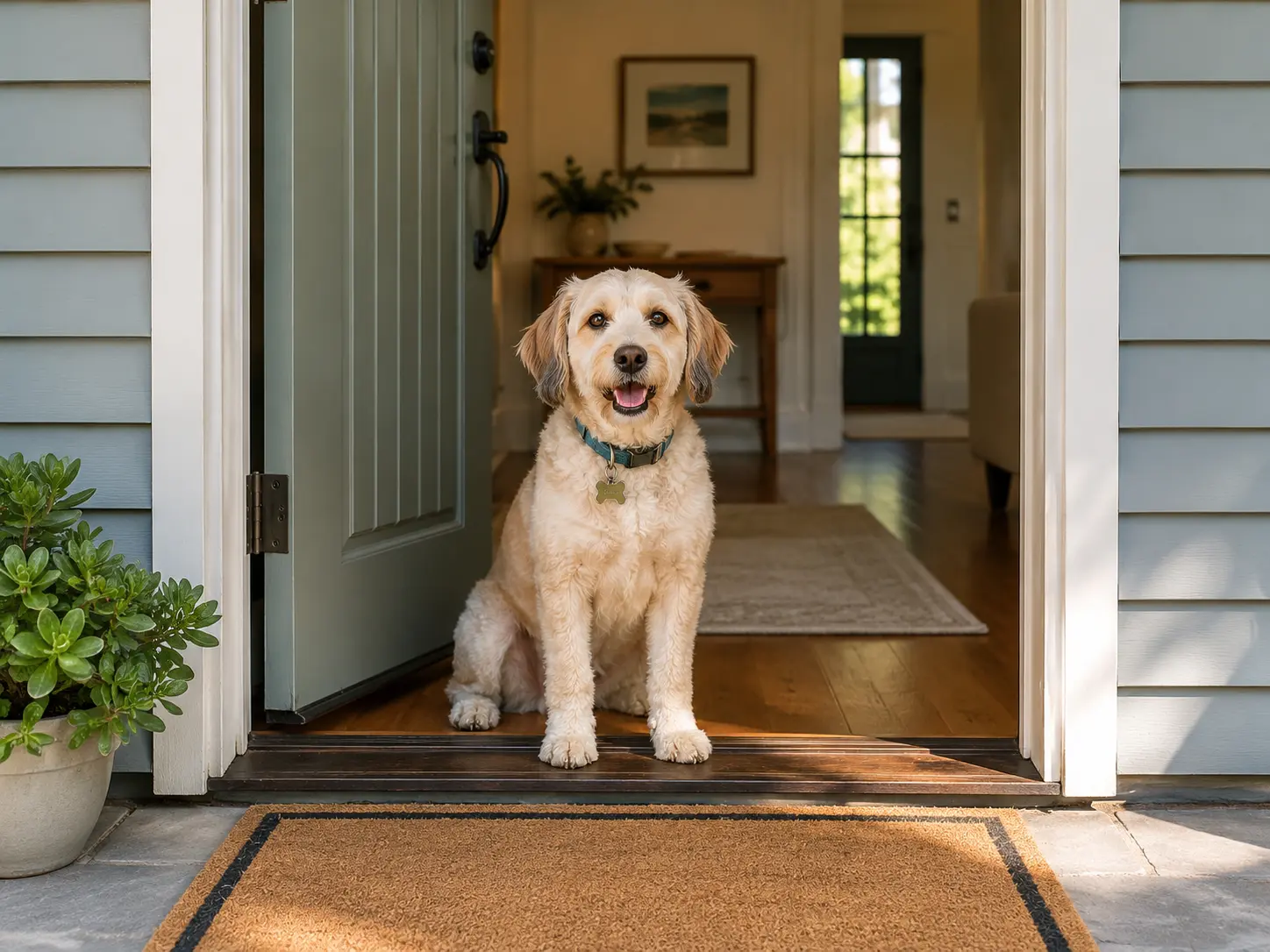
| Pattern | More Consistent With Velcro Behavior | More Concerning for Separation-Related Distress |
|---|---|---|
| When it happens | Mainly while you are home and available. | During departure cues, after you leave, or when access to you is blocked. |
| Typical behavior | Following, watching, leaning, sitting close, or choosing the same room. | Persistent vocalizing, pacing, panting, drooling, exit-directed damage, house soiling, or escape attempts. |
| Ability to settle | May protest briefly but can rest, sleep, eat, or engage with enrichment. | Remains highly aroused or repeatedly returns to doors, windows, or other exit points. |
| Response to food | Usually eats normally when alone if the food is familiar and safe. | May ignore a normally valued food item during absence; food refusal alone is not diagnostic. |
| Safety risk | Usually low, although following can create trip hazards or interfere with rest. | May injure teeth, nails, paws, or skin while trying to escape a crate, room, door, or window. |
| Best first step | Practice calm distance and independent resting without forcing isolation. | Record short absences, reduce overwhelming separations, and contact a veterinarian or qualified behavior professional. |
Use This Three-Question Check
- What triggers the behavior? Your movement around the home, a closed door, departure cues, or actual absence?
- Can your dog recover? Do they settle, sleep, eat, or play, or do signs continue and intensify?
- Is there a safety or welfare concern? Look for escape attempts, self-injury risk, heavy drooling, house soiling, sustained vocalizing, or inability to rest.
No single sign proves separation anxiety. A cluster of signs that occurs specifically around separation is more useful than clinginess by itself.
Why Dogs Become So Clingy
Clinginess can reflect personality, learning history, limited independence practice, barrier frustration, routine changes, discomfort, or separation-related fear. The cause cannot be identified from following behavior alone.

Staying Close Often Pays Off
Your dog may follow you because the kitchen predicts food, the hallway predicts a walk, and the sofa predicts attention. This can be a successful learned routine rather than evidence of panic.
What it may mean: If your dog can still relax when you leave, reward calm resting away from you instead of trying to stop all following.
Your Dog Has Not Learned to Rest Independently
Some dogs spend nearly every quiet moment touching or watching their owner. A closed door or a few steps of distance may feel unfamiliar even when the owner remains at home.
What it may mean: Start with seconds of easy indoor distance and return before the dog becomes distressed.
A Door, Gate, or Crate May Be the Trigger
A dog can be comfortable alone in a room but distressed behind a crate door, baby gate, or other barrier. This may involve frustration, fear of confinement, or a learned response to the barrier.
What it may mean: Compare different safe setups rather than assuming every reaction is caused by the owner’s absence.
Your Dog May Be Struggling With Absence
Repeated barking, howling, pacing, drooling, house soiling, exit-directed destruction, or escape attempts that begin around separation are more concerning than following alone. The ASPCA lists these among common separation-anxiety signs.
What it may mean: Record the behavior and discuss intense, worsening, or unsafe signs with a veterinarian.
Routine Changes Can Expose a Coping Gap
Clinginess or separation signs may become more noticeable after remote work ends, school resumes, a family member moves out, a household schedule changes, or a dog suddenly spends longer periods alone. The change does not prove a diagnosis, but it can reveal that the dog has not yet learned to cope with the new routine.
Sudden Clinginess Can Have a Medical Component
Pain, sensory changes, cognitive changes, urinary or digestive problems, and other medical issues can alter behavior. A veterinary check is especially important when clinginess starts suddenly or appears with appetite changes, house soiling, sleep disruption, confusion, reduced mobility, or other new signs.
Real-World Scenarios
These hypothetical examples show how context changes the interpretation. They are observation guides, not diagnoses.
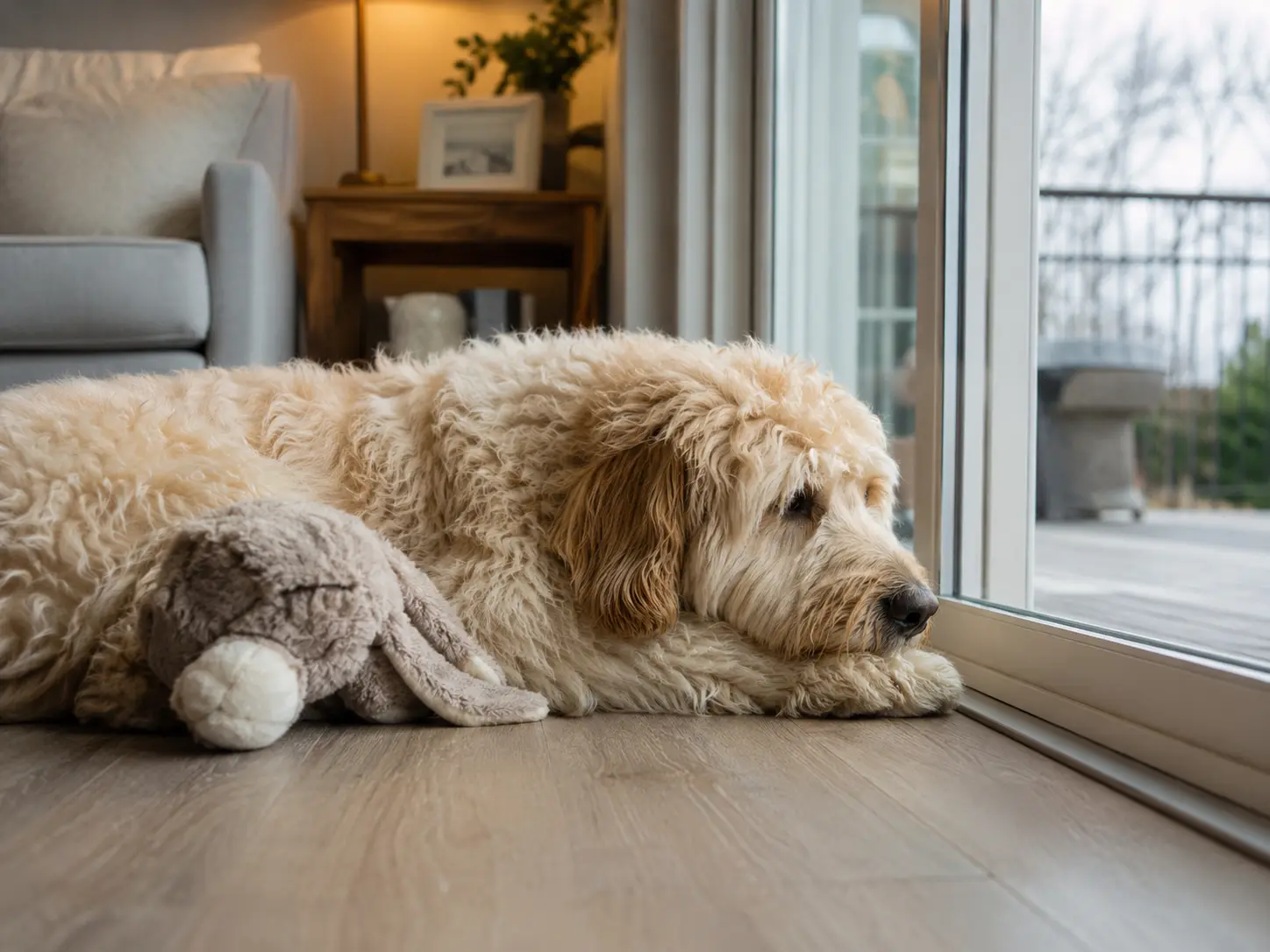
Follows Everywhere but Sleeps When Left
The dog follows from room to room and chooses to sit close. Camera footage shows the dog changing position, eating, and sleeping after the owner leaves.
What this may mean: The pattern is more consistent with a strong preference for company than severe separation-related distress.
Cries Briefly, Then Settles
The dog vocalizes after departure but then lies down and remains safe. Duration alone does not confirm or rule out a problem; intensity, recovery, and change over time also matter.
What this may mean: Continue tracking. Seek help if the episode lengthens, intensifies, or includes other distress signs.
Cries Behind the Bathroom Door
The dog becomes upset when a door closes even though the owner remains home, but is calmer when separated by an open doorway or a gate at a greater distance.
What this may mean: Barrier tolerance or loss of visual access may be part of the problem. This does not automatically establish separation anxiety.
Calm With Family but Distressed When One Person Leaves
The dog remains with another adult but paces, watches the exit, and cannot settle after one specific caregiver leaves.
What this may mean: Separation-related distress can be linked to a particular caregiver. Record the pattern and discuss persistent signs with a professional.
Fine Loose but Panics in the Crate
The dog rests in a dog-proofed room but bites crate bars, pants heavily, or tries to force the crate door when confined.
What this may mean: Confinement or the crate itself may be increasing distress. Stop unsafe testing and reassess the setup.
Quiet but Does Not Move or Eat
The dog makes little noise, remains near the door, ignores food, and appears unable to rest for most of the absence.
What this may mean: Lack of barking does not necessarily mean the dog is comfortable. RSPCA guidance notes that separation-related distress is not always obvious, so video can reveal quiet patterns that neighbors cannot report.
Step-by-Step Solutions
Begin with observation, then choose practice that stays below your dog’s distress threshold. If your dog panics, injures themselves, or cannot tolerate even very short absences, involve a veterinarian or qualified behavior professional rather than increasing difficulty alone.
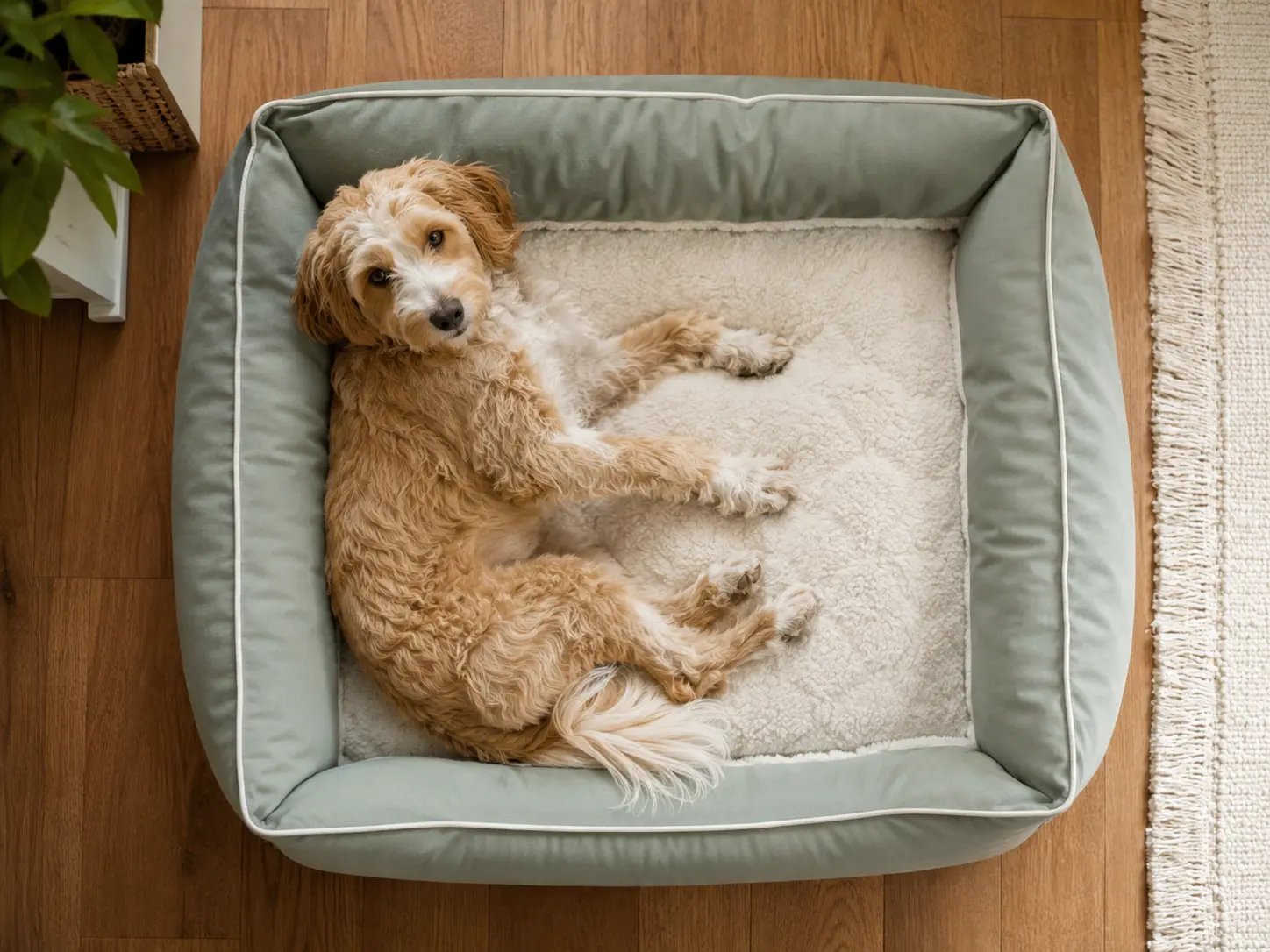
Record the Pattern Before Changing the Plan
Use a phone, tablet, laptop, or pet camera for several short, ordinary absences. Do not create a long test that you already expect your dog to fail.
Record:
- What happened during keys, shoes, coats, bags, or other departure cues.
- How soon the first sign appeared after you left.
- Whether the dog barked, paced, panted, drooled, froze, scratched, soiled, or attempted escape.
- Whether the dog ate, explored, rested, or slept.
- How long recovery took and whether the pattern changed across sessions.
A simple log gives a veterinarian or behavior professional more useful information than the statement “my dog hates being alone.”
Choose the Lowest-Difficulty Starting Point
Start with a version your dog can handle calmly. That may be lying on a mat while you take one step away, remaining behind an open gate for two seconds, or watching you leave and immediately return.
Return before signs escalate. The goal is repeated calm experience, not waiting for exhaustion or silence after distress.
Teach a Comfortable Resting Station
Use a bed, mat, open crate, or quiet corner. Reward relaxed behaviors such as lying on one hip, lowering the head, staying while you move, or choosing the spot without being prompted.
Increase distance gradually. Keep the station positive and never use it as punishment.
Build Separation in Small, Measurable Increments
Change only one difficulty variable at a time: distance, visual access, barrier type, departure cue, or duration. If your dog was calm for five seconds, do not automatically jump to five minutes.
Gradual exposure should begin at an intensity low enough to avoid a strong emotional response. This principle is described in VCA’s guidance on desensitization and counterconditioning.
Reduce the Predictive Power of Departure Cues
If keys, shoes, a work bag, or a coat trigger immediate arousal, practice those cues without leaving every time. Pick up the keys and sit down, put on shoes and prepare food, or move the bag and continue your normal routine.
Keep these repetitions neutral. Stop if rehearsal itself creates escalating distress.
Use Food and Enrichment as Information, Not Proof
Introduce any food toy while you are home and confirm that it is safe for unsupervised use. A dog who eats during absence may be coping, bored, or simply food-motivated; a dog who refuses food may be distressed, full, unwell, or uninterested in that item.
Food can support mild cases, but it is not a complete treatment for a dog who is panicking. PDSA notes that many dogs in distress will not engage with toys or food.
Manage Unavoidable Absences and Housing Pressure
For absences longer than your dog can currently manage, consider a trusted family member, pet sitter, dog walker, suitable day care, or another arrangement your dog tolerates. In an apartment, flat, condominium, terraced home, or other shared-wall housing, short camera-monitored trials can reduce the risk of repeated neighbor complaints.
White noise and closed curtains may reduce outside triggers, but they do not treat separation distress by themselves.
Progress rule: Increase difficulty only after your dog remains relaxed at the current level. If signs appear sooner, become more intense, or recovery takes longer, return to an easier step and consider professional guidance.
What Not to Do
Avoid methods that punish distress, repeatedly expose the dog to more than they can cope with, or rely on a single tool without identifying the trigger.
Do Not Continue an Unsafe Separation Test
- Stop if your dog is biting bars, bending crate parts, throwing their body at exits, or injuring teeth, nails, paws, or skin.
- Do not leave a distressed dog confined solely because the crate is normally considered a safe space.
- Use a safer temporary setup and contact a veterinarian or qualified behavior professional.
Do Not Assume Every Velcro Dog Has Separation Anxiety
Affection, curiosity, learned rewards, and social preference can all produce following behavior. Check what happens during actual separation before applying a label.
Do Not Punish Crying, Damage, or House Soiling
Punishment after the event does not teach calm coping and may add fear or uncertainty. PDSA advises against punishing destruction or accidents linked to being left alone.
Do Not Use “Cry It Out” for Strong Distress
Repeated overwhelming absences can make treatment more difficult. Veterinary guidance recommends minimizing absences that produce severe distress whenever practical.
Do Not Rely Only on Exercise, Ignoring, or a Food Toy
Exercise and enrichment can support welfare, and calm greetings may reduce excitement, but none of these alone identifies or resolves the underlying emotional response.
Non-Obvious Insight: Recovery Matters More Than Following
The strongest practical clue is not whether your dog follows you. It is whether your dog can recover and return to normal behavior when you are unavailable.
A velcro dog may follow you all day and then sleep after you leave. A dog with separation-related distress may remain near the exit, pace, freeze, pant, drool, vocalize, or refuse normal activities even if they were not especially clingy beforehand.
Ask: Can my dog settle, eat, rest, and behave normally when access to me changes?
Recovery should be judged across several observations. One quiet session, one ignored treat, or one damaged item is not enough to diagnose a behavior disorder.
When to Contact a Vet or Qualified Trainer
Contact a veterinarian first when behavior is sudden, severe, worsening, or accompanied by physical or cognitive changes. For a structured behavior plan, use a properly credentialed professional who works with your veterinarian when medical factors may be involved.
Veterinary Red Flags
- Sudden clinginess or separation signs in a previously comfortable dog.
- Pain, limping, reduced mobility, appetite change, vomiting, diarrhea, urinary changes, or unusual thirst.
- New house soiling, nighttime waking, confusion, disorientation, altered sleep, or behavior changes in an older dog.
- Heavy panting or drooling without a clear environmental reason.
- Self-injury, escape injury, collapse, or any immediate safety concern.
Behavior Support Is Especially Useful When Your Dog:
- Cannot settle during short absences.
- Vocalizes, paces, or remains highly aroused for prolonged periods.
- Scratches, chews, or throws their body at doors, windows, walls, or crates.
- Refuses food specifically during separation.
- Shows distress when one particular caregiver leaves.
- Creates repeated neighbor, landlord, or housing complaints.
- Has not improved with careful, low-intensity practice.
You can search the International Association of Animal Behavior Consultants directory for credentialed consultants and trainers. For severe, medically complicated, or medication-related cases, use the American College of Veterinary Behaviorists directory to look for a board-certified veterinary behaviorist.
Quick Summary
A velcro dog prefers closeness. Separation-related distress involves difficulty coping when the dog is alone or separated from access to an important caregiver.
- Do not diagnose from following alone. Observe departure cues, the absence itself, recovery, and safety.
- Use video. Vocalizing, pacing, freezing, food refusal, drooling, soiling, destruction, and escape attempts can reveal the pattern.
- Start below the distress threshold. Build calm distance in seconds or very small increments.
- Do not punish or force unsafe confinement. These approaches can worsen fear or create injury risk.
- Get professional help for intense, sudden, worsening, or unsafe signs. A veterinarian can check medical causes and guide referral.
FAQs
These answers address common owner questions without treating one symptom as a diagnosis.
Is a velcro dog the same as separation anxiety?
No. “Velcro dog” describes a preference for staying close, while separation anxiety refers to significant distress linked to anticipated or actual separation. A dog can show one pattern, both patterns, or neither.
Why does my dog cry when I leave?
Crying may reflect brief protest, frustration, excitement, a learned routine, fear, or separation-related distress. Video helps you judge what happens alongside the crying and whether your dog can recover.
Is it separation anxiety if my dog cries for 10 minutes?
Duration by itself cannot confirm the cause. A dog who settles, sleeps, and remains safe presents a different pattern from a dog whose vocalizing is accompanied by pacing, drooling, house soiling, exit damage, or escape attempts.
Should I stop my dog from following me everywhere?
You do not need to punish normal following. Instead, reward calm choices such as resting on a bed, staying while you move around, and settling with a safe activity at a comfortable distance.
Can letting my dog follow me cause separation anxiety?
Following alone does not prove that separation anxiety will develop. However, a dog who never experiences manageable periods of independence may be less prepared for sudden routine changes. Build short, positive separation practice gradually.
What are common dog separation anxiety signs?
Possible signs include vocalizing, pacing, panting, drooling, house soiling, exit-directed chewing or scratching, escape attempts, and inability to settle. The signs are most meaningful when they repeatedly occur around separation.
Can a dog have separation distress without barking?
Yes. Some dogs remain quiet but pace, freeze, wait by the door, pant, drool, refuse food, or stay unable to rest. Camera footage is useful because neighbors may not notice quiet distress.
Should I use a crate for a dog with separation anxiety?
Only if the dog is already comfortable and safe in the crate. If confinement triggers heavy panting, drooling, bar biting, forceful escape attempts, or injury risk, stop using that setup for separation and seek professional guidance.
- ASPCA — Separation Anxiety
- VCA Hospitals — Separation Anxiety in Dogs
- VCA Hospitals — Introduction to Desensitization and Counterconditioning
- VCA Hospitals — Separation Anxiety in Dogs Synopsis
- RSPCA — Separation-Related Behavior in Dogs
- RSPCA — How to Train Your Dog to Stay Home Alone
- PDSA — Home Alone: Preventing Separation Anxiety
- Merck Veterinary Manual — Behavior Problems of Dogs
- MSD Veterinary Manual — Diagnosis of Behavior Problems in Animals
- IAABC — Core Competencies
- IAABC — Consultant Locator
- American College of Veterinary Behaviorists — Find a Diplomate
This article provides general educational information and does not diagnose an individual dog. A veterinarian should assess sudden, severe, worsening, or medically concerning behavior.
 ✓
✓