

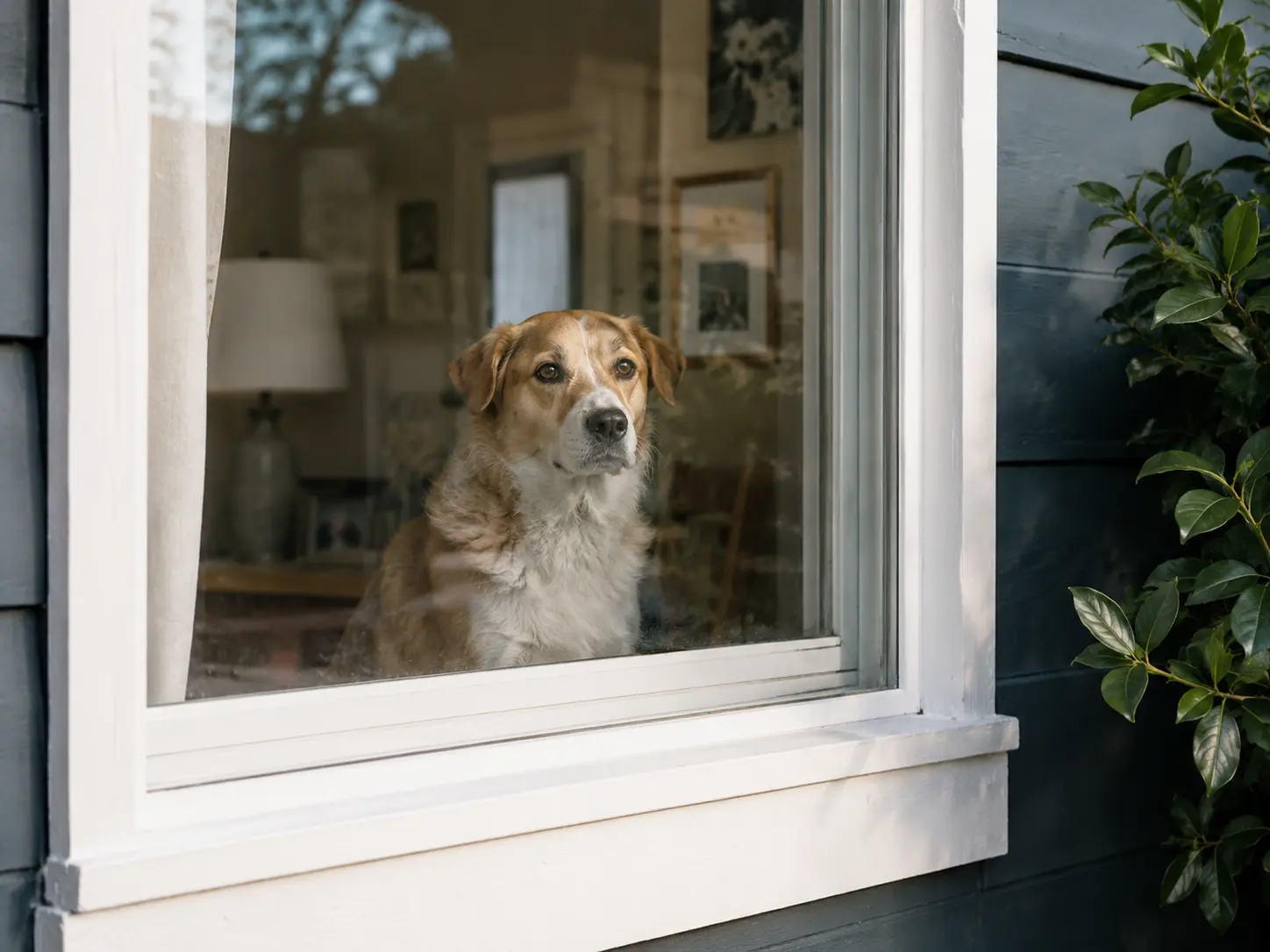
Dog peeing when left alone is a pattern to investigate, not evidence of revenge. Separation-related distress is one possibility, but incomplete house training, urine marking, confinement stress, a routine change, medication effects, pain, urinary disease, incontinence, or age-related cognitive changes can look similar.
The safest first response is to avoid punishment and separate medical clues from alone-time behavior. Record the first 30–60 minutes after you leave, note whether the urine is a full puddle or a small mark, clean the area with an enzymatic urine cleaner, and arrange veterinary advice when the change is sudden, repeated, or accompanied by urinary or general health changes.
A video showing distress only during your absence can support a separation-related explanation, but it does not diagnose separation anxiety by itself. Veterinary and behavior guidance may both be needed.
Follow the seven-step checklistQuick Decision Table: What Might Be Happening?
Start with the timing, urine pattern, and accompanying behavior. The table narrows the questions to ask; it does not diagnose the cause.
| What you notice | What it may mean | What to do next |
|---|---|---|
| Peeing happens only during absences | Separation-related distress may be involved, especially if it begins soon after departure. | Record video and note how quickly distress starts. |
| Peeing also happens while you are home | House-training gaps, marking, urgency, incontinence, or another medical or behavioral cause may be more likely. | Track all accidents and discuss a new or worsening pattern with a vet. |
| Barking, pacing, drooling, scratching, or escape attempts occur too | The cluster is more consistent with distress than with a simple toilet-training lapse. | Avoid punishment and seek qualified help if the dog cannot settle. |
| Small amounts appear on vertical objects or repeated targets | Urine marking may be involved, although illness should still be ruled out when the behavior is new. | Note triggers, block access, and arrange a veterinary check if sudden. |
| The dog urinates while resting or sleeping | Incontinence or another medical issue may be involved. | Contact a veterinarian rather than treating it as a training problem. |
| A senior dog develops new accidents, confusion, or sleep changes | Pain, illness, sensory decline, or cognitive dysfunction may contribute. | Book a veterinary assessment and bring a symptom timeline. |
| The dog strains, passes little or no urine, or seems painful | A urinary problem or blockage may require urgent care. | Contact a veterinarian urgently; do not wait for behavior training. |
Medical and behavioral causes of house soiling can overlap. See VCA Animal Hospitals on house soiling and ASPCA guidance on separation anxiety.
Is My Dog Peeing Out of Spite When I Leave?
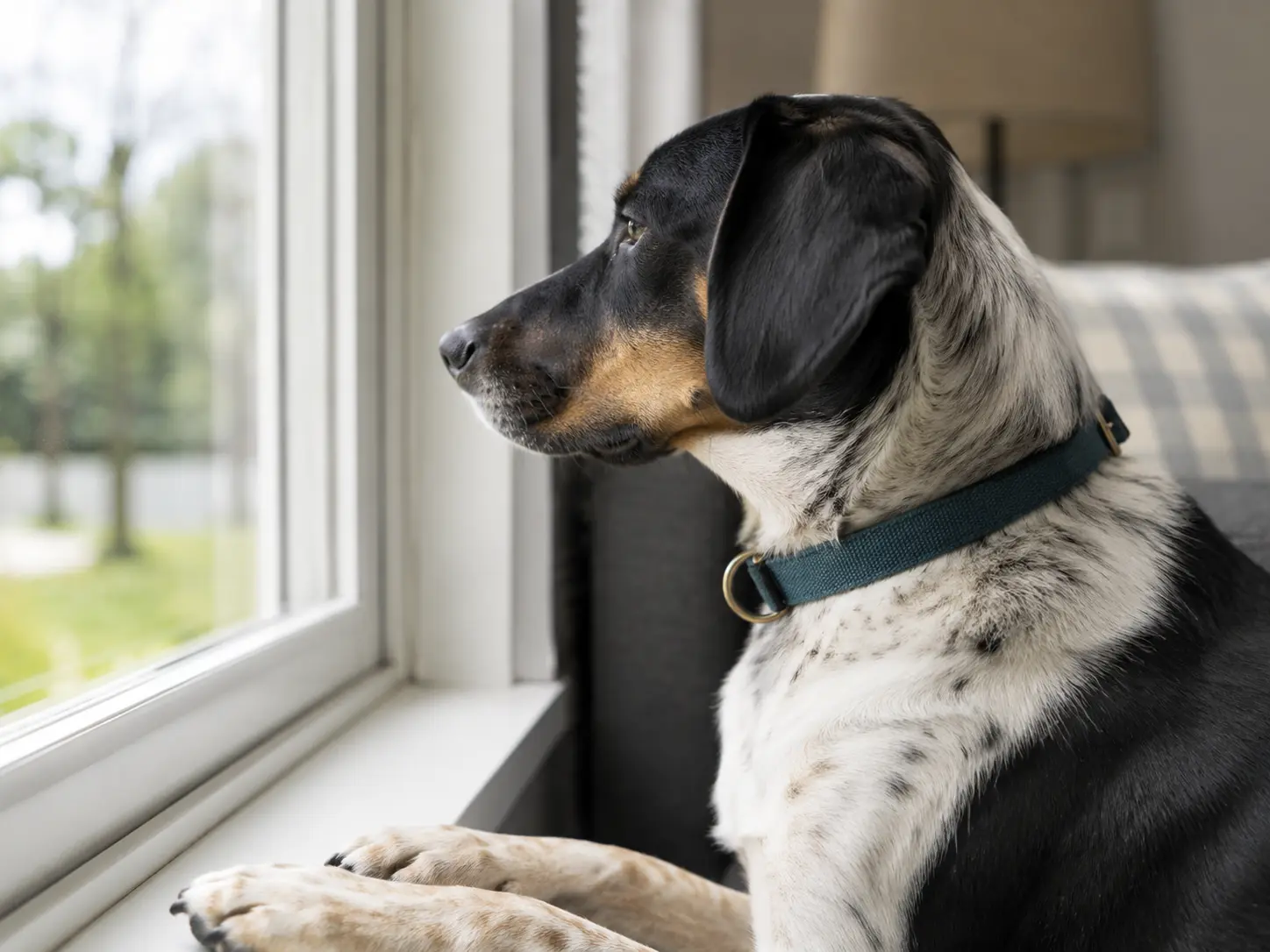
Spite is not a useful explanation for dog peeing when left alone. A more practical interpretation is that the dog could be distressed, unable to hold urine, incompletely house-trained, marking, reacting to confinement, or experiencing a health change.
Scolding after you return does not show the dog which earlier action caused your anger. It may instead make your return more worrying and can worsen anxiety-related behavior. Both the RSPCA and ASPCA advise against punishment for separation-related accidents.
Sources: RSPCA training guidance and ASPCA separation-anxiety guidance.
Ask these questions instead
- Does the accident happen only when no person is home?
- How many minutes after departure does it begin?
- Is it a full puddle, leakage while resting, or a small mark on a target?
- Does the dog also bark, howl, pace, pant, drool, scratch, or try to escape?
- Did the pattern start after a move, schedule change, adoption, illness, or medication change?
- Has thirst, appetite, sleep, mobility, or behavior changed?
- Is the dog a puppy, newly adopted dog, or senior dog?
The repeated pattern is more informative than a single accident.
What Dog Separation Anxiety Signs Can Appear With Peeing?
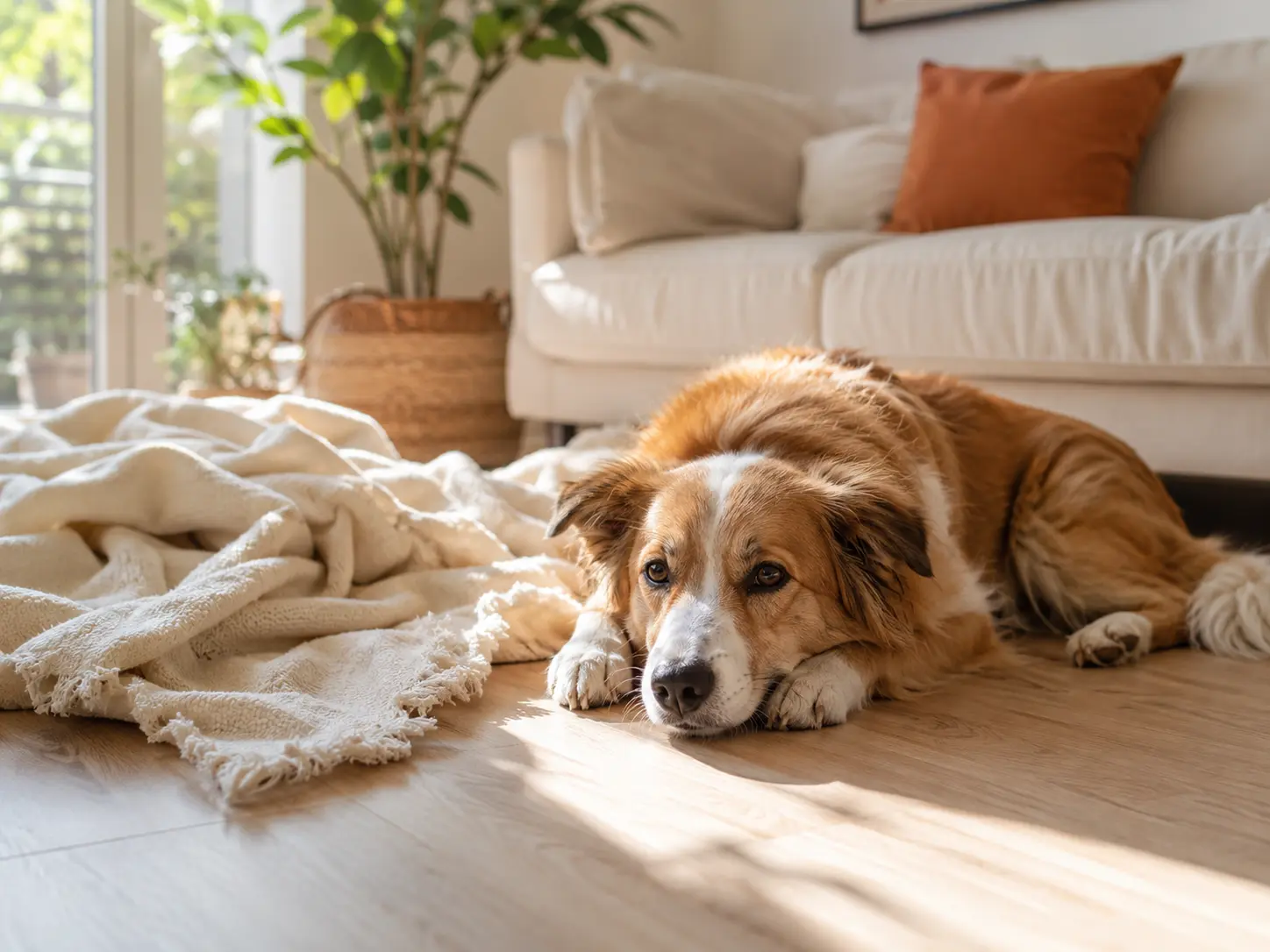
Urination is more suggestive of separation-related distress when it appears with other signs that begin before or soon after departure and are absent when a person is home. One sign alone is not enough to diagnose separation anxiety.
Signs worth recording
- Urinating or defecating during absences
- Persistent barking, crying, whining, or howling
- Pacing, circling, panting, trembling, or excessive drooling
- Scratching or chewing near doors and windows
- Frantic attempts to leave a crate, room, or home
- Ignoring a familiar food toy while alone
- Distress when keys, shoes, or other departure cues appear
- Settling only after a person returns
The RSPCA notes that separation-related behavior can include toileting, vocalizing, pacing, panting, salivation, and refusal to eat while alone. A camera is useful because some signs are hidden when the owner is present.
Sources: RSPCA on recognizing separation-related behavior and Cornell University on anxious behavior in dogs.
What Are the Common Reasons Dogs Pee When Left Alone?
The same accident can have different causes, so the safest approach is to compare timing, context, urine pattern, and health changes. More than one factor may be present.
1. Separation-related distress
The dog becomes upset specifically because a person leaves. Urination may occur with vocalizing, pacing, drooling, destruction, escape attempts, or refusal of food. Video is the most useful first observation because it shows what happens before the accident.
2. Incomplete house training or a training lapse
A dog may toilet outside when supervised but still not understand how long to wait during an absence. Puppies, recently adopted dogs, and dogs after illness or a major routine change may need a temporary return to a predictable house-training schedule.
3. Medical urgency, pain, or incontinence
Urinary infection or inflammation, bladder stones, diseases that increase thirst and urine production, neurologic problems, medication effects, pain, and weak bladder control can all contribute to indoor urination. Leakage while sleeping, increased thirst, frequent small urinations, straining, blood, or a sudden house-training change should not be treated as a behavior-only problem.
Source: VCA Animal Hospitals on investigating inappropriate urination.
4. Crate or confinement stress
A crate can be a comfortable resting place for some dogs, but it can add stress for a dog that panics when confined. Heavy panting, excessive salivation, persistent howling, frantic escape attempts, damaged nails, or urine inside the crate are signs to reassess the setup rather than simply extending crate time.
Source: ASPCA guidance on deciding whether a crate is appropriate.
5. Routine or environmental change
A new work schedule, move, visitor, construction noise, household change, illness, or adoption transition can alter how a dog copes when alone. Compare the start date of the accidents with changes in the home and daily routine.
6. Urine marking
Marking commonly involves smaller amounts on vertical surfaces, furniture edges, doorways, or newly introduced objects. Social and environmental changes can trigger marking, but a veterinary examination is still important when a previously house-trained dog suddenly begins urinating indoors.
Source: VCA Animal Hospitals on urine marking.
7. Age-related cognitive or physical changes
Senior dogs can develop house-soiling alongside disorientation, sleep-wake changes, pacing, altered interaction, pain, or reduced mobility. These signs require veterinary assessment because cognitive dysfunction is only one possible explanation and other conditions can look similar.
Source: Cornell University on canine cognitive dysfunction syndrome.
What Common Mistakes Can Make It Worse?
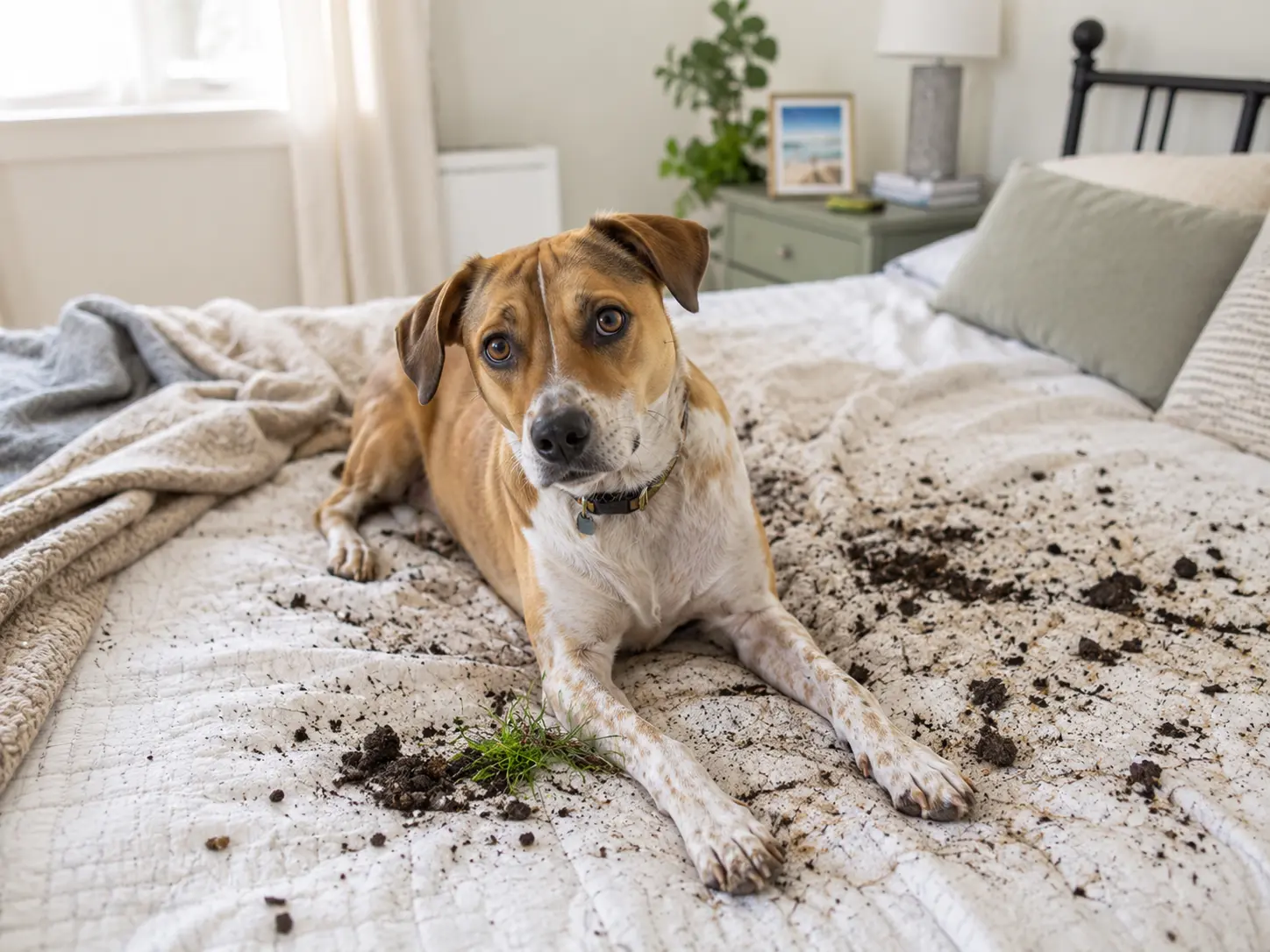
Fast fixes often fail because they address the mess without identifying why it happened. This is especially frustrating in a rented apartment or flat, but punishment and forced exposure can add stress without solving the cause.
Avoid these responses
- Scolding, shouting, rubbing the dog’s nose in urine, or showing the accident after returning home
- Assuming a worried posture means the dog feels moral guilt
- Leaving the dog alone longer to make them “get used to it” while they remain distressed
- Using a crate when video shows escalating panic or escape behavior
- Masking odor with fragrance instead of using an enzymatic urine cleaner
- Restricting water without veterinary direction
- Ignoring a sudden change in a previously house-trained or senior dog
- Getting another pet as a guaranteed cure
Another dog may provide company in some homes, but it does not reliably resolve distress tied to a particular person’s absence. Treat that decision as a separate long-term commitment, not a behavior treatment.
Owner-Reported Patterns to Notice
Owner descriptions can help organize observations, but they are not veterinary evidence or a diagnosis. Use these examples to decide what your camera and log should capture.
“My dog pees within five minutes of me leaving”
Record the period before departure and at least the first 30 minutes afterward. An accident that follows pacing, vocalizing, panting, or door-focused behavior supports a distress pattern more than an accident with calm behavior.
“My dog pees even after going outside”
A recent toilet break does not rule out stress, incomplete emptying, pain, increased urine production, or another medical cause. Note whether the dog actually urinated outside and whether thirst or urinary frequency has changed.
“My dog pees on my bed or sofa”
A bed, sofa, rug, or pillow can be a familiar resting surface, an established accident location, or a marking target. The location does not prove revenge. Clean thoroughly and block unsupervised access while investigating the pattern.
“The crate made it worse”
If crating reduces access to the floor but causes heavy drooling, howling, frantic escape attempts, damaged nails, or urine inside the crate, the confinement itself may be adding distress. Use a safer dog-proofed room or gated area while seeking advice.
“My newly adopted dog was fine at first”
Behavior may change as routines develop, the household schedule shifts, or the dog becomes more attached to specific people. Record what changed instead of labeling the dog as stubborn.
What Should I Do If My Dog Pees When Left Alone?
Use a simple sequence: check safety, observe the absence, track the pattern, manage the environment, and involve the right professional. The goal is to identify the cause before choosing a training plan.
Check for urgent urinary signs
Contact a veterinarian urgently if the dog strains, repeatedly attempts to urinate, passes little or no urine, appears painful, has blood in the urine, vomits, collapses, or seems acutely unwell.
Record the first 30–60 minutes
Place a phone, laptop, or pet camera safely where it captures the exit area and resting space. Record pre-departure cues, the accident, and whether the dog settles.
Keep a short daily log
Record the last toilet break, absence length, urine amount and location, behavior on video, crate or room setup, recent changes, medications, thirst, appetite, sleep, and mobility.
Clean and manage the location
Use a commercially available enzymatic urine cleaner according to its label. Close doors, lift rugs, use gates, and choose an easy-clean area without creating a setup that increases panic.
Restore a predictable toilet routine
Offer an appropriate toilet opportunity before departure and reward outdoor elimination. If accidents also occur while people are home, restart basic house-training with supervision and regular breaks.
Avoid absences that trigger full panic
For a dog showing clear distress, repeated long absences can rehearse the problem. Temporary help from family, a sitter, or a suitable care arrangement may be needed while a gradual plan is developed.
Bring evidence to a professional
Start with a veterinarian for sudden, frequent, or medically suspicious urination. For an absence-linked distress pattern, ask about a veterinary behaviorist, clinical animal behaviorist, certified behavior consultant, or qualified reward-based trainer with separation-case experience.
What your observations may mean
- Calm dog, long absence, full puddle: toilet timing or house-training may need review, but medical urgency is still possible.
- Distress begins within minutes and stops after return: separation-related behavior becomes more plausible.
- Small repeated marks on upright targets: marking becomes more plausible.
- Leakage during rest or sleep: incontinence or another medical cause becomes more concerning.
- New senior accidents with confusion or sleep change: veterinary assessment should come before behavior assumptions.
Practical references: RSPCA on teaching dogs to stay home alone and VCA on house-soiling observation and retraining.
When Should I Contact a Veterinarian or Behavior Professional?
Choose veterinary help first when urination is new, physically abnormal, or accompanied by health changes; add qualified behavior support when video shows distress linked to absence.
Seek urgent veterinary advice when your dog:
- Strains or repeatedly tries to urinate but produces little or no urine
- Cries, appears painful, has blood in the urine, vomits, collapses, or seems acutely unwell
- Develops a sudden major change in thirst or urination
Arrange a prompt veterinary appointment when:
- A previously house-trained dog starts having accidents
- Urination becomes frequent, occurs during sleep, or happens while the dog is home and alone
- A senior dog also shows confusion, night waking, pacing, pain, or mobility changes
- A medication or recent illness could be affecting thirst or bladder control
Add qualified behavior support when:
- Video shows escalating panic, persistent vocalizing, or escape attempts during absences
- The dog injures paws, nails, teeth, or face while confined
- The dog cannot tolerate even short departures without distress
- The problem is worsening despite calm management and medical causes have been assessed
Quick Summary
Dog peeing when left alone may be related to separation distress, but it can also result from incomplete house training, marking, confinement stress, routine changes, medical urgency, incontinence, medication effects, pain, or age-related changes.
- Do not punish the dog after an accident.
- Record what happens before and after departure.
- Distinguish full elimination, small marks, and leakage during rest.
- Use an enzymatic cleaner and manage access to repeat locations.
- Contact a veterinarian for sudden, frequent, painful, or senior-onset accidents.
- Seek qualified behavior help when absence consistently triggers distress.
FAQs
Why does my dog pee only when I leave the house?
An absence-specific pattern can point toward separation-related distress, particularly when video also shows pacing, vocalizing, panting, drooling, destruction, or escape attempts. Medical causes and house-training gaps still need consideration because they can overlap.
Can a dog pee out of spite when left alone?
Spite is not a practical or evidence-based starting point. Stress, urgency, incomplete training, marking, confinement, and medical changes offer more useful explanations and lead to safer next steps.
How can my dog pee inside after going outside?
The dog may not have fully emptied, could have increased urine production or urgency, or may urinate during distress. Note whether the dog actually urinated outside and contact a veterinarian when the pattern is sudden, frequent, painful, or accompanied by increased thirst.
Should I crate my dog if they pee when left alone?
Only when the dog is already comfortable in the crate and video shows calm behavior. Heavy panting, drooling, persistent howling, frantic escape attempts, injury, or urination inside the crate suggest that confinement may be adding stress.
Are peeing, barking, and chewing signs of separation anxiety?
They can be signs of separation-related distress when they reliably occur during absence and are accompanied by other distress behavior. Similar behavior can also result from noise triggers, boredom, training gaps, marking, or health problems, so the timing and video pattern matter.
Why does my dog pee on my bed when I leave?
A bed may be a familiar resting place, a surface that retains odor, an established accident location, or a marking target. The location does not prove revenge. Clean it thoroughly, block access temporarily, and investigate the broader urine and behavior pattern.
Will getting another dog stop the accidents?
Not reliably. Some dogs are distressed by the absence of a particular person even when another animal is present. A second pet should be chosen for long-term household reasons, not as a guaranteed treatment.
Sources and further reading
 ✓
✓