

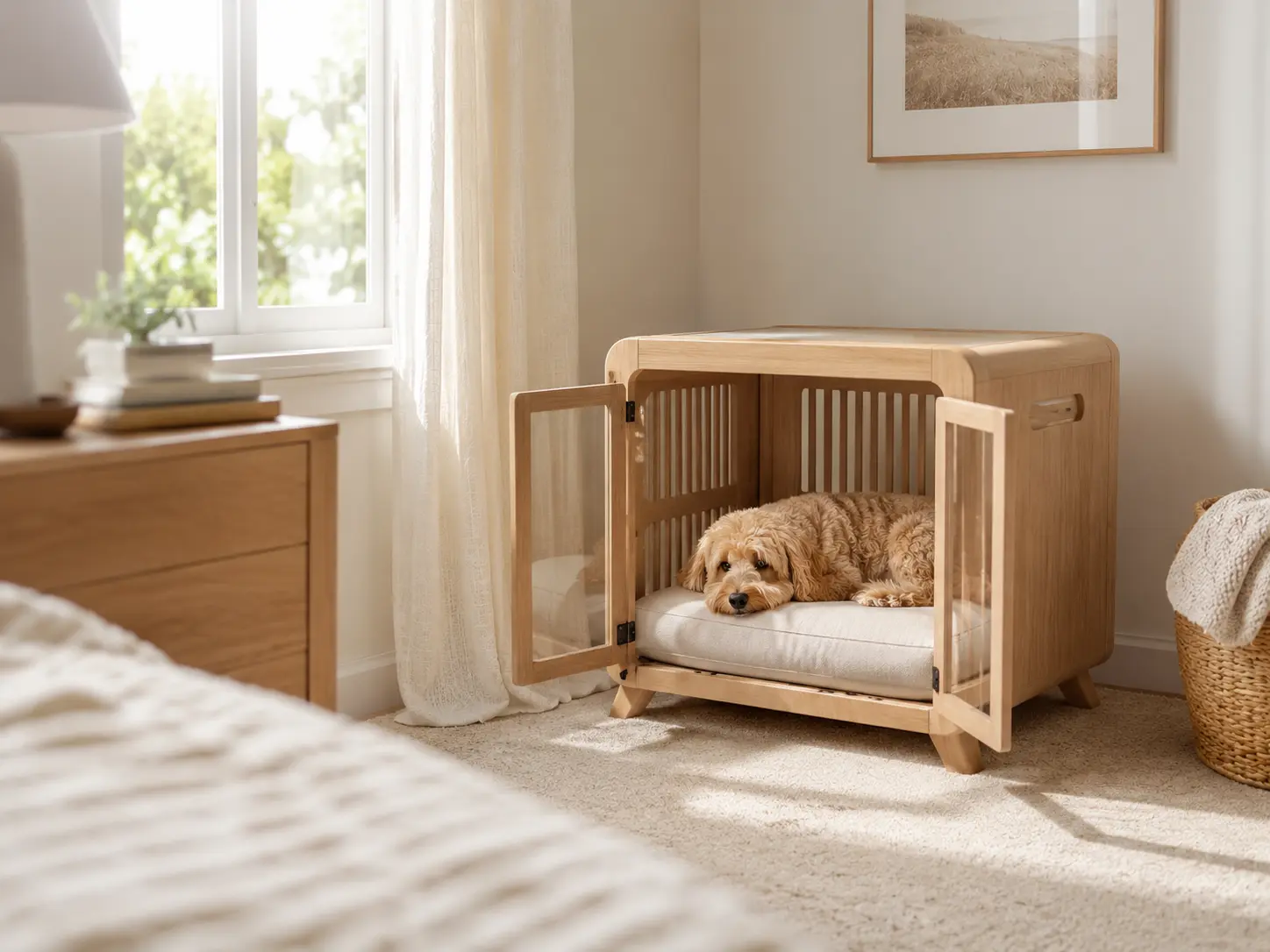
For a dog who becomes distressed when left alone, the useful question is not whether crates are good or bad in general. It is whether your individual dog settles in the crate or becomes more frightened after the door closes or you leave.
Can Crating Make Separation Anxiety Worse?
Yes. Crating can make separation anxiety worse for some dogs, especially when separation-related distress overlaps with fear of confinement. A crate may be a comfortable resting place for one dog and a trigger for frantic escape behavior in another.
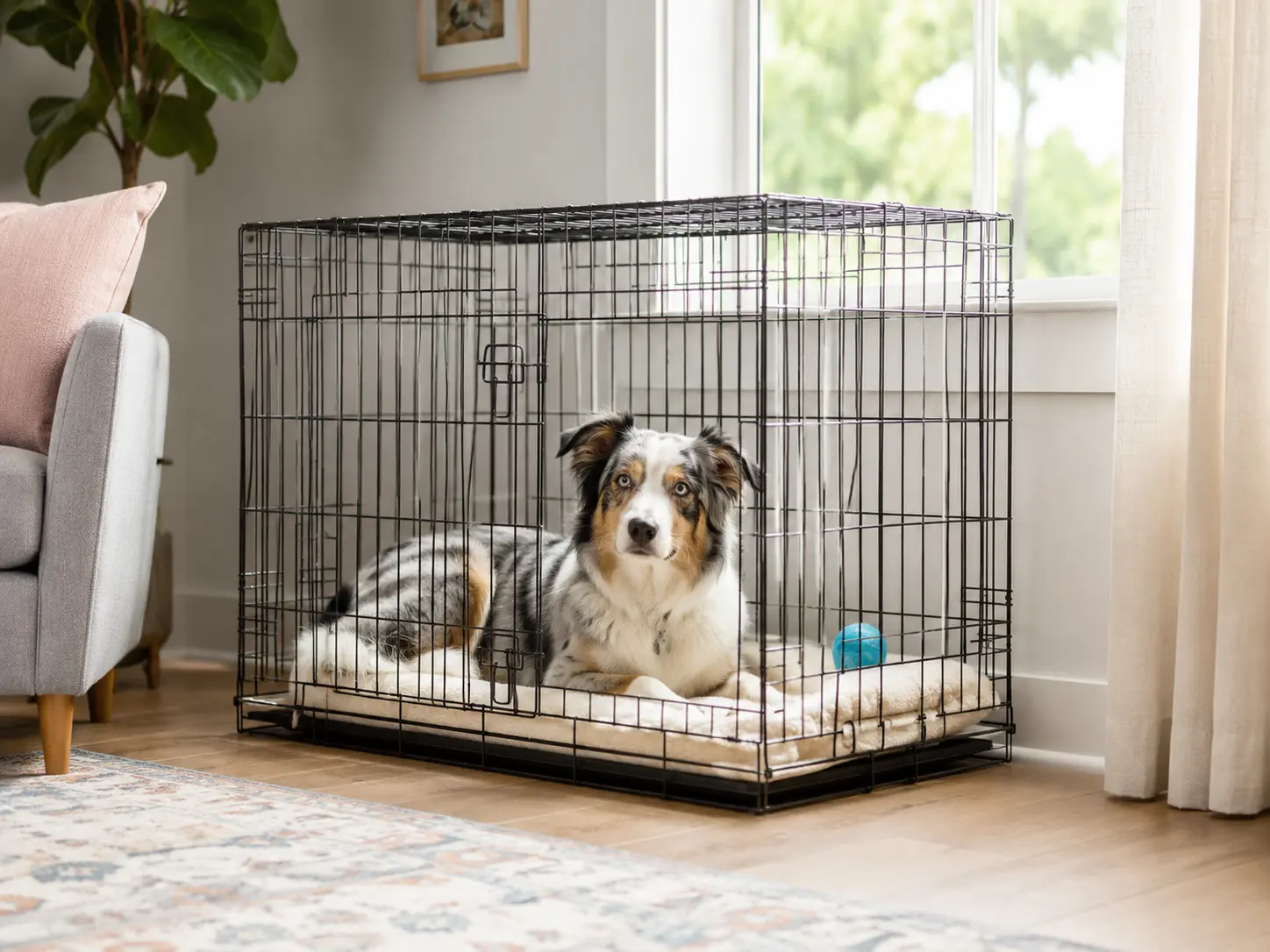
Heavy panting, excessive drooling, persistent vocalization, toileting during distress, bar biting, bent bars, damaged nails, or repeated escape attempts mean the current setup needs to be reassessed. The ASPCA advises monitoring for distress during crate use, while VCA notes that a crate is not a solution for separation-anxiety-related destruction because some dogs may injure themselves trying to escape.
Quick Table: Brief Crate Protest or Possible Panic?
Look at the whole pattern—body language, ability to settle, trigger, food response, escalation, and injury risk—not barking alone. A home camera can help you see what happens after departure; video can also give a veterinarian or behavior professional useful context.
| What You Observe | Possible Pattern | What to Do Next |
|---|---|---|
| Brief whining followed by a loose body, resting, chewing, or sleep | Short adjustment may be possible | Keep sessions easy and confirm that the dog continues to settle rather than escalating. |
| Barking when people or activity are visible, while the dog can still eat and recover | Barrier frustration may be involved | Reduce frustration and teach calm barrier skills without assuming the dog has separation anxiety. |
| Distress begins around departure cues or soon after the person leaves | Separation-related distress may be involved | Record the timing and discuss repeated or severe signs with a veterinarian or qualified behavior professional. |
| Dog is calmer in a safe room but escalates in the crate | Confinement distress may be involved | Stop treating the crate as the only option and assess a safer, less restrictive setup. |
| Bar biting, bent bars, bleeding, broken nails, damaged teeth, or forceful escape attempts | Immediate safety risk | Stop unsafe crated absences and seek professional guidance. |
| Favorite food is ignored only after departure | Distress may be too high for eating | Do not assume the food is ineffective; the absence may already be beyond the dog’s coping level. |
PDSA lists vocalization, drooling, vomiting, panting, trembling, house-soiling, self-harm, and destructive behavior among possible signs, while noting that video can help a veterinary behaviorist interpret what is happening. Read PDSA’s separation-anxiety guidance.
Why Crating Can Backfire
Crating can backfire when physical confinement adds another layer of stress to being alone. The dog may focus on escape instead of learning that the absence is safe.
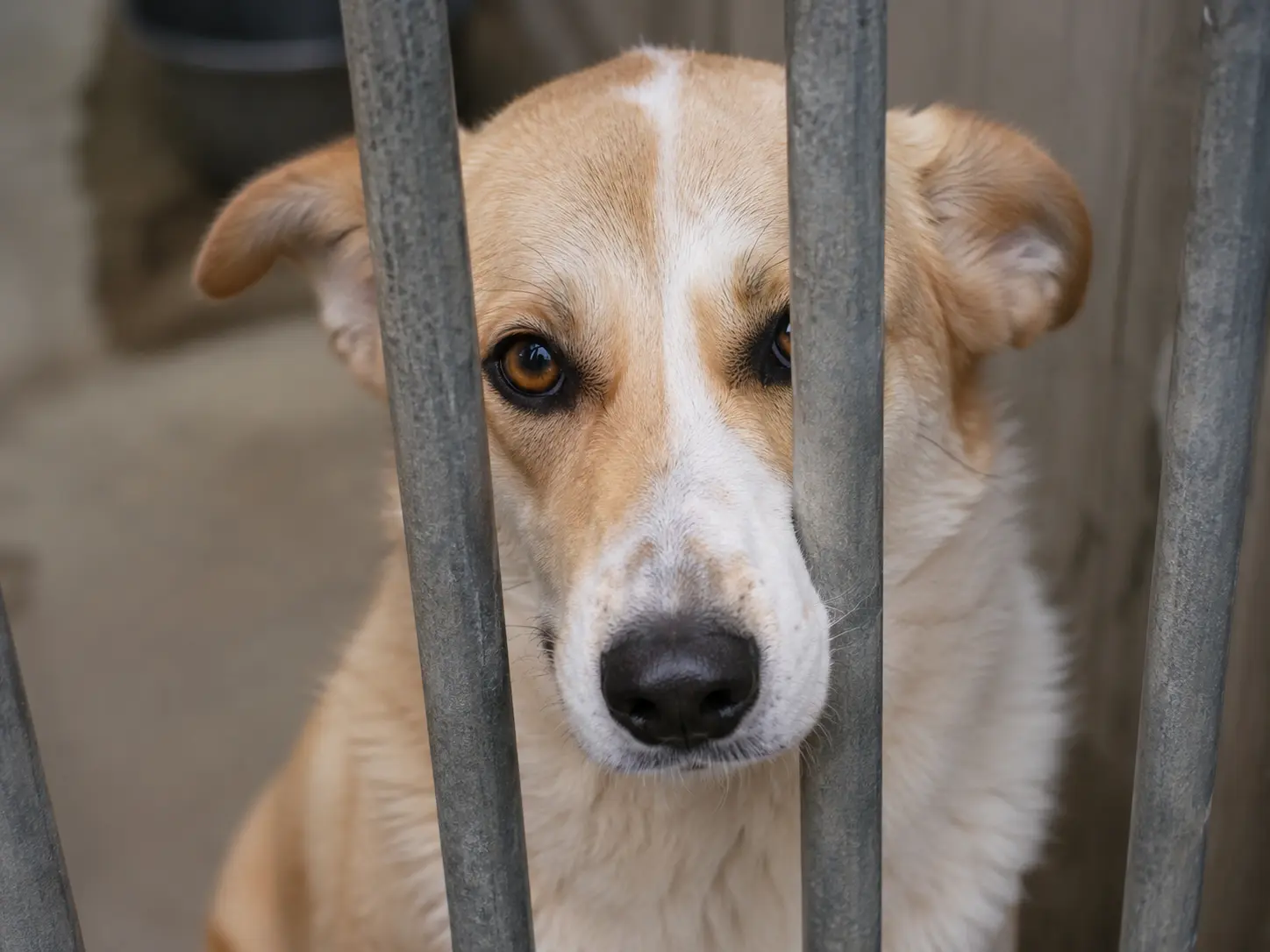
A distressed dog may bite bars, dig at the floor, push against the door, drool, pant, bark, howl, or toilet. These behaviors are not proof of a single diagnosis, but forceful escape behavior can cause damaged nails, cut paws, or broken teeth. ASPCA describes self-injury as a risk during escape attempts.
Crating may become difficult because the dog:
- panics primarily when left alone;
- panics primarily when confined;
- reacts to both absence and confinement; or
- has learned that the crate predicts a departure.
Crate Training vs Separation Anxiety
Crate training teaches comfort with a space. Separation-anxiety treatment addresses distress linked to absence. A dog can have good crate skills while you are home and still struggle after you leave.
More consistent with calm crate learning
- The dog enters voluntarily.
- The body remains loose rather than tense.
- The dog can eat, chew, rest, or sleep.
- Brief concern decreases instead of building.
- The dog does not repeatedly attempt escape.
More consistent with an unsafe distress pattern
- Vocalization, panting, drooling, or pacing escalates.
- The dog bites, bends, or pushes the crate.
- Food is ignored after departure.
- Toileting occurs despite reliable house training.
- The dog injures the mouth, nose, paws, nails, or teeth.
VCA recommends introducing a crate gradually and notes that some dogs do not tolerate it and may adapt better to a pen, dog-safe room, or gated area. See VCA’s crate-training guidance.
Separation Anxiety, Confinement Distress, or Barrier Frustration?
These patterns can overlap, and observation alone cannot provide a formal diagnosis. The goal is to identify the likely trigger so you do not repeatedly practice the wrong setup.
Separation-related distress
More likely when signs appear mainly after a key person leaves or during separation. Possible signs include persistent vocalization, pacing, drooling, door or window damage, house-soiling, food refusal, or escape attempts.
Confinement distress
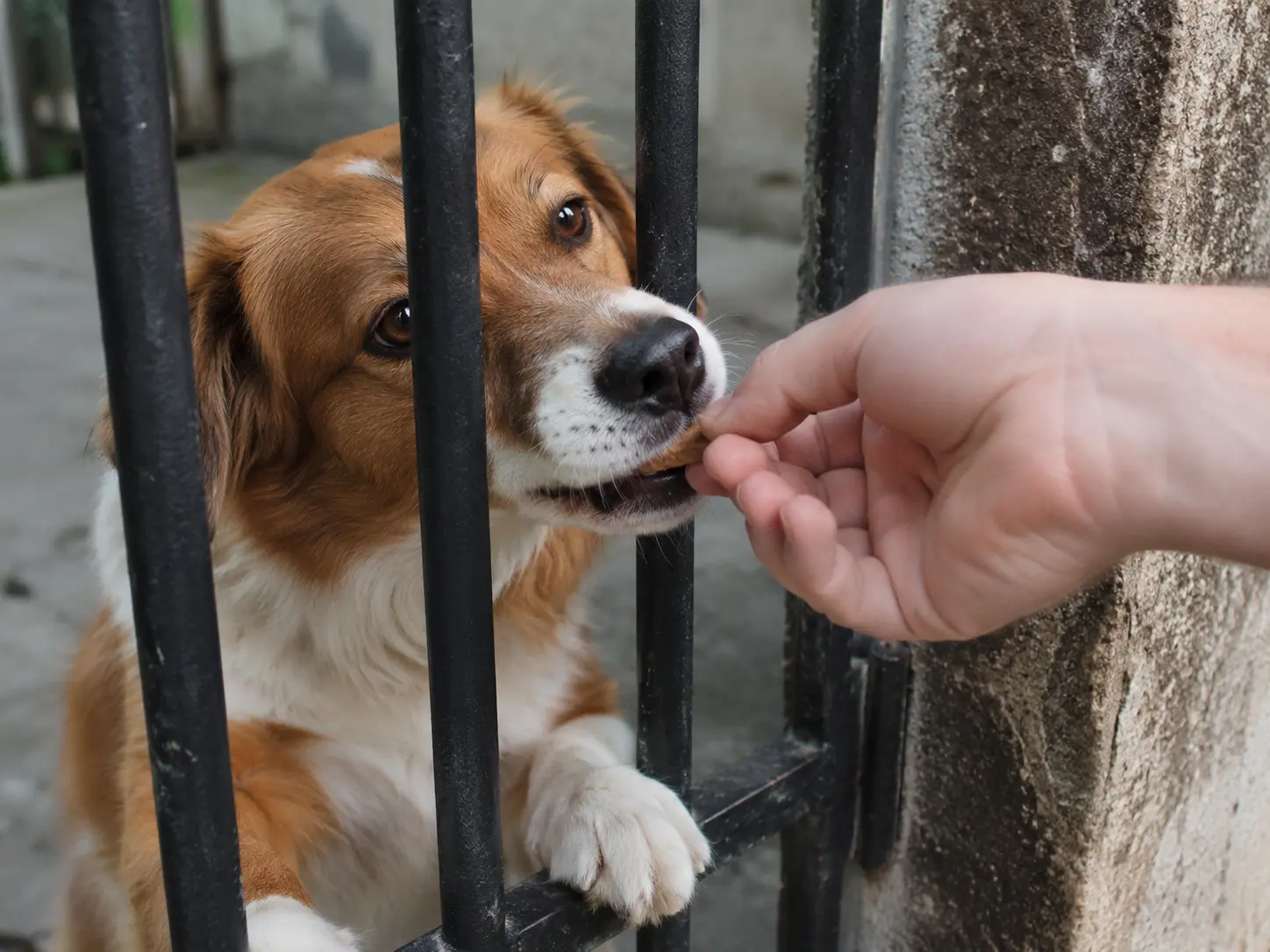
More likely when the dog is noticeably calmer loose but panics in a crate, pen, small room, or behind a gate. VCA notes that destructiveness or house-soiling during confinement can reflect confinement or barrier anxiety. Review VCA’s differential guidance.
Barrier frustration
More likely when the dog wants access to a person, activity, food, or another space but can still take food and recover once the barrier is no longer relevant. Frustration can coexist with anxiety, so the distinction is not always simple.
Use a camera to compare patterns safely
Do not deliberately trigger a long panic episode. Record normal departures or very easy practice only, then note:
- the first trigger—keys, shoes, crate door, exterior door, or actual absence;
- how quickly the dog’s body changes from relaxed to tense;
- whether the dog can eat, sniff, lie down, or disengage from the exit;
- whether signs settle, remain steady, or escalate; and
- which safe setup produces the least distress.
Common Owner Situations
A single behavior rarely tells the full story. Compare when the behavior happens, what triggers it, and whether the dog can recover.
“My dog is fine in the crate until I leave.”
The crate itself may be familiar, but absence appears to change the emotional response. Record departure cues and the first minutes after leaving rather than testing a longer absence.
“My dog broke the crate.”
Treat this as a safety problem, not a training challenge to repeat. Check for mouth, tooth, nail, paw, or nose injuries and avoid another crated absence while seeking guidance.
“My dog damages doors when loose but fights the crate when confined.”
This can indicate a higher-risk pattern involving absence, confinement, or both. Temporary human support may be safer than switching between setups that both trigger forceful escape behavior.
“My dog eats treats when I am home but not when I leave.”
Food refusal during absence can mean the dog is too distressed to eat. PDSA notes that many dogs in distress are not interested in food or toys. Read the PDSA explanation.
Safer Options Than Crating
The immediate goal is safe management, not proving that the dog can tolerate a particular enclosure. These steps do not replace an individualized treatment plan.
- Stop unsafe crated absences. If the dog is bending bars, biting metal, bleeding, breaking nails, or repeatedly throwing their body at the door, do not run another long test.
- Choose the least restrictive safe setup. A dog-proof room, larger pen, familiar bedroom, or gated area may be easier for some dogs. Remove cords, medicines, toxic plants, bins, sharp objects, and items that could be swallowed.
- Test while you are still home. Confirm that the dog can relax in the alternative space before combining it with an absence. A larger area is not automatically safe for every dog.
- Arrange temporary human support when needed. A trusted sitter, family member, friend, suitable daycare, or drop-in helper can prevent repeated panic while you seek professional help.
- Keep absence practice below the point of panic. Start with a duration the dog can handle and increase only when the dog remains relaxed. Moderate or severe cases are best handled with qualified guidance. ASPCA describes gradual absences that do not produce anxiety.
Do not use a new setup as an unsupervised experiment
A dog who attacks doors, windows, gates, or crates may also be injured in a larger room. Use a camera, begin with the person present, and seek professional help when escape behavior is forceful or unpredictable.
Common Mistakes
Most mistakes come from treating visible behavior as disobedience instead of asking what the dog can safely cope with.
Buying a stronger crate before assessing the trigger
Physical containment can prevent property damage without reducing fear. If the dog continues to fight the enclosure, the emotional and injury risks remain.
Waiting for escalating panic to “burn out”
Repeated full-intensity distress is not calm practice. If signs build instead of settling, shorten the challenge and reassess the plan.
Judging the problem by barking alone
Barking can occur with frustration, environmental triggers, boredom, fear, or separation-related distress. Body tension, drooling, food refusal, recovery, and escape behavior provide important context.
Using the crate only when leaving
If every crating event predicts an absence, the dog may begin reacting before you leave. Calm, voluntary crate use while people are home can help clarify whether the crate itself is comfortable, but it is not a substitute for treating separation distress.
Skipping a veterinary check after a sudden change
Pain, illness, sensory changes, or age-related cognitive changes can alter sleep, toileting, behavior, and tolerance of being alone. Cornell advises documenting behavioral changes and discussing suspected pain with a veterinarian. See Cornell’s pain-recognition guidance.
When to Get Help
Get veterinary or qualified behavior support when the dog cannot be left safely, the pattern is severe, or the behavior is new or worsening.
Stop the absence and seek prompt veterinary advice if you notice:
- bleeding, a broken nail or tooth, cut paws, or another injury;
- forceful escape behavior that could cause injury;
- repeated vomiting, collapse, or breathing difficulty;
- a sudden major behavior change; or
- new pain signs, appetite changes, sleep disruption, confusion, disorientation, or loss of house training.
For older dogs, new disorientation, altered sleep, house-soiling, pacing, or anxiety can occur with canine cognitive dysfunction or other medical conditions that require assessment. Cornell outlines common cognitive-dysfunction signs and veterinary evaluation.
Ask for qualified behavior help if your dog repeatedly panics, destroys exits or enclosures, cannot be left safely, or worsens despite careful management. The RSPCA recommends speaking with a veterinarian and, where appropriate, obtaining referral to a clinical animal behaviorist for a personalized plan. Read RSPCA professional-help guidance.
Quick Summary
Can crating make separation anxiety worse? Yes, when confinement adds stress or triggers escape behavior. The dog’s response—not the crate label—should guide the decision.
- A crate can be restful for some dogs but is not a cure for separation anxiety.
- Escalating panting, drooling, food refusal, toileting, bar biting, or escape attempts mean the setup may be too difficult.
- Stop unsafe crated absences, document what happens, and use the safest practical temporary arrangement.
- Contact a veterinarian or qualified reward-based behavior professional when the signs are severe, sudden, worsening, or causing injury risk.
FAQs
These answers cover common decisions without assuming that every dog has the same trigger or treatment needs.
Can a crate make separation anxiety worse?
It can when the dog experiences the crate as an additional barrier during absence. The clearest warning signs are escalation, inability to settle, food refusal, forceful escape behavior, or injury.
Should I let my dog cry it out in the crate?
Do not continue a session that is building into panic or causing escape attempts. Brief vocalization with a relaxed body is different from sustained distress, but video and professional guidance may be needed when the distinction is unclear.
What can I use instead of a crate?
Possible temporary options include a carefully dog-proofed room, larger pen, familiar room, gated area, or human supervision. Test any alternative while you are home because some dogs also react to doors, gates, or larger enclosed spaces.
Is a heavy-duty crate a solution?
It may improve physical containment, but it does not resolve fear. A dog who continues biting, pushing, or throwing their body against a stronger enclosure can still be injured.
Why does my dog ignore treats only when I leave?
The dog may be calm enough to eat while you are present but too distressed after departure. Food refusal is useful context, not a diagnosis, and should be considered with body language, timing, vocalization, and escape behavior.
Sources
Guidance reviewed July 2026. These resources support general education and do not replace diagnosis or individualized veterinary advice.
- ASPCA — Separation Anxiety
- VCA Animal Hospitals — Separation Anxiety in Dogs
- VCA Animal Hospitals — To Crate or Not to Crate?
- VCA Animal Hospitals — How to Crate Train Your Dog
- PDSA — Separation Anxiety in Dogs
- RSPCA — Separation-Related Behavior and Anxiety in Dogs
- Cornell University College of Veterinary Medicine — Cognitive Dysfunction Syndrome
- Cornell University College of Veterinary Medicine — Recognizing Pain in Dogs
 ✓
✓