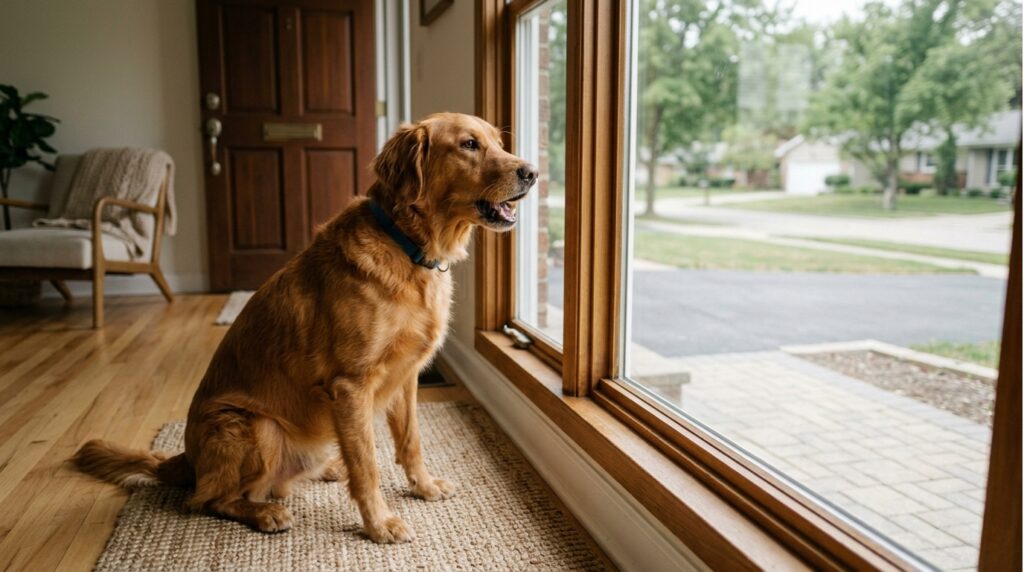


Quiet command training often fails for a simple reason: the dog has not learned what “quiet” means yet.
Many owners say “quiet,” “stop,” or “enough” during loud barking. But if the dog is already excited, scared, alert, or locked onto a trigger, the word may not help. Your voice may even add more noise and energy.
This guide explains why the quiet command fails, how to fix common barking training mistakes, and how to stop barking without shouting.
Immediate Answer
The quiet command usually fails when owners use it too late, too loudly, or before the dog has learned the cue.
A better plan is:
- Train “quiet” during easy moments first.
- Use a calm voice.
- Reward clear silence.
- Watch your dog’s body language.
- Reduce the trigger before expecting the cue to work.
- Match the fix to the barking type.
The quiet cue should be taught like a skill. It should not be used like an emergency button.
VCA explains that dogs can be taught a “hush” or “quiet” cue, but the cue should be paired with the moment barking stops or subsides.
Who This Guide Is For
This guide is for dog owners in the US, UK, CA, and other English-speaking homes who have tried saying “quiet,” but the barking continues.
It is especially useful if:
- your dog barks more when you shout
- your dog ignores the quiet command
- your dog barks at windows, doors, fences, gardens, yards, flats, apartments, or delivery workers
- your dog barks for attention
- you want a dog barking for attention fix without yelling
- you are comparing DIY training, bark deterrents, or trainer help
- you want to stop barking without shouting or harsh punishment
Quick Decision Table
| Problem | Likely Mistake | Better First Step |
|---|---|---|
| Dog barks more when you say “quiet” | Your voice may add excitement | Stop shouting and train calmly |
| Dog ignores quiet at the doorbell | Cue was not trained before the big trigger | Practice with easier sounds first |
| Dog stops for a treat, then barks again | Reward timing may be too early | Reward a clearer quiet pause |
| Dog barks for attention | Barking may be getting a response | Reward quiet before barking starts |
| Quiet works indoors but not outside | Cue is not generalized | Practice in easier places slowly |
| Owner wants a quick device | Root cause is unclear | Identify barking type first |
| Barking changed suddenly | Possible health, pain, fear, or stress factor | Vet check is safer |
Why the Quiet Command Fails
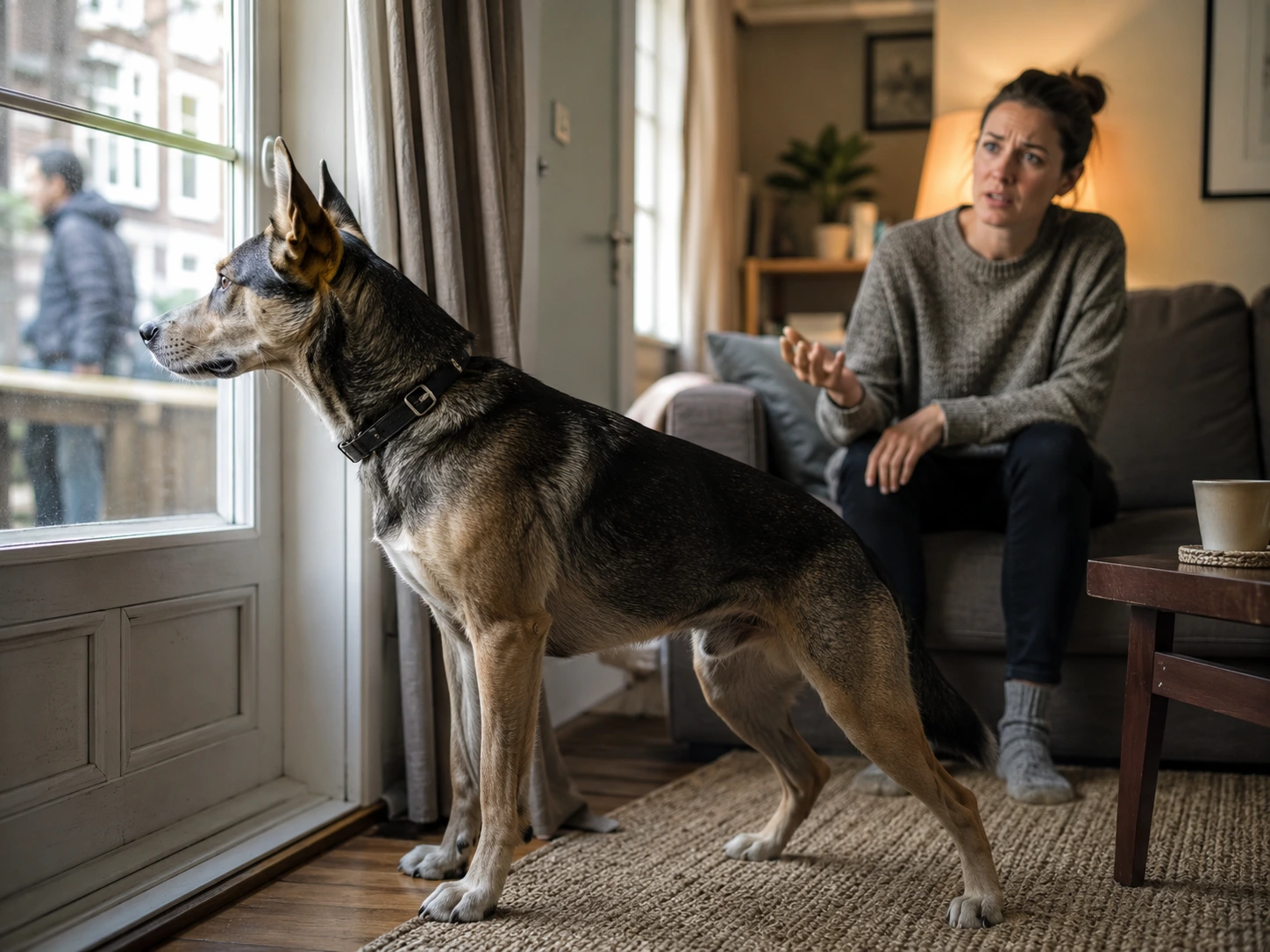
The quiet command can fail when the dog does not understand the word, the reward timing is unclear, or the trigger is too intense.
Most owners are not lazy. They are usually stuck in one of these barking loops.
1. The “Join-In” Loop
Your dog barks at the window. You shout “quiet!” from across the room.
To your dog, this may sound like more barking, more energy, or more attention.
Humane World notes that yelling at a dog to be quiet does not reduce barking and that owners should identify why the dog is barking instead.
Better first step
Stop shouting from across the room. Walk closer if safe, lower your voice, reduce the trigger, and reward a calm pause.
2. The Reward Timing Problem
Some owners reward too early.
The dog may still be:
- huffing
- staring hard
- leaning forward
- growling
- scanning
- ready to bark again
If you reward that tiny pause, your dog may learn:
bark → pause → treat → bark again
Better first step
Reward a clearer quiet moment. Better signs include:
- looking back at you
- turning away from the trigger
- relaxing the body
- moving away from the window or door
- staying quiet for a slightly longer pause
Best Friends explains that quiet should be marked and rewarded at the quiet moment, then slowly built into longer periods of silence.
3. The Emergency Cue Problem
Many owners only say “quiet” during the hardest moments:
- doorbells
- delivery workers
- dogs outside
- visitors
- people passing the window
- fence or garden triggers
That is usually too hard for early training.
Better first step
Train quiet during easier moments first. Then slowly practice around harder triggers.
4. The Wrong Barking Type Problem
Not all barking needs the same fix because different types of dog barking can come from alerting, attention-seeking, fear, frustration, boredom, being left alone, or pain and health changes.
Barking may be linked with:
- alerting
- attention-seeking
- fear
- frustration
- boredom
- being left alone
- pain or health changes
VCA describes barking as normal communication and explains that different barking patterns need different handling.
Better first step
Before choosing a tool or cue, ask:
What happens right before the barking?
That answer tells you which fix is more likely to help.
5. The Environment Problem
A dog may understand “quiet” in the living room but fail near:
- the front door
- the garden
- the yard
- a flat hallway
- an apartment corridor
- delivery workers
- other dogs
- people outside
This does not always mean the dog is stubborn. It may mean the cue has not been practiced in that harder setting yet.
Better first step
Practice in easy places first. Then slowly increase distractions.
Quiet Command Training Steps
Step 1: Stop Shouting
Use a calm, low voice.
When your dog barks, avoid yelling from another room. Instead:
- move closer if safe
- lower your voice
- close the curtain
- move away from the door
- guide your dog to a calmer area
- wait for a pause before using the cue
Best for
- alert barking
- window barking
- door barking
- dogs that get more excited when owners shout
Safety note
Avoid punishment if barking may be linked with fear, stress, or distress. Punishment-based methods may increase fear or make behavior problems worse in some dogs. Merck/MSD describes reward-based behavior modification and cautions that punishment is often misused.
Step 2: Teach “Quiet” Before You Need It
Do not wait for the doorbell to teach the cue.
Start when your dog is calm. Use a small sound your dog notices but does not explode over.
Basic practice:
- Make a very easy sound.
- Wait for your dog to stay quiet or pause.
- Say “quiet” calmly.
- Mark the quiet moment with “yes.”
- Give a treat.
- Repeat in short sessions.
Only make the sound harder when your dog can stay calm at the easy level.
Best for
- mild barking
- dogs that can still focus
- owners who can practice short daily sessions
Not best for
- severe distress barking
- dogs that react instantly to every sound
- urgent housing or neighbor-pressure situations
Step 3: Reward the Right Quiet Moment
Do not reward the bark. Reward the silence.
Avoid rewarding while your dog is still locked onto the trigger.
Reward when your dog:
- pauses clearly
- looks back at you
- turns away from the trigger
- relaxes
- moves to a calmer spot
Merck/MSD lists reinforcement, desensitization, counterconditioning, response substitution, and shaping as common behavior modification techniques.
Best for
- bark-pause-bark patterns
- owners who feel treats are not working
- dogs who stop for one second, then bark again
Safety note
Do not use food to lure your dog closer to something that scares them.
Step 4: Separate Alert Barking From Demand Barking
The quiet command works better when you know the barking type.
Ask:
Is my dog barking at something, or barking to get something?
If your dog barks at something
This may be alert barking.
Common triggers:
- doors
- windows
- fences
- people
- delivery workers
- dogs outside
- apartment hallway sounds
Better first steps:
- reduce the trigger
- create distance
- close curtains
- move away from the door
- reward calm responses
- practice with easier versions of the trigger
If your dog barks to get something
This may be attention or demand barking.
Common signs:
- staring at you
- pawing
- bringing a toy
- barking during work calls
- barking for food, play, or attention
Better first steps:
- check basic needs first
- avoid rewarding the bark
- reward quiet before barking starts
- ask for a simple calm behavior once the dog is quiet
VCA’s barking tips advise avoiding attention during attention barking, then giving calm attention and a treat once the dog quiets.
Step 5: Fix Attention Barking Without Yelling
Before barking starts, offer:
- toilet break
- water check
- short play
- calm mat time
- safe chew
- food puzzle if suitable
- planned attention break
If your dog starts attention barking and you have checked basic needs, avoid eye contact, talking, scolding, or giving the thing they want in that moment.
When your dog is quiet, ask for an easy behavior like “sit” or “go to mat,” then reward.
Best for
- dog barking for attention fix
- work-from-home owners
- dogs that bark for treats, toys, or interaction
Safety note
Only ignore barking when you are sure your dog is safe, well, and not distressed.
Step 6: Practice in New Places Slowly
A dog can know “quiet” in one room but not understand it in harder places.
Practice first in a calm room.
Then try:
- near a window with curtains closed
- near the front door during quiet times
- in the garden or yard with no big triggers
- in a flat hallway when it is quiet
- outside at a distance from dogs or people
Do not jump from the living room to a busy delivery time and expect the same result.
Best for
- quiet cue works indoors but fails outside
- dogs that know the cue in one place only
- owners who want a stronger long-term cue
Safety note
If the cue fails again and again, the setting is probably too hard.
Step 7: Know When DIY Is Not Enough
Use DIY first if:
- barking is mild
- the trigger is clear
- your dog can pause and recover
- there are no sudden behavior changes
Consider a qualified reward-based trainer if:
- the quiet command keeps failing
- barking causes neighbor complaints
- you cannot identify the barking type
- you are considering bark deterrents because you feel stuck
Speak with a veterinarian if barking starts suddenly, gets worse, or appears with pain, confusion, appetite changes, sleep changes, disorientation, or other behavior changes.
Comparison: Pros and Cons
| Option | Pros | Cons | Best For | Avoid When |
|---|---|---|---|---|
| Calm quiet cue training | Builds clear communication | Takes practice | Dogs that can pause and refocus | Dog is panicking or over threshold |
| High-value treats | Helps reward the right moment | Bad timing can reward bark-pause-bark | Teaching silence and calm choices | Dog is too stressed to eat |
| Trigger management | Reduces barking practice | Does not teach everything alone | Windows, doors, yards, gardens, flats | Used without any training plan |
| Ignoring demand barking | Can reduce attention barking | Can fail if needs are unmet | Attention-seeking barking | Dog is scared, unwell, or needs toilet |
| Online DIY protocol | Low cost and flexible | Hard to personalize | Mild, clear barking patterns | Barking is severe or complex |
| Qualified trainer | Personalized feedback | Costs more | Repeated failure, neighbor pressure | Trainer uses harsh punishment |
| Ultrasonic/bark deterrent device | May interrupt some dogs | May scare or confuse some dogs | Carefully selected support use | Fearful, anxious, or sensitive dogs |
| Vet check | Safer for sudden changes | Not a full training plan | New, worse, or unusual barking | Barking is stable and clearly routine-based |
Which Option Fits Which Situation?
If your dog barks more when you yell, start with calmer cue training and management.
If your dog barks for attention, reward quiet before barking starts.
If your dog barks at postal workers, delivery workers, doors, or windows, use distance, curtains, door management, and easy sound practice.
If your dog barks in an apartment, flat, condo, or shared-wall home, reduce triggers first so your dog is not practicing barking all day.
If the quiet cue works at home but fails outside, practice in easier outdoor settings before using it around big triggers.
If you feel pushed toward a bark device because of complaints, pause and identify the barking type first.
Practical Recommendation
Do not treat “quiet” like a magic word.
Teach it in calm moments first. Reward clear silence. Reduce triggers your dog cannot handle yet. Then slowly practice around harder distractions.
If neighbor pressure, landlord complaints, council issues, HOA rules, strata rules, or repeated failed training attempts are involved, a qualified reward-based trainer may save time and reduce stress.
Real-World Scenarios

Real-World Scenario: The Window Barking Loop
An owner notices their dog barking at the same window when people pass outside. The owner shouts “quiet” from the other room, and the dog barks harder.
This may point to alert barking, repeated trigger practice, or the dog becoming more excited when the owner gets loud.
A better first step is closing the visual trigger, walking over calmly, and practicing quiet during easier moments.
Real-World Scenario: The One-Second Silence Problem
An owner gives a treat as soon as the dog stops barking, but the dog immediately barks again.
This may mean the reward is landing during a tiny pause, not a calmer quiet moment.
A better first step is waiting for a clearer pause, such as the dog turning away from the trigger or relaxing.
Real-World Scenario: The Attention Barking Mistake
An owner is working from home and says “quiet” every time the dog barks. The dog keeps barking during calls.
This may mean barking is creating interaction.
A better first step is planned breaks, calm mat time, and rewarding quiet before calls.
What Owners Often Misunderstand
“My dog is ignoring me.”
Maybe. But often, the dog does not understand the cue in that situation yet.
A dog can know “quiet” in the kitchen but not near a fence, door, or delivery worker.
“My dog knows what they did wrong.”
A dog’s body language after scolding may reflect your tone, posture, or frustration. It does not always mean the dog understands the barking mistake.
“Quiet means stop barking right now.”
To the dog, “quiet” only means something if it has been trained and rewarded clearly.
Without training, it is just another sound.
“Reward-based training takes too long.”
Reward-based training may feel slow when timing, trigger control, or practice steps are unclear. The problem is often the setup, not the method.
Non-Obvious Insight
Many quiet-command failures are not cue problems. They are arousal problems.
When the dog is too worked up, the cue may not be processed well. The dog may be locked onto the trigger.
That is why the quiet command often works better after you lower the trigger level.
Less trigger first. Cue second. Reward third.
What Not to Do
Avoid these common mistakes:
- shouting “quiet” over and over
- punishing barking that may be linked with fear or distress
- rewarding while the dog is still locked onto the trigger
- waiting for the doorbell to train the quiet cue for the first time
- assuming your dog is dominant, defiant, or spiteful
- using shock-based punishment tools for barking
- buying a bark deterrent before understanding the barking type
When These Solutions May Not Work
These steps may not be enough if:
- barking starts suddenly
- barking gets worse quickly
- your dog seems confused, painful, or disoriented
- your dog has dog barking when left alone and cannot settle
- your dog shows panic-like behavior near triggers
- your dog cannot eat, listen, or recover after barking
- you have serious neighbor, landlord, council, HOA, strata, or tenancy pressure
- you have tried consistent reward-based training and still feel stuck
In these cases, DIY training may still help, but it should not be your only support.
When to Contact a Vet or Qualified Trainer
Speak with a veterinarian if barking is new, sudden, unusual, or appears with pain, confusion, appetite changes, sleep changes, disorientation, or other behavior changes.
Speak with a qualified reward-based trainer if:
- the quiet command keeps failing
- barking causes neighbor complaints
- you live in a flat, apartment, condo, or shared-wall home
- you cannot tell if barking is alert, attention-seeking, fear-related, or separation-related
- you are thinking about bark deterrent tools because you feel out of options
Quick Summary
The quiet command fails when it is used too late, too loudly, or without clear training.
To fix it:
- stop shouting
- train quiet during easy moments
- reward true silence
- match the fix to the barking type
- manage the trigger first
- practice in new places slowly
- get help if barking is sudden, severe, or causing housing pressure
The goal is not to silence your dog harshly. The goal is to teach calm, clear behavior your dog can understand.
FAQs
Why does my dog bark when I say quiet?
Your dog may become more excited if you shout. The word “quiet” may also not be trained clearly yet.
Should I reward my dog when they stop barking?
Yes, but timing matters. Reward a clear quiet moment, not a tiny pause while your dog is still ready to bark again.
How do I stop barking without shouting?
Lower your voice, reduce the trigger, wait for a pause, and reward calm silence. Train the quiet cue during easy moments first.
Is my dog stubborn if they ignore the quiet command?
Not always. The dog may not understand the cue in that situation, or the trigger may be too exciting.
What is the best dog barking for attention fix?
Check basic needs first. Then reward quiet behavior before barking starts. If your dog barks for attention and is safe, avoid giving attention during the barking and reward calm quiet moments instead.
Should I use a bark deterrent device?
A device may help in some cases, but it is not a full training plan. Some dogs may become scared or stressed by ultrasonic, spray, or vibration tools. Avoid shock-based punishment.