

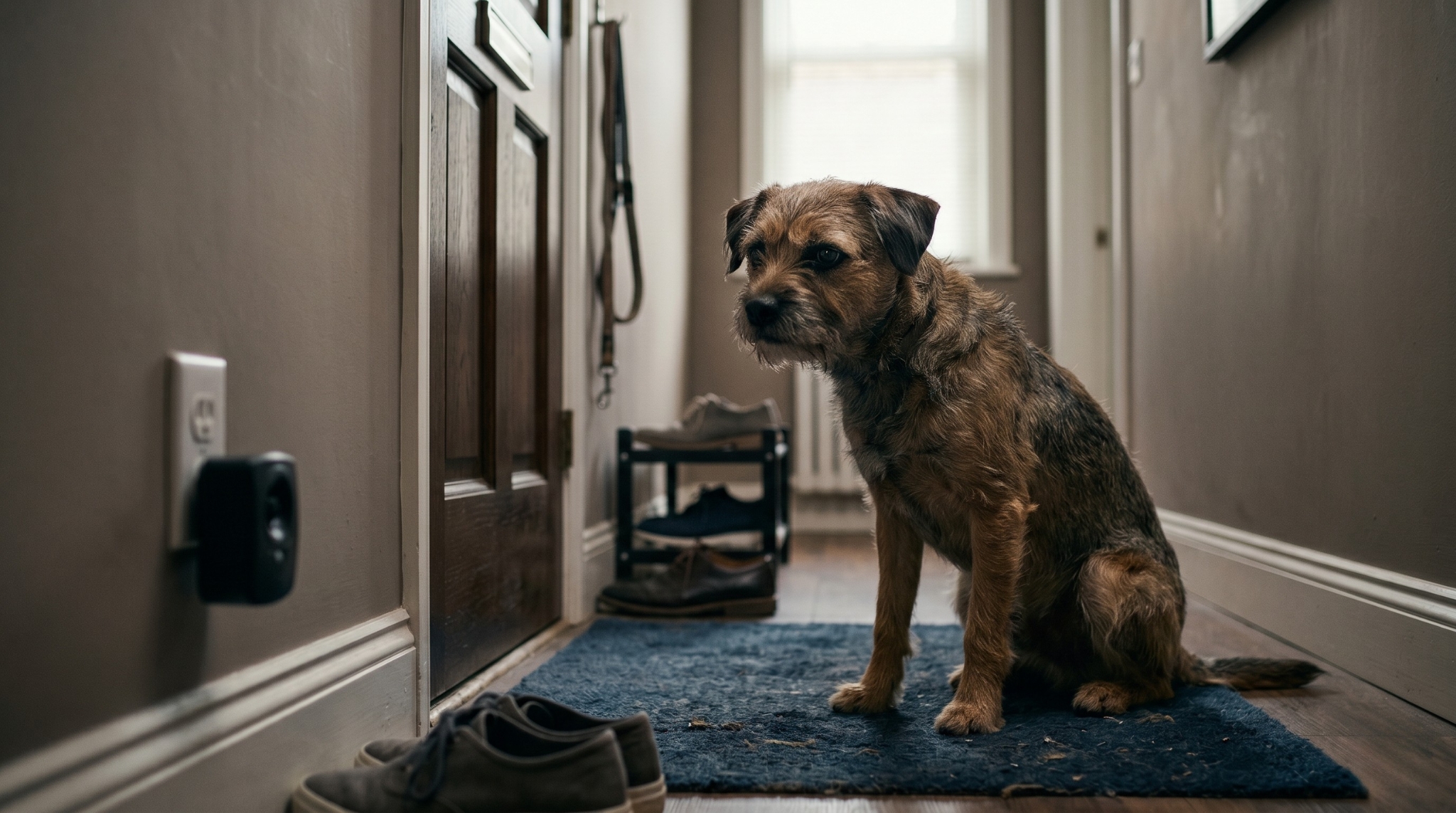
Anti-bark devices may not solve dog barking problems because they usually target the sound, not the cause. Dogs may bark because of fear, alert behavior, boredom, frustration, separation-related distress, pain, sudden behavior change, or learned attention-seeking.
If the trigger is still present, a bark collar, ultrasonic device, citronella collar, or vibration collar may not make your dog feel calmer or safer.
A safer first step is to identify why your dog is barking, reduce the trigger, reward calm behavior before barking starts, and teach your dog what to do instead.
Table of Contents
- Why Anti-Bark Devices Can Look Like a Fast Answer
- Common Barking Triggers Anti-Bark Devices May Miss
- How to Tell What Type of Barking It May Be
- Why Anti-Bark Devices May Fail
- Real-World Anti-Bark Device Scenarios
- What to Do First
- Step-by-Step Plan Before Using Anti-Bark Devices
- 7-Day Barking Reset Plan Before Buying an Anti-Bark Device
- What Owners Often Misunderstand
- Non-Obvious Insight: Stopping Barking Can Hide the Real Problem
- What Not to Do
- When to Contact a Vet or Qualified Professional
- Quick Summary
- FAQs
Why Anti-Bark Devices Can Look Like a Fast Answer
Dog barking problems can become urgent fast.
Your dog may bark:
- At night
- In an apartment
- In a flat
- In a crate
- When left alone
- When neighbors walk past
- When dogs bark outside
- When someone comes to the door
When complaints start, anti-bark devices can look like the fastest answer.
Bark collars, ultrasonic devices, citronella collars, vibration collars, and other anti-bark tools may reduce barking in some situations. But they often focus on stopping the sound instead of understanding why the dog is barking.
The main issue is simple:
Barking is not just noise. It is behavior with a reason behind it.
The ASPCA barking guide explains that dogs may bark for different reasons, including alarm barking, attention-seeking barking, frustration barking, separation-anxiety barking, and barking linked with illness or injury.
This is why a device-only plan can fail.
If the dog is scared, frustrated, bored, in pain, or distressed when left alone, stopping the sound does not automatically solve the problem.
Common Barking Triggers Anti-Bark Devices May Miss
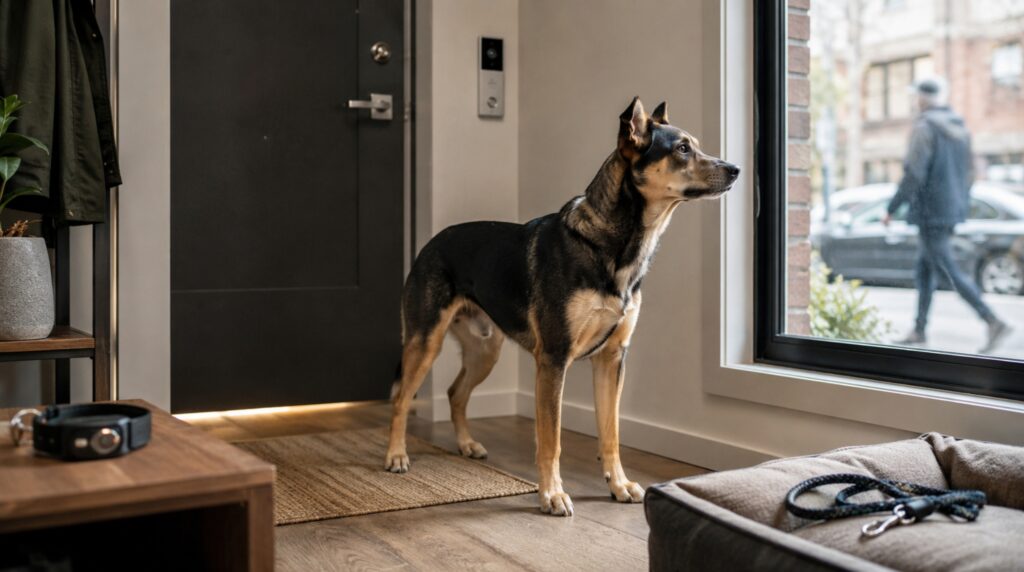
Anti-bark devices may fail when barking is caused by:
- Hallway noise
- Doorbell sounds
- People walking past windows
- Other dogs outside
- Being left alone
- Crate frustration
- Fear of sounds
- Boredom
- Lack of exercise or enrichment
- Attention-seeking patterns
- Pain or sudden behavior change
- Senior dog confusion
- Separation-related distress
- Territorial or alert barking
- Nighttime anxiety
- Apartment or shared-wall noise
This matters because each trigger needs a different plan.
A dog barking from boredom needs a different solution than a dog barking from panic, pain, fear, or separation-related distress.
In owner discussions, many people mention feeling trapped by neighbor complaints, landlord pressure, apartment noise, or barking that happens only when they leave. That pressure is real, but it can lead people to choose fast tools before they understand the cause.
How to Tell What Type of Barking It May Be
Use the pattern, trigger, timing, and body language together.
Do not judge the barking by sound alone.
| Barking Pattern | Possible Meaning | Better First Step |
|---|---|---|
| Barking at hallway or door sounds | Alert or territorial barking | Reduce access to the door, add white noise, reward calm |
| Barking when left alone | Separation-related distress, boredom, or frustration | Record behavior and get professional help if panic signs appear |
| Barking in a crate | Crate frustration, fear, or unmet needs | Check crate routine, toilet needs, duration, and comfort |
| Barking at windows | Visual trigger or alert barking | Close blinds, use window film, reward moving away |
| Barking for attention | Learned demand barking | Reward quiet before barking starts |
| Barking suddenly in an older dog | Pain, confusion, sensory change, or health issue | Contact a veterinarian |
| Barking through the device | Trigger is still too strong | Reduce the trigger and teach a replacement behavior |
| Quiet only when the collar is on | Collar-wise learning | Teach calm behavior without relying on the device |
| Barking with fear body language | Fear or anxiety | Increase distance from trigger and seek reward-based help |
| Barking with growling, lunging, or snapping | Stress, fear, frustration, or aggression risk | Stop using punishment and contact a professional |
This table does not diagnose your dog. It helps you decide what to check first.
Why Anti-Bark Devices May Fail
1. The Device Does Not Fix the Reason for Barking
Barking usually has a trigger or function.
Your dog may be barking because they are:
- Alerting to hallway noise
- Scared of people outside
- Frustrated in a crate
- Upset when left alone
- Bored or under-stimulated
- Reacting to other dogs
- Asking for attention
- Struggling with sudden behavior changes
An anti-bark device may interrupt the sound, but it does not teach your dog what to do instead.
SPCA New Zealand explains that anti-bark collars and devices do not address the underlying cause of barking. Humane World for Animals also notes that bark control products may interrupt barking, but owners still need to understand why the dog is barking and choose an appropriate plan.
For example, if a dog barks because they are distressed when left alone, a correction may not help them feel safe.
The dog may still feel upset, even if the barking becomes quieter.
2. A Strong Trigger May Still Drive the Barking
Some dogs continue barking when the trigger is intense.
This can happen when barking is triggered by:
- A stranger at the door
- Another dog outside
- Neighbor noise
- Being left alone
- Crate frustration
- Nighttime fear
- A high-energy alert state
This does not prove your dog is stubborn.
It may mean the device is not changing the emotion or trigger behind the barking.
If the dog still feels scared, frustrated, or unsafe, the barking may continue or return later.
3. False Triggers Can Confuse the Dog
Some anti-bark devices can activate at the wrong time.
Possible false triggers include:
- Another dog barking
- TV sounds
- Door sounds
- Street noise
- Loud talking
- Environmental noise near the device
- A second dog in the home
This can be confusing because the dog may receive a correction when they did not bark or when they cannot understand what caused it.
The ASPCA barking guide warns that microphone-based bark collars should not be used in multi-dog homes because any dog’s bark can activate the collar.
Humane World for Animals also notes that another dog’s bark may trigger a spray collar.
4. The Dog May Become “Collar-Wise”
Some dogs learn the equipment pattern.
They may stay quiet when the bark collar is on, then bark again when it is removed.
This means the device has not taught calm behavior. It has only taught the dog that barking is risky when the collar is present.
The ASPCA specifically notes that many dogs can become “collar-wise” with anti-bark collars.
A better goal is to teach the dog a calm behavior that works even when no device is present.
5. Quiet Does Not Always Mean Calm
Some owners notice that their dog seems quieter but not calmer.
That matters.
A dog may stop barking but show stress in other ways, such as:
- Hiding
- Freezing
- Avoiding the owner
- Acting shut down
- Panting
- Pacing
- Growling
- Snapping
- Becoming more reactive
The AVSAB Humane Dog Training Position Statement supports reward-based methods and warns against training methods based on pain, fear, intimidation, shouting, force, or shock.
SPCA New Zealand warns that anti-bark devices, including shock, citronella, and ultrasonic types, can cause stress, fear, and anxiety and may worsen barking or lead to other behavior issues.
The goal should not be “silent but stressed.”
The goal should be a dog who is safer, calmer, and better understood.
Real-World Anti-Bark Device Scenarios
These are not case studies or diagnoses. They are common owner-observed patterns that may help you think about the trigger.
Scenario 1: The Dog Barks Through the Collar
Your dog barks at people walking past the apartment door.
You try a bark collar, but your dog still barks when the hallway is noisy.
This may mean the hallway trigger is still too strong.
What to try first: Move your dog away from the door, use soft background noise, block the trigger where possible, and reward calm behavior before barking starts.
Scenario 2: The Dog Is Quiet Only When the Collar Is On
Your dog does not bark when wearing the device, but barks again when it is removed.
This may mean your dog has learned the equipment pattern, not a calmer behavior.
What to try first: Teach a replacement behavior such as “go to mat,” “this way,” or “come away” without relying on the device.
Scenario 3: The Device Activates at the Wrong Time
You have more than one dog.
One dog barks, but another dog is near the device or wearing the collar.
This can create unfair correction and confusion.
What to try first: Avoid microphone-based bark collars in multi-dog homes and use management or reward-based training instead.
Scenario 4: Barking Happens Only When the Owner Leaves
Your dog barks after you leave home.
This may be boredom, frustration, alert barking, or separation-related distress.
A device may reduce some sound, but it may not address why your dog is upset.
What to try first: Record what happens after you leave, look for distress signs, and speak with a veterinarian or qualified behavior professional if your dog panics.
Scenario 5: The Owner Feels Trapped by Complaints
You live in a flat, apartment, terraced home, shared housing, or an HOA community, and complaints are starting.
The pressure is real.
But a rushed device-only plan may miss the cause and make the behavior harder to manage.
What to try first: Use an emergency noise plan while you identify the trigger and start a safer training plan.
What to Do First
Before buying or using an anti-bark device, pause and ask:
- When does the barking happen?
- Where does it happen?
- What happens right before it starts?
- Is your dog alone?
- Is your dog in a crate?
- Can your dog see people, dogs, or movement outside?
- Does barking happen at night?
- Does your dog seem scared, excited, frustrated, or alert?
- Did the barking start suddenly?
- Is your dog older or showing health changes?
- Are there signs of pain, fear, panic, or aggression?
If barking starts suddenly, gets worse quickly, happens in an older dog, or appears with pain, confusion, appetite changes, sleep changes, disorientation, or sudden fear, contact a veterinarian.
If your older dog has suddenly started barking more, especially at night or while acting confused, restless, or unlike themselves, read our guide on sudden excessive barking in older dogs.
Step-by-Step Plan Before Using Anti-Bark Devices

Step 1: Identify the Barking Type
Find out what kind of barking is happening.
For a few days, write down:
- When it happens
- Where it happens
- What happened right before it started
- Who or what your dog barked at
- Whether your dog was alone
- Whether your dog could see outside
- Whether it happened in a crate
- Whether it happened at night
- Whether your dog seemed scared, excited, frustrated, or alert
Use this before buying a bark collar, ultrasonic device, citronella collar, vibration collar, or anti-bark tool.
The ASPCA says the first step toward reducing barking is to determine what type of bark your dog is expressing.
Step 2: Match the Solution to the Cause
Choose a response based on the trigger, not just the sound.
If your dog barks at hallway noise:
- Move your dog away from the door
- Use soft background noise
- Reward calm when sounds happen
- Avoid letting your dog rehearse barking at the door
If your dog barks when left alone:
- Record what happens after you leave
- Start with very short, calm absences
- Keep departures low-key
- Speak with a vet or qualified professional if your dog seems panicked
If your dog barks for attention:
- Reward quiet before barking starts
- Teach a settle spot
- Give attention when your dog is calm
- Avoid giving the main reward right after barking
If your dog barks from boredom:
- Add sniffing
- Use food puzzles
- Offer safe chewing
- Add short reward-based training
- Use calm enrichment before high-risk barking times
Use this after you know the main barking pattern.
Step 3: Teach a Replacement Behavior
Teach your dog what to do instead of barking.
Pick one simple behavior:
- Go to mat
- Look at me
- Settle on bed
- Come away from the window
- Find a treat scatter
- Move behind a baby gate calmly
Example for door or window barking:
- Say a simple cue like “this way.”
- Toss a treat away from the trigger.
- Reward your dog for moving away.
- Add a calm settle spot.
- Practise when the trigger is mild, not during full barking.
Use this before the barking reaches full intensity.
Early signs may include:
- Staring
- Stiff body
- Raised ears
- Rushing to the window
- Standing near the door
- Low growling
- Fixating on movement
AVSAB recommends teaching animals what to do rather than relying on punishment for unwanted behavior.
Step 4: Reduce the Trigger Where Possible
Change the environment so your dog has fewer reasons to bark.
For apartments, flats, and terraced homes:
- Use white noise near the door
- Move your dog’s bed away from shared walls
- Close curtains or blinds
- Use window film if outdoor movement triggers barking
- Avoid leaving your dog in the loudest room
- Give a calm food activity during busy hallway times
For crate barking:
- Check that crate time is not too long
- Give a toilet break first
- Build crate time gradually
- Avoid using the crate only when leaving
- Make the crate comfortable and predictable
Related: Puppy Barking in Crate at Night
For night barking:
- Check toilet needs
- Reduce outdoor sounds
- Keep the sleep area familiar
- Use a soft night light for older dogs
- Contact a vet if barking is sudden or unusual
Step 5: Reward Quiet Before Barking Starts
Catch calm behavior early.
Reward your dog when they:
- Hear a sound and stay quiet
- Look at the window but do not bark
- Rest calmly while neighbors move around
- Stay settled when you leave the room
- Pause and turn back to you
- Move away from the door
- Choose their bed or mat
Keep rewards calm.
Use food, praise, distance from the trigger, or access to something your dog likes.
Use this before barking begins, during mild triggers, and after short quiet pauses.
Step 6: Make an Emergency Noise Plan
Prepare for urgent situations without relying only on a device.
If you are facing neighbor, landlord, council, or HOA pressure:
- Block visual triggers right away
- Move your dog to the quietest room
- Add background noise
- Use safe chews or food puzzles before noisy times
- Avoid leaving your dog near windows or doors
- Keep a barking log to show patterns
- Contact a qualified professional for a plan
This does not replace training.
But it can reduce pressure while you work on the cause.
Use this when complaints are already happening or when you need a short-term management plan.
Step 7: Get Help if the Barking Is Intense or Emotional
Speak with a veterinarian or qualified behavior professional when barking is severe, sudden, or distress-related.
Share:
- When barking started
- What triggers it
- What you have tried
- Whether devices made it better or worse
- Any signs of fear, panic, pain, or aggression
- Videos, if safe to record
- Whether barking happens when your dog is alone
- Whether your dog seems more reactive or shut down
Use this if barking is causing complaints, distress, aggression, panic, or major daily stress.
Contact a veterinarian first if barking starts suddenly, gets worse quickly, or appears with pain, confusion, appetite changes, disorientation, sudden fear, or unusual restlessness.
7-Day Barking Reset Plan Before Buying an Anti-Bark Device
Day 1: Track the Barking
Write down when barking happens, where your dog is, and what happens right before it starts.
Track:
- Time
- Location
- Trigger
- Whether your dog is alone
- Whether your dog sees outside
- Whether barking happens at night
- Whether barking happens in a crate
- Body language
- Duration of barking
- What you did afterward
Goal: Find the pattern before choosing a solution.
Day 2: Identify the Barking Type
Decide whether barking looks like:
- Alert barking
- Fear barking
- Demand barking
- Boredom barking
- Crate frustration
- Separation-related barking
- Sudden health-related barking
- Sound-trigger barking
- Window or door-trigger barking
Goal: Match the plan to the cause.
Day 3: Reduce the Trigger
Try simple management:
- Close blinds
- Use white noise
- Move bed away from the door
- Block window access
- Avoid the loudest room
- Give safe enrichment before high-risk times
- Use window film if outside movement triggers barking
- Keep your dog away from shared walls during noisy times
Goal: Reduce barking rehearsal.
Day 4: Reward Calm Before Barking
Reward your dog when they:
- Hear a sound and stay quiet
- Look at the door but do not bark
- Move away from the window
- Rest during hallway noise
- Pause and look back at you
- Stay calm in the crate for a short time
- Settle before people pass outside
Goal: Teach that calm behavior works.
Day 5: Teach a Replacement Behavior
Choose one:
- Go to mat
- Come away
- Look at me
- Find it
- Settle on bed
- Move behind a baby gate
- Touch hand
Practise before the trigger gets intense.
Goal: Give your dog a job instead of barking.
Day 6: Check for Distress or Health Concerns
Contact a vet or qualified professional if barking:
- Starts suddenly
- Happens when left alone with panic signs
- Comes with pain signs
- Happens with confusion
- Gets worse quickly
- Leads to aggression or shutdown
- Happens in an older dog and feels unusual
- Appears with appetite, sleep, or toilet changes
Goal: Rule out health, pain, fear, or serious distress.
Day 7: Review Before Buying Any Device
Ask:
- Do I know the trigger?
- Have I reduced the trigger?
- Have I taught an alternative behavior?
- Is my dog scared, panicked, or in pain?
- Could a device make this worse?
- Is the barking happening because of separation-related distress?
- Is my home multi-dog, where false correction could happen?
- Am I trying to solve neighbor pressure without understanding the cause?
If the answer is unclear, speak with a qualified reward-based professional before using an anti-bark device.
Goal: Make a safer decision before buying a tool.
What Owners Often Misunderstand
“Barking is just a bad habit.”
Sometimes barking becomes learned.
But it often starts because the dog is trying to communicate something.
The dog may be alert, scared, frustrated, lonely, bored, uncomfortable, or seeking attention.
“If the collar stops the bark, the problem is solved.”
Quiet does not always mean calm.
A dog may stop barking but still feel afraid, stressed, frustrated, or unsafe.
“Vibration is always harmless.”
Some dogs may not care about vibration.
Others may find it scary or confusing.
Watch your dog’s response, not the product label.
“Reward-based training takes too long.”
Reward-based training takes practice, but management can help right away.
Blocking triggers, changing the room setup, using white noise, and rewarding quiet early can reduce barking pressure while training builds.
“My dog barks through the device because they are stubborn.”
A dog may bark through correction because the trigger is still present or too strong.
The device may not be changing the reason behind the barking.
Non-Obvious Insight: Stopping Barking Can Hide the Real Problem
If a device suppresses barking, the owner may miss the reason behind it.
A dog who no longer barks when left alone may still be distressed.
A dog who stops barking at hallway sounds may still feel scared.
A dog who freezes after correction may look “fixed,” but may not feel safe.
The sound is only one part of the behavior.
The real goal is not just less noise.
The goal is a dog who can cope better.
What Not to Do
Avoid Using a Device Before Knowing the Trigger
A dog barking at neighbors, a dog barking from panic, and a dog barking for attention may need different plans.
Do not choose the tool before you understand the barking pattern.
Avoid Punishing Barking That Starts Suddenly
Sudden barking can be linked with pain, confusion, fear, or other changes.
Veterinary evaluation is a safer first step when behavior changes suddenly.
Avoid Microphone-Based Bark Collars in Multi-Dog Homes
Another dog’s bark can activate the collar.
That can make the correction confusing and unfair.
The ASPCA warns against microphone-based collars in multi-dog homes for this reason.
Do Not Rely Only on “Humane” Marketing
Citronella, vibration, ultrasonic sound, and static correction may affect dogs differently.
Watch your dog’s body language, not just the product label.
Do Not Ignore Fear or Shutdown
If your dog hides, freezes, avoids you, growls, snaps, or seems shut down after using a device, stop using it and seek qualified help.
These may be signs that the tool is increasing stress.
Avoid Using Devices as the Only Plan for Separation-Related Barking
If barking happens when your dog is left alone, the root issue may need a careful behavior plan.
The ASPCA says separation-anxiety barking is usually linked with being left alone or separated from the guardian and often appears with other distress signs.
Do Not Assume Silence Means Success
Silence can be useful, but it is not the only measure.
A dog who is quiet but frozen, hiding, avoiding, or more reactive may not be improving.
When to Contact a Vet or Qualified Professional
Contact a veterinarian if your dog’s barking:
- Starts suddenly
- Gets worse quickly
- Appears with pain signs
- Happens with confusion or disorientation
- Comes with appetite changes
- Happens in an older dog and feels unusual
- Appears with sudden fear or restlessness
- Comes with sleep changes
- Appears with weakness, collapse, or major behavior change
Contact a qualified reward-based trainer, veterinary behaviorist, or clinical animal behaviourist if:
- The barking is causing neighbor complaints
- Your dog barks when left alone
- Your dog reacts strongly to people, dogs, or sounds
- Anti-bark devices made behavior worse
- Your dog seems scared, shut down, or more aggressive
- You cannot identify the trigger
- You need a safe plan for an apartment, flat, or shared housing
- Your dog barks through a device
- Your dog is quiet only when the device is on
AVSAB recommends reward-based methods and says training should avoid tools involving pain, intimidation, force, shouting, or electronic shock collars.
Quick Summary
Anti-bark devices may not solve dog barking problems because they often target the noise, not the cause.
Barking may be linked with:
- Alert behavior
- Fear
- Boredom
- Frustration
- Separation-related distress
- Pain or sudden behavior change
- Learned attention-seeking
- Environmental triggers
Bark collars, ultrasonic devices, vibration collars, citronella collars, and other aversive tools may fail when the dog is reacting to a real trigger or still feels stressed.
A safer first step is to:
- Track the pattern
- Identify the trigger
- Reduce barking rehearsal
- Reward quiet before barking starts
- Teach your dog what to do instead
- Contact a vet or qualified professional when barking is sudden, severe, fearful, or distress-related
The goal is not just a quiet dog.
The goal is a calmer, safer dog.
FAQs
Do anti-bark devices work?
They may reduce barking for some dogs in some situations, but they do not always solve the cause.
Some dogs may bark again when the device is removed or may still feel stressed.
Are bark collars bad for dogs?
They can be stressful or confusing for some dogs, especially if they activate at the wrong time or are used for fear-based barking.
ASPCA says anti-bark collars are punishment devices and are not recommended as a first choice.
Why does my dog bark through a bark collar?
Your dog may be highly alert, scared, frustrated, or focused on the trigger.
The device may not be changing the reason your dog is barking.
What is the most humane way to stop barking?
Start by finding the trigger.
Then reduce the trigger, reward calm behavior, teach a replacement behavior, and get help if the barking is severe or distress-related.
Can ultrasonic bark devices work through walls?
They may not work reliably in every setting, and dogs may respond differently.
ASPCA says collars that deliver noise are ineffective with most dogs.
Are citronella collars better than shock collars?
Citronella collars may seem less harsh than shock collars, but they can still be aversive for some dogs.
They may also activate at the wrong time or fail to address the reason behind barking.
Is a vibration collar safe for barking?
Some dogs may not mind vibration, but others may find it startling or scary.
Watch your dog’s body language carefully. If your dog hides, freezes, avoids you, or seems more anxious, stop and seek qualified help.
What should I do if neighbors complain about barking?
Start with short-term management while you work on the cause.
Use white noise, block visual triggers, move your dog away from shared walls or doors, provide calm enrichment before high-risk times, and keep a barking log.
If complaints continue, contact a qualified reward-based trainer or veterinary behavior professional.