
You finally get into bed. The house is quiet. Then your dog starts barking.
Not during the day. Not when everyone is moving around. Only at night.
That pattern matters.
Night barking usually is not random. In most cases, your dog is reacting to a specific trigger, feeling more alert once the house settles, or repeating a learned habit that now happens on cue. In some dogs, especially seniors, it can also point to confusion, discomfort, or a health issue.
Table of Contents
- Dog Barking at Night: Why It Happens and How to Stop It
- Immediate Answer
- Why Do Dogs Bark at Night?
- Dog Barking at Night vs Barking When Left Alone at Night
- How to Tell What Type of Night Barking You’re Dealing With
- How to Stop Dog Barking at Night
- What Not to Do
- When Night Barking Means You Should Call the Vet
- Quick Summary
- FAQs
- What To Do Tonight
Immediate Answer
If your dog barks at night, the most common reasons are outside sounds, territorial alert barking, anxiety when the house goes quiet, a recent routine change, loneliness at bedtime, or age-related changes in senior dogs.
The fix depends on the cause.
That is why the first step is not simply “stop the barking.” The first step is figuring out what your dog is reacting to.
Why Do Dogs Bark at Night?
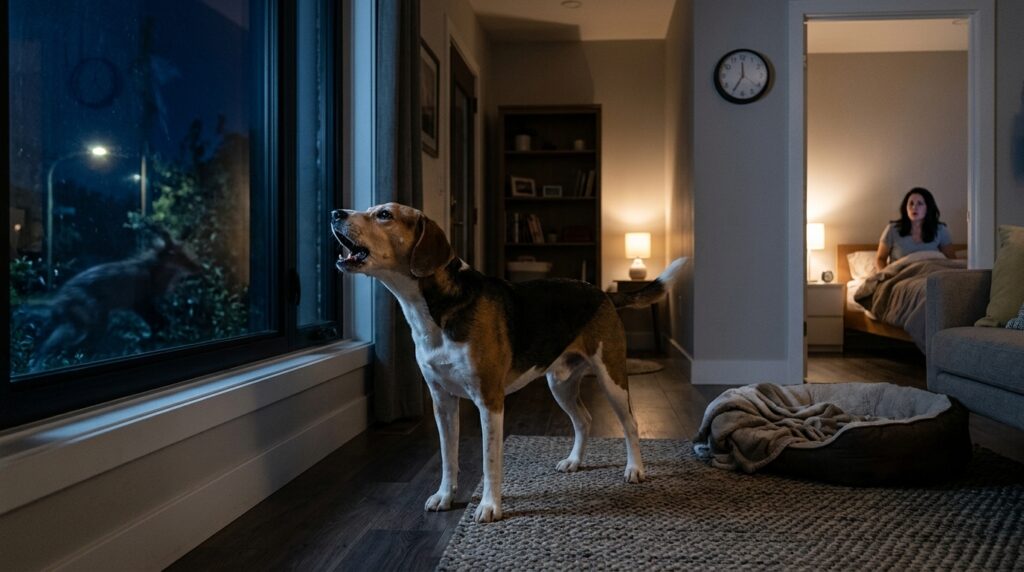
Dogs bark at night for several different reasons. Some are reacting to sounds. Some are guarding the home. Some are anxious when the household becomes quiet. Others may be uncomfortable, under-stimulated, or confused.
The timing, body language, and pattern of the barking tell you more than the barking itself.
1. Nighttime Sounds Are Easier for Your Dog to Notice
At night, there is less background noise. That makes small sounds stand out more clearly.
Your dog may hear:
- Footsteps outside
- Wildlife near the home
- A neighbor closing a car door
- Distant barking
- Movement near a window or fence
- People walking past the house
You may hear nothing at all, but your dog may still react. For dogs with sensitive hearing or strong alert instincts, nighttime sounds can feel much more important than daytime noise.
2. Some Dogs Become More Watchful After Dark
Many dogs become more alert at night. This is especially common if they sleep near a front door, window, hallway, balcony, or yard-facing room.
Signs this is alert barking include:
- Your dog rushes to the door or window.
- The barking sounds sharp, sudden, and intense.
- It happens after a noise or movement.
- Your dog looks focused on one direction.
- Your dog settles once the “threat” passes.
In this case, your dog is not barking for no reason. They believe they have noticed something worth warning you about.
3. The House Getting Quiet Can Trigger Anxiety
Some dogs cope well during the day but struggle once the home shuts down.
Lights off, bedroom doors closed, and everyone going to bed can signal that your dog is now alone or cut off from the household. For some dogs, that creates tension. For others, it can trigger separation-related barking.
This is more likely if:
- Your dog sleeps in a different room.
- Barking starts soon after bedtime.
- Your dog also whines, paces, scratches, or pants.
- Your dog seems unable to settle.
- Your dog becomes distressed when separated from people.
This type of barking is less about outside triggers and more about how your dog feels when the household becomes quiet and distant.
4. A Recent Change Can Create a New Barking Pattern
Night barking often starts after one event and then becomes a repeated habit.
Common triggers include:
- Fireworks
- A storm
- Moving house
- A new baby, pet, or person in the home
- A change in where your dog sleeps
- A change in your evening routine
- Construction or new outdoor sounds
Even if the original trigger is gone, the barking can become part of your dog’s nightly routine. The pattern may continue because your dog has learned that nighttime barking changes what happens next.
5. Your Dog May Need Something Basic
Do not overlook simple causes. Sometimes night barking happens because your dog has a practical need.
Your dog may bark because they:
- Need the toilet
- Have too much pent-up energy
- Are hungry because of a changed feeding schedule
- Feel uncomfortable in their sleeping area
- Are too hot or too cold
- Are restless because they did not get enough activity
This is especially common when the barking happens at roughly the same time every night.
6. Senior Dogs May Bark Because of Confusion or Sensory Changes
In older dogs, night barking can have a different cause.
Senior dogs may bark more because of:
- Hearing loss
- Vision decline
- Disrupted sleep-wake cycles
- Confusion at night
- Cognitive dysfunction
- Pain or physical discomfort
If an older dog starts barking at 2 a.m., seems disoriented, stares into space, paces, or wakes repeatedly, treat that as a health and behavior issue, not just a training problem.
Important: Sudden night barking in a senior dog should not be dismissed as bad behavior. Sensory decline, discomfort, confusion, and cognitive changes can all affect nighttime vocalization.
Dog Barking at Night vs Barking When Left Alone at Night
These are not always the same problem.
Night Barking
Night barking usually means your dog is reacting to something in the environment or struggling to settle after dark.
This can include alert barking, sound sensitivity, restlessness, bedtime anxiety, or a new nighttime habit.
Barking When Left Alone at Night
Barking when left alone at night points more strongly to isolation, separation-related distress, frustration about being shut away from people, boredom, or restlessness.
A simple test:
- If your dog barks even when you are home and in bed, it is more likely a night trigger or settling problem.
- If your dog barks mainly when separated from you, it is more likely isolation or separation-related. In that case, this guide on why dogs bark when left alone and how to fix it step by step will walk you through what to do next.
This difference matters because alert barking and separation-related barking need different solutions.
How to Tell What Type of Night Barking You’re Dealing With
Use your dog’s behavior, not guesswork. The way your dog barks, where they look, and how quickly they settle can tell you what is happening.
It Is Probably Alert Barking If
- Your dog looks toward a door, window, hallway, or specific sound.
- The barking is sudden and intense.
- It happens after a noise or movement.
- Your dog rushes to check something.
- Your dog calms down once the trigger passes.
It Is Probably Anxiety or Isolation If
- Barking starts soon after lights out or separation.
- Your dog paces, pants, whines, or scratches.
- Your dog struggles to settle.
- The barking keeps going instead of stopping quickly.
- Your dog seems distressed rather than alert.
It May Be Age-Related or Medical If
- Your dog is older and the barking started recently.
- Barking happens at odd hours with no clear trigger.
- Your dog seems confused, restless, or unusually needy at night.
- There are changes in sleep, housetraining, hearing, vision, or behavior.
- Your dog wakes repeatedly or cannot settle comfortably.
How to Stop Dog Barking at Night

The best way to stop dog barking at night is to match the solution to the cause. A dog barking at outdoor sounds needs a different plan from a dog barking because they are anxious, isolated, under-exercised, or confused.
Step 1: Identify the Trigger Before You Try to Fix It
Do this first tonight.
Watch for:
- Where your dog looks when they bark
- What time the barking starts
- Whether it happens after a sound
- Whether your dog seems alert, afraid, frustrated, or confused
- How long it takes your dog to settle again
A short phone recording can help. Patterns show up faster when you can replay what happened.
Step 2: Reduce What Your Dog Reacts To
If the barking is triggered by outside movement or sound, reduce access to those triggers.
Try:
- Closing curtains or blinds
- Moving your dog’s bed away from windows and doors
- Using a fan or white noise
- Blocking visual access to high-traffic areas
- Moving your dog away from the front door, hallway, or yard-facing room
This works best for dogs that bark at passing people, animals, cars, street noise, or movement outside.
Step 3: Make Bedtime Feel More Secure
If your dog barks once the house shuts down, change the bedtime setup.
Try:
- Moving your dog closer to where people sleep
- Using a covered crate if your dog already likes the crate
- Giving your dog a calm, predictable sleeping spot
- Keeping the bedtime routine the same every night
- Avoiding sudden changes in where your dog sleeps
Do not keep changing the setup every night. Consistency helps dogs settle faster.
Step 4: Add a Proper Evening Wind-Down
Many dogs are under-stimulated at the exact time owners want them to sleep.
One to two hours before bed, try:
- A calm walk
- A short training session
- Sniffing games
- Food puzzles
- A calm chew, if appropriate for your dog
This helps with both excess energy and mental restlessness. The goal is not to make your dog hyper before bed. The goal is to give them enough activity, then help them settle.
Step 5: Do Not Accidentally Teach Your Dog That Barking Works
This is where many owners get stuck.
If every bark leads to instant attention, talking, moving rooms, opening doors, or repeated reassurance, your dog may learn that barking changes the situation.
That does not mean you should ignore genuine fear, distress, or confusion. It means your response should be calm, consistent, and tied to the real cause.
A better approach:
- Pause for a moment.
- Check for a real trigger or need.
- Respond quietly.
- Avoid creating a dramatic routine around the barking.
- Return to calm as quickly as possible.
Step 6: Work on the Root Problem, Not Just the Noise
Match the fix to the cause.
- Trigger barking: manage sound and sight triggers.
- Isolation barking: adjust the sleeping arrangement and bedtime routine.
- Separation-related barking: use gradual alone-time training.
- Energy-related barking: improve exercise and enrichment.
- Senior or sudden-onset barking: book a vet check.
Stopping the sound without addressing the cause usually leads to the same problem returning later.
What Not to Do
Avoid treating every case of night barking like bad behavior. Some dogs are alert, some are anxious, some are uncomfortable, and some are confused.
Do not:
- Assume the barking is random.
- Punish a dog that is afraid or confused.
- Shout from another room.
- Keep switching tactics every night.
- Ignore sudden new barking in an older dog.
- Treat every case like disobedience.
- Use harsh corrections without understanding the cause.
Punishment can suppress noise in the moment, but it does not solve fear, confusion, discomfort, or distress.
When Night Barking Means You Should Call the Vet
Book a vet visit if:
- The barking started suddenly with no obvious reason.
- Your dog is a senior.
- Your dog seems disoriented or restless at night.
- There are signs of pain, illness, or repeated nighttime toileting.
- Your dog’s hearing, vision, sleep, or behavior has changed.
- The barking is getting worse, not better.
This matters because excessive barking can be linked to separation distress, sensory decline, discomfort, or cognitive dysfunction — not just training problems.
Quick Summary
If your dog barks at night, the cause is usually one of these:
- They hear or see something you do not.
- They become more watchful after dark.
- They feel unsettled when the house goes quiet.
- A recent change created a new barking pattern.
- They need the toilet, more exercise, or a better bedtime setup.
- They are older and dealing with confusion, discomfort, or sensory decline.
The best next step is simple: watch the pattern before you try to stop it.
The direction your dog faces, the time it happens, and what changed recently will usually tell you what the barking means.
FAQs
Why Does My Dog Bark Only at Night?
Because nighttime changes what your dog notices. Sounds carry more clearly, the house gets quieter, and some dogs become more alert or anxious once everyone settles down.
Why Did My Dog Suddenly Start Barking at Night?
A new trigger often starts it. Common causes include fireworks, a move, a routine change, a new sleeping spot, discomfort, illness, or age-related changes.
Should I Ignore My Dog Barking at Night?
Not automatically. If the barking is attention-seeking or learned, your response may need to change. But if your dog seems anxious, distressed, confused, or physically uncomfortable, ignoring it will not solve the real issue.
Can Outside Noises Really Trigger Barking Every Night?
Yes. Dogs often hear things people miss, especially at night when there is less competing noise. Footsteps, animals, cars, neighbors, or distant barking can all trigger alert barking.
Is Night Barking Worse in Older Dogs?
It can be. Older dogs may bark more because of hearing loss, vision decline, disrupted sleep, discomfort, or cognitive dysfunction. Sudden night barking in a senior dog should be checked carefully.
What To Do Tonight
Do one thing before bed: track the first barking episode instead of reacting on autopilot.
Look for:
- The time it starts
- What your dog faces
- Whether they seem alert, anxious, frustrated, or confused
- Whether they settle quickly or keep going
- Whether anything changed recently in your dog’s routine or environment
That one observation gives you the best clue about what to change next.