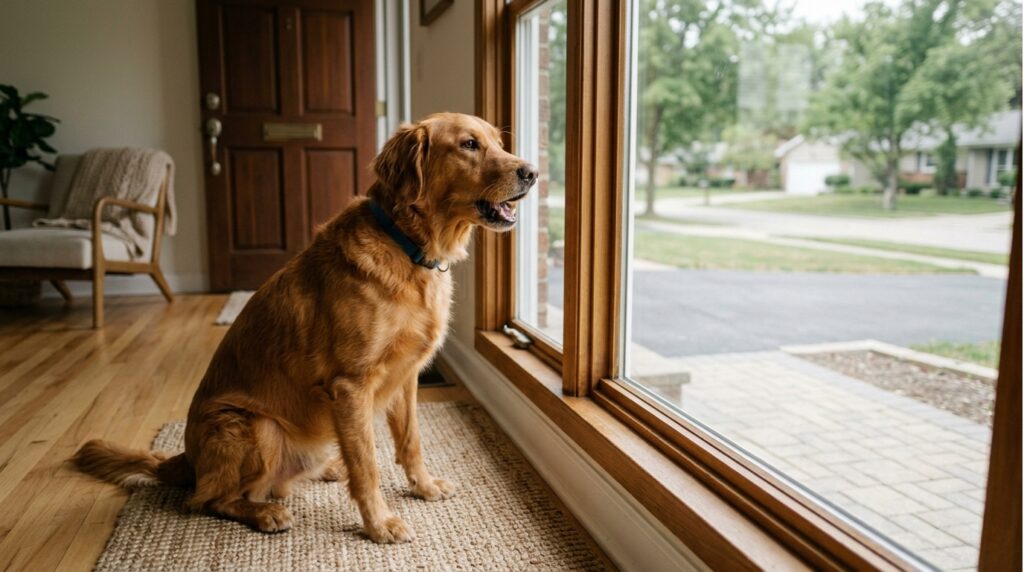

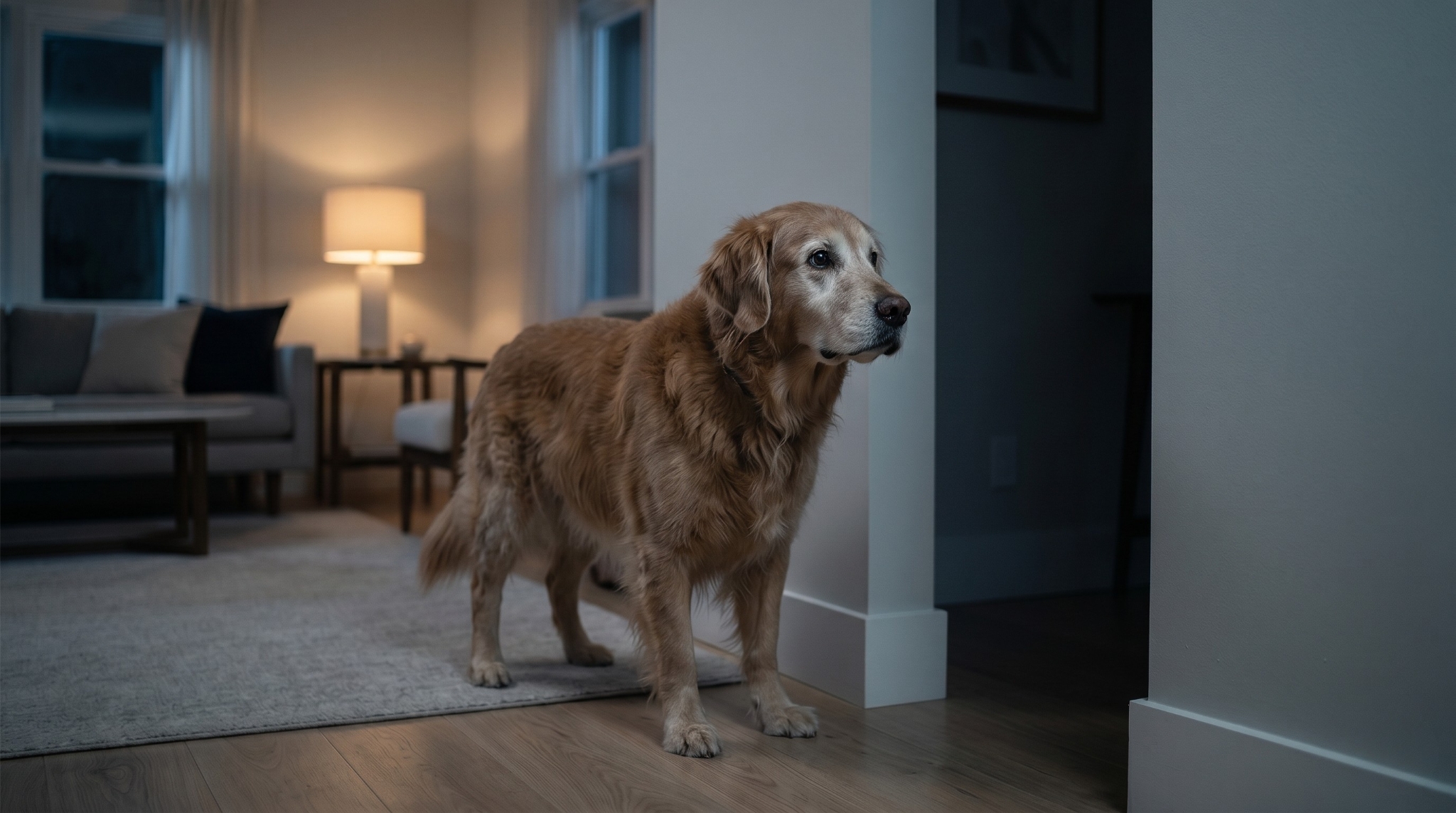
Senior dog barking can feel worrying when it starts suddenly, especially at night or when your older dog seems to bark at nothing. In many cases, this barking is not stubborn behavior. It may be linked with pain, confusion, anxiety, hearing or vision changes, or possible cognitive decline.
This guide explains why senior dogs bark in new ways, what signs to track, what to do first, and when to contact a veterinarian.
Table of Contents
- Direct Answer
- Why Senior Dog Barking Happens
- Common Triggers for Senior Dog Barking
- How to Tell What Type of Barking It May Be
- Why Senior Dogs Bark at Night
- Why Senior Dogs Bark at Nothing
- Pain or Physical Discomfort
- Hearing or Vision Changes
- Anxiety When Left Alone or Separated
- Real-World Senior Dog Barking Scenarios
- What to Do First
- Step-by-Step Solutions
- 5-Day Senior Barking Support Plan
- Mistakes to Avoid
- When to Contact a Vet or Qualified Trainer
- Quick Summary
- FAQs
- Final Takeaway
Direct Answer
Senior dog barking can happen because your older dog is uncomfortable, confused, anxious, reacting to sounds or shadows, struggling with hearing or vision changes, or showing signs that may be linked with cognitive decline.
If your senior dog’s barking starts suddenly, gets worse, happens mostly at night, or comes with pacing, staring, disorientation, appetite changes, pain signs, house-soiling, or sleep changes, contact a veterinarian.
Do not assume your dog is “just old” or “being difficult.”
Why Senior Dog Barking Happens
Older dogs may bark for different reasons than younger dogs.
A young dog may bark for play, attention, alerting, boredom, or frustration. A senior dog may bark because they feel unsure in a familiar room, cannot rest comfortably, react differently to sounds, or become anxious when a person leaves the room.
VCA Hospitals explains that barking is a normal form of dog communication, but barking can also be connected with anxiety, frustration, unusual sounds, sights, odors, or separation from family members.
Senior dog barking may be linked with:
- Pain or physical discomfort
- Hearing loss
- Vision changes
- Anxiety
- Sleep-wake changes
- Nighttime confusion
- Separation-related stress
- Environmental triggers
- Possible canine cognitive dysfunction
This is why an old “quiet” cue may stop working.
If your dog is barking because of discomfort, confusion, or sensory changes, repeating “quiet” may not solve the real problem.
The goal is not to punish the barking.
The goal is to find out what changed.
Common Triggers for Senior Dog Barking
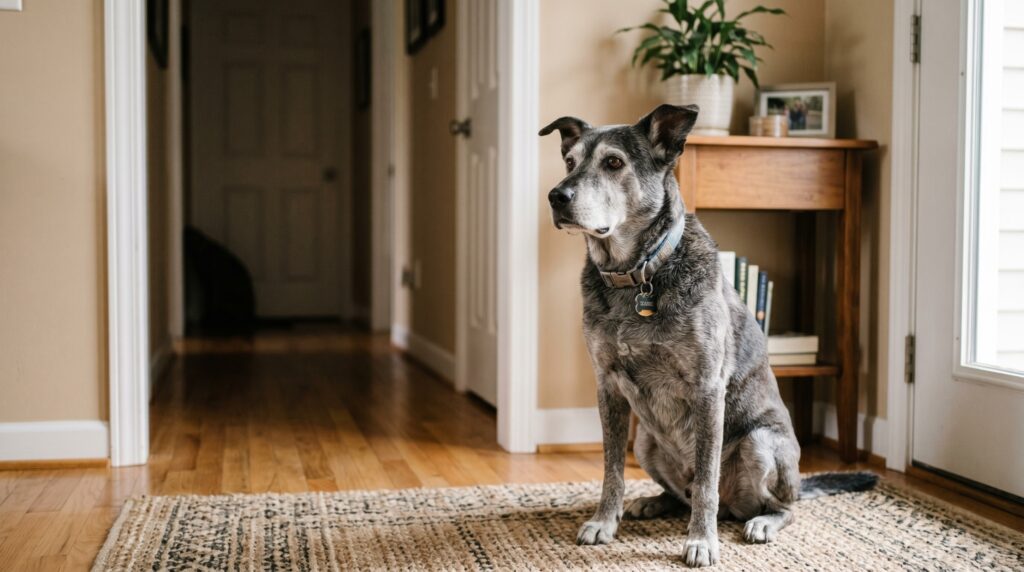
Senior dogs may bark at triggers that owners do not notice right away.
Common triggers include:
- Hallway sounds
- Elevator noise
- Pipes, heating, or AC turning on
- Window reflections
- Shadows in dark rooms
- Outdoor lights
- Neighbor noise
- Wildlife sounds
- Doorway movement
- Appliances humming
- Owner leaving the room
- Pain when lying down or getting up
- Confusion after dark
In owner discussions, many people describe older dogs barking at walls, corners, windows, empty rooms, or “nothing” at night. These patterns do not prove a diagnosis, but they are useful clues.
A dog may not be barking at nothing. They may be reacting to something subtle, confusing, uncomfortable, or unfamiliar.
For related help, read Why Is My Dog Barking at Nothing?.
How to Tell What Type of Barking It May Be
Senior dog barking can have different patterns. The pattern often gives clues about what may be happening.
| Barking Pattern | Possible Meaning | What to Do |
|---|---|---|
| Barking mostly at night | Discomfort, confusion, anxiety, sleep-wake change, or trigger after dark | Track the pattern and contact a vet if new or worsening |
| Barking at a wall or corner | Sound, shadow, reflection, smell, disorientation, or repeated trigger | Check the environment and gently redirect |
| Barking when the owner leaves | Separation-related stress, confusion, hearing change, or reduced confidence | Practice short calm separations and seek help if intense |
| Barking when touched or moved | Pain, discomfort, mobility issue, or fear | Contact a veterinarian |
| Barking with pacing or staring | Anxiety, confusion, discomfort, or possible cognitive change | Track signs and discuss with your vet |
| Barking at sounds outside | Alerting, hearing changes, fear, or sensitivity to noise | Reduce access to triggers and reward calm behavior |
| Barking after lights go off | Shadows, reflections, confusion, or nighttime anxiety | Use gentle lighting and a predictable bedtime routine |
This table does not diagnose your dog. It helps you decide what to track and when to get help.
Why Senior Dogs Bark at Night
Some senior dogs become more unsettled in the evening or at night.
They may:
- Pace
- Stare
- Whine
- Bark
- Wake often
- Seem awake but confused
- Struggle to settle after dark
- Bark after the house becomes quiet
Owners often describe this as dog barking at night.
Night barking is not always a request for food, attention, or a walk. In older dogs, it may be linked with discomfort, anxiety, hearing or vision changes, sleep-wake disruption, or possible cognitive changes.
Cornell Richard P. Riney Canine Health Center lists signs such as disorientation, sleep-wake cycle changes, anxiety, activity changes, and house-soiling as signs that may be seen with canine cognitive dysfunction.
A senior dog may also bark at night because the environment changes.
For example:
- The hallway becomes quieter, so small sounds stand out
- Window reflections become stronger after dark
- Outdoor animals become more active
- Heating, pipes, or AC sounds become more noticeable
- The dog wakes up and feels unsure where they are
- The dog cannot get comfortable on their bed
This does not mean barking alone confirms canine cognitive dysfunction. It means the pattern is worth discussing with your veterinarian.
Why Senior Dogs Bark at Nothing
Many owners search, “Why is my dog barking at nothing?”
With senior dogs, “nothing” may still mean something.
Your dog may be reacting to:
- A faint sound
- A smell
- A shadow
- A reflection
- Movement outside
- A dark corner
- A low appliance hum
- A memory or learned pattern
- Confusion in a familiar space
- Pain or discomfort that is hard to locate
A senior dog with hearing or vision changes may experience the home differently.
They may bark at sounds they cannot place. They may react to shadows or reflections that did not bother them before. They may feel less confident moving through rooms after dark.
If your dog repeatedly barks at the same wall, window, corner, or doorway, do not dismiss it. Track when it happens and look for patterns.
Pain or Physical Discomfort
Senior dogs may bark more when they are uncomfortable.
Pain, illness, arthritis, mobility problems, dental pain, digestive discomfort, or other medical issues can change behavior.
VCA Hospitals notes that behavior changes in senior pets can be related to pain, illness, degenerative disease, or cognitive dysfunction.
A senior dog may bark:
- When lying down
- When trying to stand up
- When touched
- When moved
- When crated
- When left in one position too long
- During the night because they cannot get comfortable
Other possible signs of discomfort include:
- Limping
- Panting
- Restlessness
- Trouble getting up
- Reluctance to use stairs
- Less interest in walks
- Appetite changes
- Hiding
- Irritability
- House-soiling
- Sleeping in unusual places
Safer rule: sudden new barking in a senior dog is a good reason to call your vet, even if your dog seems normal during part of the day.
Hearing or Vision Changes
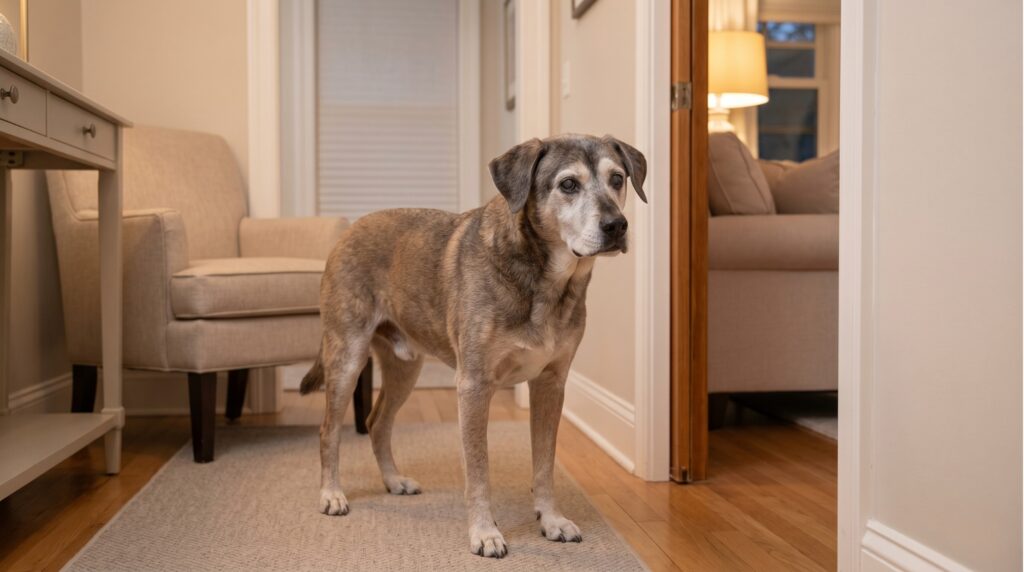
Hearing or vision changes can make a senior dog more reactive.
Your dog may bark at:
- Sounds they cannot locate
- People approaching from behind
- Shadows
- Reflections
- Doorways
- Windows
- Dark corners
- Movement outside
- Familiar rooms that feel different in low light
A dog with reduced hearing may startle more easily. A dog with reduced vision may become less confident after dark.
Simple home changes can help.
Keep furniture layout consistent. Use gentle lighting. Approach your dog from the front. Avoid startling them awake. Keep walking paths clear.
Anxiety When Left Alone or Separated
Some older dogs become more unsettled when separated from their owner.
They may bark when you:
- Leave the room
- Close a door
- Go upstairs
- Step outside
- Sleep in another room
- Leave them behind a gate
This does not mean your dog is “clingy on purpose.”
A senior dog may feel less secure because of confusion, hearing changes, vision changes, discomfort, or age-related anxiety.
ASPCA explains that dogs with separation anxiety may bark or howl when left alone or separated from their guardian. ASPCA also notes that older dogs may develop behavior changes linked with medical issues, anxiety, discomfort, sensory changes, or cognitive dysfunction in its guide on behavior problems in older dogs.
Mild separation-related barking may improve with calm, short practice sessions. Intense barking, panic, pacing, drooling, destruction, or attempts to escape need professional help.
If your older dog also barks when you are home but unavailable, such as during online meetings, phone calls, or focused work time, the trigger may be different from nighttime confusion. In that case, read our guide on dog barking during work calls to understand why Zoom or Teams calls can become a barking trigger.
Real-World Senior Dog Barking Scenarios
Scenario 1: Barking at the Same Wall at Night
An owner notices their senior dog barking at the same wall every evening.
This could be linked with a repeated sound, smell, light, shadow, routine, confusion, or learned pattern.
The safest next step is to track when it happens and contact a vet if the behavior is new, worsening, or paired with other changes.
Scenario 2: Barking When the Owner Leaves the Room
An owner leaves the living room, and the senior dog barks behind the door.
This may be linked with separation-related stress, confusion, hearing changes, or reduced confidence.
The dog may not fully understand where the owner went, even in a familiar home.
Scenario 3: Barking That Old Cues No Longer Stop
An owner says “quiet,” but the senior dog keeps barking.
This can happen when the barking is no longer simple attention-seeking.
If the dog is uncomfortable, confused, anxious, or reacting to sensory changes, repeating a cue may not address the cause.
Scenario 4: Barking Through the Night
An owner has not slept well for several nights because their senior dog barks after dark.
Feeling frustrated does not make someone a bad owner. Sleep loss is hard.
But repeated nighttime barking in an older dog should be treated as a possible support need, not as bad behavior.
What to Do First
Before trying to stop the barking, try to understand the pattern.
Ask:
- When does the barking happen?
- Where does it happen?
- What happens right before it starts?
- What helps it stop?
- Does it happen mostly at night?
- Is your dog staring, pacing, panting, limping, or confused?
- Has appetite, sleep, drinking, movement, or house training changed?
- Is your dog barking near a wall, window, vent, door, or appliance?
This helps you avoid guessing.
With senior dogs, guessing can delay the help they need.
Step-by-Step Solutions
1. Track the Barking Pattern
Keep a simple barking log for 3–7 days.
Write down:
- Time of barking
- Location
- What happened before it started
- What stopped it
- Pacing, staring, panting, limping, confusion, or restlessness
- Food, water, bathroom, and sleep changes
- Whether the barking happens near a wall, window, door, vent, or appliance
Use this when the barking is repeated, confusing, or happening at night.
A barking log helps your vet or trainer see patterns more clearly.
2. Book a Vet Check for Sudden or Worsening Barking
Contact a veterinarian if the barking is new, sudden, intense, or getting worse.
Bring your barking log.
Mention changes in:
- Sleep
- Appetite
- Drinking
- Movement
- Hearing
- Vision
- House training
- Confusion
- Pain signs
- Nighttime restlessness
Do this before treating the barking as only a training problem.
This is especially important for senior dogs.
3. Make Nighttime Easier and More Predictable
Create a calm senior-dog night routine.
Try:
- Take your dog out before bed
- Keep the sleeping area easy to reach
- Use soft bedding if your dog likes it
- Keep the room calm and familiar
- Use a low night light if darkness seems confusing
- Close curtains if reflections trigger barking
- Reduce sudden household noise where possible
- Keep water available unless your vet has advised otherwise
- Keep bedtime timing consistent
Use this if your dog barking at night is a repeated issue.
The goal is not to force silence. The goal is to reduce confusion, discomfort, and surprise triggers.
4. Help Your Dog Break the Staring-and-Barking Pattern
Some senior dogs seem to get stuck barking at a wall, corner, crate door, or empty space.
Gently interrupt and redirect.
Use a calm voice. Walk over slowly. Guide your dog away from the wall, corner, crate door, or unclear trigger.
Lead them to a bed, mat, or familiar resting spot.
Reward calm behavior with:
- Quiet praise
- Gentle touch, if they enjoy it
- A small food reward, if appropriate for their diet
- A familiar settle cue, if they know one
Avoid yelling.
A confused or anxious senior dog may become more unsettled with harsh correction.
AVSAB’s Humane Dog Training Position Statement supports humane, reward-based training approaches and warns against unnecessary aversive methods.
5. Check for Hidden Triggers
Look for sounds, shadows, smells, or patterns that may trigger barking.
Check for:
- Noisy appliances
- Pipes or heating systems
- Window reflections
- Outdoor lights
- Neighbor noise
- Wildlife sounds
- Movement near doors or windows
- Barking near vents, walls, or dark corners
- Barking after lights go off
- Barking when the TV, fan, or AC turns on
Use this when you are wondering, “Why is my dog barking at nothing?”
Your dog may be reacting to something you do not notice right away.
6. Reduce Mild Separation Stress in Small Steps
For mild separation-related barking, practice very short, calm separations.
Start small.
Step away for a few seconds. Return calmly. Avoid big greetings or emotional exits.
Slowly build up only if your dog stays relaxed.
Keep your dog in a safe, familiar area with:
- Bedding
- Water
- Easy walking space
- Familiar scent
- Low noise
- Good lighting if needed
Use this if your senior dog barks when you leave the room, close a door, go upstairs, or step outside.
If the barking is intense, starts quickly after you leave, or appears with panic signs, speak with your vet and a qualified reward-based trainer or veterinary behavior professional.
7. Adjust the Home for Hearing or Vision Changes
Make your home easier for an older dog to understand.
Try:
- Keep furniture layout consistent
- Use gentle hand signals if hearing seems reduced
- Approach from the front so you do not startle your dog
- Add safe lighting in dark areas
- Block access to confusing corners if needed
- Use non-slip mats if your dog seems unsure on floors
- Keep beds, bowls, and walking paths familiar
- Avoid moving furniture often
- Keep stairs and slippery floors safer
Use this if your dog seems startled, bumps into things, barks at shadows, or seems unsure in familiar rooms.
5-Day Senior Barking Support Plan
Day 1: Track the Barking
Write down when the barking happens, where your dog is, what happened before it started, and what helped it stop.
Also note sleep, appetite, drinking, bathroom habits, movement, and signs of confusion.
Day 2: Check the Environment
Look for possible triggers.
Check:
- Windows
- Reflections
- Hallway sounds
- Appliances
- AC or heating noise
- Outdoor lights
- Neighbor noise
- Wildlife sounds
- Vents
- Dark corners
Try to notice what changes before the barking starts.
Day 3: Make the Resting Area Easier
Make your dog’s sleeping and resting areas more senior-friendly.
You can try:
- Familiar bedding
- Gentle lighting
- Clear walking paths
- Non-slip mats
- Easy access to water
- Reduced noise
- Closed curtains if reflections are a trigger
Keep the routine predictable.
Day 4: Practice Gentle Redirection
If your dog gets stuck barking at a wall, corner, window, or empty space, calmly guide them away.
Lead them to a familiar bed or mat.
Reward calm behavior with quiet praise, gentle touch, or a small food reward if appropriate.
Do not yell or punish.
Day 5: Decide Whether Professional Help Is Needed
Review your barking log.
Contact your veterinarian if barking is:
- New
- Sudden
- Getting worse
- Mostly at night
- Paired with pacing or staring
- Paired with confusion
- Paired with pain signs
- Paired with house-soiling
- Paired with appetite, drinking, or sleep changes
If your vet rules out urgent medical concerns and the barking seems behavior-related, contact a qualified reward-based trainer or veterinary behavior professional.
Mistakes to Avoid
Do not punish sudden senior dog barking before checking for health, pain, or age-related causes.
Avoid:
- Shouting “quiet” again and again
- Using bark collars or harsh corrections
- Locking the dog away as punishment
- Assuming barking at night is always attention-seeking
- Ignoring sudden changes because the dog is “just old”
- Giving supplements, CBD, melatonin, or medication without veterinary guidance
- Forcing long crate time if the crate now causes distress
- Waiting too long when barking appears with confusion, pain, or sleep disruption
Punishment may suppress barking without solving the cause.
With senior dogs, that can be risky because the barking may be a sign of discomfort, fear, anxiety, sensory change, or illness.
When to Contact a Vet or Qualified Trainer
Contact a veterinarian if your senior dog’s barking:
- Starts suddenly
- Gets worse
- Happens mostly at night
- Comes with pacing, staring, confusion, or disorientation
- Appears with pain, limping, appetite changes, or drinking changes
- Appears with house-soiling
- Happens with major sleep changes
- Seems linked with hearing or vision loss
- Happens when your dog is touched, moved, or trying to rest
For senior dogs, the safest path is often vet first, behavior support second.
Contact a qualified reward-based trainer or veterinary behavior professional if:
- Your vet has ruled out urgent medical concerns
- The barking seems linked with separation-related distress
- Your dog cannot settle when alone
- The barking is causing neighbor, apartment, flat, or housing complaints
- You need a safe plan that does not use punishment
- Your dog seems fearful, panicked, or unable to relax
Choose a professional who uses humane, reward-based methods.
Avoid trainers who recommend fear, pain, intimidation, or punishment as the main solution. The APDT training methodologies resource discusses humane, ethical training standards and the importance of science-based practice.
Quick Summary
Senior dog barking is not always normal attention-seeking behavior.
It may be linked with:
- Nighttime confusion
- Pain or discomfort
- Hearing or vision changes
- Anxiety when alone
- Possible cognitive changes
- Environmental triggers
- A repeated barking pattern
If the barking starts suddenly or gets worse, speak with a veterinarian.
Then focus on pattern tracking, calmer routines, trigger reduction, gentle redirection, and senior-friendly home changes.
FAQs
Is excessive barking a sign of dog dementia?
It can be linked with canine cognitive dysfunction, but barking alone does not confirm it.
A veterinarian should check for pain, sensory changes, illness, anxiety, and cognitive changes.
Why is my senior dog barking at nothing?
Your dog may be reacting to sounds, smells, shadows, reflections, confusion, or discomfort.
It may look like nothing to you, but it may feel real to your dog.
How do I stop my senior dog barking at night?
Start by tracking the pattern.
Contact a vet if it is new, sudden, or worsening. Then make bedtime predictable, reduce noise and shadows, use gentle redirection, and make the sleeping area comfortable.
Should I ignore my old dog barking for attention?
Not at first if the barking is new, intense, or happening at night.
In senior dogs, sudden barking may point to discomfort, confusion, anxiety, sensory change, or another health-related issue.
Can hearing loss make a senior dog bark more?
Hearing changes may contribute to vocalization in some older dogs.
A vet can help check whether hearing, vision, pain, illness, or cognitive changes may be involved.
Why does my senior dog bark at the wall?
Your dog may be reacting to a sound, smell, shadow, reflection, or confusion.
If this is new, repeated, or happens with staring, pacing, sleep changes, or disorientation, contact your veterinarian.
Why does my senior dog bark when I leave the room?
Older dogs may bark when separated because of anxiety, confusion, hearing changes, vision changes, or reduced confidence.
If your dog seems panicked or cannot settle, speak with your vet and a qualified reward-based trainer.=