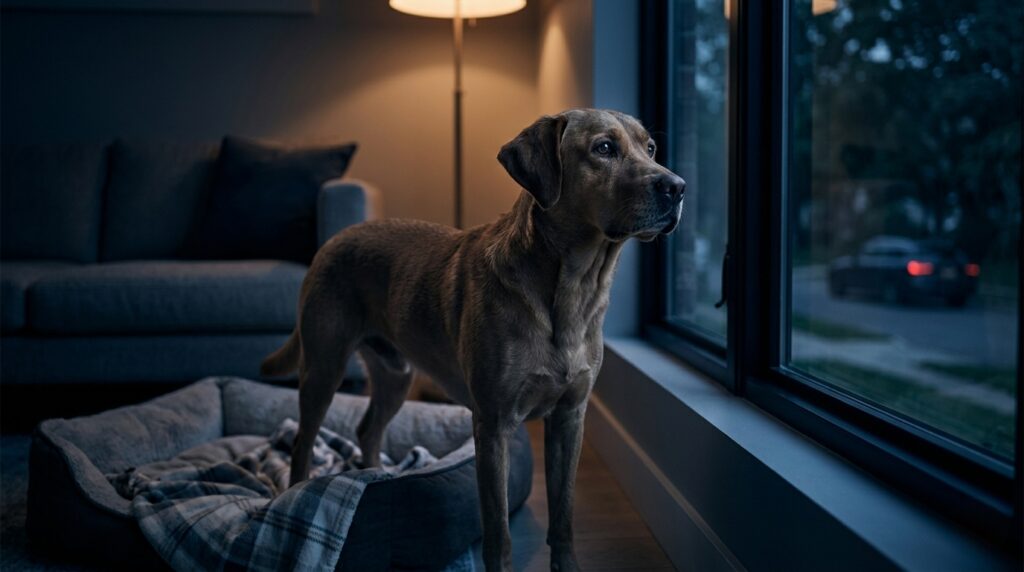

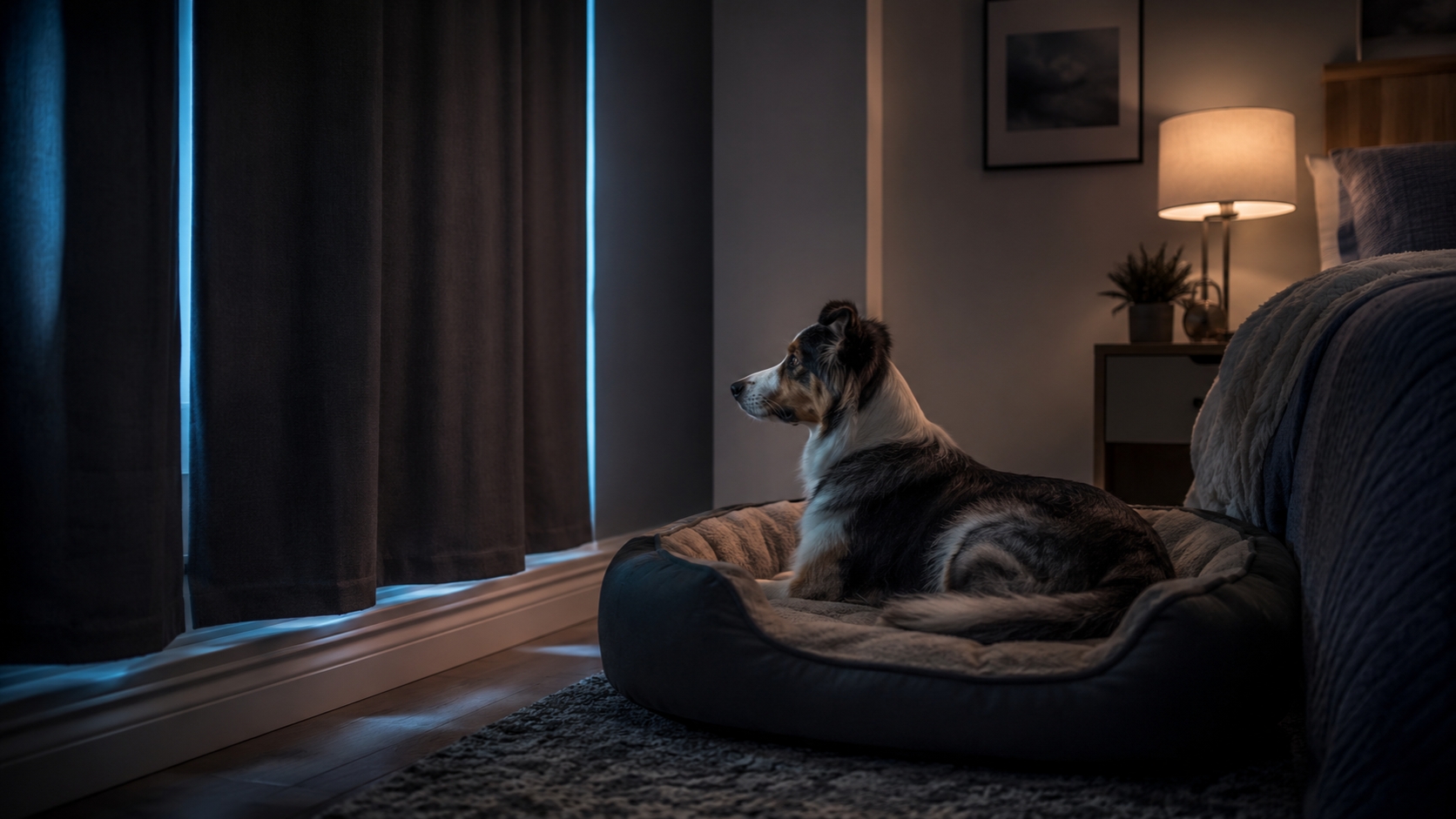
Dog barking at night can make life feel impossible fast. You may be half asleep when your dog starts barking at a window, crate, hallway sound, garden noise, outdoor animal, or something you cannot even hear.
Night barking can affect your sleep, patience, work, and relationship with neighbors, landlords, or housing providers.
Before formal training starts, the first goal is simple: reduce the triggers that keep setting your dog off at night.
Immediate Answer
To reduce dog barking at night, start by lowering the triggers before trying to train. Move your dog away from windows and doors, block outside views, use gentle steady background sound, adjust the sleeping area, and track when barking happens.
Once your dog is sleeping in a calmer setup, training becomes easier.
Night barking may be linked with alert barking, alarm barking, territorial barking, discomfort, routine changes, separation-related distress, or age-related behavior changes.
In This Article
In This Article
Why Dogs Bark at Night
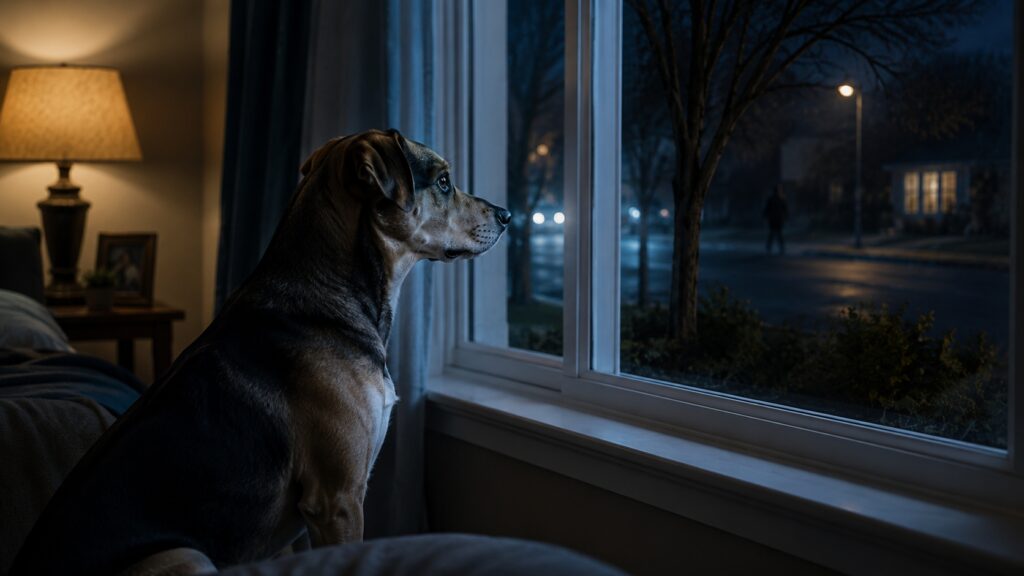
Night barking can happen for several reasons. The key is to look for patterns before assuming your dog is being difficult.
Some dogs bark because they hear something outside. Others bark because their sleeping area is too close to a window, hallway, shared wall, garden door, or front entrance. In some cases, sudden night barking can also be linked with discomfort, stress, or health changes.
1. Low-Light Alert Barking
Some dogs become more alert when the house is dark and quiet. Sounds may feel stronger at night because there is less indoor activity.
Your dog may react to:
- Cars outside
- Footsteps
- Neighbors coming home
- Hallway or lift sounds
- Wind against windows
- Outdoor animals
- Other dogs barking
- Gates, doors, or mail slots
- People talking outside
- Reflections or shadows
This may explain why a dog that seems calm during the day barks more after dark.
2. Outdoor Movement or Animals
Outdoor animals may move near homes at night. Your dog may react to sounds, smells, or movement that you cannot easily detect.
This can make it seem like your dog is barking at “nothing.” But in many cases, there may still be a trigger outside.
Possible triggers include:
- Cats
- Foxes
- Birds
- Rodents
- Other dogs
- People walking late
- Car headlights
- Movement in the garden
- Sounds from bins, gates, or fences
The first step is not to assume the barking is random. Track when it happens and what your dog is facing.
3. Apartment, Flat, or Shared-Wall Noise
In apartments, flats, condos, terraced houses, and shared-wall homes, dogs may hear people through walls, floors, doors, or hallways.
Common night triggers include:
- Neighbor footsteps
- Doors closing
- People talking outside
- Elevators or lifts
- Stairwell noise
- Late-night visitors
- Other pets nearby
- Building pipes or outdoor bins
This can feel extra stressful because owners may worry about complaints, building rules, or losing housing.
If your dog barks at hallway sounds, shared walls, or upstairs movement, trigger reduction should start immediately. Waiting until the barking becomes a habit can make the problem harder.
4. The Sleeping Area Is Too Close to Triggers
Some dogs bark at night because their crate, bed, or sleeping area is placed near sounds or movement.
This may happen if the sleeping spot is:
- Near a window
- Near the front door
- In a noisy kitchen
- Close to an outside wall
- Beside a shared hallway
- Near garden-facing glass doors
- Too far from the owner too quickly
- In a place where the dog hears every movement
This does not automatically mean your dog is clingy or badly behaved. It may simply mean the sleeping setup is too triggering.
5. The Dog Is Not Fully Settled Before Bed
Some dogs bark more at night because they go to bed already restless, excited, or alert.
This can happen after:
- Rough play before bedtime
- Late visitors
- Missed toilet break
- Too much evening excitement
- Unpredictable bedtime routine
- Not enough daytime enrichment
- A sudden change in sleeping location
A calmer final hour can make night triggers easier for your dog to ignore.
6. Sudden Behavior Change
If night barking starts suddenly, gets worse, or appears with confusion, pacing, pain signs, appetite changes, disorientation, or sleep-wake changes, do not treat it as only a training problem.
A veterinarian should rule out medical causes first, especially in senior dogs.
New night barking in a senior dog should be treated as a health-check priority before assuming it is a training issue.For related help, read: Sudden Excessive Barking in Older Dogs: Behavior Change or Medical Concern?
Which Night Barking Plan Fits Your Dog?
Use this table to choose the best first step.
| Night Barking Situation | Best First Step |
|---|---|
| Dog barks at windows at night | Block the view and move the bed away from windows |
| Dog barks at hallway sounds | Move the sleeping area away from shared walls and use gentle background sound |
| Dog barks in the crate at night | Check crate location, comfort, toilet needs, and nearby triggers |
| Dog barks at “nothing” in the dark | Track the pattern for 3 nights before changing everything |
| Dog barks at outdoor animals | Block garden-facing views and use a quieter sleeping space |
| Dog barks after neighbors come home | Start background sound before the usual trigger time |
| Dog suddenly starts night barking | Contact a veterinarian first |
| Senior dog barks, paces, or seems confused | Contact a veterinarian first |
| Dog barks when left alone at night | Check for separation-related distress signs |
| Apartment dog barking causes complaints | Use management immediately, then consider professional support |
This matters because different barking patterns need different solutions. Alert barking, fear-based barking, crate barking, discomfort, and separation-related barking should not all be handled the same way.
For related help, read:
- Dog Barking During Work Calls: Why Dogs Bark During Zoom or Teams Call
- Why Anti-Bark Devices Stop Working for Some Dogs
Real-World Night Barking Scenarios
These are common owner situations, not diagnoses.
Real-World Scenario: Barking at “Nothing” in the Dark
An owner notices their dog barking toward the window every night, but they cannot see anything outside.
Possible triggers may include outdoor animals, distant dogs, cars, neighbors, reflections, shadows, or sounds from the street.
A simple first step is to block the view and track when the barking happens.
Real-World Scenario: Apartment Hallway Barking
A dog barks after late-night hallway sounds. The dog may be reacting to footsteps, doors, voices, or lift movement.
The owner’s stress increases because neighbors can hear the barking through thin walls.
A better first step is to move the sleeping area away from the hallway side and use gentle background sound before the usual barking time.
Real-World Scenario: Crate Barking at Night
A dog sleeps in a kitchen crate but barks when outside sounds start.
This may mean the crate location is too close to windows, pipes, shared walls, garden-facing doors, or outdoor movement.
Moving the crate to a calmer space may reduce the trigger before training starts.
Real-World Scenario: The Owner Is Too Tired to Train
An owner says “No” or “Quiet” at night but becomes exhausted and frustrated.
The dog may keep barking because the trigger is still present. At night, management is usually more realistic than a full training session.
Real-World Scenario: Senior Dog Suddenly Barking at Night
A senior dog who used to sleep quietly starts barking, pacing, or appearing confused at night.
This should not be handled as simple disobedience. A vet check is the safer first step, especially if the dog also shows appetite changes, pain signs, disorientation, weakness, or sleep changes.
Step-by-Step Solutions Before Training Starts

Step 1: Track the Pattern for 3 Nights
What to do
Write down when the barking happens and where your dog is looking or moving.
How to do it
Keep a simple note on your phone. Record:
- Time of barking
- Room location
- Window or door nearby
- Sound you noticed
- How long barking lasted
- What helped your dog settle
- Whether your dog was in a crate, bed, or loose in the room
When to apply it
Start tonight. Track before changing everything at once.
Why it helps
You may find a pattern, such as barking after neighbors come home, traffic changes, outdoor animals pass, or another dog starts barking.
Step 2: Move the Sleeping Area Away From Triggers
What to do
Place your dog’s bed or crate in a quieter area.
How to do it
Move the sleeping spot away from:
- Windows
- Front doors
- Shared hallways
- Thin outside walls
- Street-facing rooms
- Garden-facing glass doors
- Noisy kitchens or entryways
Choose a space that is calm, boring, and easy to manage.
When to apply it
Use this if your dog barks at outside noises, hallway sounds, windows, doors, or garden movement at night.
Why it helps
Many dogs sleep better when they are not placed beside the exact thing that triggers alert barking.
Step 3: Block Night Views
What to do
Reduce your dog’s view of outdoor movement at night.
How to do it
Use:
- Curtains
- Blinds
- Blackout curtains
- Privacy window film
- A baby gate to block window access
- Furniture placement that keeps your dog away from glass doors
When to apply it
Use this before bedtime, especially if your dog barks at shadows, cars, people, animals, or movement outside.
Why it helps
For many dogs, less visual access means fewer reasons to alert bark.
Step 4: Use Gentle, Steady Background Sound
What to do
Use steady sound to make sudden noises less sharp.
How to do it
Try:
- White noise machine
- Fan
- Air purifier
- Soft steady music
- Calm background sound near the hallway side of the room
Keep the volume safe and comfortable. It should soften outside sounds, not blast over them.
When to apply it
Start it before the usual barking time, not after barking begins.
Why it helps
Sudden sounds can trigger alert barking. Steady background sound may make hallway noise, distant dogs, cars, and outdoor movement less noticeable.
Step 5: Create a Calm Bedtime Routine
What to do
Help your dog settle before sleep.
How to do it
Keep the final hour calm:
- Short toilet break
- Low excitement
- Dim lights
- Calm voice
- No rough play right before bed
- Same sleeping area each night
- Calm chew or settling activity, if appropriate for your dog
When to apply it
Use this every night, especially if your dog is restless or easily triggered after dark.
Why it helps
A dog that goes to bed already excited may react faster to small sounds.
Step 6: Avoid Only “Waiting It Out” During High Stress
What to do
Avoid relying only on ignoring if barking is getting louder, longer, or more distressed.
How to do it
Calmly interrupt the pattern:
- Move your dog away from the trigger
- Block the view
- Reduce the sound trigger where possible
- Guide your dog back to a quieter space
- Reward calm moments when they happen
When to apply it
Use this when barking is increasing, neighbors may be disturbed, or your dog seems unable to settle.
Why it helps
Waiting it out may not help if barking is driven by fear, alertness, discomfort, or an outside trigger. If the trigger continues, your dog may keep reacting.
Step 7: Separate Night Management From Daytime Training
What to do
Use management at night and save active training for daytime.
How to do it
At night, focus on sleep and trigger control.
During the day, practice calm skills such as:
- Going to bed or mat
- Settling after an easy sound
- Coming away from a window
- Responding to a quiet cue in easy moments
- Relaxing in the sleeping area before bedtime
When to apply it
Use management when you are tired and need sleep. Practice training when you are awake, calm, and able to reward good choices.
Why it helps
Most owners cannot train clearly at 3:00 AM. Reducing triggers first gives you and your dog a better chance.
Helpful Tools That May Support Night Barking Management
These tools do not fix barking by themselves, but they can support a calmer night setup.
1. Blackout Curtains
Blackout curtains can reduce shadows, headlights, reflections, and outdoor movement.
Best for:
- Window barking
- Street-facing rooms
- Dogs barking at lights or shadows
- Dogs waking when cars pass
2. Privacy Window Film
Privacy film can reduce visual triggers while still allowing some natural light during the day.
Best for:
- Dogs barking at people outside
- Garden-facing windows
- Ground-floor apartments
- Homes near sidewalks or shared paths
3. White Noise Machine
A white noise machine may make sudden sounds less noticeable.
Best for:
- Apartment barking
- Hallway sounds
- Shared-wall homes
- Dogs reacting to distant outdoor noises
4. Fan or Air Purifier
A fan or air purifier can provide steady background sound while also improving airflow.
Best for:
- Light sleepers
- Dogs startled by sudden noises
- Bedrooms near shared walls or hallways
5. Baby Gate
A baby gate can keep your dog away from windows, glass doors, or hallway-facing areas at night.
Best for:
- Dogs who patrol windows
- Dogs who rush toward sounds
- Dogs who bark at front doors or garden doors
6. Comfortable Dog Bed
A supportive bed in a calmer location can help your dog settle more easily.
Best for:
- Dogs who move around at night
- Older dogs
- Dogs sleeping in noisy areas
- Dogs that need a clear resting spot
7. Safe Crate Cover
A safe crate cover may help some dogs feel less exposed and less visually triggered at night.
Make sure airflow is not blocked, the dog is not overheating, and the cover cannot be pulled inside and chewed.
Best for:
- Dogs who bark at movement outside the crate
- Dogs who settle better with reduced visual access
- Crates placed in calm, well-ventilated spaces
Best Setup by Situation
The best setup depends on what is triggering your dog at night.
| Situation | Better Night Setup |
|---|---|
| Dog barks at windows | Move bed away from windows and use curtains or privacy film |
| Dog barks at hallway sounds | Move sleeping area away from hallway wall and use gentle background sound |
| Dog barks at garden movement | Block garden-facing views and avoid sleeping beside glass doors |
| Dog barks in crate | Check crate comfort, location, toilet needs, and sound triggers |
| Dog barks when alone | Look for separation-related signs and avoid sudden isolation changes |
| Senior dog barks at night | Book a vet check before treating it as a training problem |
What Not to Do
When you are tired, it is easy to react quickly. But some common responses can make night barking worse.
- Do not shout repeatedly, because it may add more noise and stress.
- Do not punish fear-based barking.
- Do not ignore sudden barking changes in senior dogs.
- Do not place the bed or crate beside the exact trigger.
- Do not use loud sound to drown out barking.
- Do not change every part of the routine at once.
- Do not assume barking at “nothing” means there is no trigger.
The goal is not to scare your dog into silence. The goal is to make the night setup calmer so your dog has fewer reasons to react.
When This Plan May Not Be Enough
Trigger reduction can help many dogs, but it may not solve every case of night barking.
This plan may not be enough if your dog:
- Barks for long periods and cannot settle
- Panics when left alone
- Paces, pants, drools, or tries to escape
- Shows sudden fear or confusion
- Has pain signs or appetite changes
- Is a senior dog with new night barking
- Has barking that is causing housing or neighbor problems
In these cases, you may need veterinary guidance, a qualified positive-reinforcement trainer, or a certified behavior professional.
When to Contact a Vet or Qualified Trainer
Contact a veterinarian if barking starts suddenly, gets worse quickly, or appears with signs of pain, confusion, pacing, weakness, appetite changes, sleep disruption, disorientation, or sudden fear.
Contact a qualified trainer or behavior professional if your dog’s barking is linked with fear, reactivity, separation-related distress, or repeated night triggers that you cannot manage alone.
Professional help is especially important if the barking is affecting your housing, neighbors, sleep, or your dog’s welfare.
Quick Summary
Dog barking at night is often easier to reduce when you lower the triggers first.
- Track the barking pattern for 3 nights.
- Move the bed or crate away from windows, doors, and shared walls.
- Block night views with curtains, blinds, or privacy film.
- Use gentle steady background sound before the usual barking time.
- Create a calm bedtime routine.
- Use nighttime management instead of trying to train while exhausted.
- Contact a vet if barking starts suddenly or comes with health changes.
Once your dog is sleeping in a calmer environment, training becomes easier and more realistic.
FAQs
Why does my dog bark at night for no reason?
Your dog may not be barking for no reason. They may hear outdoor animals, neighbors, cars, distant dogs, hallway sounds, wind, pipes, or movement that you cannot easily notice.
How do I stop my dog barking at night?
Start by reducing triggers. Move your dog away from windows and doors, block outside views, use gentle background sound, create a calm bedtime routine, and track when barking happens.
Should I ignore my dog barking at night?
Ignoring may not help if the barking is caused by fear, alertness, discomfort, outdoor triggers, or separation-related distress. If barking is escalating or your dog seems distressed, use calm management and look for the cause.
Can white noise help with dog barking at night?
Gentle steady background sound may help some dogs by making sudden outside noises less sharp. Keep the volume comfortable and start it before the usual barking time.
Why does my dog bark at the window at night?
Your dog may be reacting to people, cars, animals, shadows, reflections, or street sounds. Blocking the view and moving the sleeping area away from the window can help.
Why is my senior dog suddenly barking at night?
Sudden night barking in a senior dog may be linked with pain, sensory changes, confusion, anxiety, sleep disruption, or other health concerns. A vet check should come first.
Should I move my dog’s crate at night?
Yes, if the crate is near a window, front door, hallway, shared wall, garden door, or noisy area. A calmer crate location can reduce barking triggers.