

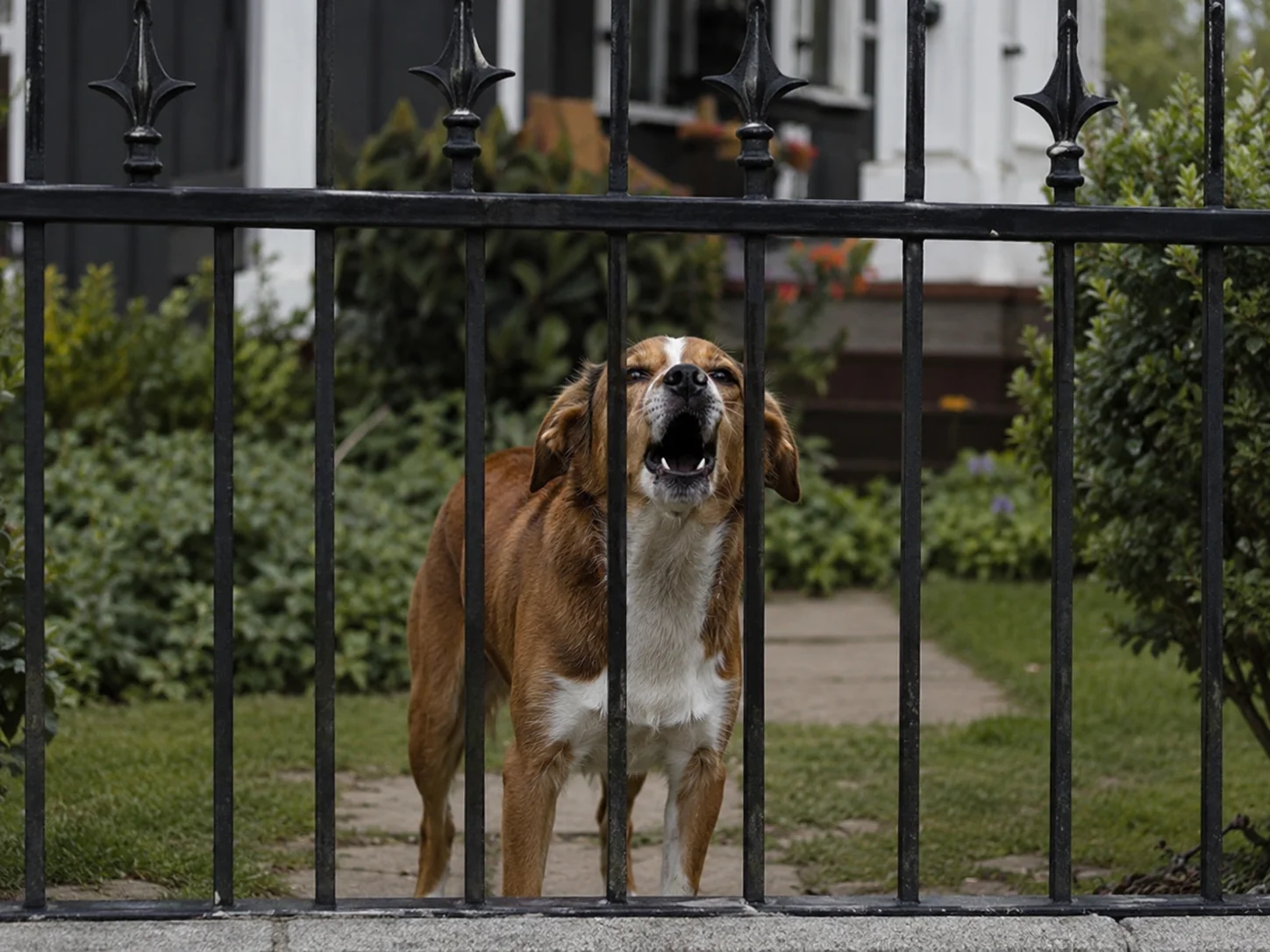
Which Barking Trigger Should You Address First?
Start with the product that removes your dog’s clearest trigger. For hallway footsteps or doors, a comfortable background-sound machine is the most practical first step. For window patrol, use privacy film; for repeated rushing to a door or window, use a correctly fitted gate; and for barking after you leave, use a camera to identify the pattern. A KONG can support mild boredom or work-call routines, but none of these products cures fear, pain, or separation anxiety. If barking is persistent and paired with distress, skip another gadget and speak with a veterinarian or qualified reward-based behavior professional.
Quick Product Matches by Trigger
How We Researched
We checked official specifications, setup guidance, product limitations, current support information, retailer listings, recurring owner concerns, and authoritative dog-behavior guidance in July 2026. Product claims below are separated from editorial judgments, and changing availability should be confirmed in your country. We did not personally test every product in this guide.
Quick Comparison
| Product | Suitable for | Key advantage | Setup or subscription | Main limitation |
|---|---|---|---|---|
| Yogasleep Dohm | Hallway and shared-wall sounds | Continuous fan-based sound with adjustable tone | Plug-in; US/Canada model only | Does not address visual triggers or distress |
| rabbitgoo Frosted Window Film | People, dogs, cars, and deliveries outside | Removable static-cling visual barrier | Measure, wet-apply, trim, and squeegee | Does not reduce sound |
| Regalo Easy Step Gate | Repeated door or window patrol | Creates distance from a trigger zone | Pressure mount; measure the opening carefully | Unsuitable for dogs that climb, chew, or panic |
| Furbo 360° Dog Camera | Unknown barking patterns when alone | Live view, barking alerts, and rotating coverage | Wi-Fi/app; advanced recording features may require a plan | Observes the problem but does not treat it |
| KONG Classic | Mild boredom and planned quiet periods | Reusable food-stuffable enrichment | Choose the correct size and supervise initially | Not a solution for alarm barking or panic |
Five Products Matched to Common Apartment Barking Triggers
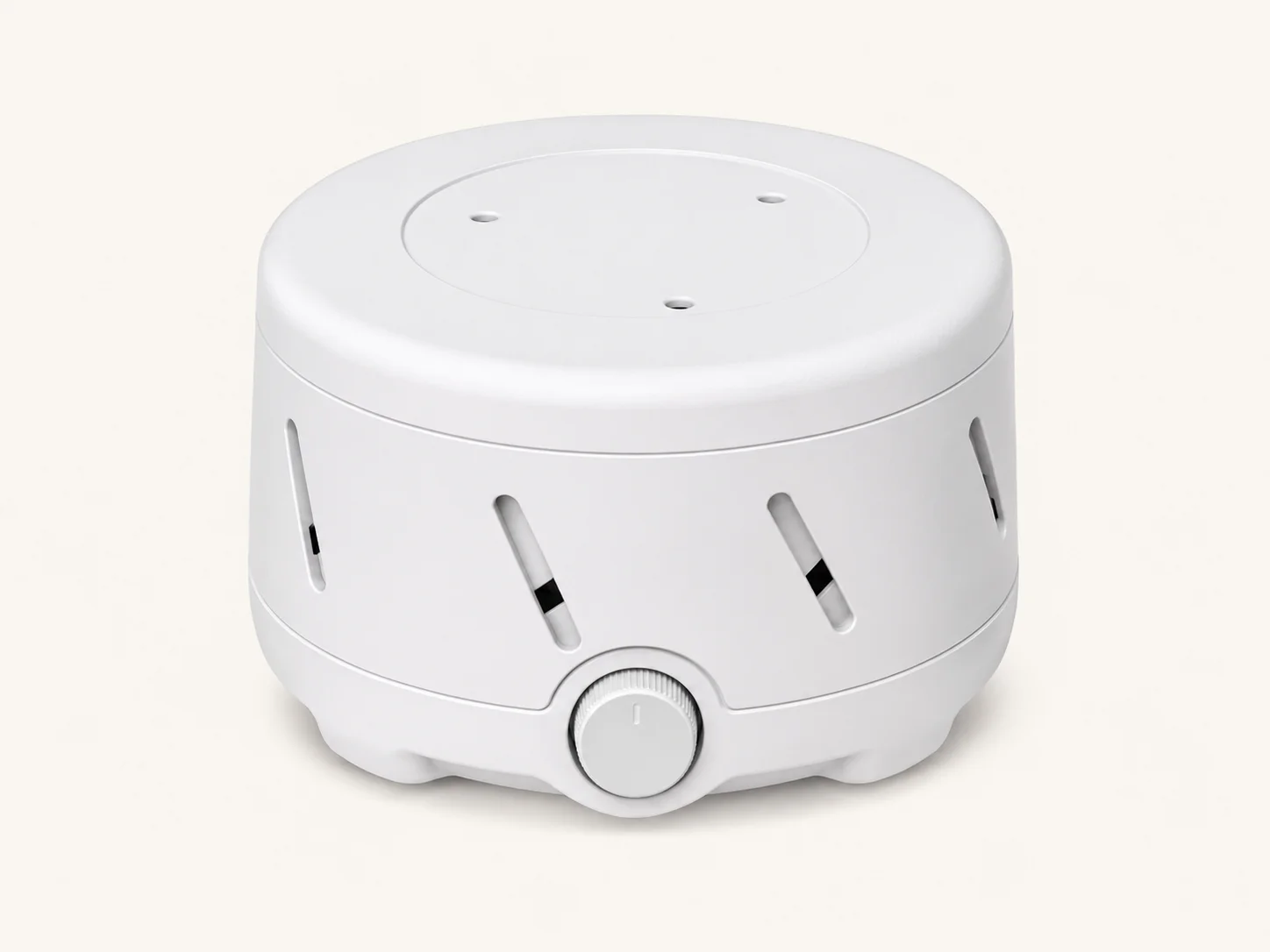
Yogasleep Dohm Fan-Based White Noise Machine
The Dohm is the most relevant option here when barking starts after footsteps, elevator sounds, voices, or neighboring doors. Its internal fan produces continuous non-looping sound, while two speed settings and an adjustable tone dial let you soften sudden noises without relying on a repeating audio track.
Main limitation: It masks some sound; it does not soundproof an apartment or teach a quiet response. The current official model is specified for the United States and Canada only, so UK and Australian buyers should choose a locally approved voltage-compatible sound machine instead.
Avoid it when: Barking is mainly caused by window movement, pain, or distress after you leave.
Setup tip: Place it between the dog’s resting area and the hallway-facing door or wall, then use the lowest comfortable setting that reduces abrupt sound contrast.
Verified through the official Yogasleep product page.
Check Current Price on Amazon
rabbitgoo Frosted Privacy Window Film
This removable static-cling film is a practical renter-friendly choice when a dog watches pedestrians, dogs, cars, balconies, or delivery activity through lower windows. Covering the dog’s eye-level view can remove the repeated visual cue while allowing more daylight than permanently closed curtains.
Main limitation: Film blocks or diffuses the view, not the sound. A dog that still reacts to engines, voices, or door slams may also need furniture moved away from the window and comfortable background sound.
Avoid it when: Your lease prohibits window coverings, the glass type is incompatible, or your dog simply jumps above the covered section.
Setup tip: Clean the glass thoroughly, apply with plenty of water, remove bubbles with a squeegee, and begin by covering only the lower section at the dog’s sightline.
Installation and material details checked against the current retailer listing; verify the exact roll and glass compatibility before ordering.
Check Availability on Amazon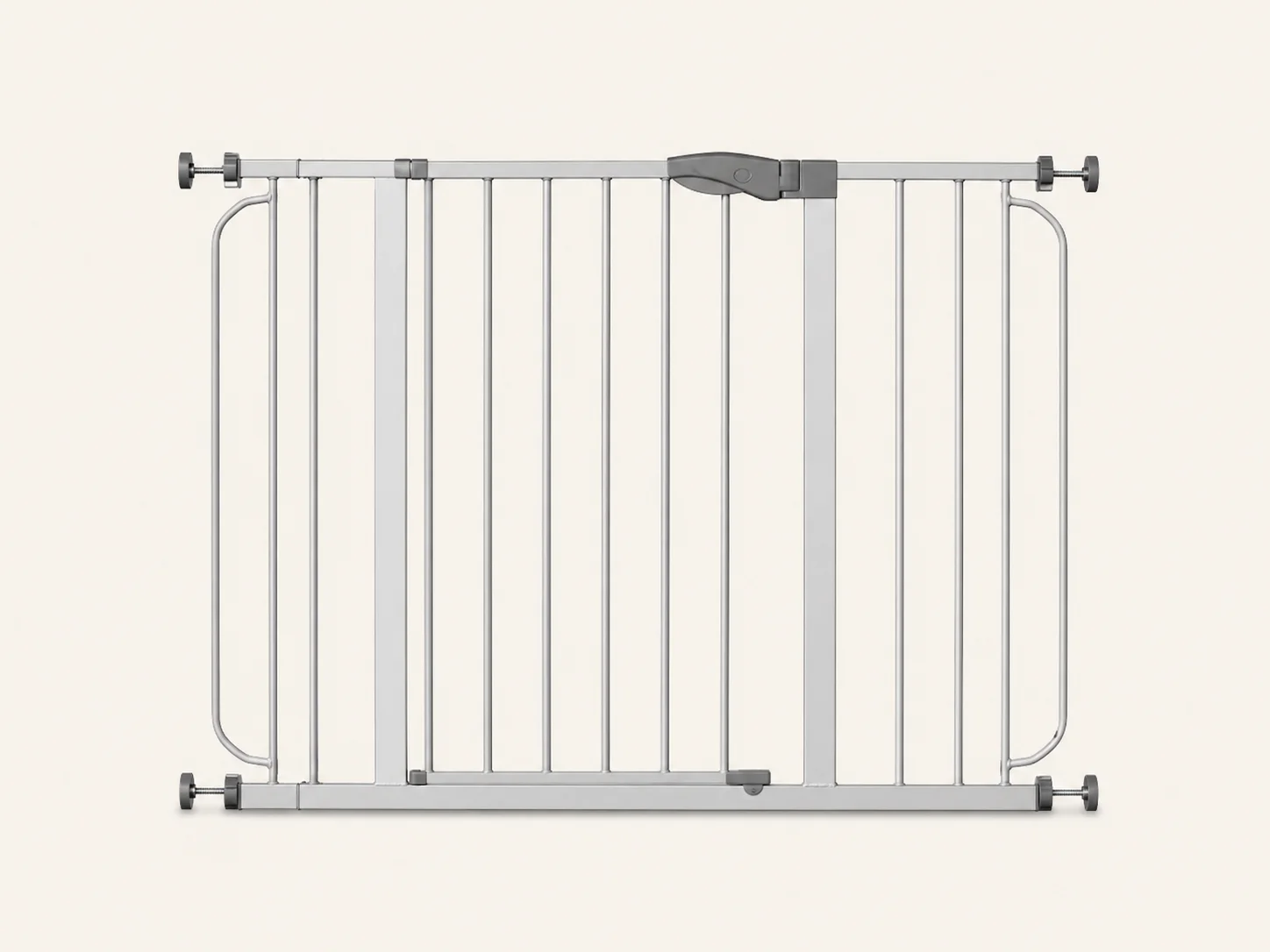
Regalo Easy Step Safety Gate
The Regalo gate is useful when barking is reinforced by repeated rushing to a front door, balcony door, or street-facing window. The official model stands 30 inches (76 cm) tall and fits stated openings from 29 to 38.5 inches (73.7 to 97.8 cm), although there is a fit gap between 32 and 35 inches unless an additional extension is used.
Main limitation: A barrier manages access; it does not make a dog comfortable with the trigger. Some dogs become more frustrated when confined.
Avoid it when: Your dog can jump or climb it, chew the bars, squeeze through gaps, or panic behind barriers. It is also the wrong model for an opening outside its supported range.
Setup tip: Measure at floor level and higher up before ordering. Keep water, bedding, and a calm resting area on the dog’s side of the gate.
Dimensions and installation details verified through the official Regalo product page.
View Latest Price on Amazon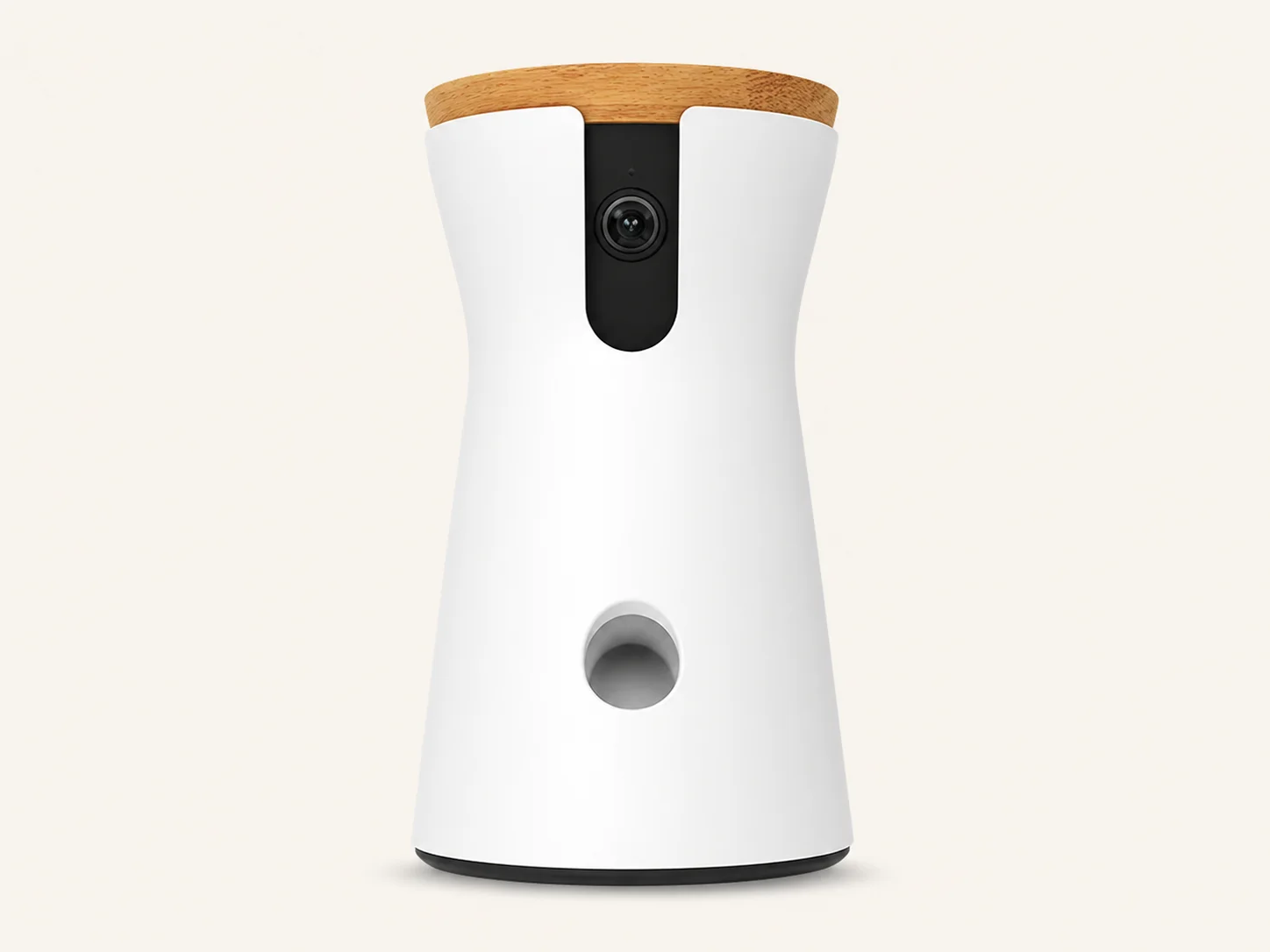
Furbo 360° Dog Camera
Choose a camera before buying a correction tool when neighbors report barking after you leave. Furbo lists full-HD viewing, automatic night vision, a barking sensor, two-way audio, treat tossing, and a 360-degree rotating view. The standalone model includes live view and barking alerts without a Furbo Nanny subscription, while extended video history and advanced monitoring depend on the model and plan selected.
Main limitation: A camera tells you what happens; it does not treat separation anxiety. Remote talking can also excite or confuse some dogs.
Avoid it when: You only want a device that stops barking automatically, or you are unwilling to check whether the listing is standalone or subscription-required.
Setup tip: Furbo recommends placing the camera 2–4 feet (60–120 cm) high and within 15 feet (4.5 m) of the Wi-Fi router. Record the first 15–30 minutes after departure before using voice or treat features.
Features and placement checked through Furbo’s official quick-start guide and subscription support page.
Check Current Price on Amazon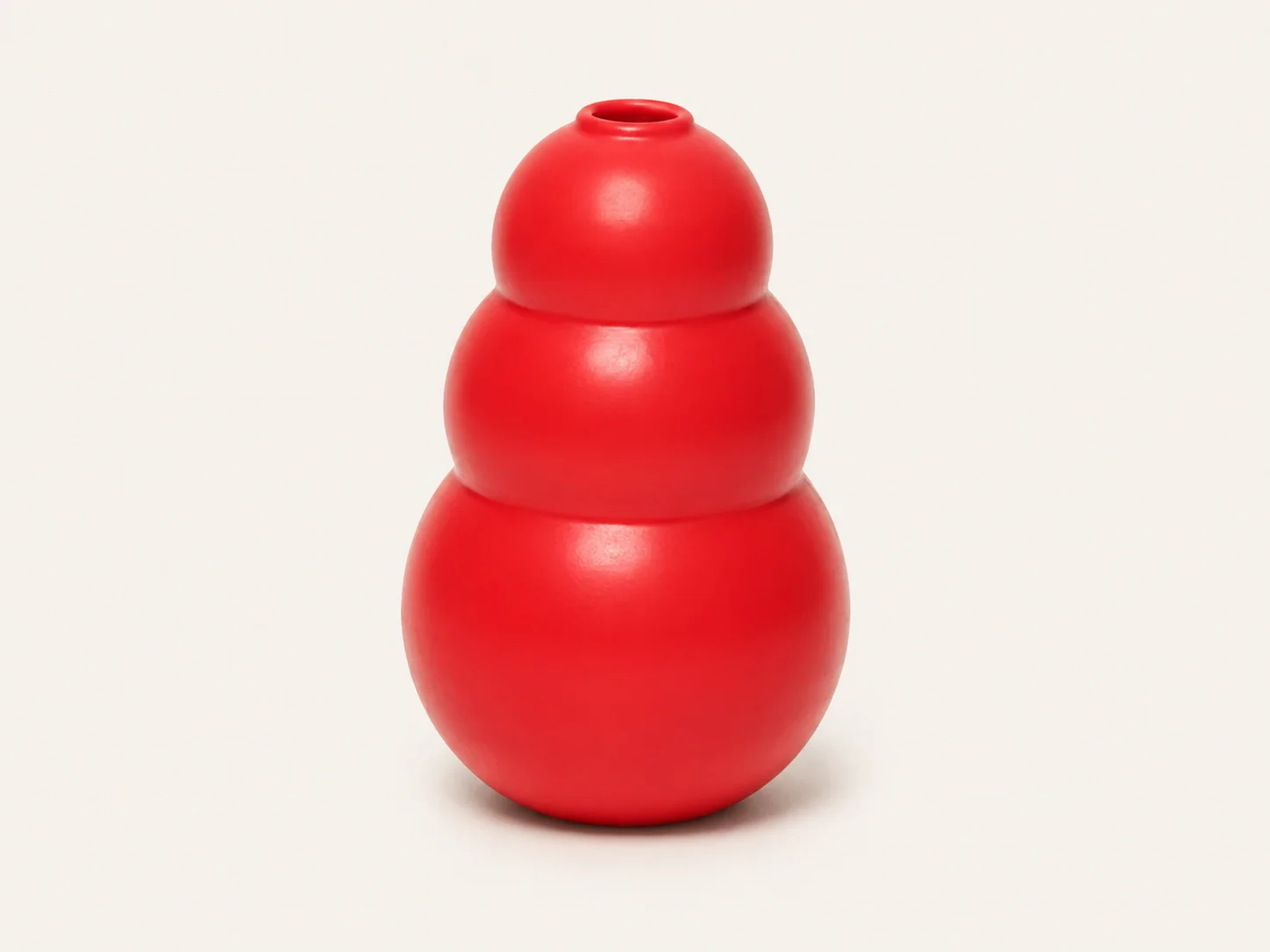
KONG Classic Dog Toy
A correctly sized stuffed KONG is useful for predictable quiet periods, such as the beginning of a work call or a planned rest block. It gives the dog a licking and chewing task before barking begins, making it more relevant for mild boredom or routine gaps than for alarm barking at doors and windows.
Main limitation: It is enrichment, not a treatment for persistent distress. KONG also states that its rubber toys are not indestructible.
Avoid it when: Your dog resource guards food, swallows toy pieces, destroys rubber quickly, or will be left unsupervised before you know their chewing style.
Setup tip: KONG recommends sizing up when uncertain; the largest ring should be larger than the back of the dog’s mouth. Begin with loosely packed familiar food so the activity is easy rather than frustrating.
Sizing and introduction guidance verified through KONG’s official sizing guide and introduction guide.
Check Availability on AmazonBefore You Buy
- What happens immediately before barking? Separate sound, sight, access, boredom, and being alone.
- Will the product physically fit? Measure doorways, windows, outlets, Wi-Fi distance, and the dog’s reach.
- Could it increase frustration? A gate, blocked view, remote voice, or difficult food toy can make some dogs more agitated.
- Are you expecting management or treatment? These products can reduce triggers or collect evidence; they cannot diagnose pain or cure anxiety.
A Simple Apartment Setup Plan
- Record the time, location, and trigger for several barking episodes.
- Change one trigger at a time: block the view, add distance, soften hallway sound, or provide planned enrichment.
- Introduce gates, film, sound, and food toys while you are present and watch the dog’s response.
- Reward calm behavior away from the trigger instead of waiting for a full barking episode.
- Use a camera when barking happens during absences, then review whether the dog settles or remains distressed.
When Another Product Is Unlikely to Be Enough
Arrange a veterinary assessment when barking begins suddenly or appears alongside pain, confusion, or physical changes. Persistent barking during absences combined with pacing, drooling, destruction, elimination, or escape attempts can indicate separation-related distress rather than boredom. The ASPCA recommends identifying the barking type and ruling out medical causes, while AVSAB recommends reward-based methods and advises against aversive tools. Shock, spray, or fear-based bark devices should not be the first purchase.
Frequently Asked Questions
Why does my dog still bark after I cover the window?
The remaining trigger may be sound, vibration, or access to a higher viewing point. Move climbable furniture, cover the dog’s actual sightline, and test comfortable background sound separately rather than assuming the film failed.
Can a baby gate make apartment barking worse?
Yes. Some dogs bark more when a barrier prevents them from reaching a person, window, or doorway. Introduce the gate gradually while you are home, provide a comfortable resting area, and stop using it unsupervised if the dog climbs, chews, or panics.
Should I talk to my dog through the camera when barking starts?
Watch first. Your voice may settle one dog but confuse or excite another because you cannot be located. If barking or searching increases after two-way audio, leave that feature off and use the recording to guide a training or veterinary conversation.
Will white noise stop hallway barking completely?
Usually not by itself. Background sound can reduce the contrast of footsteps and doors, but the dog may still notice louder events. Combine it with greater distance from the entrance and reward calm responses to manageable sounds.
Is a stuffed KONG enough for barking when I leave?
It may help mild boredom, but it is not enough when the dog ignores food, stops eating as soon as you leave, or shows pacing, destruction, drooling, or escape behavior. Those patterns need a structured behavior plan and possibly veterinary support.
Final Recommendation
Match one product to one verified trigger: the Dohm for hallway sound in compatible regions, rabbitgoo film for outside movement, the Regalo gate for safe distance from patrol zones, Furbo for documenting absence barking, or a correctly sized KONG for mild boredom. Start with the least intrusive option, observe the result, and keep the main limitation in mind. If your dog cannot settle or shows distress, professional assessment is a better next step than adding another anti-bark device.
 ✓
✓