

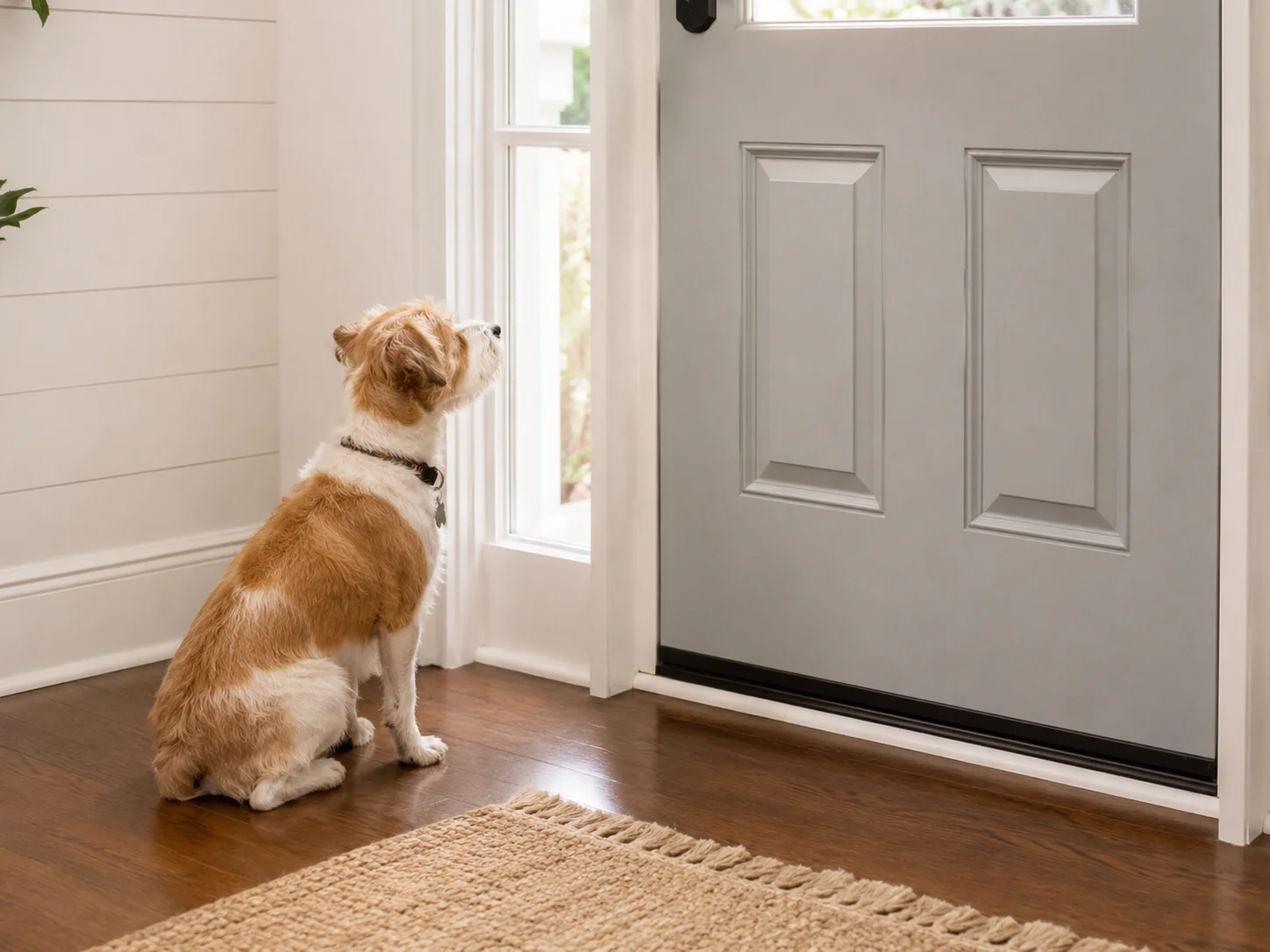
What Should You Change First When Your Dog Barks at the Door?
Start by identifying what sets the barking off. For a dog that rushes a wide entrance, a securely mounted Regalo 2-in-1 gate can create useful distance, but its 26-inch (66 cm) height will not contain every dog. For doorbell or knocking practice, a marker such as the Educator FC-100 clicker paired with small rewards is the more relevant starting point. Choose the MAXTID draft stopper only when hallway cues are entering beneath the door. These products can manage triggers or support training, but they cannot treat fear, aggression, panic, or separation-related distress by themselves.
Quick product matches by trigger
How we researched these options
We checked official product specifications, installation requirements, the supplied Amazon US pages, and the main limitation of each option in July 2026. Public discussions were used to identify recurring questions about visitor routines, doorbell reactions, and frustration behind barriers. Behavioral and safety guidance was checked against AVSAB, VCA Animal Hospitals, and the RSPCA. We did not personally test every product in this guide.
Prices, stock, packaging, and product variants may differ between Amazon US, UK, Canada, and Australia.
Quick comparison
| Product | Most relevant for | Key advantage | Setup | Main limitation |
|---|---|---|---|---|
| Regalo 2-in-1 Gate | Wide or angled entry zones | Fits openings up to 192 in (487.7 cm) | Hardware mounting required | Only 26 in (66 cm) tall |
| Educator FC-100 Clicker | Marking a calm alternative response | Four adjustable sound levels | Pair each click with a reward | May startle sound-sensitive dogs |
| PetSafe Treat Pouch Sport | Fast reward access near the door | Hinged opening and inner divider | Load before practice | Storage accessory, not a treatment |
| Zuke’s Mini Naturals Salmon | Repeated short training sessions | Soft, tearable, 2-calorie pieces | Use suitably small portions | Not appropriate for every diet |
| MAXTID Draft Stopper | Under-door sound, light, or movement | Fits stated gaps of 0.5–1.7 in | Measure gap and floor clearance | Does not soundproof the door |
Product recommendations by problem
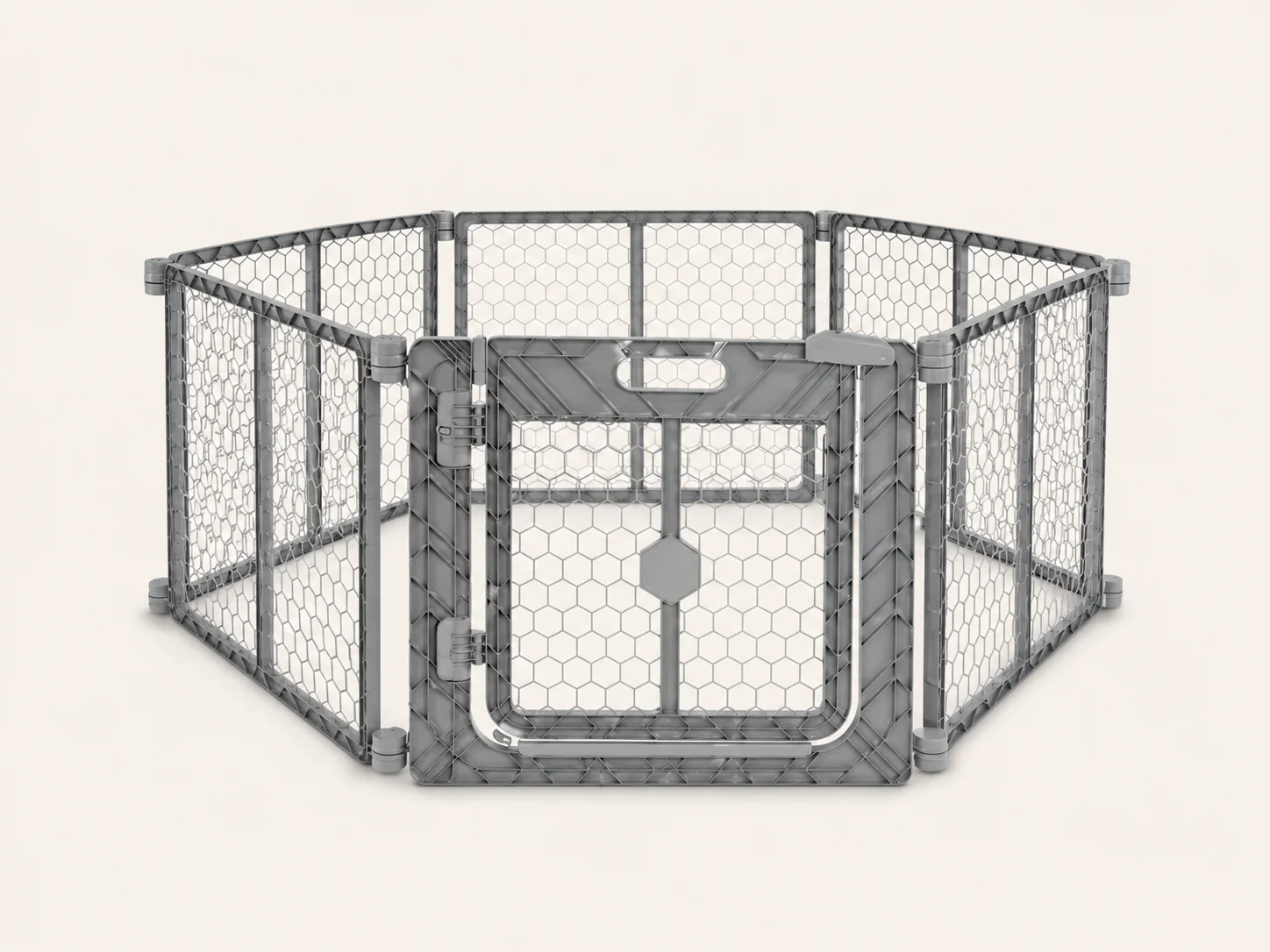
1. Regalo 2-in-1 Play Yard and Safety Gate with Door
This barrier is the most relevant option when a normal doorway gate cannot span the entrance. Regalo lists six 32-inch panels, coverage up to 192 inches (487.7 cm), a 26-inch (66 cm) height, and configurations as either a wall-mounted gate or play yard. That flexibility can create distance between the front door and a dog during deliveries or visitor arrivals.
Why it fits: Its hinged panels can follow wide, open-plan, uneven, or angled entry layouts.
Main limitation: The 26-inch height is unsuitable for dogs that can jump, climb, push the panels, or become highly frustrated behind a barrier.
Avoid it if: You need a compact pressure-mounted gate, cannot install wall hardware, or your dog redirects frustration toward people or other pets.
Setup tip: Position the gate several feet from the entrance where practical, supervise initial use, and confirm the mounting instructions on the official Regalo page.
Check Current Price on Amazon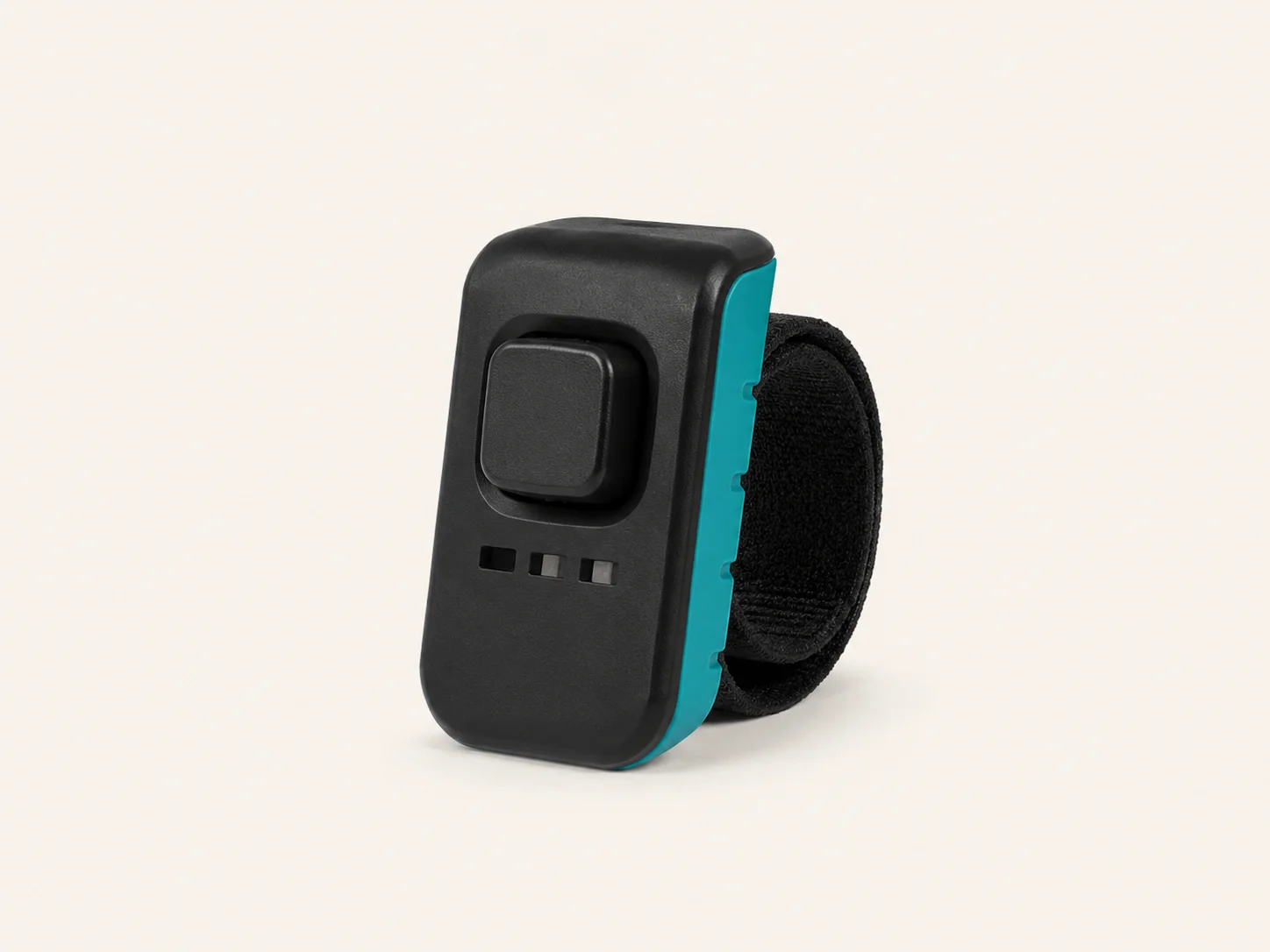
2. Educator FC-100 Finger Clicker
A clicker can mark the exact moment a dog looks away from the door, turns back to you, pauses, or reaches a mat. The FC-100 has a finger strap and four sound levels. According to the manufacturer, lower levels are created by covering one or more sound holes, giving it more flexibility than a fixed-volume box clicker.
Why it fits: The finger-mounted design leaves more of the hand available for delivering rewards, while the adjustable sound may suit different training environments.
Main limitation: The click has no meaning until it has been paired with a reward, and it cannot reduce physical access to the door or remove environmental triggers.
Avoid it if: Your dog freezes, retreats, startles, or becomes more agitated when hearing the click. A quiet verbal marker can be used instead.
Setup tip: Begin by teaching that one click predicts one reward in a quiet room. Review the official FC-100 specifications before ordering.
Check Current Price on Amazon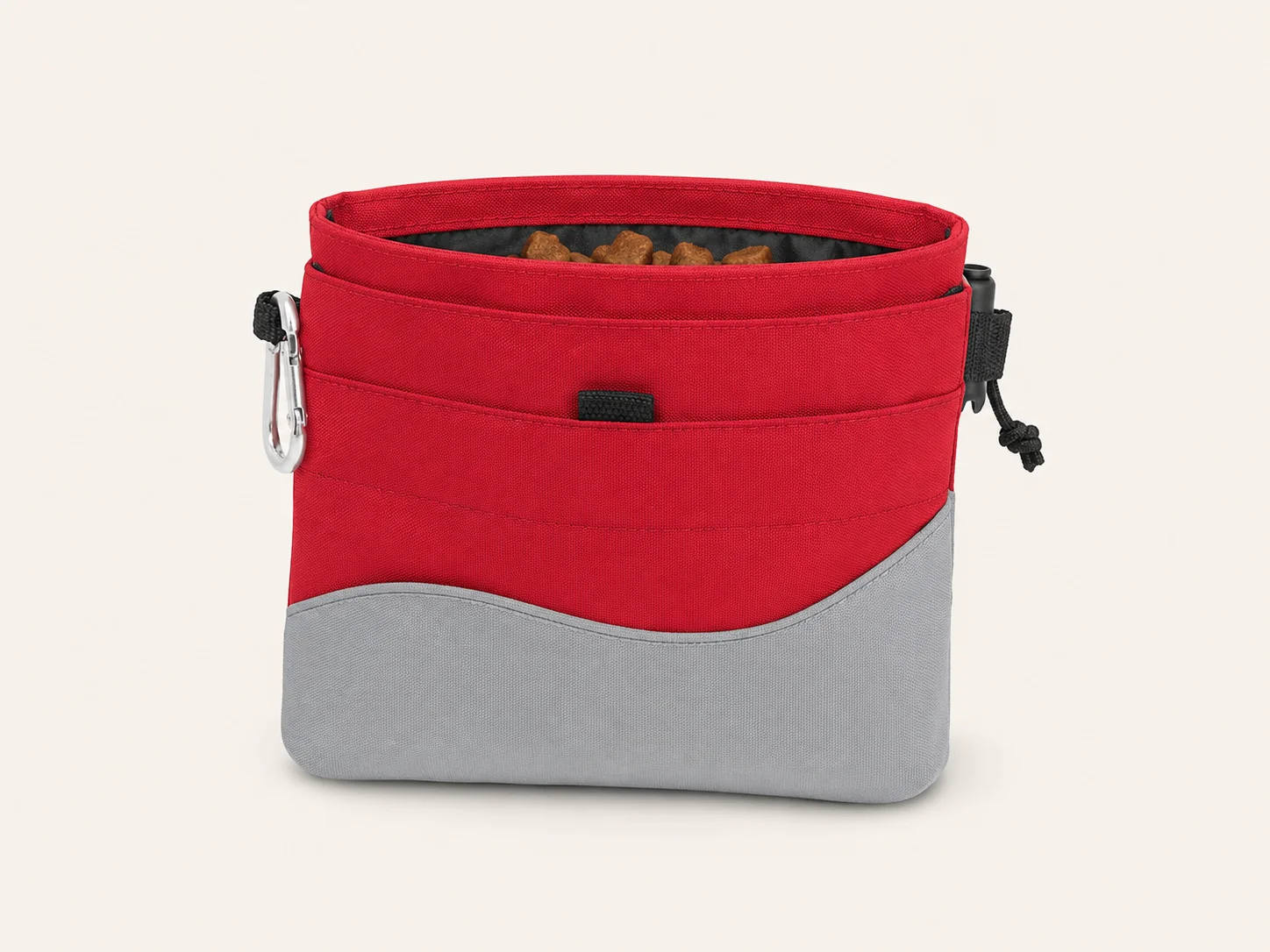
3. PetSafe Treat Pouch Sport
This pouch addresses a timing problem rather than barking itself: the trigger happens before you can reach the reward container. PetSafe lists a hinged opening that stays open during use, an inner divider, front storage, a carabiner, a belt clip, and an adjustable belt. Its stated size is 7.5 by 6.5 inches (19.1 by 16.5 cm).
Why it fits: Treats and a clicker can stay together near the practice area, making short door routines easier to repeat consistently.
Main limitation: It is only a storage accessory. It cannot correct poor reward timing, identify the trigger, or teach a replacement behavior by itself.
Avoid it if: You only need a small sealed container or your dog is likely to steal, chew, or guard a loaded pouch.
Setup tip: Load the pouch before planned practice, store it out of reach afterward, and follow the cold-cycle care guidance on the official PetSafe page.
Check Current Price on Amazon
4. Zuke’s Mini Naturals Salmon Recipe Training Treats
Door practice often requires several small rewards rather than one large biscuit. Zuke’s lists real salmon as the first ingredient, an easy-to-tear chewy texture, and 2 calories per treat. The pieces can also be divided when a smaller portion is suitable for the dog and the training session.
Why it fits: Small, soft pieces can be delivered quickly during repeated low-intensity doorbell, knocking, or mat practice.
Main limitation: Repeated rewards still add calories, and the salmon recipe may not suit dogs with fish sensitivities, gastrointestinal concerns, or a prescribed diet.
Avoid it if: Your veterinarian has restricted treats or the ingredient list conflicts with your dog’s dietary history.
Usage tip: Break pieces smaller where appropriate, include rewards in the daily food allowance, and review the ingredients and feeding directions on the official Zuke’s page.
Check Current Price on Amazon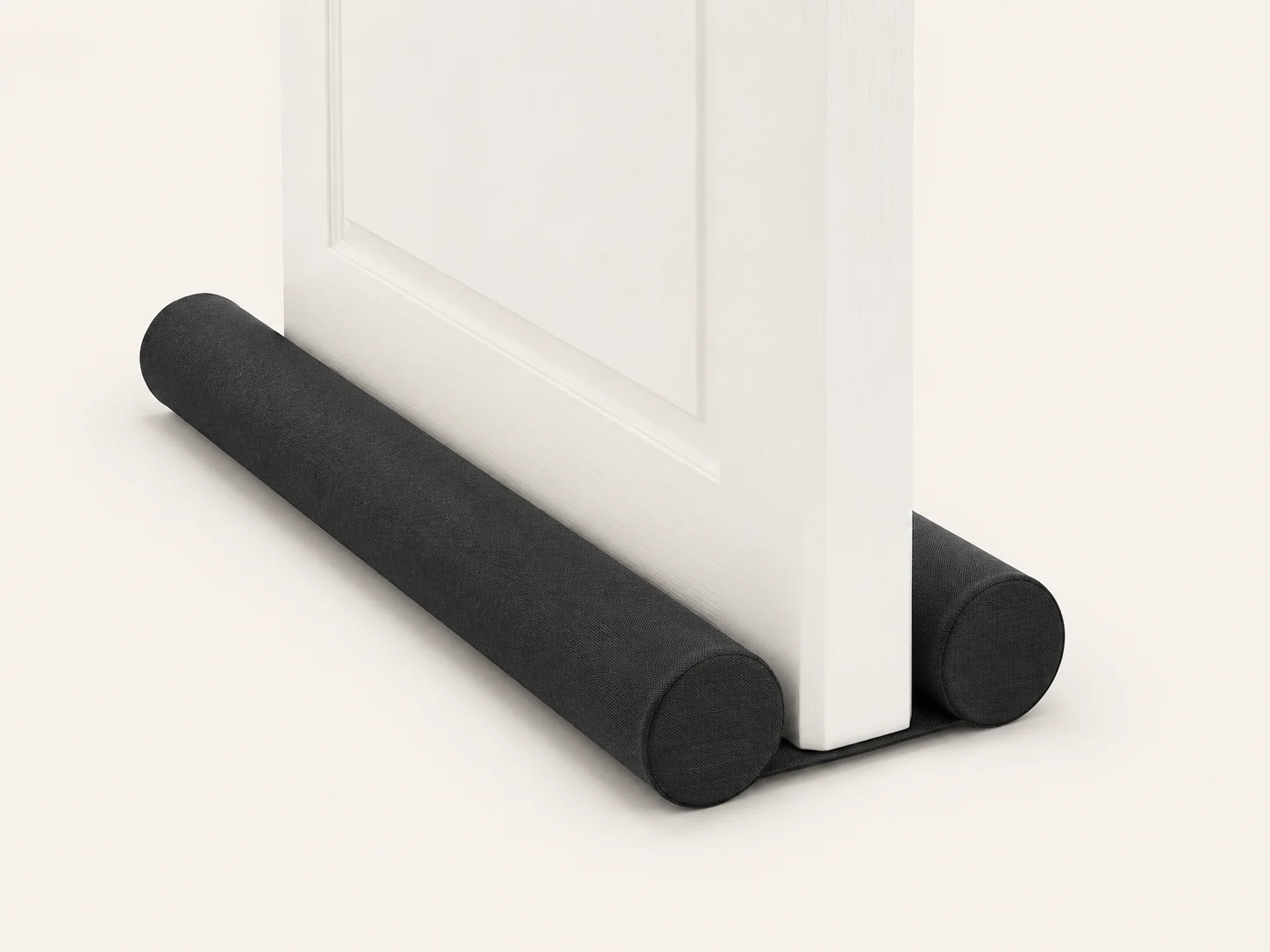
5. MAXTID Large Door Draft Stopper
This option is most relevant in apartments or shared hallways where light, odors, movement, or some sound enters through the bottom gap. MAXTID lists a 36-inch (91.4 cm) length, 2-inch foam, and stated coverage for gaps between 0.5 and 1.7 inches (1.3–4.3 cm). The foam can be shortened for some narrower doors.
Why it fits: It targets one identifiable pathway by which hallway cues can reach the dog and does not require permanent adhesive installation.
Main limitation: MAXTID does not publish a measured sound-reduction rating. The stopper cannot block a doorbell, loud knocking, wall-transmitted noise, or a person entering.
Avoid it if: Your dog chews or swallows fabric or foam, the door lacks floor clearance, or the main trigger is visible through a window.
Setup tip: Measure the door width, bottom gap, floor clearance, and any exterior threshold before buying. Check the stated compatibility on the official MAXTID page.
Check Current Price on AmazonBefore you buy: five questions that prevent the wrong purchase
- What is the exact trigger? A door opening, visible stranger, doorbell, knock, or low hallway sound may require a different solution.
- Can your dog safely use a barrier? Consider jumping, climbing, chewing, pushing, and frustration as well as the opening width.
- Is a free alternative enough? A verbal marker can replace a clicker, regular food may replace commercial treats, and a sealed container may replace a pouch.
- Can you practise before the real event? Training should begin with a manageable trigger while the dog can still respond and eat.
- Is this beyond a product problem? Growling, lunging, snapping, biting, panic, escape attempts, or sudden behavioral change requires professional assessment.
A short door-training setup
- Teach a mat or “place” behavior several feet from the entrance while the home is quiet.
- Introduce a very soft knock or low-volume doorbell recording that the dog notices without escalating.
- Mark and reward one clear alternative response, such as turning toward you, moving to the mat, pausing, or remaining behind a boundary.
- Put management in place before predictable deliveries or visitors, rather than after the dog has reached full intensity.
- Increase difficulty gradually. Reduce the trigger or create more distance when fear, frustration, or frantic behavior increases.
VCA advises teaching an alternative behavior while the dog is calm and placing the mat away from the visitor’s path.
When another purchase is not the right next step
AVSAB recommends reward-based training and advises against methods that depend on pain, intimidation, or fear. Shock collars, harsh corrections, startle devices, or punishment may suppress visible behavior without resolving why the dog reacts.
Contact a veterinarian when barking begins or worsens suddenly, especially alongside pain signs, confusion, hearing changes, appetite changes, or senior-dog behavior changes. Seek a qualified reward-based behavior professional when the dog growls, lunges, snaps, bites, panics, redirects onto people or pets, or cannot be safely separated from visitors. VCA recommends professional help when fear, frustration, or excitement could put a visitor at risk.
Frequently asked questions
Why does my dog bark more behind a baby gate?
The barrier may be increasing frustration or fear instead of helping the dog settle. Move the barrier farther from the entrance, practise calm barrier time without visitors, and stop unsupervised use if the dog claws, chews, redirects, or becomes more intense. A gate manages access; it does not prove that the dog feels safe.
Am I rewarding barking when I give treats after the doorbell?
Reward a defined response rather than prolonged barking. That response could be a pause, head turn, movement toward a mat, or return to you. Begin with a quiet trigger so the response can be marked before the dog reaches full intensity.
Can a draft stopper soundproof an apartment door?
No. A stopper may reduce some leakage through the bottom gap, but it cannot block wall-transmitted noise, a doorbell, loud knocking, or sound entering around the rest of the frame. Treat it as a limited environmental adjustment rather than a soundproofing system.
What should I do if my dog is afraid of the clicker?
Stop using it and switch to a quiet verbal marker such as “yes.” The marker should predict a reward rather than startle the dog. Do not click near the ears or use the sound to interrupt or punish barking.
What if my dog barks at the door only when home alone?
Use a camera to check for pacing, salivation, scratching exits, destruction, house soiling, or prolonged vocalizing. Barking that mainly occurs during absence may involve separation-related or confinement distress rather than a simple door-training problem. VCA recommends veterinary guidance when distress is present or begins suddenly.
Final recommendation
Buy for the trigger rather than the general keyword “barking.” Use the Regalo gate only for a genuinely wide or angled entrance, the FC-100 with small rewards for calm-response training, the PetSafe pouch when reward access is the practical bottleneck, and the MAXTID stopper only for under-door leakage. Most homes need one relevant management product and a consistent reward routine not all five products.
 ✓
✓