

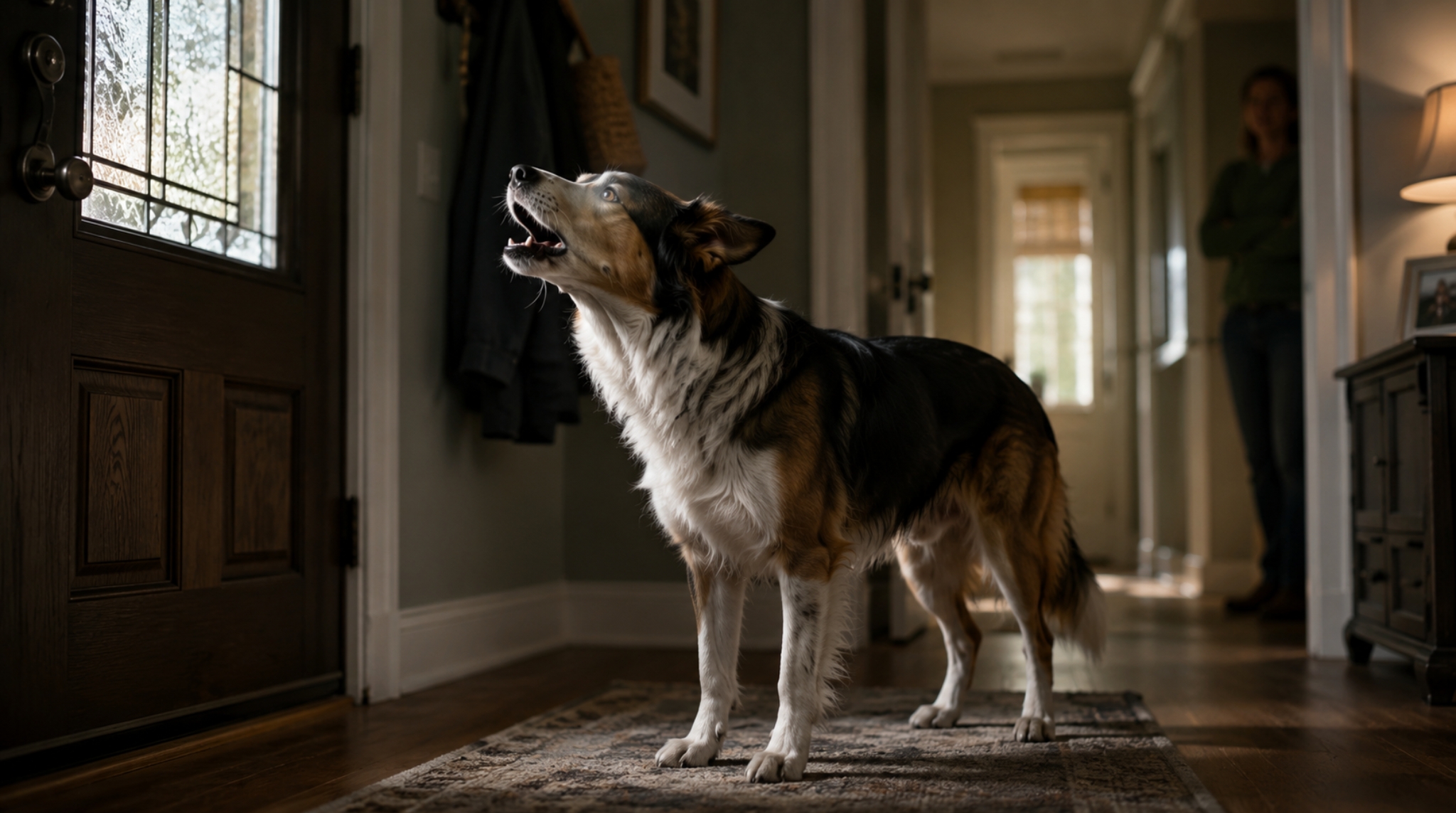
Different types of dog barks and meanings depend on context. A bark may mean alert, fear, play, demand, distress, discomfort, or confusion. To understand what your dog may be trying to say, look at the bark sound, body language, trigger, and timing together.
A bark at the door may be alert barking. Barking during play may be excitement. Barking near a stranger may be fear or uncertainty. Barking at night or barking at “nothing” may need closer attention, especially if it starts suddenly.
Table of Contents
- Immediate Answer
- Why Different Dog Barks Depend on Context
- Common Triggers Behind Dog Barking
- How to Tell the Barking Type
- Different Types of Dog Barks and Meanings
- Real-World Scenarios
- What to Do First
- Step-by-Step Solutions
- 5-Day Barking Meaning Check Plan
- Mistakes to Avoid
- When to Contact a Vet or Qualified Trainer
- Quick Summary
- FAQs
Immediate Answer
Different types of dog barks and meanings depend on sound, body language, trigger, and timing.
Common bark types may include:
- Alert barking: Your dog noticed something.
- Fear or warning barking: Your dog may need space.
- Play barking: Your dog may be excited.
- Demand barking: Your dog may have learned barking gets a result.
- Distress barking: Your dog may be uncomfortable or unable to cope.
- Night barking or barking at nothing: Your dog may be reacting to a sound, smell, shadow, discomfort, or confusion.
A bark is communication. It is not proof that your dog is being bad, dominant, or stubborn.
VCA Hospitals explains that barking is a natural dog behavior and may happen during alerting, separation from family members, unusual sights or sounds, anxiety, frustration, or other causes.
Why Different Dog Barks Depend on Context
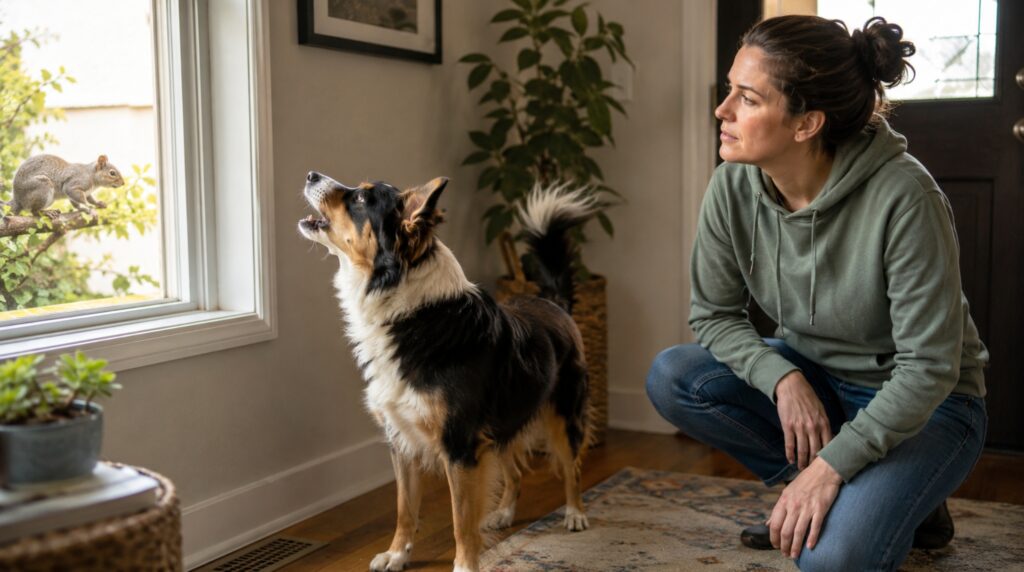
Dog barking is not one simple language.
The same dog may bark in different ways depending on what they feel and what is happening around them.
A bark may be linked with:
- Excitement
- Fear
- Frustration
- Alerting
- Boredom
- Separation-related distress
- Pain or discomfort
- Hearing or vision changes
- Learned behavior
- Confusion or uncertainty
Barking is not always anger. It can happen when a dog is excited, worried, confused, overstimulated, uncomfortable, or unsure what to do next.
This is why you should not judge a bark by sound alone.
Look at:
- Your dog’s body language
- What triggered the bark
- Where your dog is looking
- Whether your dog is moving forward or backing away
- Whether the barking stops when the trigger leaves
- Whether this barking is normal for your dog or new
RSPCA explains that dog body language can show whether a dog is happy, worried, or uncomfortable. This is why the whole dog matters, not just the sound.
Common Triggers Behind Dog Barking
Common dog barking triggers include:
- Doorbells
- Hallway sounds
- Elevator or lift noise
- People walking past windows
- Dogs outside
- Garden or yard movement
- Strangers approaching
- Play excitement
- Food routines
- Toy routines
- Owner leaving the room
- Crate time
- Night sounds
- Reflections or shadows
- Pipes, wind, or appliances
- Pain, discomfort, or senior dog changes
The trigger matters because the same bark sound can mean different things in different situations.
For example, barking at a person outside the window may be alert barking. Barking at a person who is leaning over your dog may be fear or warning barking. Barking while chasing another dog with loose body movement may be play barking.
In owner discussions, many people describe barking that happens around very specific patterns, such as hallway doors, elevator dings, AC noise, window reflections, crate time, or nighttime sounds.
These patterns do not prove one cause, but they are useful clues.
How to Tell the Barking Type
Use the bark, body language, trigger, and timing together.
| Barking Pattern | Possible Meaning | What to Do |
|---|---|---|
| Barking at doorbells, windows, or hallway noise | Alert barking | Acknowledge calmly, move your dog away, and reward quiet behavior |
| Barking with stiff posture, growling, tucked tail, or backing away | Fear or warning barking | Create distance and reduce pressure |
| Barking with loose, bouncy movement and play bows | Play barking | Monitor play and pause if one dog looks uncomfortable |
| Barking at food, toys, attention, or doors | Demand barking | Stop rewarding the bark and reward calmer behavior |
| Barking when left alone or crated | Separation-related distress, frustration, or crate distress | Check needs, reduce stress, and seek help if intense |
| Barking at night or into empty space | Sound, smell, shadow, discomfort, confusion, or senior changes | Track the pattern and contact a vet if sudden or worsening |
| Barking with pain signs or behavior changes | Possible health concern | Contact a veterinarian |
This table does not diagnose your dog. It helps you decide what to track and what to do next.
Different Types of Dog Barks and Meanings

1. Alert Barking
Alert barking often happens when your dog notices a sound, person, animal, doorbell, hallway noise, car door, or movement outside.
It may look like:
- Fast repeated barking
- Focus toward a door, window, fence, hallway, or garden
- Ears forward or alert
- Body facing the trigger
- Barking that slows when the trigger leaves
Possible meaning: “Something is happening.”
In apartments, flats, condos, or close housing, alert barking may happen more often because dogs can hear people, doors, stairs, lifts, elevators, cars, or outdoor sounds nearby.
Alert barking is not always “bad behavior.” Your dog may simply be responding to close-range triggers.
The goal is to teach your dog what to do after noticing the trigger.
2. Fear or Warning Barking
Fear or warning barking is safer to judge by body language, not sound alone.
You may see:
- Stiff body
- Hard stare
- Growling
- Backing away
- Tail tucked or stiff
- Ears pinned back
- Leaning away
- Lunging if the dog feels trapped
- Tight mouth or tense face
This does not automatically mean the dog wants to attack. But it should be treated as a request for space.
Possible meaning: “Please move away.”
RSPCA’s dog body language guidance shows that tense posture, hard eyes, ears back, and other body signals can indicate worry or discomfort.
PDSA also explains that growling is a sign a dog may be distressed or afraid and asking for space.
Do not punish growling or warning signals.
Punishing the warning may make the dog stop communicating clearly, but it does not make the dog feel safe.
3. Play Barking
Play barking is usually easier to read when you look at the whole body.
You may see:
- Loose, bouncy movement
- Play bows
- Open mouth
- Short pauses
- Chasing and returning
- Wiggly body movement
- Both dogs choosing to re-engage
Possible meaning: “Keep playing.”
Play can be loud, especially in multi-dog homes, dog parks, or excited puppy play. But loud does not always mean unsafe.
ASPCAPro describes playful dogs as loose and wiggly, often with play bows, exaggerated movement, and brief pauses.
Pause the play if one dog is:
- Stiff
- Hiding
- Pinned
- Trying to leave
- Being chased nonstop
- Showing hard staring
- Moving away repeatedly
- No longer choosing to re-engage
Good play should include consent from both dogs.
4. Demand Barking
Demand barking can happen when a dog learns that barking gets a result.
The result may be:
- Food
- A treat
- A toy
- A door opening
- Attention
- Play
- Release from a crate
- The owner looking at them
This is common during:
- Work-from-home routines
- Mealtimes
- Sofa time
- Playtime
- Door routines
- Morning routines
- Evening routines
- Times when the owner is busy
Some dogs may learn this loop:
Bark → owner says “quiet” → dog pauses → treat → dog barks again.
Possible meaning: “This has worked before.”
Demand barking is not fixed by yelling. Yelling may accidentally become attention.
The fix is to change what the bark earns.
Humane World advises identifying why a dog is barking, removing the stimulus where possible, and teaching an alternative way to communicate.
5. Distress Barking
Distress barking may happen when a dog is uncomfortable, overwhelmed, isolated, confined, or unable to cope.
It may happen:
- In a crate
- Behind a closed door
- When left alone
- During storms or loud noises
- When the dog is separated from the owner
- When the dog cannot access a safe resting spot
- When the dog is in pain or discomfort
Possible meaning: “I am not coping.”
Distress barking may sound repetitive, urgent, or difficult to interrupt.
It may also appear with:
- Pacing
- Panting
- Drooling
- Digging
- Escape attempts
- Destruction
- Trembling
- House-soiling
- Refusing food when alone
ASPCA explains that dogs with separation anxiety may bark or howl when left alone or separated from their guardian.
If barking appears with panic signs, do not treat it as simple stubbornness. Speak with a veterinarian or qualified reward-based trainer.
6. Night Barking or Barking at Nothing
This is the barking that often worries owners most.
Searches like “why is my dog barking at nothing” often come from people who see their dog barking at a wall, dark corner, crate door, window, or empty space.
Possible non-diagnosis explanations include:
- Distant sounds
- Outdoor movement
- Shadows or reflections
- Hallway or elevator noise
- Wind, pipes, or appliances
- Separation-related distress
- Crate distress
- Senior dog confusion
- Pain or discomfort
- Hearing or vision changes
Your dog may not be barking at “nothing.” Your dog may be reacting to a small sound, smell, shadow, pattern, or body feeling that you cannot easily detect.
If your older dog has started barking in a new way, especially at night or while staring at walls, corners, or empty spaces, read our full guide on senior dog barking to understand when barking may be linked with discomfort, sensory changes, confusion, or possible cognitive decline.
Cornell Richard P. Riney Canine Health Center lists disorientation, sleep-wake cycle changes, house-soiling, activity changes, and anxiety changes as signs owners may track when discussing possible cognitive dysfunction with a veterinarian.
This does not prove canine cognitive dysfunction. It means new or worsening barking should not be ignored.
Real-World Scenarios
Real-World Scenario: Dog Barking at the Wall at Night
An owner notices their dog barking at the same wall every night. This could point to a repeated trigger, such as sound, smell, routine, wildlife, pipes, shadows, or a learned pattern.
If this starts suddenly, gets worse, or happens with confusion, sleep changes, or pain signs, the safer next step is to contact a veterinarian.
Real-World Scenario: Dog Barking at Hallway Sounds
An owner in an apartment, flat, or condo hears their dog bark every time someone walks past the door. This may be alert barking.
The dog may be reacting to:
- Footsteps
- Voices
- Keys
- Lifts or elevators
- Door movement
- Neighbor dogs
- Delivery sounds
The dog is responding to close-range triggers, not trying to cause trouble.
Real-World Scenario: Dog Barking During Rough Play
An owner hears loud barking while two dogs play and worries it may become a fight.
Look at body language. Loose bodies, play bows, and short pauses often point to play. Stiff bodies, hard staring, hiding, pinned ears, or one dog trying to escape may mean the play needs to stop.
Real-World Scenario: Dog Barking for Food or Attention
An owner’s dog barks at the same time each day for food, a toy, or play. This may be demand barking.
The dog may have learned that barking makes people move. The fix is not yelling. The fix is changing what the bark earns.
Real-World Scenario: Dog Barking in the Crate
An owner hears barking every time the dog goes into the crate. This may be frustration, habit, fear, separation-related distress, or discomfort.
A dog that barks briefly and settles may need a different plan than a dog that panics, drools, scratches, or tries to escape.
If crate barking looks intense or distress-based, get professional help.
What to Do First
Before trying to stop the barking, try to understand the bark.
Ask:
- Where is your dog looking?
- What happened right before the bark?
- Is the body loose, stiff, low, or forward?
- Is your dog moving toward the trigger or away from it?
- Does the barking stop when the trigger leaves?
- Does your dog bark at the same time every day?
- Does the barking happen when your dog wants something?
- Does the barking happen when your dog is alone?
- Is this barking new or normal for your dog?
- Are there pain, sleep, appetite, bathroom, or behavior changes?
Do not judge the bark by sound alone. The same sound can mean different things in different situations.
Step-by-Step Solutions
1. Match the Bark to the Situation
Look at the bark, body language, trigger, and timing together.
Ask:
- Is your dog looking at a door, window, person, dog, toy, food bowl, or empty space?
- Did the barking start after a sound, movement, or routine?
- Is your dog loose and bouncy?
- Is your dog stiff, low, or leaning away?
- Is your dog barking because they want something?
- Is your dog barking because they cannot cope?
Use this anytime you are unsure whether the bark means play, fear, alert, demand, or distress.
2. Use a Bark Log for Confusing Barking
Track repeated barking for a few days.
Write down:
- Time
- Location
- Possible trigger
- Bark sound
- Body language
- What you did
- What stopped the barking
- Any changes in sleep, appetite, bathroom habits, or energy
Use this for night barking, barking at nothing, apartment barking, crate barking, sudden barking changes, and senior dog barking changes.
A pattern is easier to solve than a mystery.
3. Handle Alert Barking Without Yelling
Teach your dog that you noticed the trigger and they can move away.
Try this:
- Calmly say a cue like “thank you” or “all done.”
- Walk your dog away from the window, door, hallway, or garden fence.
- Reward quiet behavior away from the trigger.
- Block the view if needed with curtains, window film, gates, or a different room setup.
Use this for barking at doorbells, strangers, hallway noise, garden sounds, yard movement, and people walking past windows.
Do not yell. Yelling can make some dogs more excited, more anxious, or more convinced that something serious is happening.
4. Break the Demand Barking Loop
Avoid rewarding the bark. Reward calmer behavior instead.
Try this:
- Do not give food, toys, door access, or attention while your dog is actively barking for them.
- Wait for a small pause or calmer behavior.
- Ask for an easy behavior, such as “sit” or “go to mat.”
- Reward that calmer action.
- If the barking happens at the same time each day, offer attention, a toilet break, or a calm activity before the barking starts.
Use this when your dog barks for food, play, attention, toys, door opening, sofa access, or work-from-home interruptions.
If you cannot ignore barking because of thin walls or neighbors, use management first. Move your dog away from the trigger, offer a calm activity before barking starts, and reward quiet moments.
5. Respond Safely to Fear or Warning Barking
Create distance and reduce pressure.
Try this:
- Do not force greetings.
- Move your dog away from the person, dog, or object.
- Avoid pulling them closer.
- Keep your voice calm.
- Reward your dog when they look away, move away, or settle.
- Give them a safe exit route when possible.
Use this when barking comes with stiff body language, growling, hiding, lunging, backing away, hard staring, tucked tail, or ears pinned back.
Do not punish fear barking. Fear barking usually means the dog needs safety and distance, not pressure.
6. Manage Night Barking or “Ghost Barking”
Check for real triggers and reduce confusion.
Try this:
- Listen for pipes, pests, outdoor animals, wind, or neighbors.
- Close curtains to reduce shadows and reflections.
- Move your dog’s bed away from windows or noisy walls.
- Use a calm bedtime routine.
- Add low lighting if darkness seems to upset your dog.
- Track whether barking happens at the same time or place.
- Note any sleep, bathroom, appetite, or movement changes.
Use this when your dog barks at night, barks into the dark, or seems to bark at nothing.
If the barking is new, intense, or linked with senior dog confusion, pain signs, house-soiling, or sleep changes, contact a veterinarian.
7. Take Crate Barking Seriously
Work out whether the bark is frustration, habit, fear, or distress.
Check:
- Bathroom needs
- Water
- Comfort
- Safe temperature
- Whether your dog barks only when alone
- Whether your dog tries to escape
- Whether the crate has become linked with distress
- Whether barking starts as soon as the door closes
Avoid using the crate as punishment. Build crate comfort slowly during calm times.
Use this when barking happens in the crate at night, when you leave, or when the dog cannot see you.
If your dog panics, drools, tries to escape, injures themselves, or cannot settle, speak with a veterinarian or qualified reward-based trainer.
5-Day Barking Meaning Check Plan
Day 1: Track When the Barking Happens
Write down the time, place, trigger, bark sound, and body language.
Notice whether your dog is:
- Loose
- Stiff
- Moving forward
- Backing away
- Staring
- Pacing
- Trying to get something
- Trying to escape
- Unable to settle
Day 2: Identify the Most Common Trigger
Look for patterns.
Is the barking mostly linked with doorbells, windows, hallway sounds, food, toys, play, crate time, nighttime, being left alone, strangers, other dogs, or pain or discomfort?
Do not try to fix everything at once. Start with the most repeated trigger.
Day 3: Match the Bark to the Body Language
Do not judge the bark by sound alone.
Loose and bouncy may point to play. Stiff, low, tucked, or leaning away may point to fear or warning. Focused barking toward a door or window may be alert barking. Barking at food, toys, or attention may be demand barking. Barking with pacing, panic, or escape attempts may be distress.
Day 4: Change What the Bark Earns
If barking gets food, toys, attention, or door access, change the routine.
Try this:
- Reward calm behavior before barking starts.
- Ask for a simple behavior like “sit” or “go to mat.”
- Give the reward after calm behavior, not during active barking.
- Use management if neighbors or thin walls make ignoring impossible.
- Offer enrichment before predictable barking times.
The goal is to teach: calm behavior works better than barking.
Day 5: Reduce Triggers and Choose the Next Step
Reduce the most common trigger.
You may need to:
- Block window views
- Reduce hallway noise
- Move the bed away from noisy walls
- Adjust crate routines
- Use a calmer bedtime setup
- Practice short separations
- Reward quiet behavior away from triggers
- Contact a professional if barking is intense or risky
Contact a veterinarian if barking is sudden, intense, worsening, or linked with pain, confusion, sleep changes, house-soiling, appetite changes, or senior dog behavior changes.
Contact a qualified reward-based trainer if barking is fear-based, demand-based, separation-related, or causing housing problems.
Mistakes to Avoid
Avoid these common mistakes:
- Do not assume every bark means dominance.
- Do not punish fear barking without understanding the trigger.
- Do not keep repeating “quiet” if it has become part of a reward loop.
- Do not ignore sudden barking in senior dogs.
- Do not use bark collars as a first response before understanding why the barking is happening.
- Do not force a scared dog to “face” the trigger.
- Do not assume barking at nothing is fake.
- Do not reward barking with food, play, or attention every time.
- Do not punish growling or warning signs.
- Do not wait until neighbors, councils, HOAs, landlords, or housing managers complain before taking action.
The goal is not just to stop noise. The goal is to understand what the barking is doing for your dog.
AVSAB’s Humane Dog Training Position Statement supports humane, reward-based training and explains welfare concerns with aversive methods.
When to Contact a Vet or Qualified Trainer
Contact a veterinarian if dog barking:
- Starts suddenly
- Gets worse
- Happens mostly at night
- Comes with pain signs
- Comes with confusion or disorientation
- Appears with appetite changes
- Appears with sleep changes
- Appears with house-soiling
- Happens in a senior dog with new behavior changes
- Happens when your dog is touched or moved
Veterinary evaluation is important when behavior changes suddenly, especially in older dogs.
Contact a qualified reward-based trainer or behavior professional if:
- Barking is causing housing or neighbor problems
- Your dog barks from fear or panic
- Your dog reacts strongly to people or dogs
- Crate barking looks like distress
- Demand barking is getting stronger
- Separation-related barking is intense
- You are unsure how to respond safely
Use reward-based support where possible, especially for fear, anxiety, and senior dog behavior changes.
Avoid trainers who rely mainly on fear, intimidation, pain, or punishment.
Quick Summary
Different types of dog barks and meanings are easier to understand when you look at sound, body language, trigger, and timing.
Common bark types include:
- Alert barking
- Fear or warning barking
- Play barking
- Demand barking
- Distress barking
- Night barking
- Barking at “nothing”
A bark is not always anger, dominance, or bad behavior.
It may be alerting, fear, excitement, frustration, confusion, discomfort, or a learned pattern.
If barking is sudden, intense, worsening, or linked with senior dog changes, speak with a veterinarian.
FAQs
What do different dog barks mean?
Different dog barks may mean alert, fear, play, demand, distress, discomfort, or confusion.
Look at the trigger and body language before deciding what the bark may mean.
Why is my dog barking at nothing?
Your dog may hear, smell, or see something you do not notice.
Barking at nothing may also be linked with shadows, reflections, distant sounds, anxiety, discomfort, or senior dog changes.
How can I tell play barking from warning barking?
Play barking usually comes with loose, bouncy movement, play bows, and pauses.
Warning barking often comes with stiffness, hard staring, backing away, growling, or one dog trying to escape.
Why does my dog bark more in an apartment or flat?
Close sounds can trigger barking.
Dogs may react to hallway steps, doors, neighbors, elevators, lifts, delivery sounds, or outdoor noise in shared housing.
Should I ignore demand barking?
Sometimes, but not if the barking is caused by fear, distress, pain, panic, or confusion.
First check the cause. For attention-based barking, try to prevent the pattern, reward calm behavior, and avoid giving the dog what they want while they are actively barking.
What does a high-pitched bark mean?
A high-pitched bark may happen during excitement, play, frustration, or distress.
Do not judge by pitch alone. Look at your dog’s body, trigger, and timing.
What does a deep bark mean?
A deep bark may happen during alerting, warning, fear, or frustration.
It does not automatically mean aggression. Check body language and create distance if your dog looks stiff, tense, or worried.
Why does my dog bark and growl at people?
Your dog may feel worried, trapped, protective, startled, or uncomfortable.
Do not force greetings. Create distance and contact a qualified reward-based trainer if this pattern repeats.