
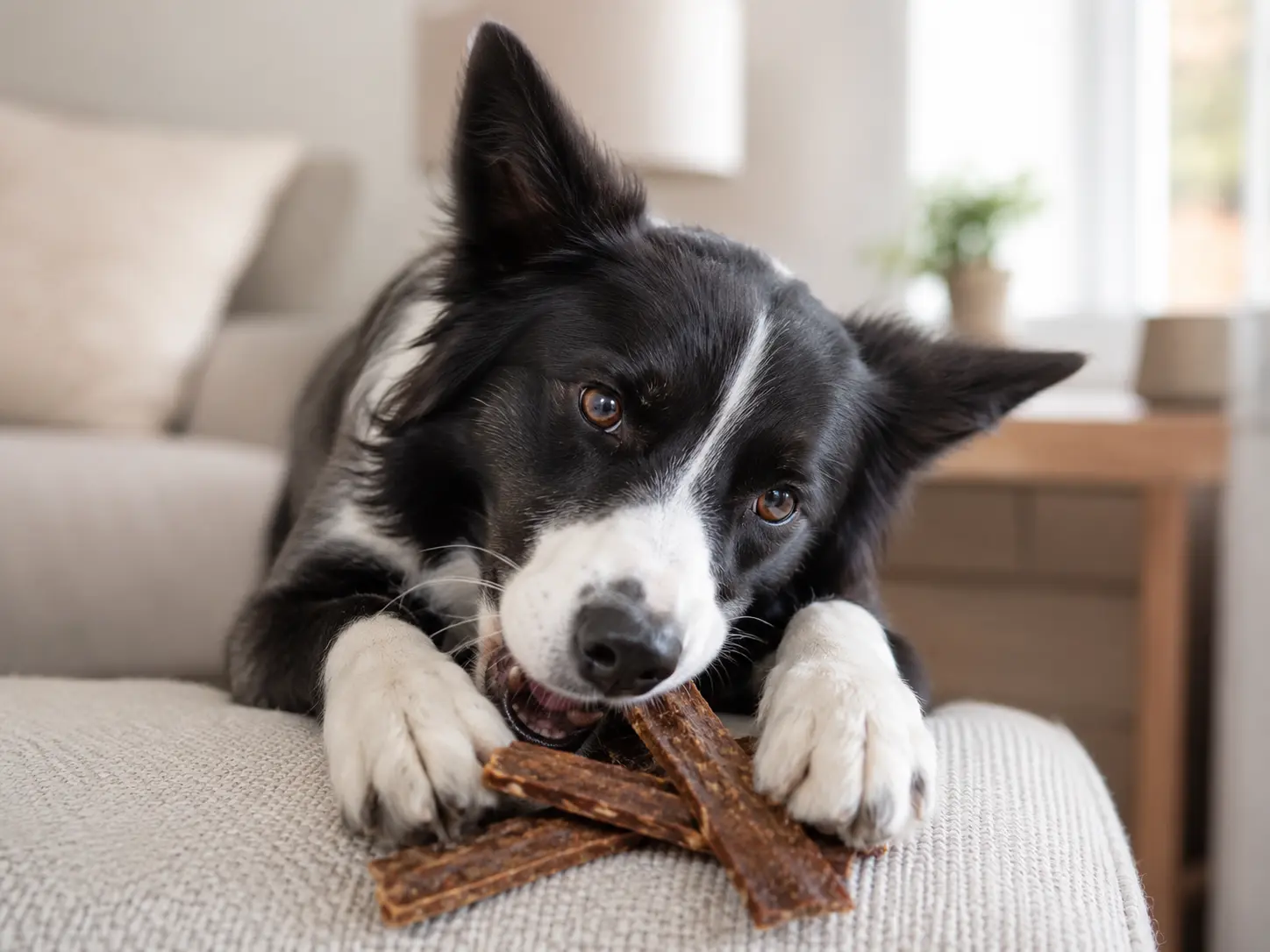
If your dog happily eats a Kong, chew, or puzzle toy while you are home but ignores it after you leave, stress may be making eating difficult. Food refusal alone does not diagnose separation anxiety, but it becomes more meaningful when it appears with barking, pacing, drooling, scratching at exits, destruction near doors, or an inability to settle.
Quick answer: A relaxed dog can usually investigate food. A dog that feels unsafe may focus on the exit, listen for your return, or stay too tense to eat. Use a camera to observe the full pattern instead of assuming the toy is boring.
Why a Dog May Refuse Food Toys When Alone
Stress can reduce interest in food
Eating is easier when a dog feels safe. During a stressful absence, some dogs become too alert to chew, lick, or solve a puzzle. They may return to the food immediately after the owner comes home, which suggests the problem is the alone-time context rather than the food itself.
The food toy may predict your departure
If a special Kong appears only before you leave, it can become part of the departure routine. Some dogs learn that the toy predicts keys, shoes, a closed door, and a long absence. The toy may then trigger worry instead of relaxation.
The toy may be too difficult
A tightly packed frozen toy can be useful for a calm dog, but it may be frustrating for a dog that is already tense. Start with an easy version while you are home. The dog should understand how to get the food before you use the toy during an absence.
The dog may not be hungry
Large meals, frequent treats, hot weather, medication, dental discomfort, stomach upset, or a changed routine can also reduce appetite. If your dog refuses food in several situations—not only when alone—speak with a veterinarian.
What Food Refusal Can Tell You
- Eats after you return: alone-time stress may be involved.
- Eats during short absences but not longer ones: distress may increase after a threshold.
- Eats near the door but not in a crate: confinement may be part of the problem.
- Refuses all food everywhere: health, pain, nausea, or appetite changes need consideration.
- Takes food but keeps pacing: eating does not automatically mean the dog is relaxed.
How to Test the Pattern Safely
- Offer the same toy while you remain in the room.
- Repeat while you move around the home normally.
- Try a very short absence that is unlikely to cause panic.
- Use a pet camera to observe the complete behavior.
- Record when eating stops, when barking or pacing starts, and whether the dog settles.
Do not create a long or difficult absence just to test the dog. If your dog already shows severe distress, get professional guidance rather than repeatedly pushing beyond the point where the dog can cope.
Ways to Make Food Toys Easier
- Use soft, familiar food instead of a completely new filling.
- Pack the toy loosely before trying a frozen version.
- Introduce it during calm periods when you are home.
- Use a toy size that is appropriate for your dog and supervise initial use.
- Rotate only a small number of familiar options.
- Place the toy away from a stressful exit or noisy window.
For a practical comparison of formats, see Kong vs. lick mat vs. puzzle feeder. When you are ready to compare specific products, use the best food toys for dog separation anxiety guide.
When Food Toys Are Not Enough
A food toy is enrichment, not a treatment for panic. Seek veterinary or qualified reward-based behavior support if your dog shows:
- persistent barking or howling
- heavy drooling or frantic panting
- escape attempts or self-injury
- destruction concentrated around doors or windows
- house-soiling that occurs mainly during absences
- long periods without settling
- sudden appetite or behavior changes
What Not to Do
- Do not withhold regular meals to force interest in the toy.
- Do not leave an unsafe chew or damaged toy unsupervised.
- Do not assume refusal means stubbornness.
- Do not extend absences because the dog ate for the first few minutes.
- Do not use food to distract from severe panic without addressing the underlying distress.
Frequently Asked Questions
Does refusing a Kong mean my dog has separation anxiety?
No. It is one clue. The timing, body language, vocalization, pacing, exit behavior, and ability to settle matter more than food refusal by itself.
Why does my dog eat the toy when I return?
Your return may lower the dog’s stress enough for appetite to come back. Camera footage can help show whether the dog spent the absence monitoring the exit or showing other distress signs.
Should I try a higher-value filling?
You can test a familiar, easy-to-eat filling while you are home. If the dog still refuses it only during absences, increasing food value may not solve the emotional problem.
Can a lick mat be better than a Kong?
A lick mat may be easier, while a Kong can last longer and is often more durable. The safest choice depends on your dog’s chewing style, experience, and ability to use the item calmly.
Sources
 ✓
✓