

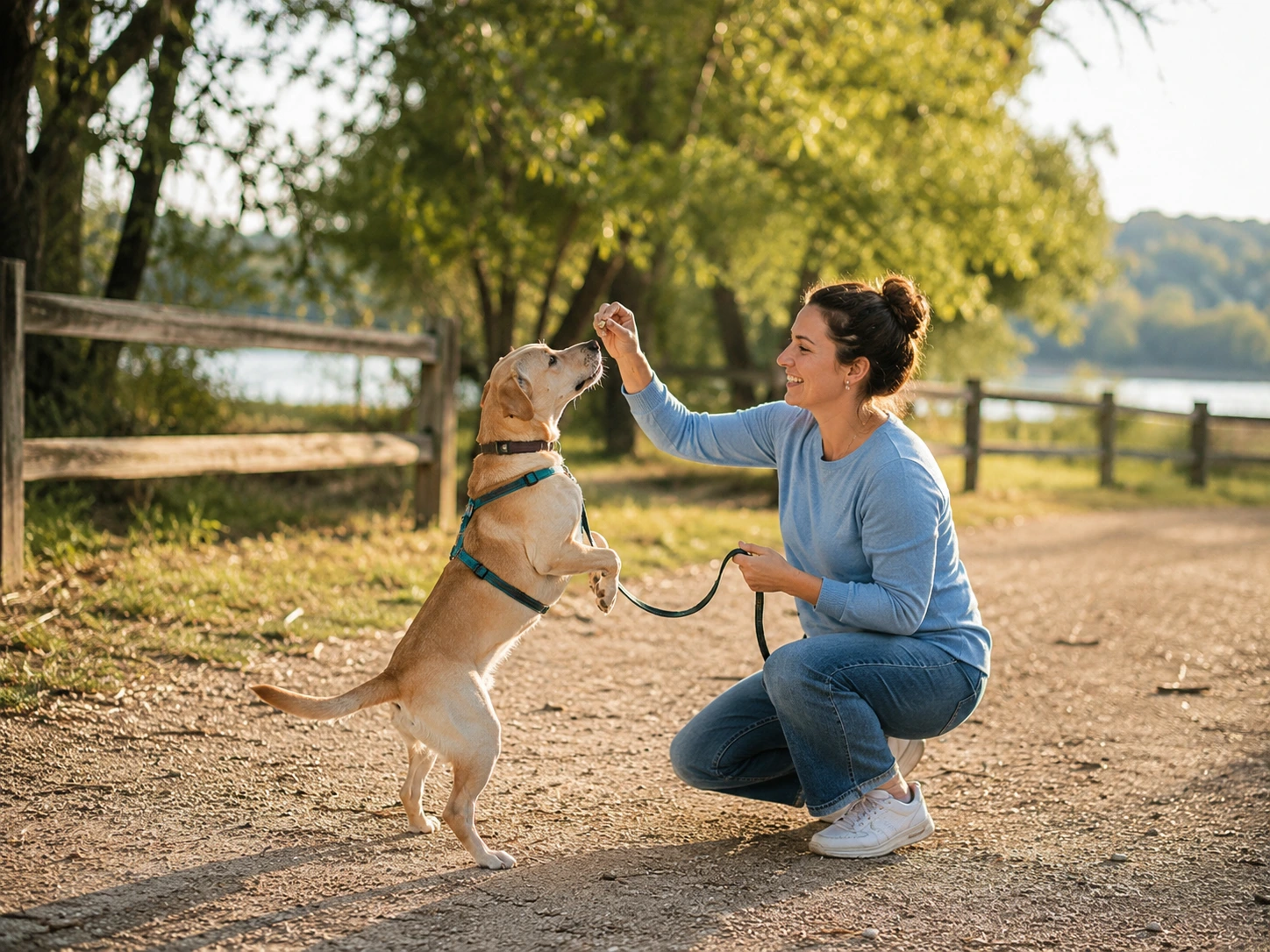
Dog barking can feel hard to live with when neighbors are close, your dog barks through work calls, or your landlord has warned you about noise. In that stress, it is normal to look for fast quiet.
Bark collars, yelling, and harsh “stop it” corrections can backfire because they often target the sound, not the reason your dog is barking. Barking may be linked with fear, boredom, alerting, frustration, needing something, reacting to movement, or distress when alone.
The safer first step is to identify the barking pattern before choosing a response. A calmer plan should reduce triggers, teach your dog what to do instead, and get professional help when barking looks sudden, intense, fear-based, or distress-linked.
Quick Answer: Why Bark Collars and Yelling Can Backfire
Bark collars and yelling can backfire because they may stop noise for a moment without teaching your dog a safer behavior.
If barking comes from fear, stress, frustration, boredom, or alone-time distress, punishment may add pressure without solving the cause.
Dog barking may be linked with:
- fear
- boredom
- alerting
- frustration
- needing something
- reacting to sounds, people, or movement
- distress when alone
A dog barking deterrent should not be treated as the whole plan. Before choosing one, compare when anti-bark devices may help, when they do not, and which safer options make more sense for the actual barking pattern.
Why Dog Barking Punishment Can Backfire
Punishment can backfire when it adds fear, confusion, or stress to an already intense barking moment.
It may also hide the barking without teaching your dog how to settle, move away, or ask in a calmer way.
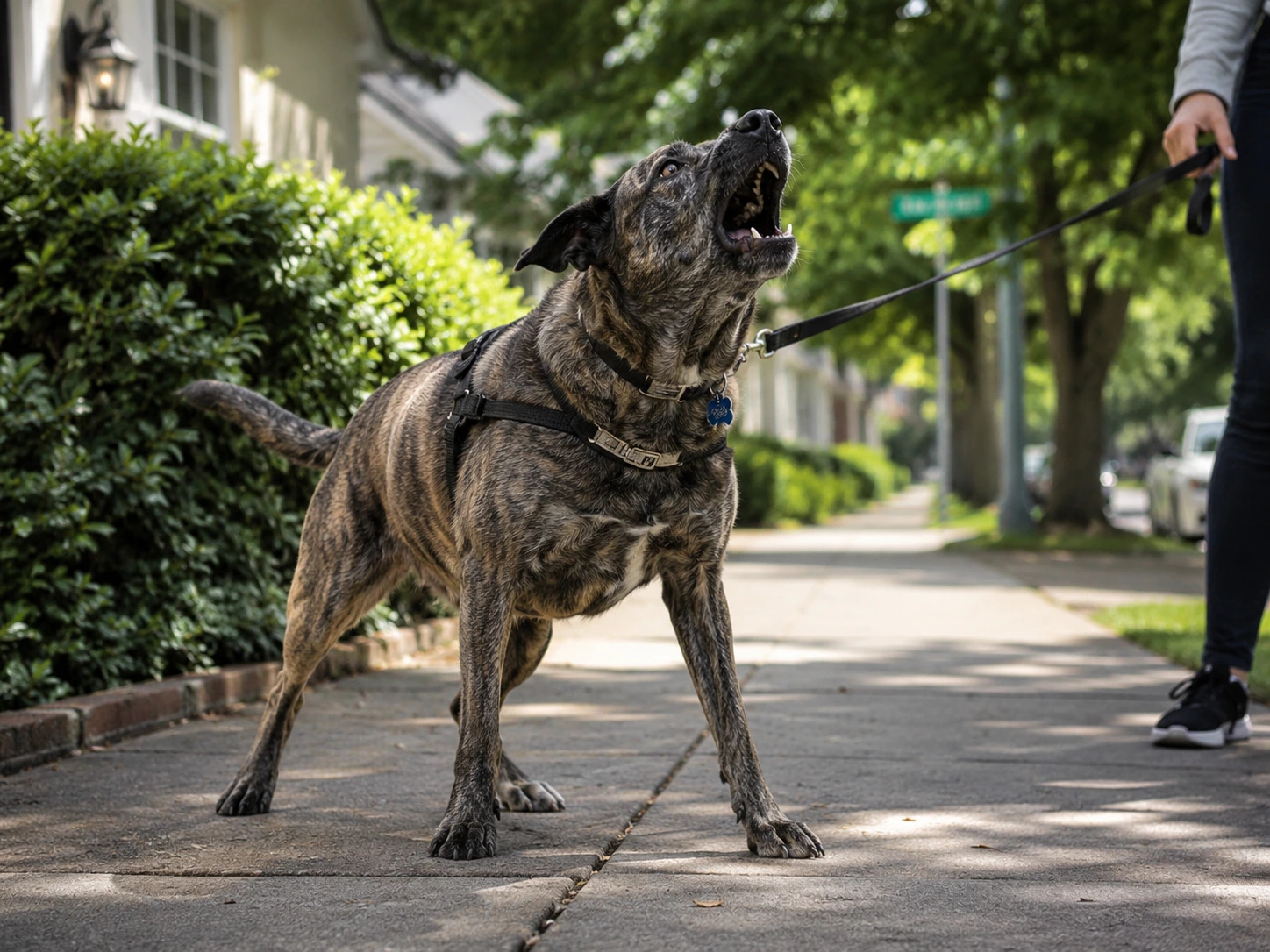
1. Yelling Can Add Noise and Intensity
When a dog barks at the door, window, hallway, fence, or another dog, they may already be excited, worried, frustrated, or on alert.
If you shout “stop it,” “quiet,” or “shut up,” your dog may not understand it as a calm instruction. Your voice may add more noise to an already loud moment.
Your dog may become more excited, confused, worried, focused on the trigger, or likely to bark again next time.
Teaching a calm “quiet” cue during training is different from shouting over barking. If the cue is not trained yet, saying it louder usually does not make it clearer.
2. A Bark Collar May Stop the Sound but Not the Cause
A bark collar may interrupt barking through sound, spray, vibration, or static correction. The problem is that barking is only the visible behavior.
If your dog barks because hallway noise scares them, a collar does not teach them that hallway noise is safe. If your dog struggles when left alone, a collar does not teach them how to settle alone. If your dog is bored, a collar does not add exercise, enrichment, rest, or a better routine.
That is why a bark collar should not be the whole plan. If you have already tried a collar, ultrasonic device, spray tool, or other deterrent without lasting results, see this guide on why anti-bark devices are not working.
3. Some Dogs Learn the Tool, Not the Skill

Some dogs may become quieter only when the tool is present. That does not mean the dog is stubborn or manipulative. It may mean the dog has learned about the tool, not the replacement skill.
They may still not know how to come away from a trigger, settle on a mat, stay quiet before a door opens, relax around hallway sounds, or cope when left alone.
A quieter dog is not always a calmer or better-trained dog. The goal is to teach a safer behavior your dog can use without the tool.
4. Automatic Tools Can Be Hard to Time Correctly
Good training depends on clear timing. Your dog needs to understand which behavior caused which result.
Automatic bark devices can be hard to control in real homes, especially when there are other dogs barking, doors closing, children shouting, neighbors making noise, delivery drivers knocking, cars passing, or people moving near windows.
If a correction happens at the wrong moment, some dogs may connect it with the wrong thing, such as a visitor, another dog, a child, or hallway sounds. That can make the trigger feel more worrying.
5. Small Dogs May Have Extra Fit and Comfort Concerns
Many owners search for the best bark collar for small dogs because small dogs can have sharp, high-pitched barks that are hard to ignore in apartments.
But very small dogs may have extra fit and comfort concerns with collars or deterrent tools, including bulky size, poor fit, rubbing, skin irritation, collar weight, contact points, or a fear response to sound, spray, vibration, or correction.
A product labeled “mini” does not automatically mean it is right for every small dog. Speak with a veterinarian or qualified reward-based trainer before using any correction device on a very small dog.
6. Less Barking Does Not Always Mean a Calmer Dog
Barking is communication. It can be annoying, but it gives information.
If barking is suppressed without addressing fear, frustration, boredom, pain, confusion, or distress, the dog may still feel tense even if they are quieter.
The real goal is not only silence. The goal is a dog who understands what to do instead.
Real-World Scenarios

Scenario 1: Yelling at Door Barking
Your dog barks every time someone knocks. You shout “stop it” from across the room. Your dog barks louder and runs harder toward the door.
This could be alert barking, excitement, fear, or a pattern where loud human reactions increase arousal. A calmer plan is to move your dog away from the door, teach a mat cue, and reward quiet behavior before the barking explodes.
Scenario 2: Bark Collar Works Only When Worn
Your dog is quiet while wearing the collar. When it comes off, they bark again at the window, hallway, or yard.
This may mean the collar is suppressing the sound without teaching a lasting replacement behavior. The missing skill may be “come away,” “go to mat,” “look at me,” “find it,” or calm settling near triggers.
Scenario 3: Small Dog Reacts Badly to a Deterrent
A device marketed for small dogs makes your dog freeze, hide, scratch at the collar, or avoid you.
This could be linked with poor fit, fear, discomfort, or a correction that feels too intense for that dog. Stop using the device and speak with a veterinarian or qualified reward-based trainer.
Scenario 4: Apartment Barking and Neighbor Panic
Your dog barks at hallway sounds in an apartment. You worry about complaints, lease problems, or formal noise reports.
This could be alert barking, sound-triggered barking, alone-time distress, or stress from shared-wall living. White noise, blocked views, changed rest areas, and a predictable routine may reduce noise while you work on training.
Scenario 5: Barking When Left Alone
Your dog barks when left alone. A deterrent reduces the noise for a few days, then barking returns. Your dog also starts scratching doors or chewing items.
Alone-time distress may be one possible cause. Barking alone does not prove separation anxiety, but alone-time barking with pacing, drooling, scratching, destruction, or panic-like signs deserves help from a veterinarian or qualified behavior professional.
Step-by-Step Solutions for Dog Barking Without Punishment
To reduce barking without punishment, identify the pattern, reduce the trigger, teach a replacement behavior, and reward the quiet behavior you want.
Start before the barking is at full intensity whenever possible.

1. Identify the Bark Type Before You Correct It
Work out what your dog’s barking may be trying to achieve. Write down what happens before the barking.
Ask:
- Is my dog barking at a sound?
- Is my dog barking at me?
- Is my dog barking when alone?
- Is my dog barking in the crate?
- Is my dog barking at visitors?
- Is my dog barking out the window?
- Is my dog barking after missing exercise, sleep, or enrichment?
| Barking Pattern | Possible Meaning |
|---|---|
| Barking at door, window, hallway, or fence | Alert or alarm barking |
| Barking at owner for food, play, or access | Demand barking |
| Barking when left alone | Alone-time distress may be one possible cause |
| Barking in crate at night | Potty need, fear, routine issue, or learned pattern |
| Barking at visitors | Fear, excitement, guarding, or lack of calm greeting skills |
| Barking after long boredom | Under-stimulation or frustration |
Use this before buying any dog barking deterrent or using corrections. The wrong response may make the pattern harder to change.
2. Replace Yelling With a Calm Interrupt-and-Redirect Plan
Stop adding noise to noise. Use a calm cue and move your dog away from the trigger.
- Say one calm phrase, such as “this way.”
- Move away from the window, door, hallway, or fence.
- Guide your dog to a mat, bed, or quiet area.
- Reward when they follow, pause, or look back at you.
- Keep your voice low and boring.
Do not repeat “quiet” over and over while your dog is already barking hard. If the cue is not trained yet, saying it louder is unlikely to help.
3. Block the Trigger Before Training
Reduce the thing your dog keeps reacting to.
For window barking, close curtains, use privacy film, move furniture away from the window, or give your dog a different resting spot.
For apartment hallway barking, use white noise, move the bed away from the front door, add a draft blocker if hallway sound leaks in, and give enrichment before busy building times.
For yard or fence barking, bring your dog in before peak trigger times, use a long line if needed, reward check-ins away from the fence, and avoid leaving your dog outside to practice barking for long periods.
4. Teach a Replacement Behavior
Show your dog what to do instead of barking.
Pick one simple behavior: go to mat, touch hand, look at me, sit, find it, or come away.
For door barking, practice “mat” when there is no visitor first. Add easy door sounds later and reward calm behavior before your dog explodes into barking.
For hallway barking, play a low-level hallway sound, say “find it,” scatter a few treats away from the door, and slowly build difficulty.
5. Handle Demand Barking Without Rewarding It
After checking safety, potty needs, fear, distress, and health concerns, avoid giving the wanted thing during likely demand barking.
If your dog barks for food, play, doors, toys, or attention, stay quiet, wait for a short pause, ask for a simple behavior like “sit,” reward the calm behavior, then give access after quiet.
Do not use this if your dog may need to potty, seems panicked, is frightened, or is acting unwell.
6. Create a Quick Plan for Work-From-Home Barking
Prepare before meetings instead of reacting during them.
Ten minutes before a call, take your dog for a potty break, give a short walk if possible, set up a safe chew or food puzzle, use a quieter room, turn on white noise, and close curtains if window barking is a trigger.
This is not a full behavior plan, but it can reduce crisis barking while you work on the root cause.
7. Address Barking When Left Alone Carefully
Treat alone-time barking as a possible distress signal, not just noise.
Look for whether barking starts soon after you leave, whether your dog also paces, scratches, chews, drools, or panics, whether barking happens only when alone, and whether it gets worse over time.
If yes, avoid relying only on punishment or deterrents. Consider a vet check and help from a qualified trainer or behavior professional.
8. If You Are Under Housing Pressure, Use Management First
Reduce noise risk while you build a training plan.
Move your dog away from shared walls, use white noise near the door, block window views, avoid leaving your dog alone during peak barking times if possible, use enrichment before known trigger periods, and keep a written log of what you are doing.
Management is not failure. It is often the first layer of solving barking safely.
Simple 7-Day Barking Reset Plan
Day 1: Track Three Barking Episodes
Write down what happened before, what your dog barked at, what your dog’s body looked like, what you did, and what happened after. Do not fix everything today.
Day 2: Remove One Trigger
Close curtains, use white noise, move the bed away from the door, block window access, or bring your dog inside before fence barking starts.
Day 3: Stop Yelling
Choose one calm phrase, such as “this way,” “come away,” “let’s go,” or “mat.” Use a low voice. Say it once. Move your dog away from the trigger.
Day 4: Teach One Replacement Behavior
Pick one behavior such as mat, touch, find it, sit, or come away. Practice when your dog is calm, not when they are already barking hard.
Day 5: Reward Quiet Before Barking Starts
Reward quiet sitting, quiet lying down, looking at you after a sound, coming away from a window, resting before a meeting, or waiting quietly before a door opens.
Day 6: Handle Likely Demand Barking With a Clear Rule
If your dog is safe and barking for something clear, wait for a quiet pause, ask for a simple cue, reward the calm behavior, then give access after quiet.
Day 7: Review and Decide Whether You Need Help
Look at your notes. Get help if barking is sudden, getting worse, fear-linked, alone-time related, causing neighbor or lease pressure, or making you feel out of options.
What Not to Do
Do Not Assume Barking Is Defiance
Dogs are usually not barking to upset you on purpose. Barking is often linked with emotion, habit, environment, frustration, fear, alerting, unmet needs, or alone-time distress.
Do Not Keep Shouting “Quiet” If It Is Not Working
If you say “quiet” and your dog keeps barking, the cue is not trained yet. Train quiet moments first, then use the cue during easier barking moments.
Do Not Use a Bark Collar on a Puppy Without Professional Guidance
Puppies are still learning safety, sleep, alone time, and household routines. If puppy barking is intense, worsening, or linked with crate panic, speak with a veterinarian or qualified reward-based trainer.
Do Not Ignore Physical Fit on Small Dogs
For toy breeds and very small dogs, collar weight, width, contact points, and vibration strength may matter. A tool sold as the best bark collar for small dogs does not prove it is right for your dog.
Do Not Use a Deterrent as the Whole Plan
A deterrent may interrupt barking, but it does not teach your dog what to do instead.
A safer plan should include trigger control, calm routines, replacement behaviors, rewarding quiet, meeting real needs, and professional help when needed. If you are ready to replace a collar or correction device, compare the best humane bark-collar alternatives by trigger and setup rather than buying another generic deterrent.
Do Not Punish Fear Barking
If your dog is barking because they are scared, punishment may increase stress and make the problem harder to change.
Watch for hiding, trembling, tucked tail, wide eyes, pacing, heavy panting, trying to escape, refusing food, or sudden shutdown. If you see these signs often, get qualified help.
When to Contact a Vet or Qualified Trainer
Contact a veterinarian if barking changes suddenly, gets worse quickly, happens with pain signs, confusion, appetite changes, disorientation, restlessness, sleep changes, new house accidents, or appears in an older dog.
Contact a qualified reward-based trainer or behavior professional if barking feels unsafe, unmanageable, fear-based, alone-time related, or tied to housing pressure.
A useful professional plan should help you understand why the barking happens and what your dog should do instead.
Quick Summary
Bark collars, yelling, and “stop it” corrections can backfire because they often target the sound, not the reason behind the sound.
Dog barking may be linked with alerting, fear, boredom, demand behavior, distress when alone, or environmental triggers.
Before using a dog barking deterrent, identify the bark type, reduce triggers, stop yelling, teach a replacement behavior, reward quiet before barking starts, manage apartment noise pressure, be careful with small dogs and collar fit, and get vet or trainer help when barking changes suddenly or feels intense.
The goal is not just a quieter dog. The goal is a dog who understands what to do instead.
FAQs
Is a bark collar the best way to stop dog barking?
Not usually as a first step. A bark collar may interrupt noise, but it does not fix the reason your dog is barking. Start by identifying the trigger, reducing barking practice, and teaching a replacement behavior.
Why does yelling make my dog bark more?
Yelling can raise the intensity of the moment. Your dog may become more excited, confused, or worried. A calm redirect is usually safer than shouting.
Are bark collars safe for small dogs?
Very small dogs may have extra fit and comfort concerns. A collar may be too bulky, too strong, or irritating. Some small dogs may also become frightened by sound, spray, vibration, or correction.
What can I use instead of a dog barking deterrent?
Use trigger blocking, white noise, calm routines, enrichment, reward-based training, and replacement cues like “mat,” “touch,” “find it,” or “come away.”
Why does my dog stop barking with the collar but bark when it comes off?
Your dog may have learned not to bark while wearing the device, but not learned a lasting calm behavior without it. This means the collar changed the moment, but not the underlying skill.
Should I punish my dog for barking at neighbors?
No. First identify why your dog is barking. Neighbor barking may be alert barking, fear, excitement, frustration, or sound sensitivity. Use management first: block views, reduce sound, move your dog away from shared walls, and reward calm behavior.
When should I get professional help for barking?
Get help if barking is sudden, intense, worsening, linked with fear, happens when your dog is alone, causes housing pressure, or makes you feel angry or out of control.
- SPCA New Zealand — Excessive Barking in Dogs
- SPCA New Zealand — Training Methods and Devices
- New Zealand Veterinary Association — Behavior Modifying Collar Use on Dogs
- ASPCA — Barking
- ASPCA — Separation Anxiety
- VCA Hospitals — Tips to Quiet Barking
- VCA Hospitals — Barking in Dogs
- VCA Hospitals — Signs Your Dog Is Stressed and How to Relieve It
- Cornell Riney Canine Health Center — Cognitive Dysfunction Syndrome
 ✓
✓