


Dog barking can feel much bigger than “just noise.” When you are tired, working from home, worried about neighbors, or dealing with puppy barking in a crate at night, repeated barking can make your home feel tense.
Dog barking feels overwhelming because it can affect your sleep, focus, home routine, neighbor stress, and confidence as a pet parent. You may feel guilty, angry, sad, trapped, embarrassed, or unsure what to do next.
That does not mean you are a bad dog owner. It means the barking has become stressful and hard to understand. The safest first step is to separate real needs from learned barking patterns, then use a calm plan instead of reacting in the moment.
Quick Answer: Why Barking Feels So Overwhelming
Dog barking feels overwhelming because it can overload your senses, interrupt sleep or work, create neighbor pressure, and make you second-guess every response.
The goal is not to “win” against your dog. The goal is to understand what the barking may be doing, protect your own calm, and avoid rewarding barking by accident.
Common reasons dog owners feel worn down include:
- Sensory overload: repeated barking feels sharp, loud, and hard to escape.
- Puppy blues: you may feel regret, guilt, anxiety, sadness, or frustration.
- Crate barking confusion: you do not know whether to comfort, wait, check, or ignore.
- Demand barking: your dog barks for food, play, attention, toys, doors, or access.
- Neighbor pressure: apartments, rentals, or thin walls make barking feel urgent.
- Regression: barking returns after weeks or months of progress.
Why Dog Barking Can Feel So Overwhelming
Barking can feel overwhelming because it affects both your dog’s behavior plan and your own nervous system.
It is harder to make calm choices when you are tired, worried about complaints, or unsure whether your dog needs help.

Dogs bark for many reasons, including excitement, frustration, boredom, fear, distress, or wanting something. Barking is normal dog communication, but frequent or intense barking should be understood and managed humanely.
For the owner, the hardest part is often the pressure: “What if this never stops?” “What if the neighbors complain?” “What if I respond the wrong way?”
Barking Can Create Sensory Overload
One bark may be easy to handle. Repeated barking is different.
It can feel worse when:
- your puppy barks in the crate while you are trying to sleep
- your dog demand barks while you eat or work
- your dog barks at hallway sounds in an apartment
- your dog barks at night and you worry about neighbors
- your dog was quiet for months, then starts barking again
Some owners feel like they are always “on alert” in their own home. That does not mean you hate your dog. It means the situation is hard.
Puppy Blues Can Make Barking Feel Personal
Some puppy owners experience what is often called puppy blues. This can include stress, worry, anxiety, strain, frustration, weariness, or regret.
Barking can make puppy blues feel worse because it may seem like proof that something is wrong.
Common thoughts include:
- “I’ve ruined the training.”
- “My dog will never settle.”
- “I should not have got a puppy.”
- “Everyone else seems to manage this.”
- “I’m a bad owner.”
These thoughts often show up when you are tired and overstimulated. They are not proof that you failed.
Puppy Barking in Crate: Why It Feels So Hard

Puppy barking in a crate can feel stressful because two concerns clash: you do not want to leave your puppy in distress, but you also do not want barking to become the way your puppy gets attention.
Crate barking may be linked with:
- needing a potty break
- fear or distress
- being overtired
- wanting attention
- not being crate-ready yet
- hearing movement in the home
- a bedtime routine that changed too fast
If your puppy wakes and vocalizes, first consider whether they may need to eliminate. Keep the potty break calm and boring, then return them to rest.
Crate barking does not mean your puppy is bad, stubborn, or manipulative. It may be a real need, distress, confusion, or a learned pattern.
Demand Barking Can Make Owners Feel Controlled

Demand barking happens when a dog barks to get something, such as food, play, attention, a toy, a door opening, yard access, sofa access, the crate opening, or you looking at them.
Demand barking can feel personal because the dog is barking directly at you. That does not mean you should ignore every bark. First check for potty needs, fear, distress, pain, illness, and safety.
If needs are met and the barking is likely attention-based, use a calm rule: wait for a brief quiet pause, ask for a simple behavior, then reward the calmer action.
Neighbor Pressure Makes Barking Feel Urgent
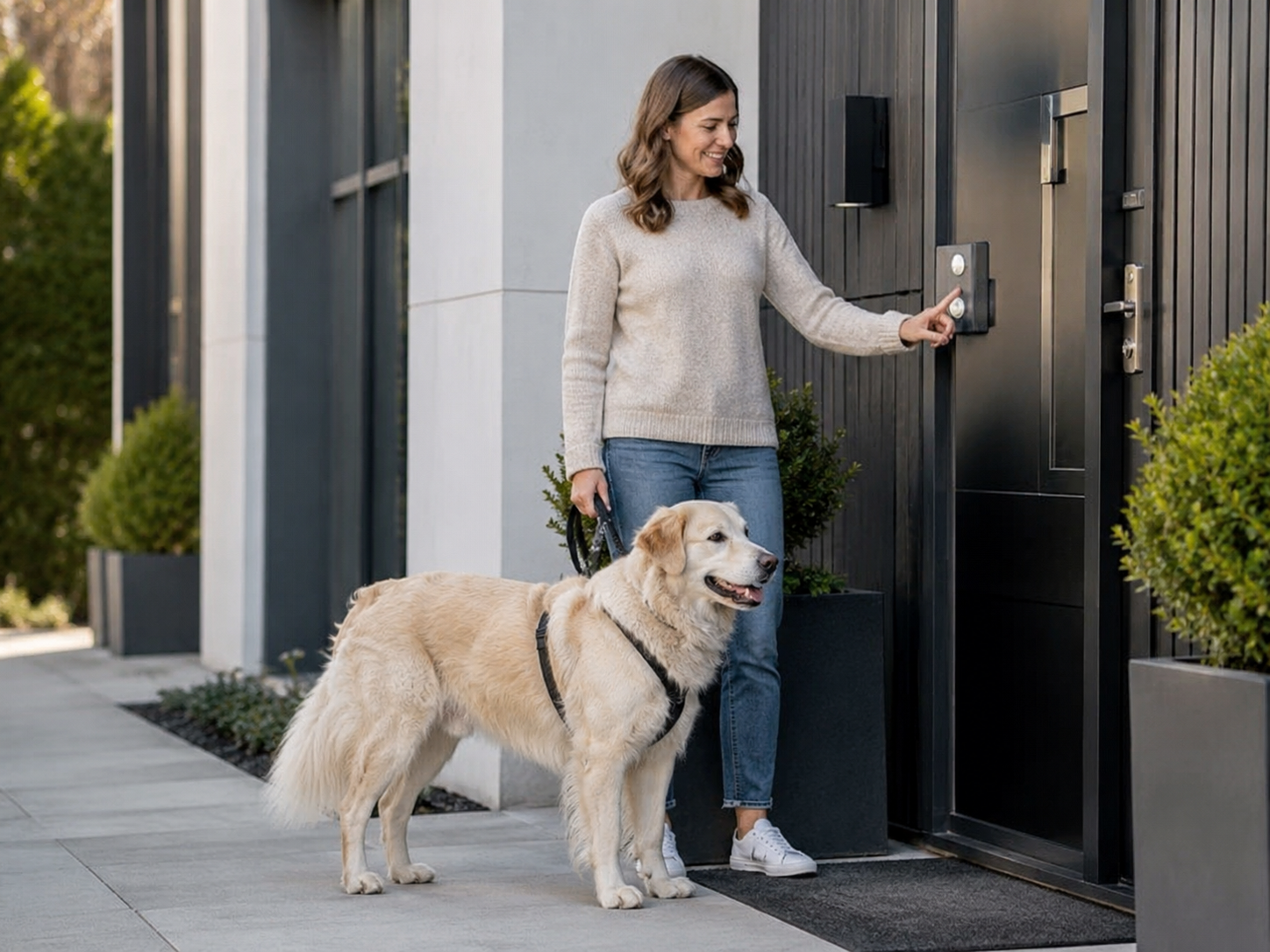
Dog barking feels worse when other people may hear it. This is common in apartments, condos, townhomes, shared buildings, rentals, and homes with thin walls.
Even without a complaint, you may start listening for footsteps, doors, ceiling noise, or neighbor reactions. The barking no longer feels like only a training issue. It can feel like a housing problem.
If barking is mainly aimed at people next door, hallway noise, shared walls, or movement outside, reduce the trigger first. Move your dog’s resting area away from the door, use white noise, and prevent long window-watching sessions.
Barking Regression Can Feel Like Failure
Barking can return after a quiet period. This may happen after a routine change, less sleep, less exercise, new neighbors, a new dog nearby, visitors, a move, a stressful event, or a change in work schedule.
This does not mean all progress is gone. It means the barking pattern needs a fresh look.
Real-World Scenarios
Scenario 1: Puppy Barking in the Crate at Night
You put your puppy in the crate at bedtime. The puppy barks, pauses, then barks again.
This could be linked with a real need, distress, overtiredness, or a crate routine that needs to be easier. Start with a calm potty check, then review whether the crate routine moved too fast.
Scenario 2: Demand Barking During Work
You sit down for a video call. Your dog barks, brings a toy, barks again, then gets louder.
This could be demand barking, under-stimulation, poor timing, or a learned pattern. Often, the better solution starts before the call with a potty break, short sniff time, and a safe chew or food toy.
Scenario 3: Barking in an Apartment
Your dog barks at hallway sounds, doors, footsteps, elevators, delivery drivers, or other dogs.
Move your dog’s resting area away from the door, use background sound, and reward calm moments before barking starts.
Scenario 4: Barking Comes Back After Progress
Your dog was calmer for weeks or months. Then barking starts again.
Maybe your routine changed, a new trigger appeared, your dog has been sleeping less, or barking worked in one specific situation. Track the pattern again before assuming training failed.
Step-by-Step Solutions for Dog Barking Overwhelm
When barking overwhelms you, use a simple order: check real needs, track the pattern, reduce triggers, reward quiet, and protect your own calm.
Do not try to solve every barking problem in one day.
1. Separate Real Needs From Demand Barking
Before treating barking as demand barking, ask:
- Has your dog recently gone potty?
- Has your dog eaten and had water?
- Could your dog be in pain, confused, or unwell?
- Is your dog tired but unable to settle?
- Is your dog barking at a clear trigger?
- Does barking happen mainly when your dog wants attention?
Use this when barking feels confusing, especially with crate barking, night barking, sudden barking, or barking after a quiet period.
2. Make a Barking Pattern Log for 3 Days
Track the barking instead of guessing. Write down the time, location, what happened before, your dog’s body language, what you did, and what happened after.
| Time | Trigger | Bark Type Guess | Your Response | Result |
|---|---|---|---|---|
| 2am | Puppy in crate | Possible potty need or crate distress | Quiet potty trip | Settled after |
| 9am | Owner starts work | Possible demand barking | Enrichment before call | Less barking |
| 6pm | Hallway noise | Alert barking | Closed curtain, white noise | Shorter barking |
3. Build a “Before Barking” Routine
Set your dog up before the usual barking window starts.
Before work calls, try a potty break, short sniff walk, calm chew, stuffed food toy, prepared rest spot, closed curtains, or white noise.
Before bedtime crate barking, try a potty trip, calm settling routine, dim lights, low talking, the same sleep spot, no exciting play before crate time, and easier crate sessions if the current routine is too hard.
4. Reward Quiet Moments Before Barking Starts
Teach your dog that quiet behavior works. Reward quiet sitting, quiet lying down, calm crate moments, looking at you quietly, waiting quietly before access, or hearing a sound without barking.
Use this daily during calm moments. Do not wait until your dog is already barking hard.
5. Handle Demand Barking With a Clear Rule
When you are confident it is attention-based barking and your dog is safe, avoid giving the wanted thing during active barking.
Wait for a brief pause, ask for a simple behavior such as “sit” or “touch,” then reward the calm behavior and give access after quiet.
Do not use this approach if your dog seems panicked, unwell, in pain, frightened, or in real distress.
6. Reduce Apartment and Shared-Wall Barking Triggers
Lower the amount of sound and movement your dog can react to.
Try closing curtains, using window film, moving the dog’s bed away from the front door or window, using white noise, giving enrichment before busy building times, teaching a mat cue, and blocking window access during high-trigger periods.
7. Protect Your Own Calm
Create a safe owner reset plan. Use earplugs or noise-reducing headphones when safe, step into another room for 60 seconds if your dog is secure, breathe slowly before responding, keep a written plan near the crate or door, and ask another adult to take over when possible.
Taking a short reset is not failure. It can help you respond more safely and calmly.
Simple 7-Day Dog Barking Overwhelm Plan
Day 1: Track the Barking
Write down when barking happens, what happens before it, and what your dog gets after it. Do not fix everything today.
Day 2: Check Real Needs First
Check potty needs, food, water, sleep, pain signs, fear, distress, and sudden behavior changes.
Day 3: Add One “Before Barking” Routine
Pick the worst barking window and add one routine before it starts.
Day 4: Reward Quiet Moments
Reward quiet sitting, calm crate moments, looking at you quietly, or waiting quietly before access.
Day 5: Reduce One Trigger
Close curtains, add white noise, move the bed away from the door, block window access, or use a calm chew before busy hallway times.
Day 6: Use a Clear Rule for Likely Demand Barking
If your dog is safe and barking is likely demand barking, wait for quiet, ask for a simple behavior, then reward the calm behavior.
Day 7: Review the Pattern
Ask whether barking is linked with a time, trigger, attention, tiredness, being alone, sudden change, or a need for vet or trainer help.
What Not to Do
Do Not Assume Barking Means You Are a Bad Owner
Barking is information. It does not prove you failed. Start with the pattern, not self-blame.
Do Not Punish Fearful or Distressed Barking
If your dog is barking because they are scared or distressed, punishment may increase fear or stress. For a deeper guide, read this article on bark collars and yelling for dog barking.
Watch for trembling, hiding, pacing, wide eyes, tucked tail, heavy panting, trying to escape, freezing, or being unable to take food. If you see these signs, focus on safety, distance from the trigger, and professional help.
Do Not Reward Demand Barking by Accident
If your dog is safe and the barking is likely demand barking, avoid giving the wanted thing while the dog is actively barking. Wait for a quiet pause, ask for a simple behavior, then reward that behavior.
Do Not Compare Your Dog to Social Media Dogs
Online clips rarely show 2am barking, crying owners, crate setbacks, neighbor stress, training mistakes, or barking that returns after progress.
Do Not Use Quick Fixes Without Understanding the Cause
Punishment-based tools may suppress barking without solving the reason behind it, especially when barking may be linked with fear, distress, pain, confusion, separation-related stress, or senior dog changes.
When to Contact a Vet or Qualified Trainer
Contact a veterinarian if barking starts suddenly, gets worse quickly, appears mostly at night, or comes with pain signs, confusion, appetite changes, sleep changes, accidents, disorientation, pacing, restlessness, or senior dog behavior changes.
Contact a qualified reward-based trainer or behavior professional if barking is intense, worsening, linked with being alone, causing housing stress, or making you feel stuck.
A good plan should explain what to do before, during, and after barking. It should not only tell you to “ignore it” or “correct it” without understanding the cause.
Quick Summary
Dog barking feels overwhelming because it can affect your sleep, focus, home, neighbors, and confidence.
Puppy blues, demand barking, puppy barking in a crate, neighbor pressure, and barking setbacks can all make the problem feel bigger.
Start by asking whether the barking is a real need, attention-seeking, fear or distress, sound-triggered, routine-based, sudden, or linked with your dog acting unwell.
Then use a clear plan: track the pattern, meet real needs calmly, reward quiet moments, avoid rewarding likely demand barking, reduce triggers, protect your own calm, and get vet or trainer help when needed.
FAQs
Is it normal to regret getting a puppy because of barking?
Some new puppy owners feel regret, guilt, sadness, anxiety, frustration, or overwhelm during the puppy stage. That does not mean you do not care about your puppy. It may mean you need rest, support, and a clearer plan.
Should I ignore puppy barking in the crate?
Not always. First check for real needs such as potty, fear, discomfort, or sudden distress. If your puppy is safe and the barking is likely attention-based, wait for a brief quiet pause before giving attention or opening the crate.
How do I know if it is demand barking?
Demand barking is usually aimed at you and often happens when your dog wants something, such as food, play, attention, a toy, or a door opened. It often reduces when the dog gets what they wanted.
Why did my dog start barking again after months of progress?
Barking can return after routine changes, new triggers, stress, boredom, poor sleep, or learned habits. Track what changed. If barking starts suddenly, gets worse, or comes with health or behavior changes, contact a veterinarian.
Can barking cause owner burnout?
Constant barking can leave some owners feeling worn down, especially when it affects sleep, work, neighbors, or normal home life. Use management, take safe breaks, reduce triggers, and consider help from a veterinarian or qualified reward-based trainer.
What should I do first if barking is making me panic?
Start with one small step. Write down when the barking happened, what happened before it, what your dog did, what you did, and what happened after. A pattern log can turn panic into information.
- RSPCA — Barking dogs: what can I do?
- ASPCA — Barking
- VCA Hospitals — Crate Training Your Dog: An Overview
- VCA Hospitals — Signs Your Dog Is Stressed and How to Relieve It
- SPCA New Zealand — Excessive Barking in Dogs
- Cornell Riney Canine Health Center — Cognitive Dysfunction Syndrome
- IAABC — Credentials
- Ståhl et al., 2024 — Development and Validation of the Puppy Blues Scale
 ✓
✓