

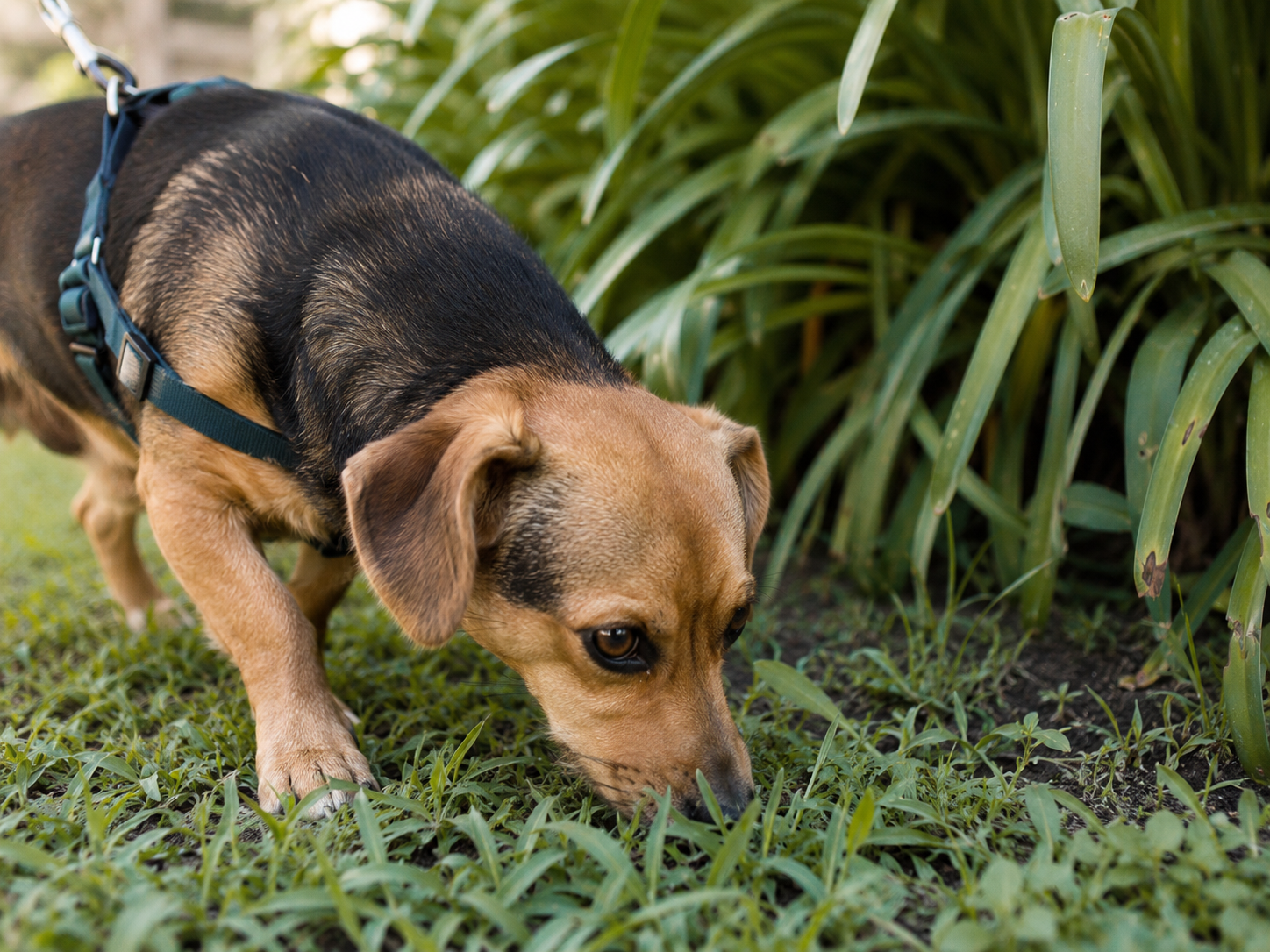
How soon can you leave a newly adopted rescue dog alone?
Some dogs can begin with a few seconds or minutes of monitored separation on the first day, while others need more time. Do not make several hours alone the first test. Once your dog’s basic needs are met and the dog is showing some ability to settle, try a deliberately easy departure and watch the response on camera. If you are new to monitoring absences, the pet-camera guide for separation anxiety explains what to watch for. There is no evidence-based rule requiring every newly adopted dog to wait exactly three days, one week or three weeks before being left alone. Increase alone time according to the individual dog’s response rather than a fixed calendar. [3] [5]
How can you tell if your rescue dog is ready for a short test?
Look for some ability to settle rather than perfect behavior. A dog that can rest and recover after normal household activity may be ready for a short monitored test. If your dog is already pacing, panting, trembling or unable to settle while you are still home, make the first separation easier. If you are unsure which behaviors matter most, compare them with the common symptoms of dog separation anxiety.
| What you see | What it may mean | What to do |
|---|---|---|
| Dog can rest or nap away from you | Encouraging | Try a brief monitored separation. |
| Dog follows you but eventually settles | Test carefully | Try a short out-of-sight period inside the home first. |
| Dog notices keys, shoes or the door but settles again | Possible departure sensitivity | Keep the first real departure easy and monitor it. |
| Dog immediately paces, pants, cries or scratches the exit | Current step may be too difficult | Shorten the next attempt. |
| Dog makes frantic escape attempts or injures itself | Safety concern | Stop testing and contact a veterinarian. |
Exactly how should you test alone time today?
Start with an absence short enough that your dog is likely to remain relaxed. Both ASPCA and VCA describe gradual departures that begin below the dog’s distress threshold. [4] [5]
- Meet basic needs first. Give your dog an opportunity to toilet, drink and settle before the test.
- Make the area safe. Secure exterior doors and accessible windows and remove obvious hazards such as trash, reachable food, loose cords and unsafe objects.
- Use the safest familiar setup. Depending on the dog, this may be a crate, gated area, dog-proofed room or limited free roam.
- Turn on a camera. Video can reveal pacing, trembling, whining and other behavior that you cannot observe after leaving. [3]
- Leave briefly. The appropriate starting duration depends on the dog. For some dogs, the first successful test may be only seconds. [5]
- Review what actually happened. Look at whether the dog settled, remained focused on the exit or showed escalating distress before increasing the next absence.
What order should you use to increase alone time?
Move from easier separations to harder ones instead of jumping directly from an indoor exercise to a long errand. The sequence below is an example, not a fixed timetable.
- Move briefly out of sight inside the home.
- Open and close the exit door without leaving.
- Step outside briefly and return.
- Walk toward the hallway, stairs, elevator, mailbox or driveway.
- Try a short real-world trip after the easier steps remain calm.
- Increase gradually according to the dog’s response.
If distress appears, return to an easier duration rather than repeatedly extending the same difficult absence. [4] [5]
What should you do if you have an 8–9 hour workday tomorrow?
Do not make an 8–9 hour workday your dog’s first alone-time test. If your dog has only demonstrated comfort with a short absence, use temporary help for the portion of the day the dog cannot yet manage. For a fuller plan, see working full time with a dog who has separation anxiety.
What could tomorrow’s workday plan look like?
- Before work: follow the dog’s normal toilet, feeding and activity routine.
- At departure: use the safe setup you already tested rather than introducing a completely new confinement setup that morning.
- During the day: consider a trusted family member, sitter or appropriately introduced dog walker if the required absence exceeds the dog’s current ability.
- Monitor: use camera footage to see whether the plan is actually working.
- After work: return to the dog’s normal toilet, activity and rest routine.
ASPCA lists options such as family, friends, pet sitters and suitable daycare as temporary management for dogs that cannot currently tolerate necessary absences. [4]
Do puppies, adult dogs and senior rescue dogs need the same plan?
No. Age, health, house-training history and previous routine affect practical alone-time planning. Puppies may need more frequent management, while sudden anxiety or other behavior changes in an older dog can also have medical or age-related contributors. [3] [7]
| Dog | What deserves extra attention |
|---|---|
| Puppy | Toileting, house training, chewing safety and shorter management intervals. |
| Adult rescue | Unknown prior routine, confinement history, house training and previous alone-time behavior. |
| Senior dog | Health, mobility, sensory changes, toileting and sudden changes in behavior. |
| Dog with a medical condition | Follow individualized veterinary instructions instead of a generic schedule. |
What should you ask the shelter or foster before leaving your dog?
Previous behavior cannot guarantee what your dog will do in a new home, but available history can help you choose a safer starting setup.
- Was the dog previously left alone?
- Did the dog bark, howl or pace?
- Was the dog comfortable in a crate?
- Were there previous escape attempts?
- What was the dog’s house-training history?
- Did the dog use a sitter or walker?
- Did the dog previously live with another dog or cat?
- What feeding, walking and sleeping routine was used?
Can you leave a new rescue dog alone with your other pets?
Do not treat a successful introduction as automatic proof that the animals should immediately be left together without supervision. If their relationship is still new or uncertain, manage the pets separately during absences until you have more supervised experience with them.
Should you use a crate, room, gate or free roam?
Use the setup where your dog can remain physically safe without showing escalating distress. ASPCA notes that crates help some dogs but can add stress for others. [4] For side-by-side setup guidance, see crate training vs free roam.
| Setup | May be reasonable when… | Reconsider when… |
|---|---|---|
| Crate | Dog voluntarily rests there and remains relaxed. | Dog pants heavily, drools, bites bars or tries to escape. |
| Dog-proofed room | Dog settles better with more space. | Dog repeatedly attacks doors, windows or trim. |
| Baby-gated area | Dog remains calm behind the barrier. | The barrier triggers jumping or frantic escape behavior. |
| Limited free roam | You already have enough supervised history to judge the dog’s behavior in that area. | Chewing, house training, escape behavior or resident-pet interactions are still uncertain. |
How can you tell the absence was too long?
Persistent barking, pacing, panting, drooling, exit scratching or frantic escape attempts can indicate that the absence exceeded your dog’s current tolerance. [4]
- ongoing whining, barking or howling
- continuous pacing instead of settling
- panting not explained by heat or recent activity
- heavy drooling
- scratching or biting at exits and barriers
- frantic escape attempts
- exit-focused destruction
- urination or defecation associated with the absence
- food refusal along with other distress signs
These signs do not automatically prove separation anxiety. Barking, destruction and house-soiling can have other explanations, so the timing and full behavior pattern matter. If the dog settles with another person present but not when completely alone, read separation anxiety vs isolation distress. [4]
What should apartment or condo owners watch for?
Use video with audio early so you can identify repeated barking, howling or pacing before the problem is discovered through a neighbor complaint. Also check whether hallway traffic, doors or outside sounds trigger barking, because barking during an absence is not automatically separation anxiety.
Should you leave a KONG, chew or food toy?
A familiar food toy may be useful if you already know your dog uses it safely. Eating, however, does not prove that the dog will remain comfortable throughout the absence, and ASPCA notes that highly anxious dogs may refuse food while their guardian is away. [4]
As a practical safety step, supervise unfamiliar chews or toys before deciding whether to leave them with a newly adopted dog when nobody is home.
Should you let your rescue dog “cry it out”?
No. If distress is escalating, extending the absence is not the same as gradual alone-time training. RSPCA and ASPCA guidance supports building duration without repeatedly pushing the dog into significant distress. [3] [4]
AVSAB recommends reward-based methods for dog training and behavior modification rather than aversive methods. [6]
When should you call a veterinarian instead of continuing alone?
Contact your veterinarian when the behavior is severe, begins suddenly, causes injury or may overlap with a medical problem. Veterinary help is also appropriate when your dog cannot tolerate even very short separations despite careful management.
- broken teeth, nails, wounds or bleeding from escape attempts
- panic during extremely short departures
- heavy drooling, trembling or sustained pacing
- sudden new house-soiling
- pain, appetite changes or other physical symptoms
- rapidly worsening behavior
- sudden behavior changes in a senior dog
A veterinarian can evaluate medical contributors and discuss whether additional behavior support is appropriate. If escape attempts or self-injury are present, review the signs of severe separation anxiety. [5] [7]
What does research show about newly adopted dogs being left alone?
In a prospective post-adoption study, separation-related behaviors were reported among dogs that had actually been left alone at each survey point. Reports were 37.3% at two days, 19.0% at two weeks and 15.0% at four months. [2]
These numbers are not clinical separation-anxiety diagnosis rates. They describe owner-reported separation-related behaviors in the study population.
Source: prospective canine post-adoption cohort study. Percentages were calculated only among dogs reported to have been left alone at the relevant survey point. [2]
Frequently Asked Questions
Can I leave my rescue dog alone on the first day?
Do I have to stay home with my rescue dog for three days?
No. The popular 3-3-3 framework describes general adjustment expectations rather than a fixed waiting period before the first separation. [1]
How long should I leave my rescue dog alone the first time?
There is no single correct duration. Start with an absence short enough that your dog is likely to remain calm and increase only after successful easier attempts. [5]
What should I do if I work 8–9 hours?
Do not make the full workday the first test. If your dog cannot yet handle the required absence, use temporary help such as a trusted family member, sitter or appropriately introduced walker. [4]
Should I crate my newly adopted dog when I leave?
Only if the dog is comfortable there. Heavy panting, drooling, persistent vocalizing or frantic escape attempts are reasons to reconsider that setup. If the crate itself appears to increase panic, see when crating a dog with separation anxiety can be unsafe. [4]
How do I know if my rescue dog has separation anxiety?
Look for a repeatable departure-linked pattern such as persistent vocalizing, pacing, panting, drooling, escape attempts or inability to settle. Video can help identify the pattern, but other behavioral or medical explanations should also be considered. [4]
What is the bottom line?
Do not use the calendar alone to decide when your new rescue dog is ready. Start with an easy monitored separation, increase duration according to the dog’s response, and use temporary help when your required absence is longer than the dog can currently manage.
- Test first instead of assuming.
- Watch the dog’s behavior, not only the clock.
- Do not make a full workday the first alone-time test.
Sources and Further Reading
- American Animal Hospital Association (AAHA). “Adopting a rescue dog: What to expect.”
https://www.aaha.org/resources/adopting-a-rescue-dog-what-to-expect/ - Prospective post-adoption cohort research. “New Strategies of Canine Post-Adoption Support: Methods for a Prospective Longitudinal Cohort Study.”
https://pmc.ncbi.nlm.nih.gov/articles/PMC12071166/ - Royal Society for the Prevention of Cruelty to Animals (RSPCA). “How to Train Your Dog to Stay Home Alone.”
https://www.rspca.org.uk/adviceandwelfare/pets/dogs/training/leftalone - ASPCA. “Separation Anxiety.”
https://www.aspca.org/pet-care/dog-care/common-dog-behavior-issues/separation-anxiety - VCA Animal Hospitals. “Separation Anxiety in Dogs.”
https://vcahospitals.com/know-your-pet/separation-anxiety-in-dogs - American Veterinary Society of Animal Behavior (AVSAB). Humane Dog Training Position Statement.
https://avsab.org/resources/position-statements/ - ASPCA. “Behavior Problems in Older Dogs.”
https://www.aspca.org/pet-care/dog-care/common-dog-behavior-issues/behavior-problems-older-dogs
Evidence note: The post-adoption percentages above are owner-reported separation-related behaviors among dogs that had been left alone. They are not clinical separation-anxiety diagnosis rates.
This article provides general educational information and does not replace individualized veterinary or behavior advice.
 ✓
✓