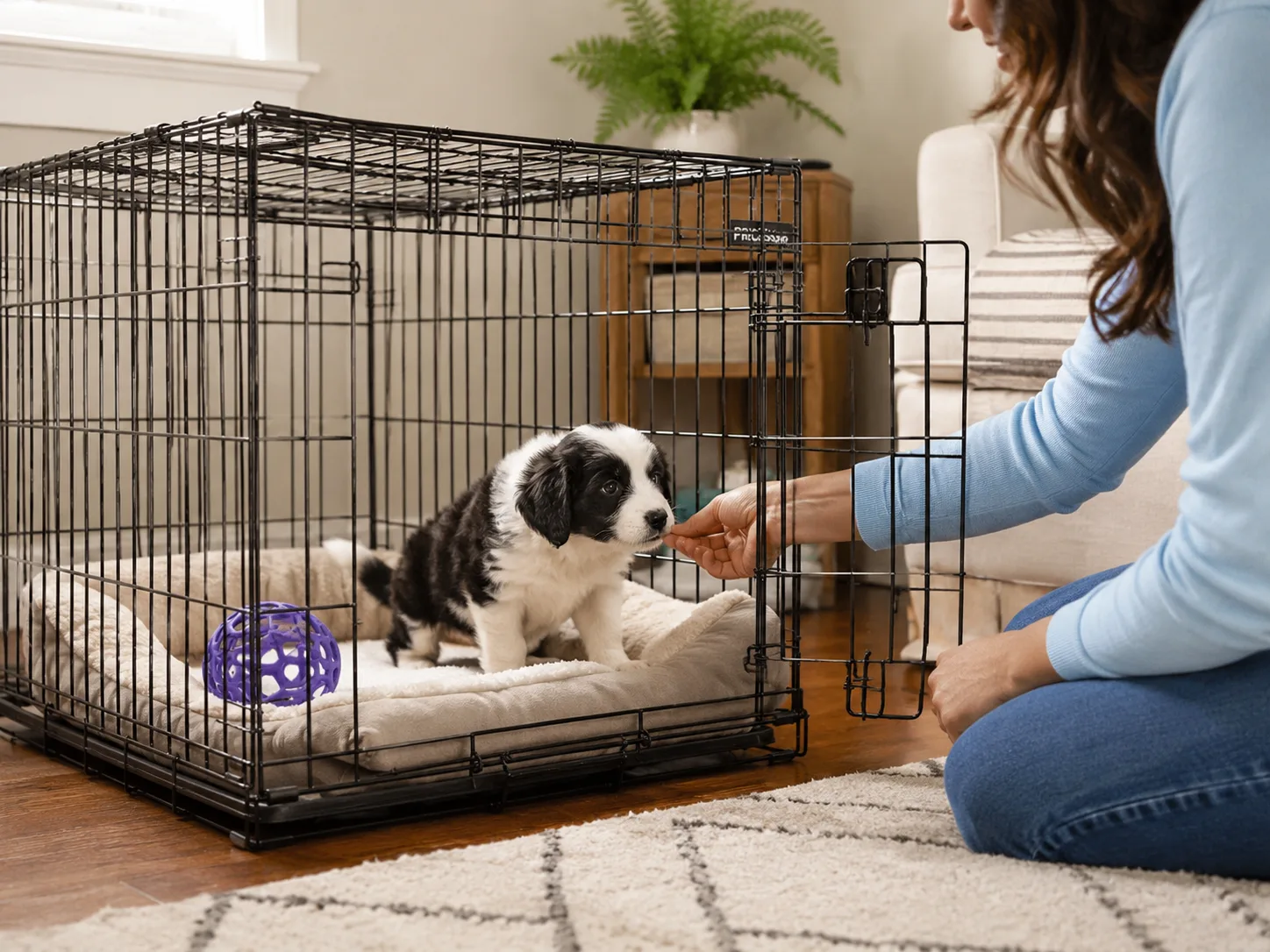
Crate Alternatives for Dog Separation Anxiety: Playpen, Baby Gate, or Safe Room?

Crate Alternatives for Dog Separation Anxiety: Playpen, Baby Gate, or Safe Room?

Crate alternatives for dog separation anxiety can help when your dog panics in a crate. The best answer is not always a bigger crate or another confinement tool. The right crate alternative depends on what your dog actually does when left alone.

This guide compares safe rooms, baby gates, playpens, and pet cameras so you can choose a setup based on your dog’s real alone-time behavior not guesswork.

Immediate Answer

For many dogs with crate-related distress, a safe room or baby gate setup may be a better first crate alternative than a playpen, especially if the dog settles better with more open space. A dog playpen can help when your dog needs more room than a crate but still needs limits. A pet camera should be used as a monitoring tool, not as a treatment, because it helps you see whether your dog is settling, barking, pacing, peeing, chewing, or panicking.

If your dog shows panic, escape attempts, self-injury, or sudden behavior changes, products alone may not be enough. The ASPCA notes that some dogs with separation anxiety may become more distressed in crates and may do better confined to a room behind a baby gate instead. ASPCA

Quick Decision Table: Which Product Type Fits Your Dog’s Trigger?

User problem Best solution/product type Best for Avoid when / not best for
Dog panics in the crate but settles better outside it Safe room or baby gate + camera Dogs who may have confinement-related distress Dog scratches doors, destroys the room, or tries to escape
Dog needs more space than a crate but should not access the full house Dog playpen / exercise pen + camera Calm small or medium dogs that respect barriers Climbers, jumpers, large anxious dogs, or escape artists
Owner cannot tell if dog is barking, sleeping, pacing, or panicking Basic pet camera First-time alone-time monitoring Owners expecting the camera to fix anxiety
Dog paces around a larger room and leaves the camera view Pan/tilt or wide-angle indoor camera Larger rooms or safe room setups Tiny spaces where one basic camera covers the area
Dog barks sometimes and owner needs pattern tracking Motion-alert or sound-alert camera Checking when barking or pacing starts Severe anxiety that needs professional support
Dog calmly eats treats when alone Treat-tossing camera Mild stress or calm reward-based check-ins Dogs that refuse food, guard food, panic, or become overexcited
Dog gets worse when hearing the owner’s voice Camera with two-way audio turned off Dogs triggered by remote voice Using two-way talk as the default soothing method
Dog destroys items in the safe room Do not leave dog unsupervised in that setup yet Dogs needing reassessment and safer management Product-only fixes when there is panic or injury risk

How to Choose the Right Product for This Barking Problem

How to Choose the Right Product for This Barking Problem

Start by asking one question:

What does your dog do after you leave?

If you do not know, buy or use a basic camera before changing the setup. Video helps you see whether your dog is calm, confused, bored, frustrated, or distressed. AVSAB recommends video recording home-alone behavior when trying to understand whether the problem is separation anxiety, confinement anxiety, or another issue. AVSAB

Use this simple selection logic:

  • If your dog settles outside the crate, try a safe room or baby gate setup.
  • If your dog needs a boundary but more space, consider a playpen.
  • If your dog paces, barks, or disappears from view, use a wider camera angle, pan/tilt camera, or motion alerts.
  • If your dog panics, injures themselves, or tries to escape, do not rely on a product alone. Talk with your vet or a qualified behavior professional.

Product Options That Match This Barking Problem

This article may contain affiliate links. If you buy through these links, we may earn a commission at no extra cost to you. We only include products or product types that match the problem discussed in this guide.

Safe room

What it does:
A safe room gives your dog a dog-proofed space instead of a small crate. It usually includes a bed or mat, water, safe flooring, controlled access, and fewer hazards.

When to use:
Use a safe room when your dog panics in the crate but appears calmer with more space.

Best for:
Dogs that can settle in one room without chewing cords, scratching doors, destroying furniture, or trying to escape.

Not best for:
Dogs that chew walls, doors, blinds, baseboards, flooring, cords, or window areas when left alone.

How to use:
Choose a small, quiet room. Remove cords, trash, toxic items, shoes, plants, blind cords, small objects, and anything your dog may chew. Place a camera so you can see the door, bed area, and main pacing path.

Pros:

  • Gives more space than a crate
  • May reduce stress if tight confinement is the trigger

Cons:

  • Can still be unsafe if the dog destroys the room
  • Requires careful dog-proofing before unsupervised use

Safety note:
Do not leave your dog in a room they try to break out of. Door scratching, chewing, heavy panting, drooling, pacing, and repeated escape attempts may point to distress rather than simple dislike of the room. Separation anxiety signs can include vocalization, destruction, house soiling, pacing, salivation, trembling, and self-injury. VCA Hospitals

Baby gate or pet gate


View product examples: Regalo Easy Step Baby Gate or Carlson Extra Wide Pet Gate

What it does:
A baby gate or pet gate limits your dog to one area without closing them inside a crate.

When to use:
Use it when your dog does better with visual openness and does not panic at barriers.

Best for:
Apartments, rentals, hallways, kitchens, living rooms, and dogs that do not jump, climb, chew, or push gates.

Not best for:
Strong jumpers, climbers, chewers, escape artists, or dogs that injure themselves at barriers.

How to use:
Measure the doorway width and height. Test the gate while you are home before using it during real departures. Make sure the gate does not move, tilt, or leave gaps your dog can squeeze through.

Pros:

  • More open than a crate
  • Can be renter-friendly when installed correctly

Cons:

  • Not safe for dogs that jump or climb
  • Some gates may not hold up to pushing or chewing

Safety note:
Use the gate only after supervised testing. If your dog panics, chews the gate, jumps it, or gets paws or nails caught, choose a different setup and seek professional help if distress is severe.

Dog playpen / exercise pen


View product example: MidWest Exercise Pen

What it does:
A playpen gives your dog more space than a crate while still limiting access to the full home.

When to use:
Use it when your dog dislikes tight crate space but can calmly handle a larger boundary.

Best for:
Calm small or medium dogs, puppies under supervision, and dogs that do not climb, jump, chew, or push panels.

Not best for:
Large anxious dogs, athletic dogs, climbers, jumpers, or dogs that panic at barriers.

How to use:
Place the pen on a stable surface. Check panel height, latch strength, floor grip, and whether the pen can tip or slide. Use a camera during test sessions.

Pros:

  • More freedom than a crate
  • Helpful when full loose access is unsafe

Cons:

  • Not safe for escape-prone dogs
  • Can tip, shift, or become a climbing hazard if mismatched to the dog

Safety note:
Do not assume a playpen is safer just because it is bigger. If your dog tries to climb, jump, bend panels, chew connectors, or escape, the pen may increase injury risk.

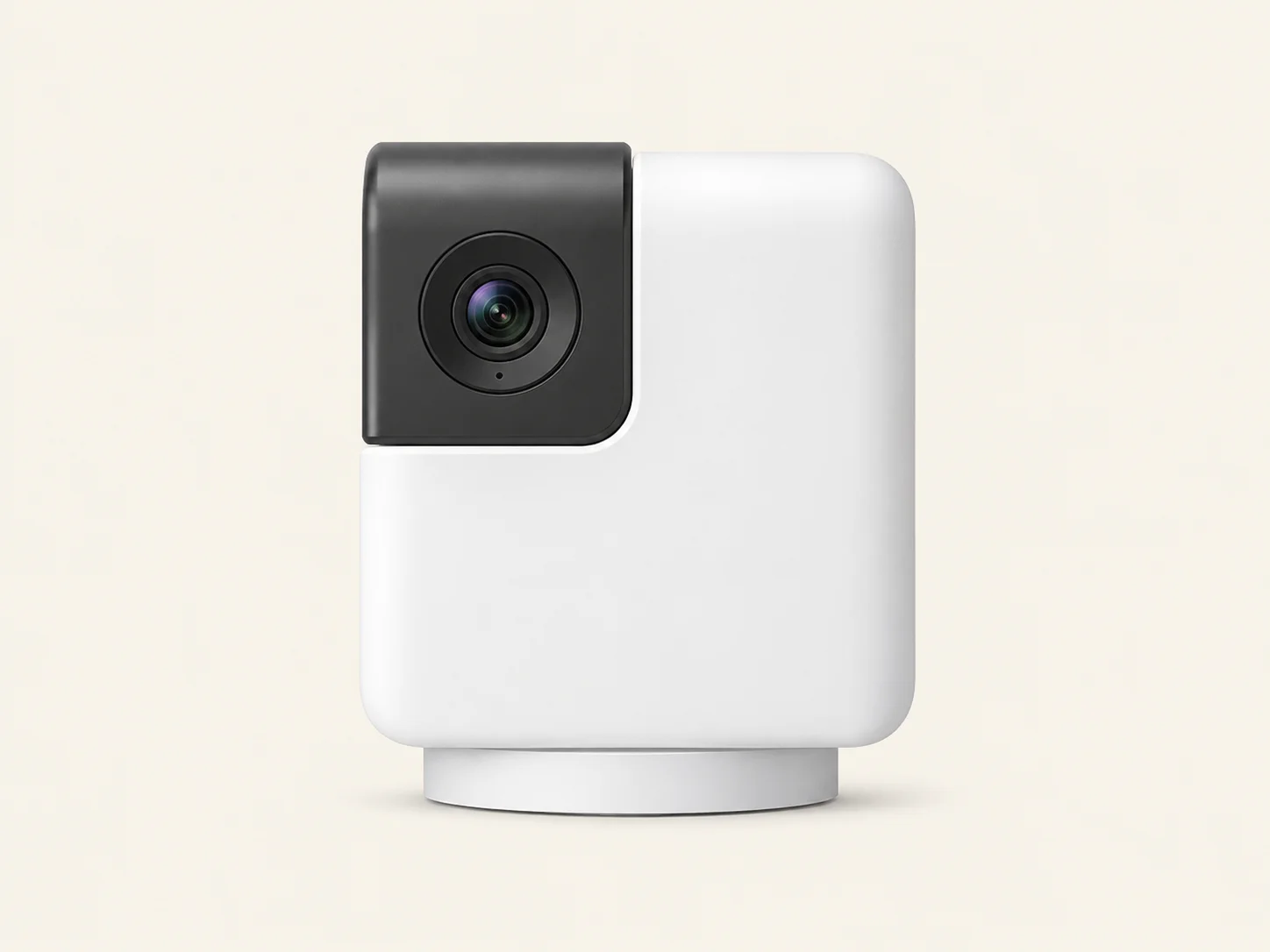
Basic pet camera / indoor camera


View product examples: Wyze Cam, Kasa Pan/Tilt Camera, or Ring Indoor Cam

What it does:
A pet camera or indoor camera lets you see what your dog does when left alone.

When to use:
Use it before deciding whether a crate, safe room, baby gate, or playpen is actually working.

Best for:
Owners who need to know whether their dog is sleeping, barking, pacing, peeing, chewing, door-focused, or panicking.

Not best for:
Owners expecting a camera to treat separation anxiety by itself.

How to use:
Place the camera where it shows the door, resting area, and main movement path. Test the Wi-Fi connection and video angle before leaving.

Pros:

  • Helps you make decisions based on real behavior
  • Can show whether barking starts immediately or later

Cons:

  • Does not fix anxiety on its own
  • Some alerts or storage features may depend on app settings or subscriptions

Safety note:
Mount the camera and cords out of reach. Indoor cameras also create privacy and security concerns, so use strong passwords and two-factor authentication where available. The FTC recommends securing home security cameras with good account security. FTC

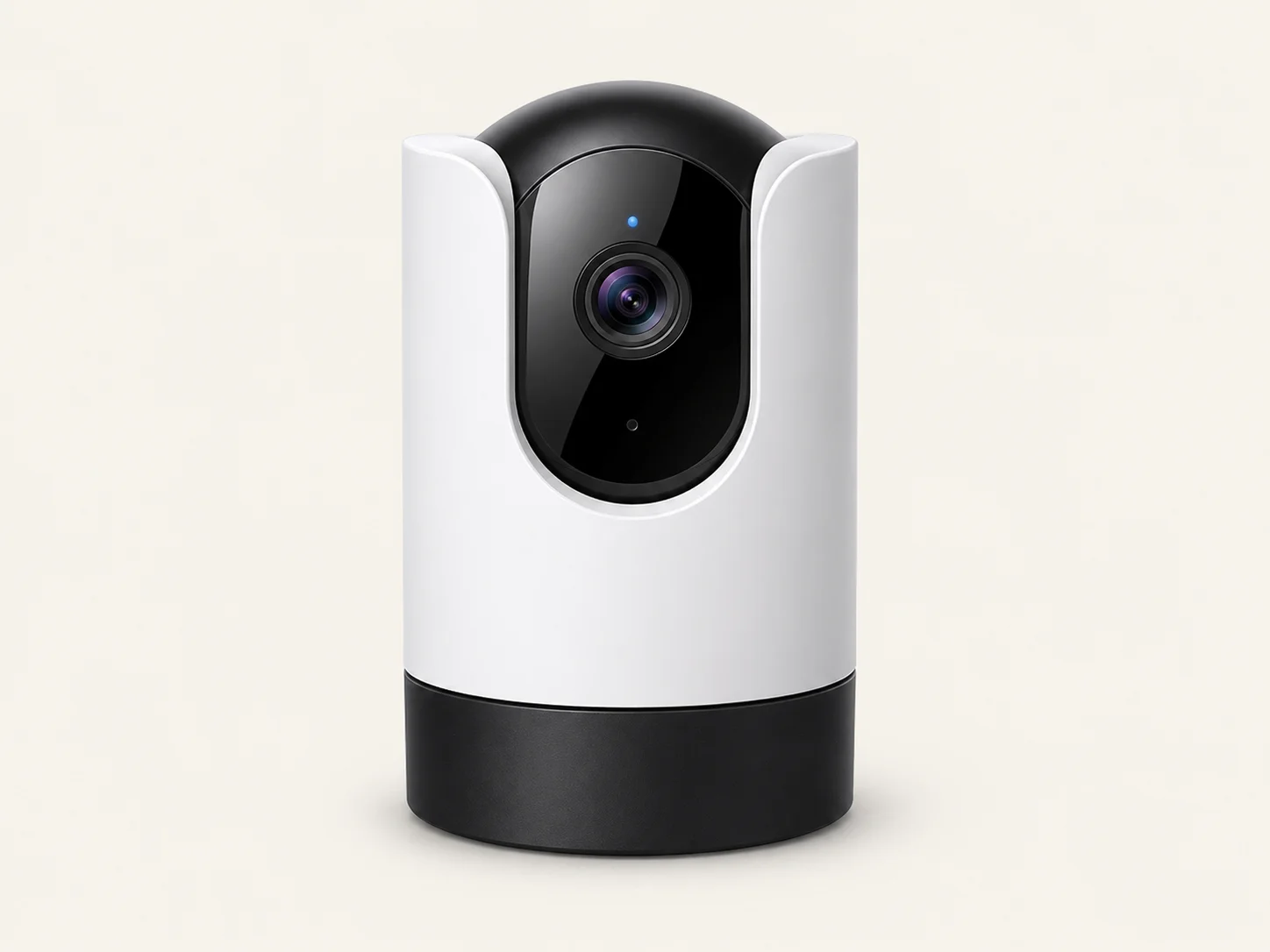
Pan/tilt or wide-angle camera


View product example: Kasa Pan/Tilt Camera

What it does:
A pan/tilt or wide-angle camera helps cover a larger room where a fixed camera may miss pacing, door focus, or movement.

When to use:
Use it when your dog moves around a safe room, hallway, or larger gated area.

Best for:
Larger rooms, safe rooms, and dogs that pace or patrol when alone.

Not best for:
Small spaces where one basic camera already shows the full area.

How to use:
Set the camera where it captures the door and main resting area. Test the pan/tilt range before relying on it.

Pros:

  • Better room coverage than a narrow camera
  • Helps identify pacing patterns

Cons:

  • More features may mean more settings to manage
  • Still only monitors behavior; it does not treat anxiety

Safety note:
Secure the cord and place the camera where your dog cannot knock it over or chew it.

Motion-alert or sound-alert camera


View product examples: Furbo 360 Dog Camera, Ring Indoor Cam, or Wyze Cam

What it does:
A motion-alert or sound-alert camera can notify you when activity, movement, barking, or noise is detected, depending on the product and settings.

When to use:
Use it when you want to track patterns, such as barking after three minutes, pacing near the door, or settling after a short period.

Best for:
Owners who need event-based monitoring instead of watching live video constantly.

Not best for:
Severe anxiety cases where alerts only show distress but do not solve the underlying problem.

How to use:
Adjust motion sensitivity, sound settings, notification settings, and recording zones if the camera allows it.

Pros:

  • Helps identify timing and patterns
  • Useful for checking whether a setup is improving or worsening behavior

Cons:

  • Alerts can miss context
  • False alerts may happen depending on camera settings and room activity

Safety note:
Do not use alerts as a diagnosis. Use them as clues, then review video to see what your dog is actually doing.

Two-way audio camera


View product examples: Furbo 360 Dog Camera, Petcube Bites 2 Lite, or Ring Indoor Cam

What it does:
A two-way audio camera lets you hear your dog and speak through the camera.

When to use:
Use it only if your dog stays calm when hearing your voice remotely.

Best for:
Dogs that respond calmly to the owner’s voice and do not search, bark, or panic after hearing it.

Not best for:
Dogs that become more anxious, bark harder, scratch the door, or search for the owner after hearing a remote voice.

How to use:
Test the audio while you are home first. Keep the volume low and watch your dog’s reaction.

Pros:

  • Lets you hear barking or whining
  • May help some calm dogs during short check-ins

Cons:

  • Can confuse or frustrate some dogs
  • Should not be used as the main anxiety solution

Safety note:
If your dog escalates after hearing your voice, stop using two-way talk and use the camera only for observation.

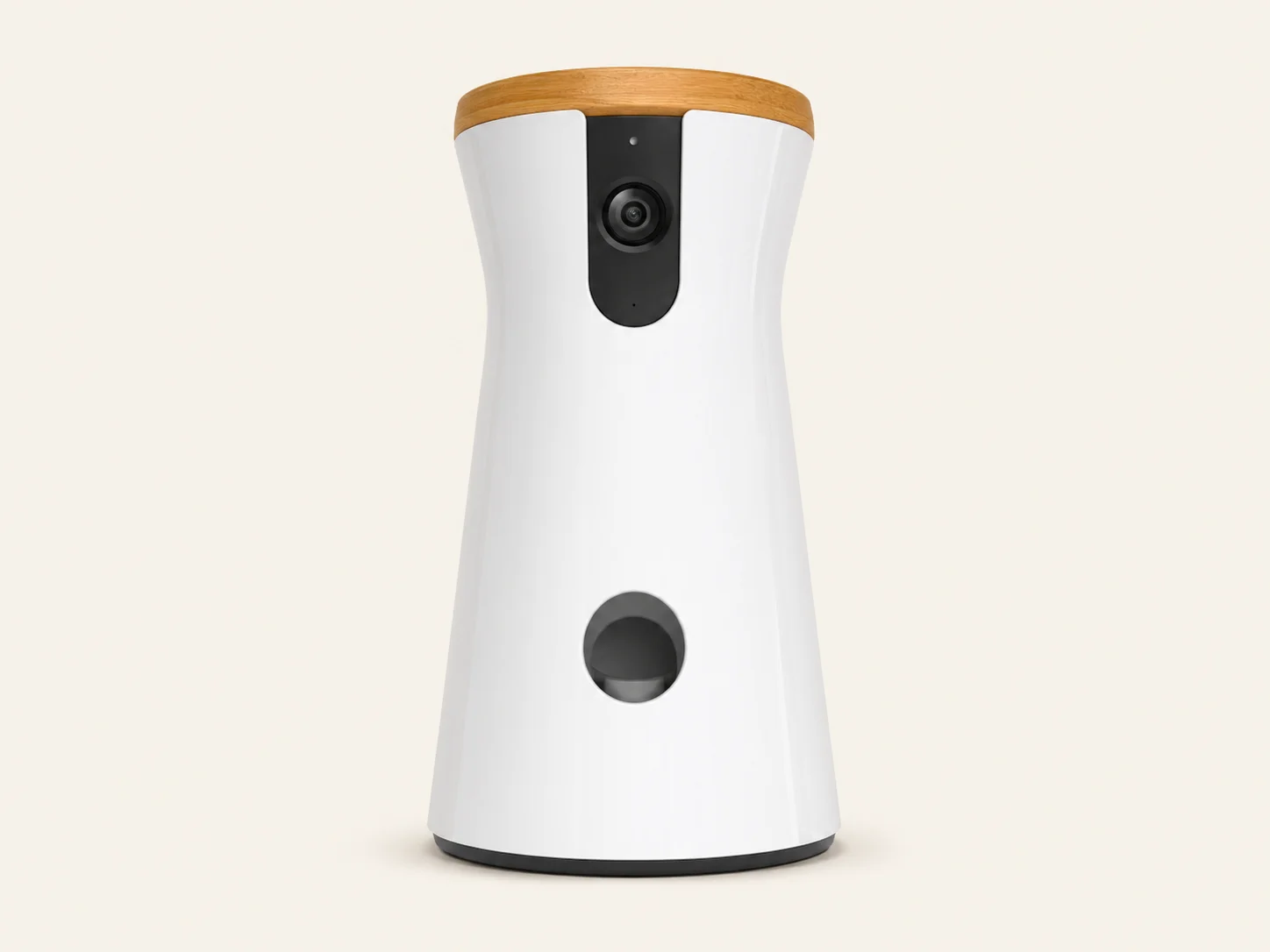
Treat-tossing camera


View product examples: Furbo 360 Dog Camera or Petcube Bites 2 Lite

What it does:
A treat-tossing camera combines video monitoring with remote treat delivery.

When to use:
Use it only when your dog is calm enough to eat while alone.

Best for:
Dogs with mild stress, short departures, or calm routines where treats are already useful.

Not best for:
Dogs that refuse food, panic, guard food, become frantic, or are startled by treat-tossing sounds.

How to use:
Test treat size, treat delivery, sound level, and placement before leaving. Use it during calm moments, not during panic.

Pros:

  • Can support calm check-ins for some dogs
  • Combines monitoring with reward delivery

Cons:

  • Not useful if the dog is too anxious to eat
  • Treat delivery does not replace a separation anxiety behavior plan

Safety note:
Use safe treat sizes and avoid overfeeding. If your dog refuses treats when alone, that may be a sign the dog is too distressed for treat features to help. The RSPCA notes that dogs with separation-related behavior may show distress when left alone, and support should focus on reducing that distress rather than simply distracting the dog. RSPCA

Product Comparison: Which Option Should You Try First?

Product/product type Main job Best for Main limitation Try first if…
Safe room Gives dog a dog-proofed room instead of crate confinement Dogs calmer outside a crate Unsafe if dog chews, scratches, or escapes Your dog settles better with more space
Baby gate / pet gate Limits access while keeping space visually open Dogs that dislike tight confinement Unsafe for jumpers, climbers, or chewers Your dog handles barriers calmly
Dog playpen / exercise pen Gives more space than a crate but less access than a full room Calm dogs needing a boundary Not safe for escape-prone or athletic dogs Your dog needs room but not full-house access
Basic pet camera Shows what happens after you leave Owners who need objective monitoring Does not treat anxiety You do not know what your dog does alone
Pan/tilt or wide-angle camera Covers larger spaces Safe rooms or bigger gated areas May require more setup Your dog moves out of view
Motion/sound-alert camera Tracks barking or activity patterns Owners needing alerts Alerts can lack context You need to know when barking or pacing starts
Two-way audio camera Lets owner hear and speak Dogs calm with remote voice Can worsen anxiety for some dogs Your dog relaxes when hearing your voice
Treat-tossing camera Adds remote treat delivery Dogs calm enough to eat alone Not useful during panic Your dog eats calmly during short departures

What Not to Buy or Use for This Problem

Avoid buying products that only suppress symptoms without addressing distress.

For anxiety-related barking, avoid using anti-bark collars, shock collars, or correction devices as your main solution. Barking during owner absence may be a sign of distress, not stubborn behavior. AVSAB recommends humane, reward-based training approaches and advises against aversive methods for behavior problems. AVSAB Humane Dog Training Position Statement

Also avoid:

  • A playpen if your dog climbs, jumps, bends panels, or panics at barriers
  • A baby gate if your dog chews, pushes, or injures themselves on it
  • A safe room that contains cords, blind cords, plants, trash, shoes, or chewable hazards
  • A treat camera if your dog refuses food when alone
  • Two-way audio if your dog becomes more anxious when hearing your voice
  • Any product claiming to “cure” separation anxiety or stop barking completely

A camera may help you observe the problem, but it does not replace a behavior plan when the dog is panicking.

What to Check Before Buying

Use this checklist before choosing a crate alternative:

  • Does the product match the actual trigger: crate panic, tight confinement, full-house destruction, barking, or unknown behavior?
  • Can your dog safely stay in the space without chewing cords, doors, blinds, baseboards, or furniture?
  • Is the setup safe for your dog’s size, strength, and jumping ability?
  • Can the baby gate or playpen handle your dog’s height and behavior?
  • Is the setup renter-friendly if you live in an apartment?
  • Can your dog push, climb, jump, chew, or squeeze through the barrier?
  • Does the room have safe airflow and temperature?
  • Are camera cords mounted out of reach?
  • Does the camera cover the door, bed, and pacing area?
  • Do alerts, storage, or bark detection require a subscription?
  • Can you test the setup while you are home before leaving your dog alone?
  • Does the product support management, or are you expecting it to fix anxiety by itself?
  • Does the seller have a return policy if the product does not fit your setup?
  • Are you avoiding products that promise guaranteed barking control?

Safety Note: When Products May Not Be Enough

A crate alternative can help with management, but it is not a complete treatment for separation anxiety.

Talk with your vet or a qualified behavior professional if your dog shows:

  • Sudden new barking, peeing, pooping, or destruction
  • Heavy panting, drooling, trembling, or repeated pacing when alone
  • Escape attempts from a crate, gate, pen, or room
  • Paw, nail, tooth, or mouth injuries from trying to get out
  • Severe door scratching or wall chewing
  • Refusing food or treats when left alone
  • Panic that starts within minutes of departure
  • Worsening behavior despite setup changes

A structured behavior plan may include gradual alone-time work, desensitization, and counterconditioning. Veterinary behavior literature discusses these approaches as common parts of separation anxiety treatment. PMC

If the behavior is new or sudden, check with your vet before treating it as only a setup problem.

FAQ

Will crate alternatives stop my dog’s separation anxiety?

Not by themselves. A safe room, baby gate, or playpen may reduce crate-related stress for some dogs, but separation anxiety usually needs behavior support, careful management, and sometimes professional help.

Is a playpen better than a crate for separation anxiety?

A playpen can be better for dogs that dislike tight crate space but still stay calm behind a larger boundary. It is not better for dogs that climb, jump, chew, panic, or try to escape.

Should I use a baby gate or a safe room?

Use a baby gate if your dog handles visual openness and does not test barriers. Use a safe room if your dog needs a contained space with fewer hazards. In both cases, test the setup with a camera before relying on it.

Do I need a pet camera?

A pet camera is strongly useful if you do not know what your dog does after you leave. It helps you see whether the setup is working, but it does not treat anxiety by itself.

Is two-way audio good for separation anxiety?

Sometimes, but not always. Some dogs calm down when they hear the owner’s voice. Others become more anxious because they hear the owner but cannot find them. Test it carefully and stop using it if barking or pacing gets worse.

Is a treat-tossing camera worth it?

It may be worth it only if your dog can calmly eat while alone. If your dog refuses food, panics, or becomes frantic, a treat camera is unlikely to solve the problem.

Final Recommendation

Start with observation, not guessing.

If you do not know what your dog does when left alone, use a basic pet camera first. If your dog settles better outside the crate, try a safe room or baby gate setup. If your dog needs more room but cannot access the full house, consider a playpen only after supervised testing.

Use two-way audio and treat-tossing cameras as optional support tools, not as cures. If your dog panics, injures themselves, destroys the space, or shows sudden new behavior, get veterinary or behavior help before relying on another product.

Want helpful pet care updates?

Sign Up For PetPlanetPro Updates

🐶

Pet care tips, behavior guides, product insights, and community stories for everyday pet parents.

By subscribing, you agree to receive emails from PetPlanetPro. You can unsubscribe anytime.
Loading

How useful was this post?

Click a star to leave quick feedback.

Authored By

M. Hassan

PetPlanetPro shares practical pet care guides, behavior insights, nutrition tips, and useful resources for everyday pet owners.

Leave a Comment

You’re very welcome to leave a comment or question. Please keep it helpful, respectful, and positive. Your email address will not be published.

Scroll to Top