
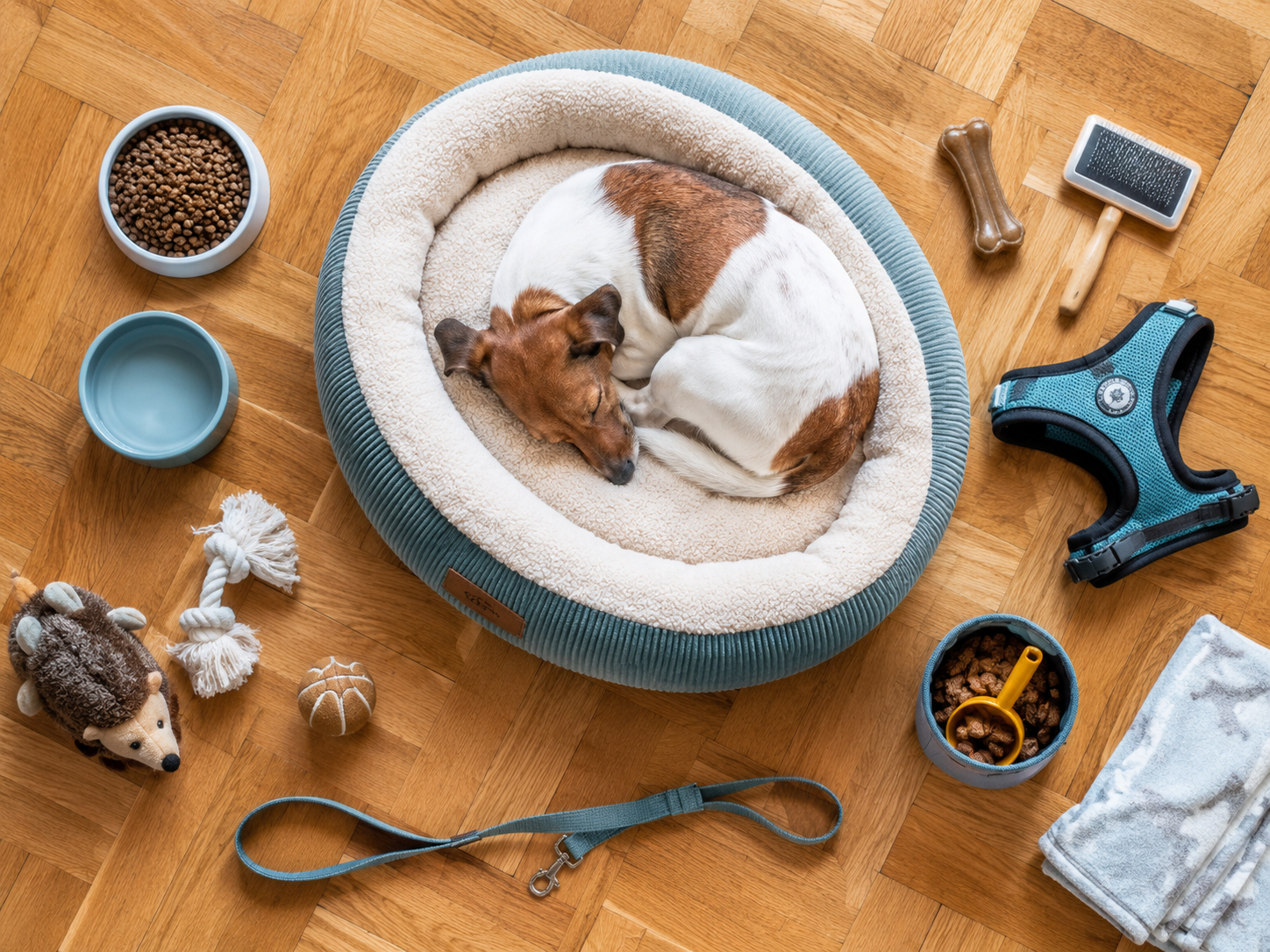
Which food toy should you try first?
For a food-motivated dog with mild alone-time stress, the most practical starting point is a correctly sized, frozen KONG Classic. It suits average chewers and can provide longer engagement than a lick mat. Its main limitation is simple: it will not help a dog who becomes too distressed to eat, and it may only delay anxiety until the food is gone. Choose KONG Extreme for a proven power chewer, a LickiMat Soother for a calm non-chewer who prefers licking, or a supervised beginner puzzle only for a dog that already enjoys problem-solving.
ASPCA guidance explains that food-stuffed toys are most useful in mild cases because highly anxious dogs often will not eat when left alone.
Quick product matches
How we researched
We compared official product specifications, sizing, materials, care instructions, and manufacturer safety warnings. We also reviewed current product availability and recurring owner concerns about ignored food toys, damaged lick mats, puzzle frustration, and dogs panicking after a toy is empty. Product information was checked in July 2026; marketplace availability may vary across the US, UK, Canada, and Australia. We did not personally test every product in this guide.
Quick comparison
| Product | Suitable for | Key advantage | Use condition | Main limitation |
|---|---|---|---|---|
| KONG Classic | Average chewers that eat when alone | Stuffable natural-rubber design with multiple sizes | Supervised testing before alone-time use | May be ignored during stronger anxiety |
| KONG Extreme | Power chewers that still engage with food | KONG’s strongest black rubber formula | Correct size, frequent inspection, and no swallowing behavior | More durable does not mean indestructible |
| LickiMat Soother | Calm dogs that prefer soft-food licking | Textured 8 × 8 in (20 × 20 cm) surface; freezer safe | Dog must not chew, fold, or tear mats | Shorter-lasting and risky for chewers |
| Nina Ottosson Dog Smart | Dogs new to supervised puzzle games | Level 1 design with nine treat compartments | Supervised use only | Manufacturer says not to leave it with an unsupervised pet |
Product recommendations by trigger
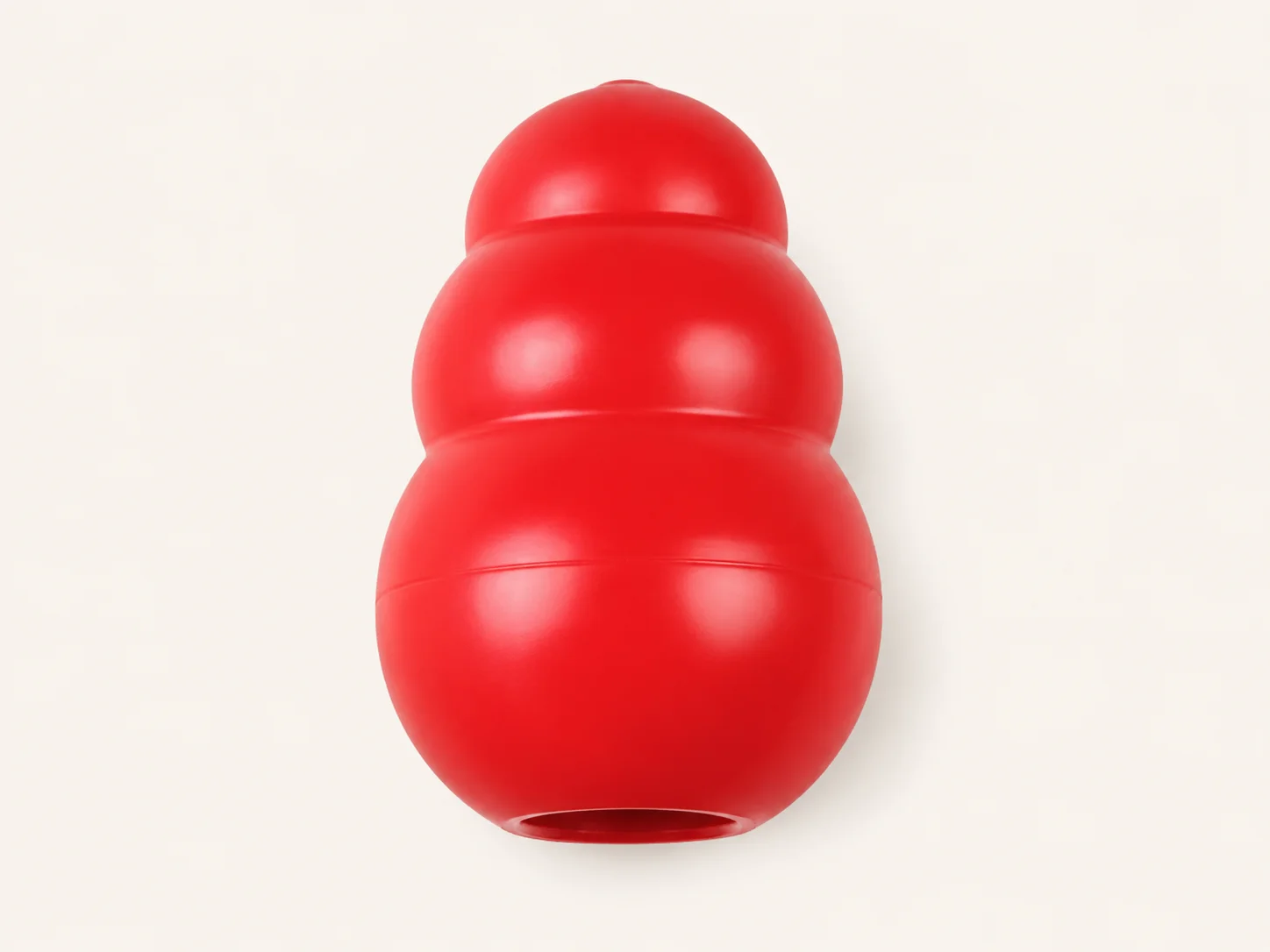
KONG Classic
The KONG Classic is the clearest first purchase when a dog still eats during short absences and already uses rubber food toys safely. The manufacturer lists natural red rubber for average chewers, six size options, and a cavity that can be filled with kibble or soft food. Freezing the filling can extend the activity without making the mechanism confusing.
- Main advantage: Simple, adjustable difficulty and easier to make long-lasting than a flat mat.
- Main limitation: It cannot treat moderate or severe separation anxiety and may be abandoned as soon as the owner leaves.
- Avoid it if: Your dog damages rubber, tries to swallow pieces, or refuses all food during departures.
- Setup tip: Start loosely packed while you are home; freeze it only after the dog can empty it without frustration.
Official details: KONG Classic product page.
Check Current Price on Amazon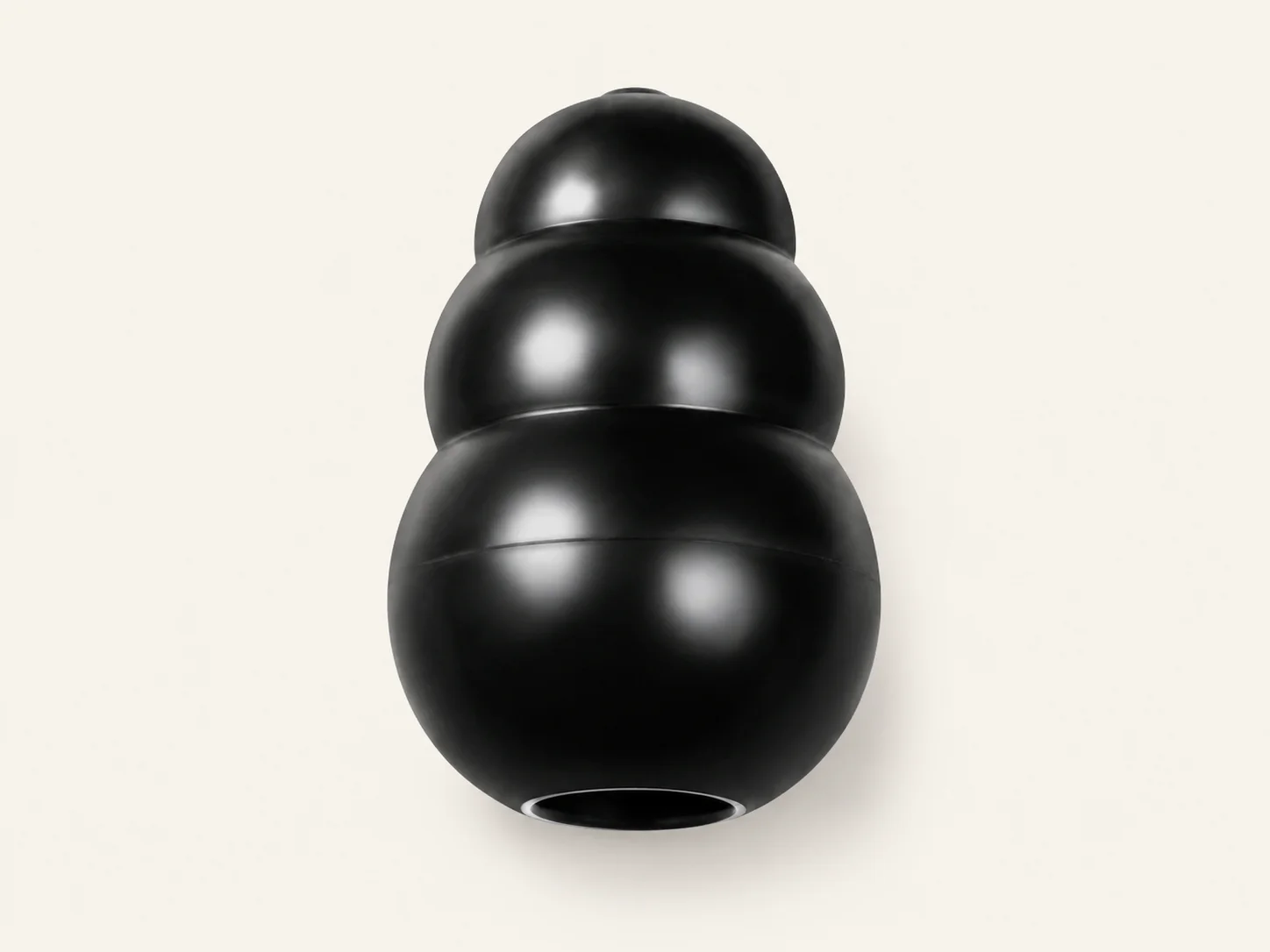
KONG Extreme
KONG Extreme is the more relevant version when a dog is an established power chewer but still settles with stuffed food toys. KONG describes its black natural-rubber formula as its most durable strength and lists sizes from small through XX-large. It can be stuffed and frozen like the Classic, so the daily routine stays familiar.
- Main advantage: Stronger rubber than the Classic for determined chewing styles.
- Main limitation: It is still not indestructible, and choosing an undersized toy can create avoidable risk.
- Avoid it if: Your dog removes chunks, gulps objects, or becomes more frantic while chewing.
- Setup tip: Size according to the official chart, consider sizing up for unusually strong chewers, and inspect after every session.
Official details: KONG Extreme product page.
View Latest Price on Amazon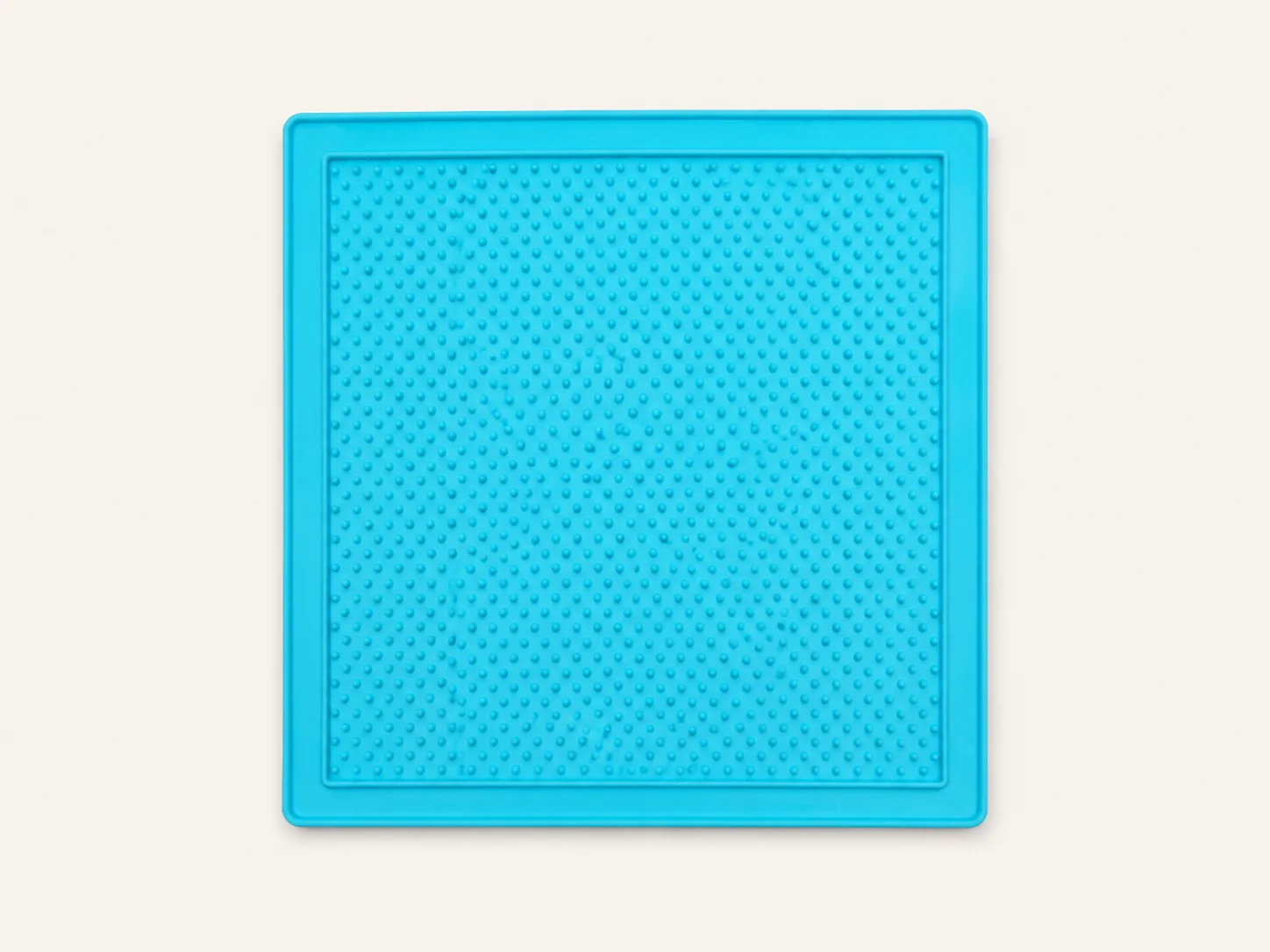
LickiMat Classic Soother
The Soother fits dogs that enjoy soft foods and become frustrated by food-extraction toys. Its brush-nub surface is designed for foods such as purees and other soft spreads. The official page lists a size of 8 × 8 inches (20 × 20 cm), food-grade TPR construction, freezer compatibility, and hand washing.
- Main advantage: Very easy to understand and useful for a short, low-effort licking routine.
- Main limitation: It usually empties faster than a frozen stuffed toy and is not suitable for dogs that chew flexible mats.
- Avoid it if: Your dog lifts, folds, shreds, or swallows mat material.
- Setup tip: Test with a thin layer while present; remove it immediately if licking changes to biting or tearing.
Official details and supervision guidance: LickiMat Soother product page.
Check Availability on Amazon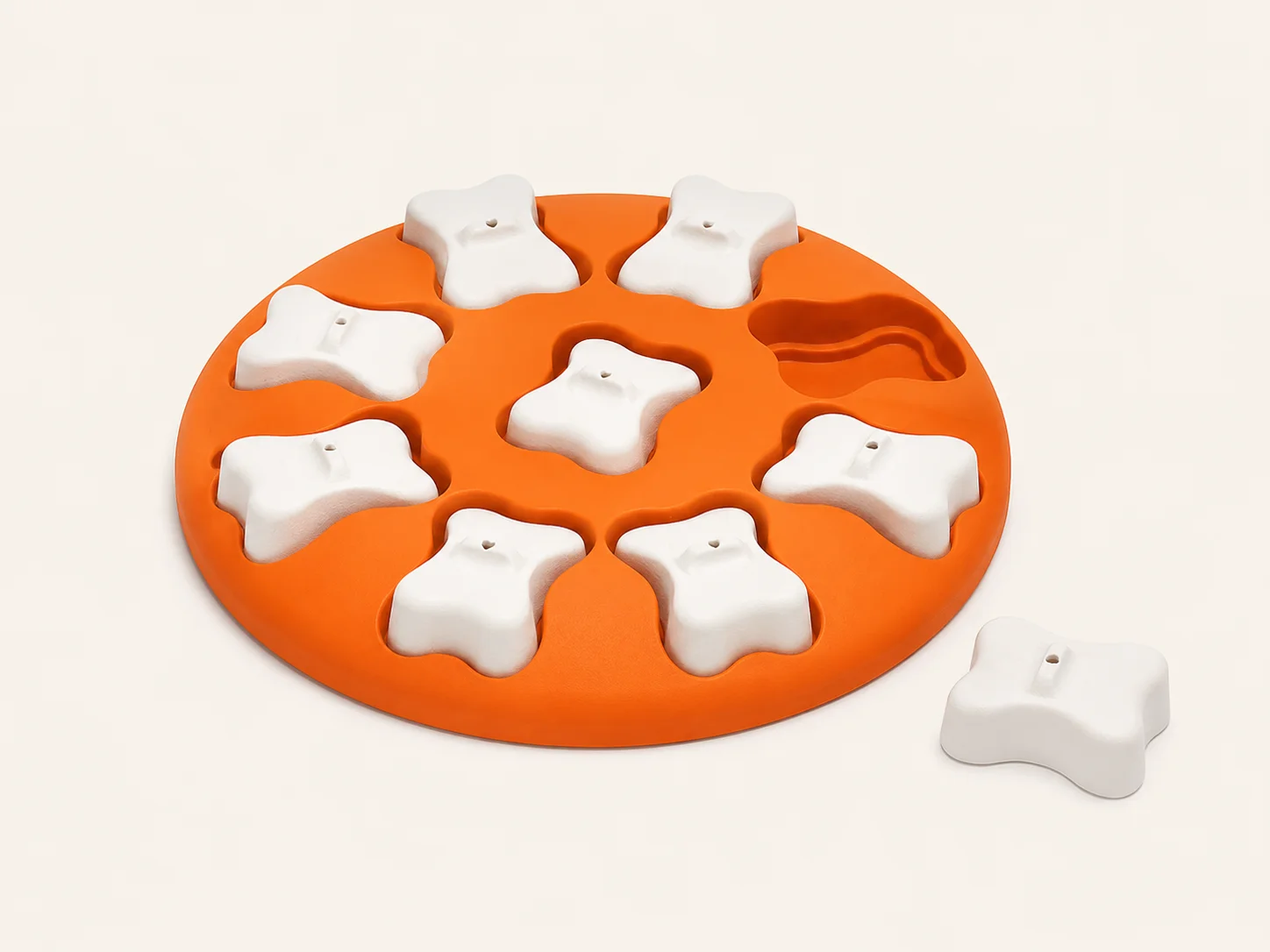
Nina Ottosson Dog Smart Level 1
Dog Smart is a beginner board for dogs that already enjoy sniffing, pawing, and moving simple pieces to reach food. The manufacturer lists nine treat compartments, nine removable bone-shaped covers, food-safe materials, and adjustable difficulty by changing how the covers sit. It is useful for supervised pre-departure enrichment or mealtime—not for leaving with an anxious dog.
- Main advantage: A genuine level 1 puzzle that can reveal whether problem-solving engages or frustrates the dog.
- Main limitation: Outward Hound explicitly says not to leave the puzzle with an unsupervised pet.
- Avoid it if: Your dog chews pieces, barks from frustration, or needs a safe activity after you leave.
- Setup tip: Expose some food at first and end the session before the dog starts biting the covers.
Official details and safety instructions: Outward Hound Dog Smart product page.
Check Current Price on AmazonBefore you buy
- Does your dog eat after you leave? An untouched high-value toy can be a sign of distress rather than a product problem. The RSPCA recommends monitoring this response.
- Is the issue anxiety or boredom? Use a camera to check whether the dog settles, scans doors, paces, vocalizes, or tries to escape.
- Can the product be used safely without you? Follow the manufacturer’s supervision warning; do not assume “tough” means indestructible.
- Will the activity calm or increase arousal? Rolling, pawing, and difficult puzzles can excite or frustrate some dogs.
- Are the filling and calories appropriate? Count food toward the daily allowance and check every spread for xylitol.
How to introduce a food toy safely
- Offer the product while you are home and make the first attempt easy.
- Confirm that your dog licks or works calmly rather than chewing, guarding, or becoming frustrated.
- Use a camera during a very short absence. Note whether the dog keeps eating, stops when the door closes, or panics after finishing.
- Increase difficulty or freezing time gradually; never use a harder setup simply to make the dog “push through” distress.
- Inspect and clean the product after use. For nut butter or other human foods, follow the FDA warning to check for xylitol.
When another toy is unlikely to solve the problem
Seek veterinary or qualified behavior help when your dog repeatedly refuses food, pants, paces, drools, vocalizes continuously, destroys exit points, eliminates indoors, or attempts to escape. These signs can reflect significant separation-related distress and may carry an injury risk. AAHA describes these warning signs, while AVSAB recommends reward-based methods for behavior modification. Sudden anxiety or appetite change also warrants a veterinary check rather than another enrichment purchase.
Frequently asked questions
Why does my dog ignore a KONG only after I leave?
The most likely explanation is that departure stress is stronger than food motivation. Do not respond by making the toy harder. Record a short absence, reduce the duration to a level the dog can tolerate, and discuss persistent distress with a veterinarian or qualified behavior professional.
What if my dog finishes the food toy and then starts barking?
The toy is probably delaying the response rather than changing the underlying anxiety. A longer-lasting filling may provide more transition time, but the training plan still needs absences short enough to avoid panic.
Should I buy KONG Classic or KONG Extreme?
Choose Classic for an average chewer and Extreme for a proven power chewer. Extreme is not automatically better for every dog; correct sizing, supervised introduction, and regular inspection matter more than buying the toughest version by default.
Can I leave a lick mat with my dog unsupervised?
Only consider it after repeated supervised sessions show calm licking with no biting, folding, scraping, or tearing. Dogs that chew flexible material should not be left alone with a lick mat.
Can a puzzle feeder replace separation-anxiety training?
No. A puzzle can provide enrichment for a dog that enjoys it, but it does not teach a panicking dog to feel safe alone. The Dog Smart board is also labeled for supervised use, so it is not a suitable leave-alone solution.
Final recommendation
Start with KONG Classic when your dog is an average chewer who still eats during short absences. Move to KONG Extreme only for a demonstrated need for stronger rubber. Choose LickiMat Soother for a calm, non-chewing licker, and keep Dog Smart for supervised enrichment. If food is ignored or panic begins when it is gone, stop shopping for a harder toy and shift the priority to camera-based assessment, gradual alone-time work, and professional guidance.
 ✓
✓