


A dog who whines briefly after you leave may be showing mild departure upset. A dog who cannot settle, repeatedly tries to escape, or injures themselves may be experiencing a much more serious separation-related distress pattern.
The important question is not simply, “Does my dog cry?” It is, “What else happens, how quickly does it start, and can my dog recover?”
Signs of severe separation anxiety in dogs can include persistent barking or howling, pacing, panting, heavy drooling, refusing food, house soiling, destruction around exits, frantic escape attempts, or injuries such as damaged nails, paws, teeth, or the mouth.
- Distress begins as you prepare to leave or soon after departure.
- Several signs happen together rather than as one isolated behavior.
- The dog remains highly alert and cannot rest or settle.
- Confinement or escape behavior creates a safety risk.
These signs do not confirm a diagnosis by themselves. Similar behavior can also be related to boredom, outside triggers, incomplete house training, pain, illness, noise sensitivity, or confinement distress. The ASPCA and Merck Veterinary Manual both emphasize looking at the complete pattern and ruling out other causes.
Mild Upset vs Possible Severe Separation-Related Distress
The clearest distinction is usually recovery. Brief vocalizing that stops is different from escalating distress that continues, clusters with physical signs, or creates an injury risk.

| What you observe | Mild upset may look like | More serious distress may look like | What to do next |
|---|---|---|---|
| Vocalizing | Brief whining that decreases | Persistent barking, howling, or crying that escalates | Check video for duration, triggers, and other body signs |
| Movement | Waits near the door, then moves away | Repeated pacing, circling, scanning, or checking exits | Note when movement starts and whether the dog ever rests |
| Food | Uses a familiar chew or food toy | Ignores a normally valued food item until you return | Treat food refusal as one clue, not a diagnosis |
| Damage | No damage or ordinary chewing in multiple contexts | Scratching or chewing concentrated around doors, windows, gates, or crates | Change unsafe confinement and seek guidance if escape behavior repeats |
| Physical signs | Body relaxes after a short period | Heavy panting, drooling, trembling, or sustained hyper-alertness | Contact a veterinarian when signs are intense, sudden, or worsening |
| Safety | No meaningful injury risk | Broken nails, bloody paws, damaged teeth, mouth injury, or a dangerous escape attempt | Stop repeating the unsafe setup and obtain professional help promptly |
Do not judge severity by noise alone. Some distressed dogs are loud, while others may freeze, tremble, stay hyper-alert, or quietly wait by an exit. Periodic video checks can reveal signs that are easy to miss, a step also recommended by the RSPCA.
Why This Happens
The same outward behavior can have different causes. Separation-related distress, confinement anxiety, environmental triggers, unmet needs, and medical changes can overlap, so observation and professional assessment matter.

Distress may begin before you leave
Some dogs react to shoes, keys, a work bag, or movement toward the door because those cues predict separation. Others remain calm during the routine and become distressed only after the door closes.
The dog may have a limited coping threshold
A dog can appear settled for a short period and then begin pacing, vocalizing, panting, or checking exits. Video helps identify the approximate point where comfortable waiting changes into distress.
Confinement can be a separate trigger
Destruction in a crate or closed room does not automatically prove separation anxiety. It may involve confinement or barrier anxiety, especially when the same dog is calmer in a safer, less restrictive area. VCA Animal Hospitals notes that these causes should be distinguished.
Medical or age-related changes can alter behavior
Pain, urinary problems, neurological changes, sensory decline, medication effects, or cognitive changes can contribute to vocalizing, house soiling, confusion, appetite changes, altered sleep, or new anxiety. A veterinarian should assess sudden or unexplained changes.
Real-World Scenarios
A single sign rarely tells the whole story. These hypothetical examples show how timing, recovery, location of damage, and safety can change what the next step should be.
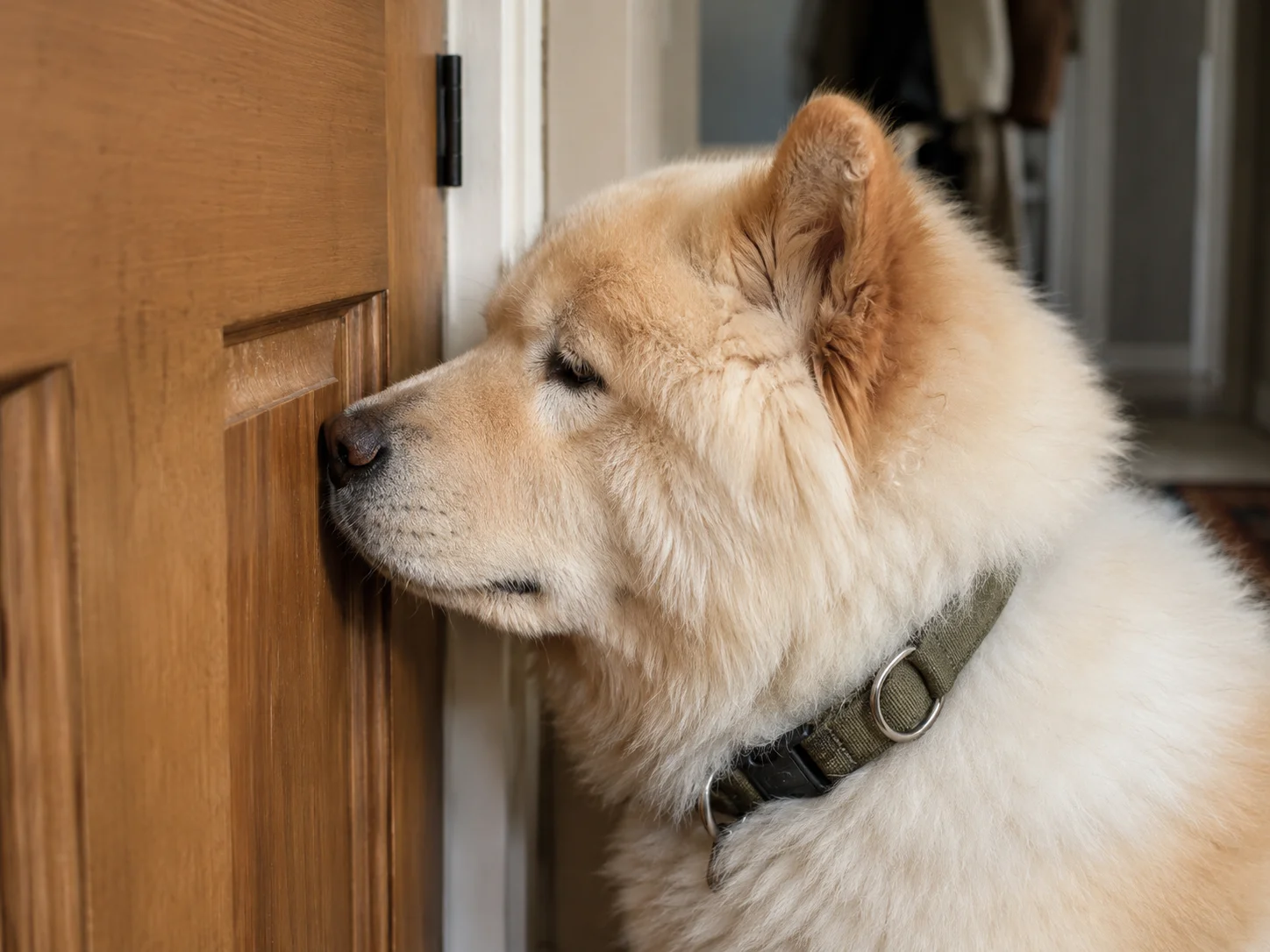
Brief whining, then sleep
A camera shows three minutes of whining, followed by resting and sleep. This may fit mild departure upset better than a severe pattern, although repeated monitoring can confirm whether the dog consistently settles.
Pacing and no recovery
The dog circles, pants, watches the door, ignores food, and does not lie down during the entire absence. The cluster of signs suggests stronger distress and justifies shorter absences plus professional guidance.
Damage concentrated around an exit
Deep scratches and chewing appear only around the door used by the owner. Exit-focused damage, especially when paired with vocalizing or pacing, is more concerning than ordinary chewing that also happens when people are home.
Crate escape with injury
The dog bends wire, damages nails, or injures the mouth while confined. The immediate priority is preventing another injury. VCA advises changing the strategy when significant crate distress appears rather than continuing the same setup.
Shared-wall housing can make the situation urgent
In an apartment, flat, condo, terraced home, or rental, repeated howling can affect neighbors and housing security. Use short camera-tested absences, arrange temporary help where possible, and seek support before complaints or unsafe escape behavior escalate.
Step-by-Step Solutions
Begin with facts and safety. The goal is to identify your dog’s current comfortable limit, prevent rehearsals of full distress, and build a plan that stays below that limit.

What to record during a short, safe camera check
- The time you leave and the first moment behavior changes
- Vocalizing: brief whining, persistent barking, howling, or silence
- Body signs: pacing, trembling, panting, drooling, freezing, or scanning
- Location: bed, door, window, crate, gate, or repeated route
- Food response: eats normally, pauses, or ignores a valued item
- Recovery: lies down, sleeps, remains alert, or escalates
- Safety: scratching, chewing, climbing, bending wire, or self-injury
Video is especially useful because behavior can begin within minutes and may be absent when you are home. Merck describes video recording as an important diagnostic aid for distinguishing separation distress from other triggers.
Confirm the pattern instead of guessing
Record several ordinary departures when it is safe to do so. Look for consistency: Does the behavior happen only when a particular person leaves? Does it happen in a crate but not a room? Does outside noise trigger barking even when someone is home?
Share concise clips and notes with your veterinarian or behavior professional rather than relying only on the damage you find later.
Remove immediate injury risks
Do not repeat a crate, gate, room, or tethering setup that has already led to frantic escape attempts or injury. Use the safest practical temporary arrangement available, such as a dog-proofed area, a trusted sitter, family help, or adjusted absences.
This is management, not a cure. It protects the dog while the cause and training plan are assessed.
Work below the distress threshold
Practice separations that end before your dog becomes anxious. The starting point may be touching the door handle, opening and closing the door, stepping out for one second, or walking a few steps away.
Increase difficulty only while the dog remains relaxed. Merck recommends simulated absences that are short enough not to trigger anxiety, monitored by video.
Use departure cues and food strategically
If keys, shoes, or a bag trigger worry, practice those cues at times when you do not leave. A safe food toy can support mild cases when the dog is still able to eat, but it should not be used to mask escalating distress.
If a normally valued food item is ignored until you return, record that response and shorten the next practice.
Reduce unavoidable full-distress absences
Where practical, use a sitter, family member, dog walker, suitable day care, work-from-home flexibility, or shorter errands while training is underway. Repeated episodes that push the dog into full distress can make progress harder.
For shared-wall housing, test each increase before attempting a long absence and keep a backup care plan for essential appointments.
Build a professional treatment plan when needed
A veterinarian can rule out medical contributors and discuss whether medication should be part of a wider behavior plan. A qualified reward-based behavior professional can help set safe practice durations, interpret video, and adjust progress without punishment.
Expect the pace to depend on the individual dog. Progress is often gradual, and moving too quickly can cause setbacks.
What Not to Do
Avoid methods that add fear, repeat preventable injury risks, or treat distress as disobedience. They do not address the underlying problem.
Do not punish after returning
A dog cannot reliably connect punishment at homecoming with behavior that happened earlier. The RSPCA warns that punishment can increase anxiety around your return and worsen the pattern.
Do not assume spite or guilt
Door damage, house soiling, vocalizing, and escape behavior can have several causes. Treat them as information to investigate, not proof that the dog acted out of revenge.
Do not use “cry it out” for escalating distress
Brief, non-escalating vocalizing during new confinement is different from sustained panting, drooling, clawing, screaming, or self-injury. Significant distress calls for a different plan.
Do not assume another dog will solve it
Some dogs are distressed by separation from a specific person rather than by the absence of all company. Adding another pet is not a predictable treatment and may create additional welfare or behavior needs.
When to Contact a Vet or Qualified Trainer
Seek professional help promptly when behavior is intense, sudden, worsening, or difficult to manage safely, or affecting the dog’s physical health or your housing.
Contact a veterinarian promptly when:
- Your dog is injured, bleeding, damaging teeth or nails, or attempting a dangerous escape.
- The behavior begins suddenly or changes sharply.
- A senior dog shows confusion, altered sleep, house soiling, appetite change, pain, or disorientation.
- Heavy panting, drooling, trembling, or distress is prolonged or worsening.
- You suspect a medical condition, medication effect, or sensory change.
If your dog is currently injured or in immediate danger, stop the absence or confinement and contact a veterinarian or emergency veterinary clinic.
Behavior concerns should be assessed alongside medical history. The Merck Veterinary Manual states that medical causes should be excluded before a behavior problem is diagnosed.
Consider a qualified reward-based trainer, clinical animal behaviorist, or veterinary behaviorist when your dog cannot stay below the distress threshold, when progress repeatedly stalls, or when you need a structured management plan. The professional should be willing to review video, explain methods clearly, avoid punishment, and coordinate with your veterinarian when medical support may be relevant.
Quick Summary
Possible severe separation-related distress involves more than missing you. Look for a cluster of signs, inability to recover, exit-focused behavior, and safety risk.
- Observe: Use video to record timing, body language, food response, and recovery.
- Compare: Brief upset that settles is different from escalating distress that continues.
- Protect: Stop using any confinement setup that leads to injury or frantic escape attempts.
- Train gradually: Keep practice absences shorter than the point where distress begins.
- Get help: Contact a veterinarian for sudden, severe, or medically concerning changes and use a qualified reward-based behavior professional for a structured plan.
FAQs
These answers clarify common questions without treating one behavior as proof of a diagnosis.
What are common signs of separation anxiety in dogs?
Possible signs include persistent barking or howling, pacing, panting, drooling, house soiling, destruction near exits, refusing food, escape attempts, or intense behavior as the owner prepares to leave. The pattern should occur specifically around separation and should be assessed against other possible causes.
What makes separation-related distress potentially severe?
Severity is more concerning when several signs occur together, the dog cannot settle, behavior escalates quickly, or there is a risk of injury, escape, housing loss, or prolonged physical distress.
Is brief crying after I leave always separation anxiety?
No. Brief whining that stops may reflect mild frustration, a learned departure routine, or adjustment to being alone. Video is useful because recovery and the presence of other signs matter more than one short vocal episode.
Can a crate make the problem worse?
Yes, for some dogs. A crate may be comfortable for one dog but trigger confinement distress in another. If your dog bends wire, bites bars, drools heavily, or injures themselves, stop repeating that setup and discuss a safer alternative with a veterinarian or behavior professional.
Should I leave a food toy when my dog is alone?
A safe food toy may help a dog who remains calm enough to eat. It is less useful during intense distress, and ignoring a normally valued item can be an important observation to record.
Should I let my dog cry it out?
Not when crying escalates or appears with panting, drooling, frantic pacing, clawing, escape attempts, or injury. Practice should stay below the point where the dog becomes overwhelmed.
When is the situation urgent?
It is urgent when your dog is injured, at immediate risk of escape, showing a sudden major behavior change, or experiencing severe physical distress. Stop the unsafe situation and contact a veterinarian or emergency veterinary clinic.
Sources
This educational article does not diagnose or treat an individual dog. A veterinarian should assess sudden, severe, worsening, or medically concerning behavior.
 ✓
✓