

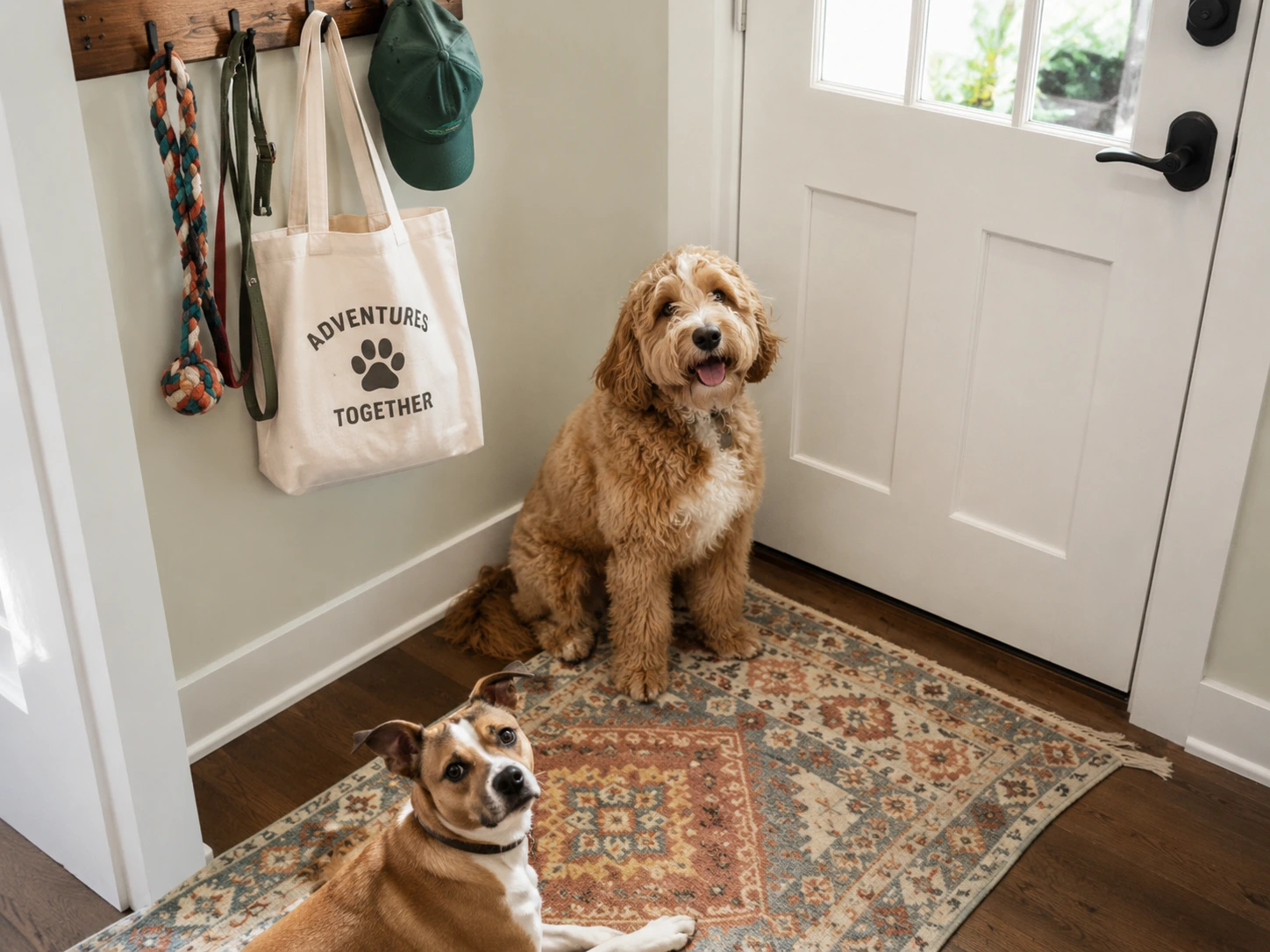
You reach for your keys, and your dog changes fast.
They may pace, pant, whine, bark, follow you, stare at the door, or scratch before you even leave.
If you are wondering why dogs panic when owners leave, the reaction may start before the actual exit. For some dogs, keys, shoes, coats, bags, and door sounds become signs that their person is about to leave.
This does not always mean your dog has separation anxiety. Some dogs react because of worry. Some react because of excitement, frustration, habit, or a learned leaving routine.
The key sound may not be the real problem. The meaning behind the keys may be the trigger.
Immediate Answer
Your dog may react when you pick up your keys because they have learned that keys often come before you leave.
Over time, keys can become a warning sign. Your dog may connect them with being left alone, losing access to you, or a stressful departure routine.
This can overlap with signs of dog separation anxiety, but not every dog who reacts to keys has separation anxiety. The full pattern matters.
Why Dogs React Before Owners Leave
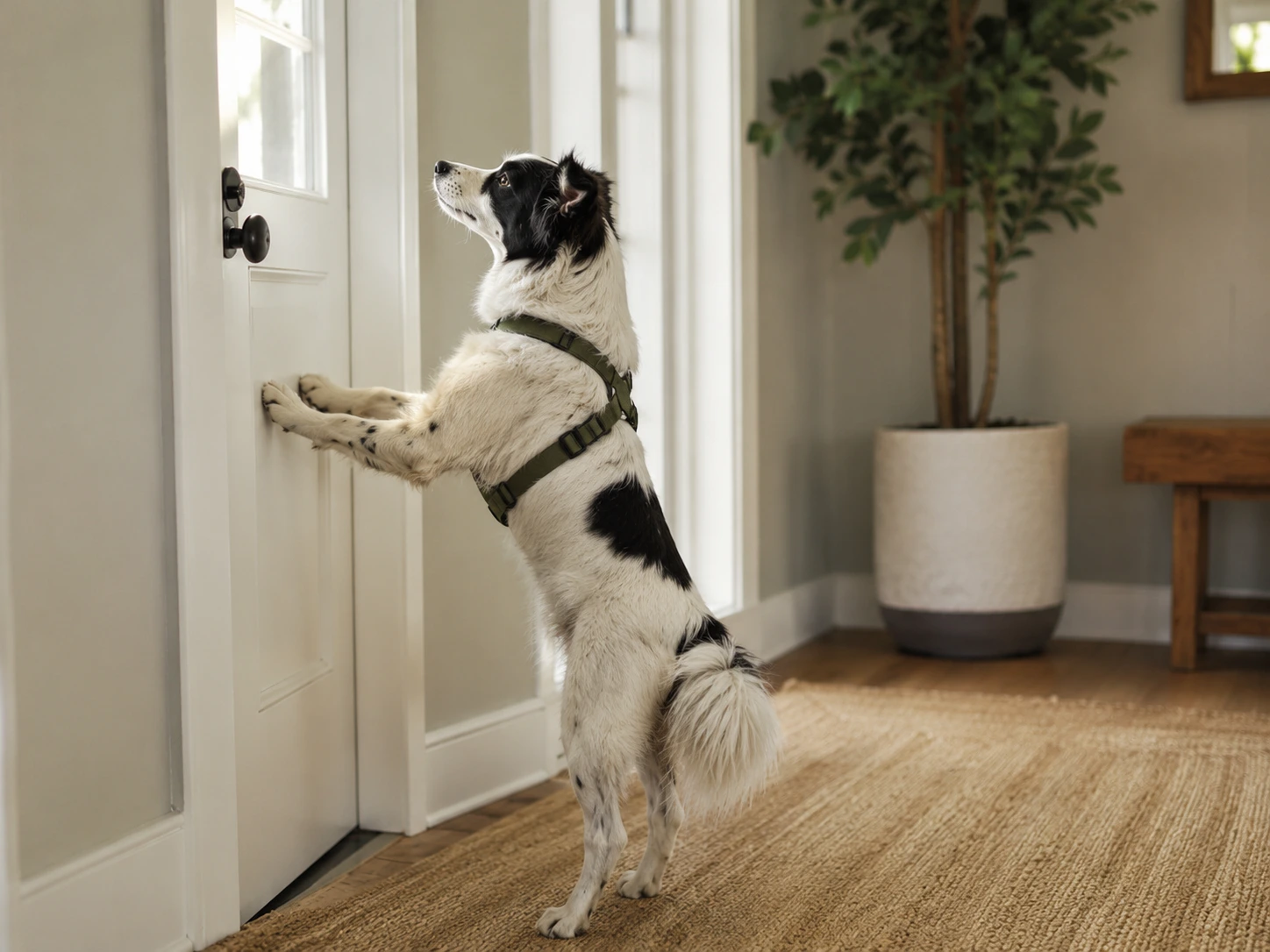
1. Your dog has learned your leaving pattern
Dogs can notice small details before you leave.
Common leaving cues include:
- Picking up keys
- Putting on shoes
- Grabbing a coat
- Taking a work bag
- Turning off lights
- Walking toward the door
- Locking the door
- Starting the car
Your dog may react before the door opens because they are responding to the routine, not just the absence.
2. Several small cues can build into one hard moment
Your dog may not react to only one cue. The whole chain may matter.
For example:
- You put on shoes
- Then you pick up keys
- Then you grab your coat
- Then you walk to the door
- Then your dog hears the lock
By the time you leave, your dog may already feel stressed.
This is why a dog may seem calm at first, then suddenly whine, bark, pace, or follow when the final cue appears.
3. Your dog may react to meaning, not just sound
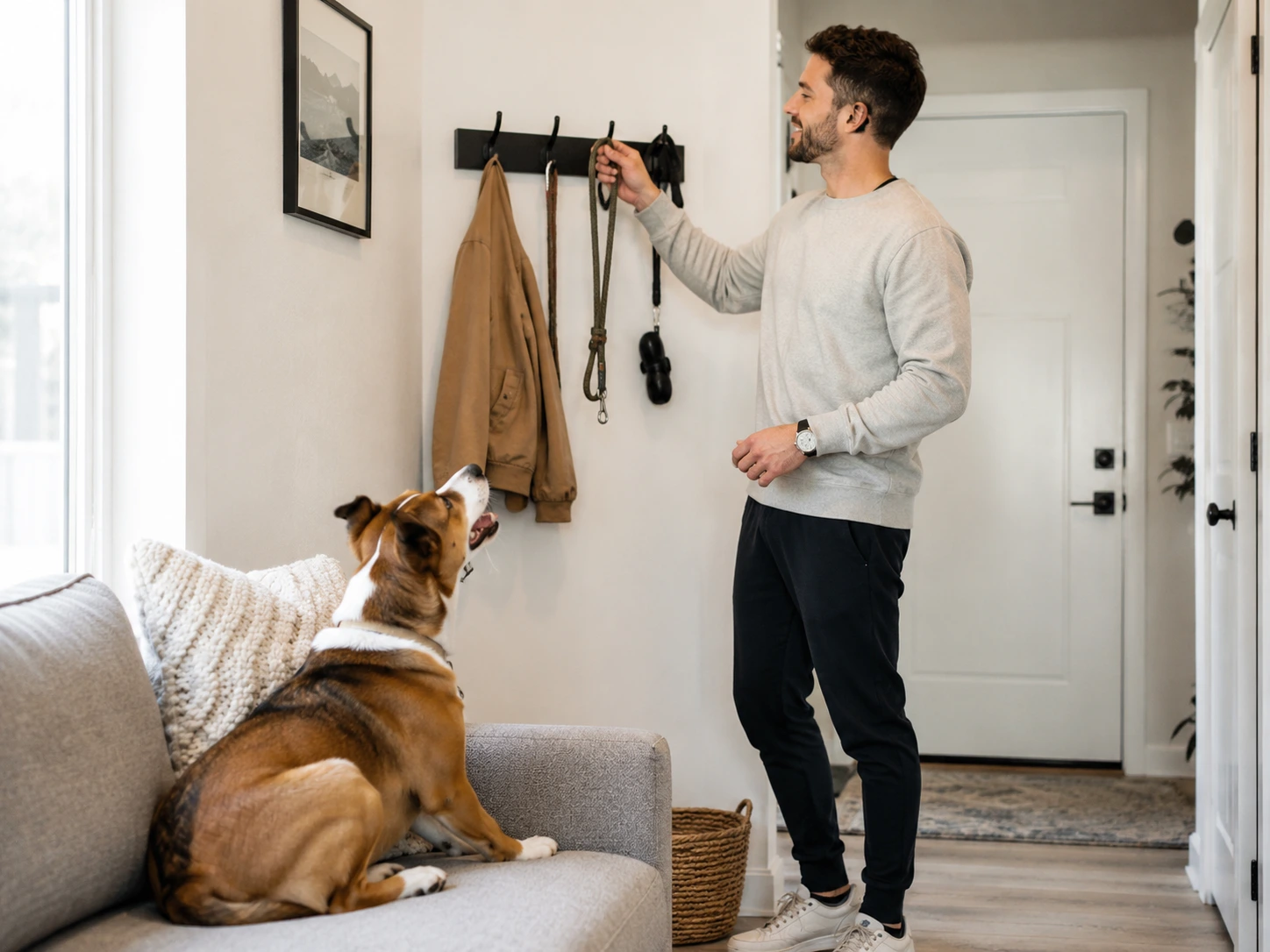
Some dogs may dislike the sound of keys. But many dogs react because they know what keys usually mean.
A useful clue:
If your dog ignores keys at random times but reacts when keys happen with shoes, coats, bags, or door movement, the routine may be the bigger trigger.
4. Different routines can change your dog’s reaction
Some dogs react differently depending on the day.
Your dog may stay calmer during a normal work routine because it is predictable. But they may react more when you grab keys in casual clothes on a weekend.
This does not mean your dog is being stubborn. It may mean the cue chain feels less predictable.
5. Past stressful departures can make keys feel more important
If your dog has had many stressful moments after hearing keys, the keys can become a warning sign.
Your dog may act as if:
“Keys mean I am about to be left.”
This may lead to:
- Pacing
- Panting
- Whining
- Barking
- Scratching
- Trying to follow you out
- Refusing food when alone
- Destructive behavior near exits
These can be possible separation-related signs, but they do not prove a diagnosis by themselves.
Real-World Scenarios
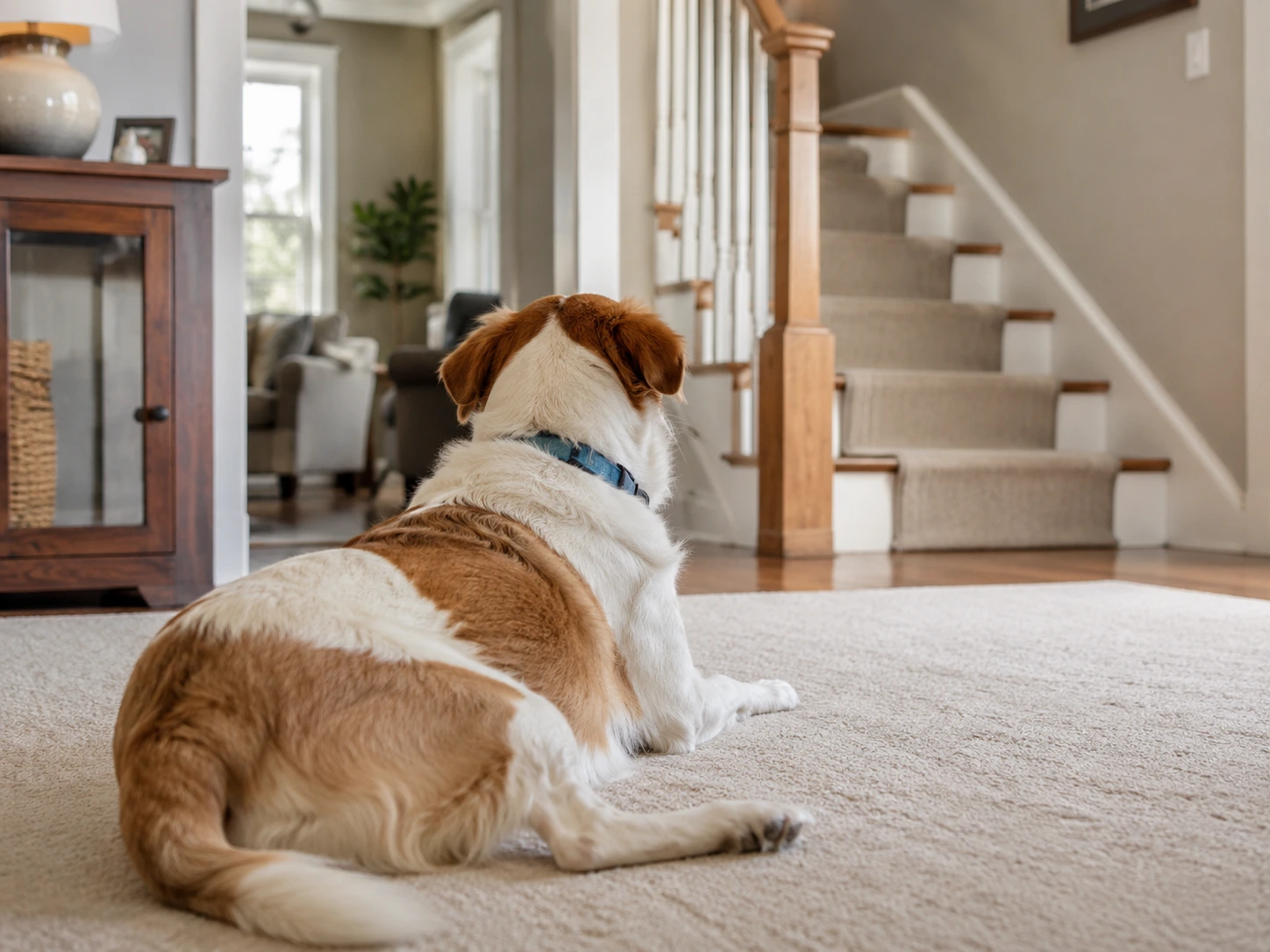
Scenario 1: The key hook reaction
You reach toward the key hook. Your dog starts pacing, whining, or staring at the door.
This may be a pre-departure reaction. Your dog has learned that keys often come before you leave.
Scenario 2: Hallway barking in shared housing
You live in an apartment, flat, or terraced home. Your dog starts barking when you lock the door, before you even leave the building.
This may involve several triggers at once: keys, door sounds, hallway noise, and the repeated leaving routine.
Scenario 3: Work keys are fine, weekend keys are not
Your dog stays calmer during your normal work routine but reacts when you grab keys in casual clothes.
This may mean your dog is reacting to the whole pattern, not only the keys.
How to Help a Dog Stay Calm Around Keys
Step 1: Find the first trigger in the chain
Before training, find the first cue your dog reacts to.
Watch your dog during your normal leaving routine.
Look for:
- Staring
- Following
- Pacing
- Whining
- Panting
- Barking
- Blocking the door
- Scratching
- Refusing food
Example:
- You put on shoes. Your dog starts watching.
- You pick up keys. Your dog starts whining.
- You open the door. Your dog barks.
In this example, the keys are not the first trigger. Shoes may be the first warning sign.
Step 2: Make keys boring in easy moments
Pick up your keys when you are not leaving.
Start small:
- Touch the keys.
- Put your hand down.
- Walk away.
- Repeat later.
Then build slowly:
- Pick up the keys for one second.
- Put them down.
- Sit down or do something normal.
- Stay calm.
The goal is to teach your dog that keys do not always mean you are leaving.
Do this when your dog is relaxed, not when you are rushed or already leaving.
Step 3: Break the leaving pattern into tiny pieces
Practice one leaving cue at a time.
Examples:
- Put on shoes, then sit down
- Pick up keys, then make tea
- Touch the door handle, then return to the sofa
- Grab your bag, then stay home
This helps your dog learn that these cues do not always predict a full departure.
Step 4: Do not overdo key jingling
Do not keep jingling keys again and again if it makes your dog more tense.
If your dog starts staring, following, pacing, or waiting for the next key sound, the practice may be too intense.
Use short, planned practice instead.
Better practice:
- Touch keys once
- Put them down
- Stay calm
- Repeat later
Not better practice:
- Loud jingling again and again
- Randomly testing your dog all day
- Practicing when your dog is already upset
Step 5: Pair keys with calm household behavior
Once your dog can handle seeing or hearing the keys, pair them with normal behavior.
Try this:
- Pick up the keys.
- Walk across the room.
- Put the keys down.
- Continue your normal activity.
If your dog stays relaxed, calmly reward them.
Keep the reward low-key. You do not want to make keys exciting.
Step 6: Add the door only after keys feel easier
Do not start with a full exit.
Build slowly:
- Pick up keys.
- Touch the door.
- Return.
- Later, open the door for one second.
- Close it.
- Return calmly.
Only move forward when your dog stays calm.
If your dog barks, whines, pants, or follows in distress, the step was probably too hard. Go back to an easier version.
Step 7: Keep real departures calm
Make leaving and returning boring and predictable.
You can use a short phrase like:
“I’ll be back.”
Then leave calmly.
Avoid long emotional goodbyes if they make your dog more upset.
This does not mean you must be cold. It means the routine should not feel dramatic.
Step 8: Practice very short exits
After your dog can handle keys and door movement, practice tiny exits.
Start with:
- Keys in hand, door closed, no exit
- Keys in hand, door opens, no exit
- Step outside for one second
- Return calmly
- Later, build to three seconds
- Later, build to five seconds
Do not rush this.
If your dog becomes distressed, go back to an easier step.
What Not to Do
Avoid these mistakes:
- Do not assume your dog is being spiteful
- Do not punish barking at the door
- Do not force long absences as training
- Do not keep jingling keys if it makes your dog more nervous
- Do not rely on sneaking out as the main plan
- Do not assume a crate, room, or safe space will fix the problem by itself
- Do not ignore sudden behavior changes
A crate or safe space may help some dogs, but it can make other dogs more distressed if they feel trapped or separated.
When to Contact a Vet or Qualified Behavior Professional
Contact a veterinarian if this behavior starts suddenly, gets worse, or appears with other changes like pain signs, confusion, appetite changes, house soiling, sleep changes, disorientation, or sudden fearfulness.
Medical or age-related issues can sometimes show up as behavior changes.
Contact a qualified reward-based trainer, certified behavior consultant, or veterinary behavior professional if your dog shows strong separation-related signs, such as heavy panting, drooling, scratching doors, trying to escape, barking for long periods, refusing food when alone, or becoming very distressed when you pick up your keys.
A good professional should look at the full pattern, not just the key reaction. They may ask when the reaction starts, what cue comes first, how long the barking lasts, and whether your dog can relax when truly home alone.
Quick Summary
Your dog may react when you pick up your keys because keys have become a warning sign that you are leaving.
The problem may not be the key sound itself. It may be the meaning, the routine, and the stress that builds before you walk out.
Start by finding the first trigger. Then practice keys in tiny, calm steps. Build slowly from keys, to door movement, to short exits.
Do not rely on random key jingling if it makes your dog more alert or tense.
If your dog shows strong distress signs or the behavior suddenly changes, speak with a veterinarian or qualified behavior professional.
FAQs
Why does my dog panic when I pick up my keys?
Your dog may panic or become worried because they have learned that keys often mean you are about to leave. The keys may be a pre-departure cue, not the whole problem.
Why do dogs panic when owners leave?
Some dogs struggle with the loss of access to their owner. Others react to the leaving routine before the owner is gone. Keys, shoes, coats, bags, and door sounds can all become warning signs.
Is my dog scared of the key sound?
Maybe. But many dogs react to what the keys mean, not only the sound. If your dog reacts more when keys happen with shoes, coats, bags, or door movement, the full routine may be the bigger trigger.
How do I desensitize a dog to keys moving?
Start small. Touch the keys, put them down, and do not leave. Later, pick them up for one second, put them down, and stay home. Keep sessions short and calm.
What are signs of dog separation anxiety?
Possible signs include barking, howling, pacing, panting, drooling, escape attempts, destruction near exits, house soiling, refusing food when alone, or distress when you prepare to leave.
Should I say goodbye to my dog before leaving?
A short, calm goodbye is fine if it does not upset your dog. Avoid long emotional goodbyes if they increase whining, barking, pacing, or following.
Why does my dog panic before I even leave?
Your dog may be reacting to pre-departure cues. These can include keys, shoes, coats, bags, door sounds, or your usual leaving routine.
 ✓
✓