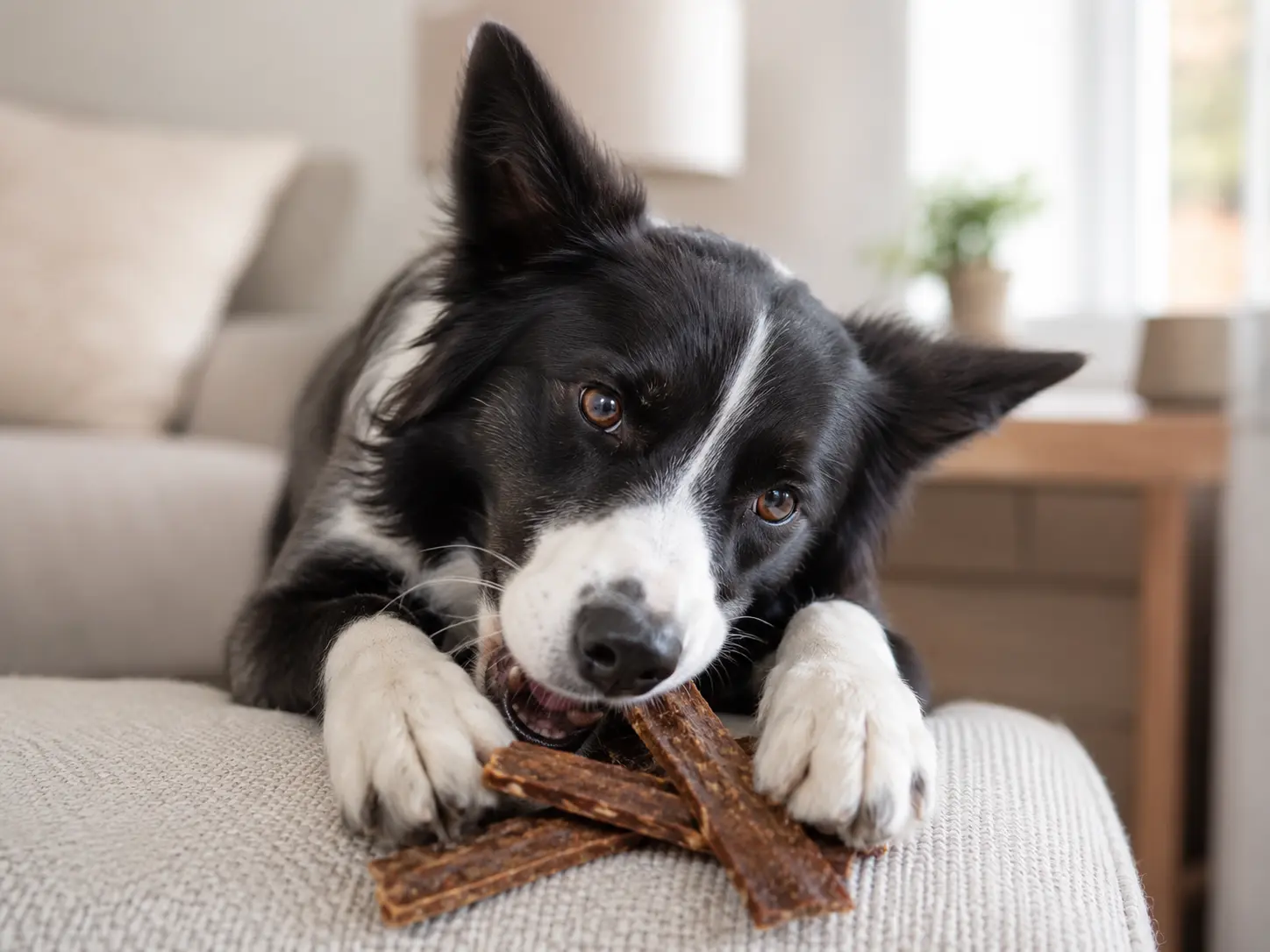
You leave a frozen Kong, peanut butter, liver treats, a puzzle toy, or a long-lasting chew.
Your dog loves the same food when you are home. But when you leave, the toy stays untouched.
This can feel confusing and upsetting. Many owners wonder if this is one of the signs of dog separation anxiety, especially when the dog also shows distress behaviors such as vocalizing, restlessness, drooling, door scratching, or escape attempts.
Your dog is not being stubborn. They are not “getting revenge.” In some cases, a dog who refuses food when left alone may be too worried, frustrated, or distressed to eat.
Immediate Answer
A dog may refuse food toys when left alone because stress, fear, or separation-related distress can make eating less important in that moment.
Food toys can help some dogs stay busy and calm. But if your dog is already showing strong stress signs or panic-like responses, the food toy may not be enough.
Food refusal alone does not prove separation anxiety. But if your dog ignores food when alone and also shows other distress signs, the pattern is worth tracking.
Why Your Dog Ignores Food When You Leave
1. Stress can affect appetite
When a dog feels safe, they may eat, sniff, chew, lick, and solve food puzzles.
When a dog feels very worried or frightened, food may not matter as much. Some stressed dogs may also show distress behaviors such as whining, panting, drooling, vocalizing, or refusing food.
This is why your dog may love peanut butter when you are nearby but ignore the same Kong when you leave.
The food did not become less tasty. The situation may have become too hard for your dog to handle calmly.
2. Your dog may be over their coping threshold
A coping threshold is the point where a situation becomes too hard for the dog to manage calmly.
Below that point, your dog may notice food, rest, chew, sniff, or follow a simple cue.
Above that point, your dog may show stress signs, ignore food, vocalize, move around restlessly, drool, scratch, or try to escape.
At that stage, a food toy may not help much because the dog is already too upset.
This is why food toys may help mild boredom but may not solve stronger separation-related distress.
3. The toy may delay distress, not solve it
Some dogs eat the food while the owner is leaving. Then they become distressed after the food is gone.
This can make the toy look like it “worked” for a few minutes.
But if the dog becomes upset after finishing it, the food toy may only be delaying the problem.
In that case, the main issue is not the Kong, chew, or puzzle toy. The main issue may be how the dog feels about being left alone.
4. The food toy may become a leaving cue
Some dogs only get a special Kong, lick mat, or puzzle toy before the owner leaves.
Over time, the toy may become another clue that the owner is about to go.
That does not mean the toy is bad. It means the dog may need to use the toy during calm times too, not only before departures.
5. It may not be simple boredom
Many owners think, “My dog must be bored, so I need a better toy.”
Boredom can be part of some barking and chewing problems. But if your dog is showing separation distress, ignoring food, damaging exits, drooling, or trying to escape, the issue may be more than boredom.
Buying stronger-smelling treats or more expensive chews may not fix the problem if your dog is too distressed to eat.
Food Toys: When They May Help vs When They May Not Be Enough
| When Food Toys May Help | When Food Toys May Not Be Enough |
|---|---|
| Your dog eats calmly while you are gone. | Your dog ignores the food until you return. |
| Your dog settles after eating. | Your dog starts vocalizing soon after you leave. |
| Your dog does not show strong stress signs during alone time. | Your dog paces, drools, scratches, pants heavily, or tries to escape. |
| Your dog uses the toy during calm times when you are home. | Your dog eats the toy first, then becomes distressed after it is finished. |
| Your dog treats the toy as normal enrichment. | Your dog reacts before you leave, such as when you pick up keys, shoes, a coat, or a bag. |
| A Kong, chew, lick mat, or puzzle toy supports an already calm routine. | The food toy appears to delay separation distress rather than reduce it. |
These patterns do not prove a diagnosis by themselves, but they do mean the full behavior pattern matters.
Real-World Scenarios
Scenario 1: The untouched frozen Kong
An owner leaves a frozen Kong filled with peanut butter. The dog loves it when the owner is nearby.
But when the owner leaves, the Kong stays untouched.
When the owner returns, the dog rushes to the Kong and starts eating.
This could suggest the dog felt too worried to eat while alone. It does not prove separation anxiety by itself, but it is worth tracking with the full behavior pattern.
Scenario 2: The apartment or flat howling problem
An owner lives in an apartment or flat. The dog ignores the food toy and starts howling soon after the door closes.
Now the owner has two worries: the dog may be distressed, and neighbors may complain.
The first step is not just to “stop the noise.” The safer first step is to understand when the howling starts, what triggers it, and whether the dog can settle.
A camera can help here. It can show whether the howling starts immediately after the door closes, or whether it begins 20 minutes later after the food toy is finished. That timing matters because it helps you understand whether the toy is helping, delaying distress, or not being used at all.
Scenario 3: The puzzle toy that works for another dog
One owner says their neighbor’s dog settles with a chew. Their own dog ignores bones, chews, lick mats, and puzzle toys.
This does not mean one dog is “better trained.”
Dogs have different stress levels, routines, histories, and coping skills.
Food toys help some dogs. For others, they are not enough during alone time.
Scenario 4: The crate problem
An owner puts a food toy inside the crate before leaving. The dog ignores the toy, pants, barks, paws at the crate, or tries to escape.
This could suggest the crate or confinement setup is part of the stress pattern.
Some dogs are calm in crates. Other dogs may feel more trapped when confined. If the crate increases distress, the setup may need to change.
What to Do If Your Dog Refuses Food Toys When Alone
1. Track the pattern before changing everything
Write down what happens before, during, and after you leave.
Track:
- What time you left
- What food toy you used
- Whether your dog ate it
- When barking or howling started
- Whether there were other distress behaviors, such as pacing, drooling, scratching, panting, or escape attempts
- Whether your dog ate after you returned
Use this for several departures if you are unsure whether the problem is boredom, frustration, fear, separation-related distress, or a learned routine.
This helps you see patterns instead of guessing.
2. Use a camera or audio recording
Record what your dog does when alone.
You can use a pet camera, phone, tablet, laptop camera, or audio recorder.
Look for:
- Fast pacing
- Panting
- Whining
- Barking
- Howling
- Drooling
- Scratching doors
- Ignoring food
- Trying to escape
- Settling after a short time
Use this when you come home to untouched food, damage, drool, or neighbor complaints.
A recording can show whether your dog settles or stays distressed.
3. Lower the difficulty of alone time
Start with very short absences your dog can handle calmly.
Instead of leaving for hours and hoping the food toy helps, practise tiny steps.
Examples:
- Pick up keys, then sit back down
- Walk to the door, then return
- Step outside for a few seconds, then come back
- Close the door briefly, then re-enter calmly
Keep it boring and low-pressure.
Use this when your dog reacts before you leave, such as when you pick up keys, put on shoes, touch the door, or grab your bag.
The goal is not to trick your dog. The goal is to avoid pushing your dog past what they can handle.
4. Stop using food as the only plan
Food toys can support a plan, but they should not be the whole plan.
Ask:
- Does my dog eat while I am gone?
- Does my dog become distressed after finishing the food?
- Does the food toy predict that I am leaving?
- Does my dog ignore the toy until I return?
Use this if you have tried Kongs, chews, lick mats, and puzzle toys, but your dog still shows separation distress or refuses food.
This helps you avoid spending more money on treats when the main issue may be the alone-time pattern.
5. Practise food toys when you are not leaving
Make the food toy feel safe and normal.
Give the Kong, chew, or lick mat while you are home. Do not leave every time the toy appears.
Use it during calm moments:
- While you read
- While you work nearby
- After a walk
- During quiet evening time
Use this if your dog may have learned that a special food toy means you are about to leave.
This can help the toy become part of normal life, not only part of the leaving routine.
6. Reduce pre-departure triggers
Make leaving cues less intense.
Practise small parts of your leaving routine without actually leaving.
Examples:
- Pick up keys and put them down
- Put on shoes, then make tea
- Touch the door handle, then walk away
- Pick up your bag, then sit on the sofa
Do this calmly. Do not tease, surprise, or scare your dog.
Use this when your dog starts reacting before you leave the house.
This may help dogs who react to keys, coats, shoes, bags, or door sounds.
7. Build a lower-stress leaving setup
Set up a space that helps your dog stay safer and calmer.
Choose an area where your dog is safest and least reactive. This may be a room, gated area, or crate only if the crate is already comfortable.
Add simple support:
- Water
- Comfortable resting place
- Safe chew or food toy if your dog uses it calmly
- Reduced window access if outside sights trigger barking
- Background sound if it helps soften hallway or street noise
Use this before short practice absences, not only before long workdays.
The setup should reduce stress. It should not trap the dog in a place they fear.
What Not to Do
Do not assume your dog is being spiteful
A dog refusing food when alone is not trying to punish you.
If your dog eats when you return, they may simply feel safe enough to eat again.
Do not keep buying more expensive treats without checking the pattern
Freeze-dried liver, steak, peanut butter, puzzle toys, and premium chews may still fail if your dog is too distressed to eat.
The issue may not be food quality. It may be the stress level around being left alone.
Do not rely only on TV, music, or puzzle toys
TV or background sound may help some dogs, especially if outside noise is part of the problem.
But it should not be the only plan if your dog is showing strong separation distress or refusing food.
Do not use the crate if it clearly increases distress
Some dogs are calm in crates. Other dogs may become more distressed when confined.
If your dog ignores food in the crate, paws at the crate, tries to escape, or barks intensely, the crate setup may need to be changed.
Do not wait if the signs are intense or getting worse
Some dogs improve with gradual training and a better routine. But repeated distress during alone time can become a stronger pattern.
If the behavior is intense, unsafe, or getting worse, get help early.
When to Contact a Vet or Qualified Reward-Based Trainer
Contact a veterinarian if the behavior starts suddenly, gets worse, or appears with:
- Pain
- Confusion
- Appetite changes
- Disorientation
- Sudden restlessness
- New house-soiling
- Senior dog behavior changes
- Sleep changes
A qualified reward-based trainer, clinical animal behaviorist, or separation anxiety specialist may help if your dog:
- Refuses food every time you leave
- Barks or howls for long periods
- Shows panic-like behavior in the crate
- Damages doors or windows
- Drools heavily when alone
- Cannot settle even for short absences
- Causes neighbor, housing, or landlord stress
A safer behavior plan usually starts by identifying triggers, watching what happens when the dog is alone, and building from what the dog can handle calmly.
Quick Summary
A dog may refuse food toys when left alone because stress or fear can make eating hard.
This can happen alongside other signs of dog separation anxiety, including vocalizing, restlessness, drooling, door scratching, or escape attempts.
Food toys can help some dogs, but they are not a full fix for strong dog barking separation anxiety. If the toy only delays distress, or your dog refuses it completely, the problem may need a calmer training plan and professional support.
The key is to watch the full pattern, not just the food toy.
FAQs
Why does my dog love treats when I am home but ignore them when I leave?
Your dog may feel safe enough to eat when you are home. When you leave, stress or fear may become too high, and food may no longer feel important.
Is refusing a Kong one of the signs of dog separation anxiety?
It can be linked with separation-related distress, especially if it happens with vocalizing, restlessness, drooling, door scratching, or escape attempts.
Food refusal alone does not prove separation anxiety.
Will a frozen Kong stop dog barking separation anxiety?
A frozen Kong may help some dogs, but it may not stop barking caused by strong distress.
If your dog ignores the Kong or barks after finishing it, the toy is not solving the main issue.
How long will separation anxiety dog howling symptoms last?
It depends on the dog and the situation.
Some dogs howl for a few minutes. Others may continue much longer. A camera or audio recording can help you see the real pattern.
Should I leave the TV on for my anxious dog?
TV or background sound may help some dogs, especially if hallway or street noise triggers barking.
But it should not be the only plan if your dog is showing panic-like behavior, howling, or refusing food.
Should I stop giving food toys before I leave?
Not always.
If your dog eats calmly and settles, the food toy may help. If your dog ignores it, becomes distressed after finishing it, or treats it as a leaving cue, practise using the toy during normal calm times when you are not leaving.