

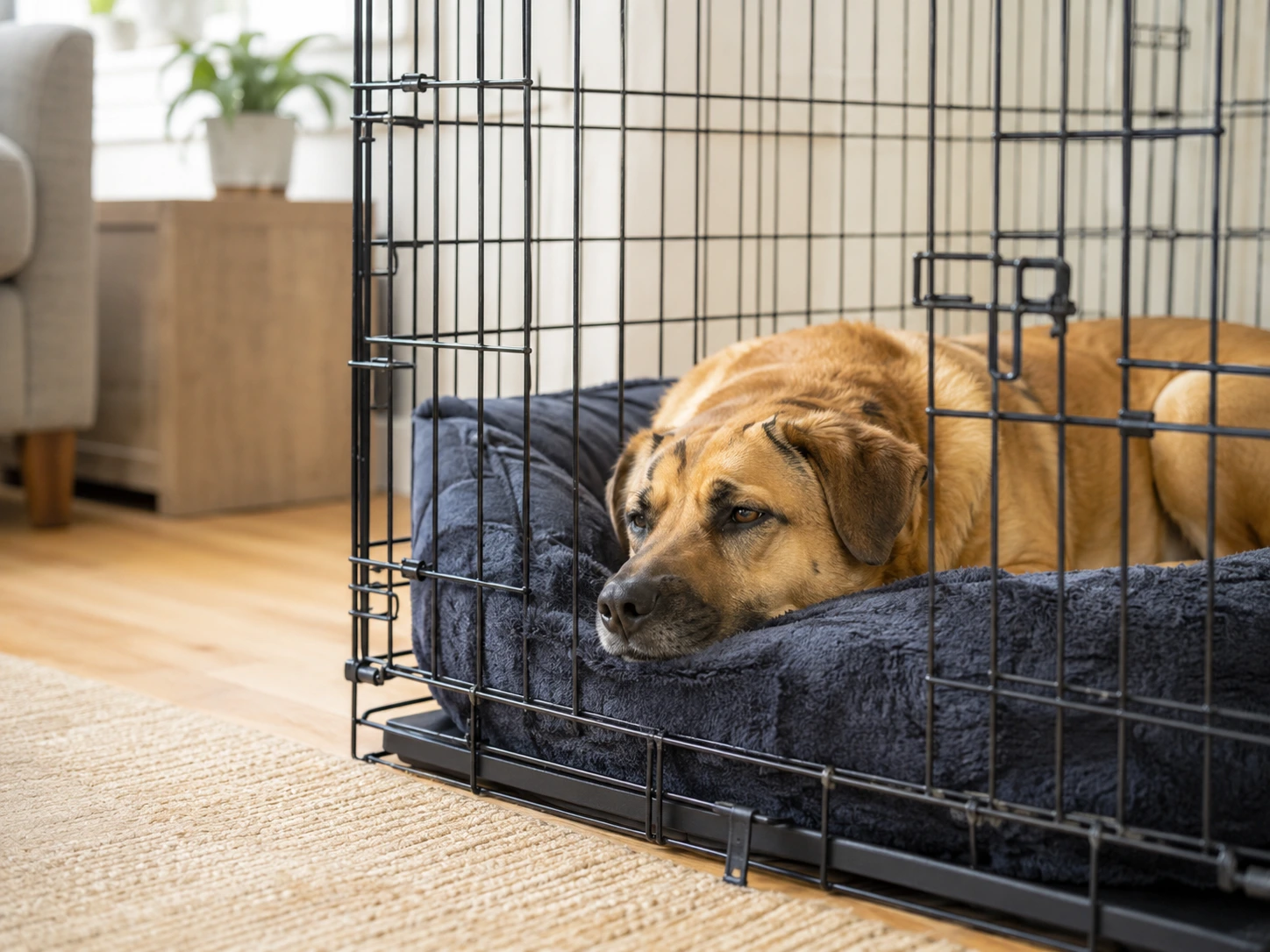
Your dog may rest comfortably in a crate while you are home, then bark, pant, drool, claw, or try to escape as soon as you leave.
That pattern can leave you choosing between two imperfect options: confinement that may increase distress, or free roam that may expose your dog and home to other risks.
This guide explains how to compare crate training vs. free roam for dog separation anxiety without assuming that one setup is right for every dog. It focuses on observable behavior, injury prevention, gradual alone-time practice, and knowing when professional help is needed.
Neither a crate nor free roam is automatically best for a dog showing separation-related distress. A crate may be suitable when the dog enters willingly and remains relaxed during short monitored absences. It may be unsafe when confinement triggers frantic escape attempts, heavy drooling, damaged nails or teeth, or escalating vocalization.
Free roam may reduce confinement pressure for some dogs, but it is not safe when the dog chews cords, medication, doors, windows, walls, or other hazardous items. A dog-proofed room, gated area, or exercise pen can provide a middle ground when the dog can tolerate that barrier.
The practical decision is: which setup produces the least distress and the lowest injury risk while you address the underlying alone-time problem? The ASPCA notes that crates help some dogs but add stress for others, so observation matters more than a universal rule.
Use the step-by-step decision processCrate vs Free Roam: Quick Comparison
Choose the setup your dog can use without escalating distress or gaining access to hazards. Test short absences with a camera before relying on any option for a workday.
| Setup | May Be Safer When | May Be Risky When | First Test |
|---|---|---|---|
| Crate | Your dog enters willingly, rests with loose body language, accepts food, and remains settled during short monitored absences. | Your dog bites bars, claws continuously, bends wires, drools heavily, damages nails or teeth, or makes frantic escape attempts. | Record a very short departure and stop using the setup for unsupervised absences if distress escalates. |
| Free roam | Your dog settles, moves safely between resting places, and does not target doors, windows, cords, bins, food, or medication. | Your dog searches for exits, damages the home, swallows unsafe objects, or cannot settle. | Dog-proof one limited area first rather than opening the entire home. |
| Gated room or safe area | Your dog needs more room than a crate but is not ready for full access to the home. | Your dog panics at barriers, jumps gates, chews doors, or becomes more agitated when movement is restricted. | Test the space while you remain nearby, then repeat with a short camera-monitored absence. |
Calm, not merely contained
A setup is useful when your dog can rest, move normally, and recover from minor sounds. A lack of property damage does not prove that the dog feels safe.
Escape behavior or injury
Blood, broken nails, damaged teeth, bent wire, heavy salivation, or repeated high-intensity escape attempts mean the current setup needs prompt reassessment.
Why Crates Can Be Hard for Some Dogs With Separation Distress
A crate can be a comfortable resting place, but confinement may add another trigger when a dog already struggles with being left alone. The dog’s behavior before and after departure helps separate crate discomfort from alone-time distress.
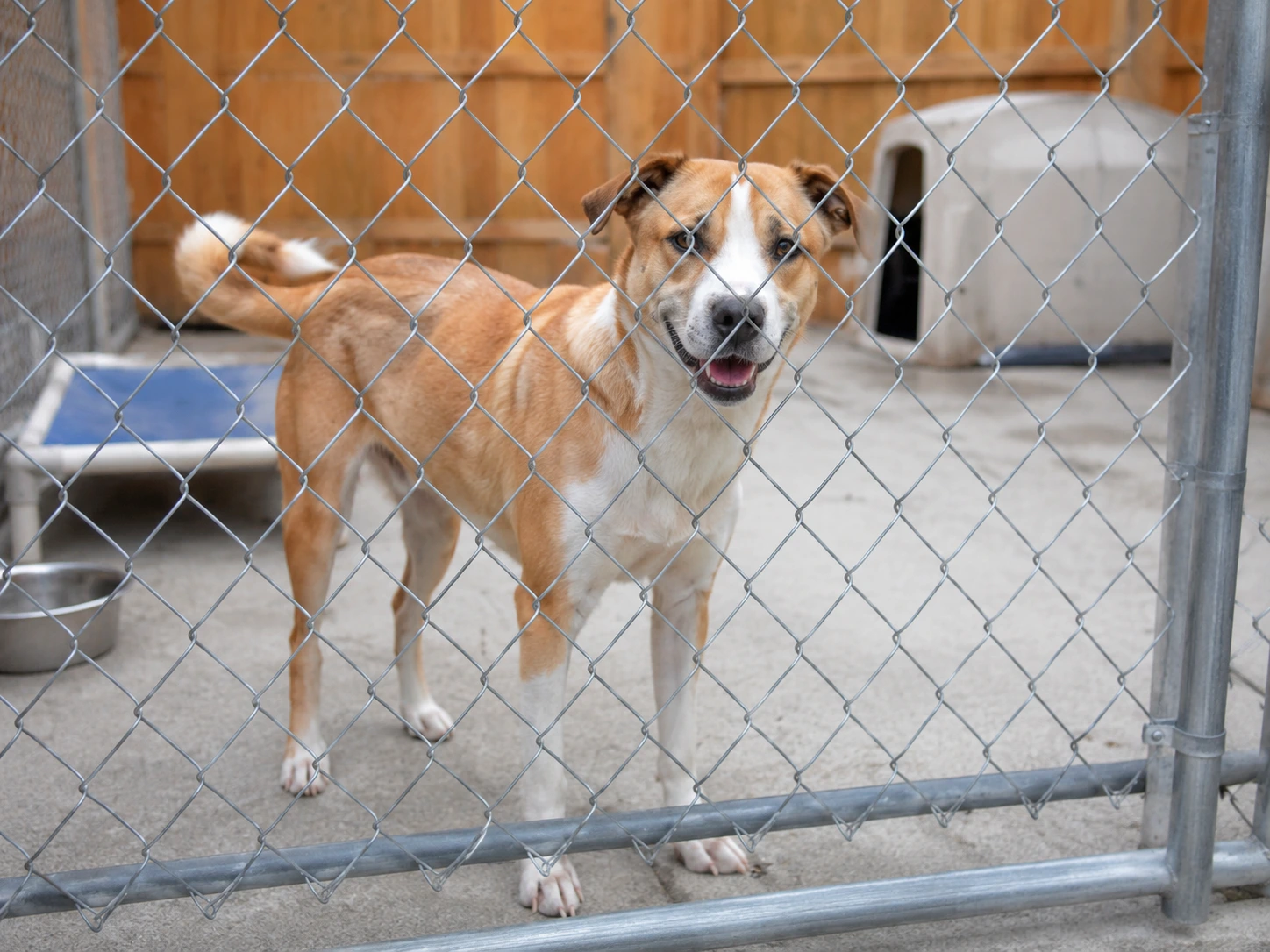
1. Confinement may add pressure
A worried dog may want to follow you, approach an exit, move away from a sound, or choose another resting place. A crate removes those choices. For some dogs, that restriction can increase vocalizing, panting, salivation, chewing, pawing, or escape behavior.
This does not make crates inherently harmful. It means the crate must be evaluated as part of the dog’s individual response. Both the ASPCA separation-anxiety guidance and VCA’s veterinary overview recognize that confinement works for some dogs and can be unsuitable for others.
2. The main trigger may be departure, not the crate itself
A dog who refuses the crate when anyone is home may have a confinement or crate-training problem. A dog who sleeps in the crate while you are home but becomes distressed only after you leave may be reacting mainly to separation, departure cues, or both.
Signs such as barking, destruction, house-soiling, panting, pacing, or drooling can have more than one cause. They support further investigation but do not diagnose separation anxiety by themselves.
3. Escalating distress should not be treated as a timer exercise

There is no reliable universal number of minutes that separates harmless whining from serious distress. Focus on intensity, escalation, recovery, and injury risk rather than waiting for a fixed time limit.
If vocalizing becomes more frantic, your dog stops taking food, repeatedly throws their body at the barrier, bites metal, claws continuously, or cannot recover, the exercise is too difficult. End the exposure safely, lower the next step, and seek professional guidance when the reaction is severe.
4. A stronger crate may contain behavior without reducing fear
A heavy-duty crate can reduce escape access in some situations, but it does not automatically change the dog’s emotional response. If the dog remains highly distressed inside, the stronger barrier may protect the house while leaving the underlying problem unchanged.
A secure crate should never be used as a substitute for veterinary assessment, behavior modification, or management of necessary absences.
5. More space is not automatically safer
Some dogs do better when they can choose a bed, floor area, or quieter corner. Others target doors, windows, drywall, carpet, cords, rubbish bins, food, or medication. In apartments, flats, terraced homes, and rentals, persistent vocalization or property damage can also create housing pressure.
The goal is not maximum freedom. It is the lowest-risk space the dog can tolerate calmly.
Real-World Scenarios
These examples are not diagnoses. They show how the same visible behavior can point to different next steps depending on when it starts and what the dog does.
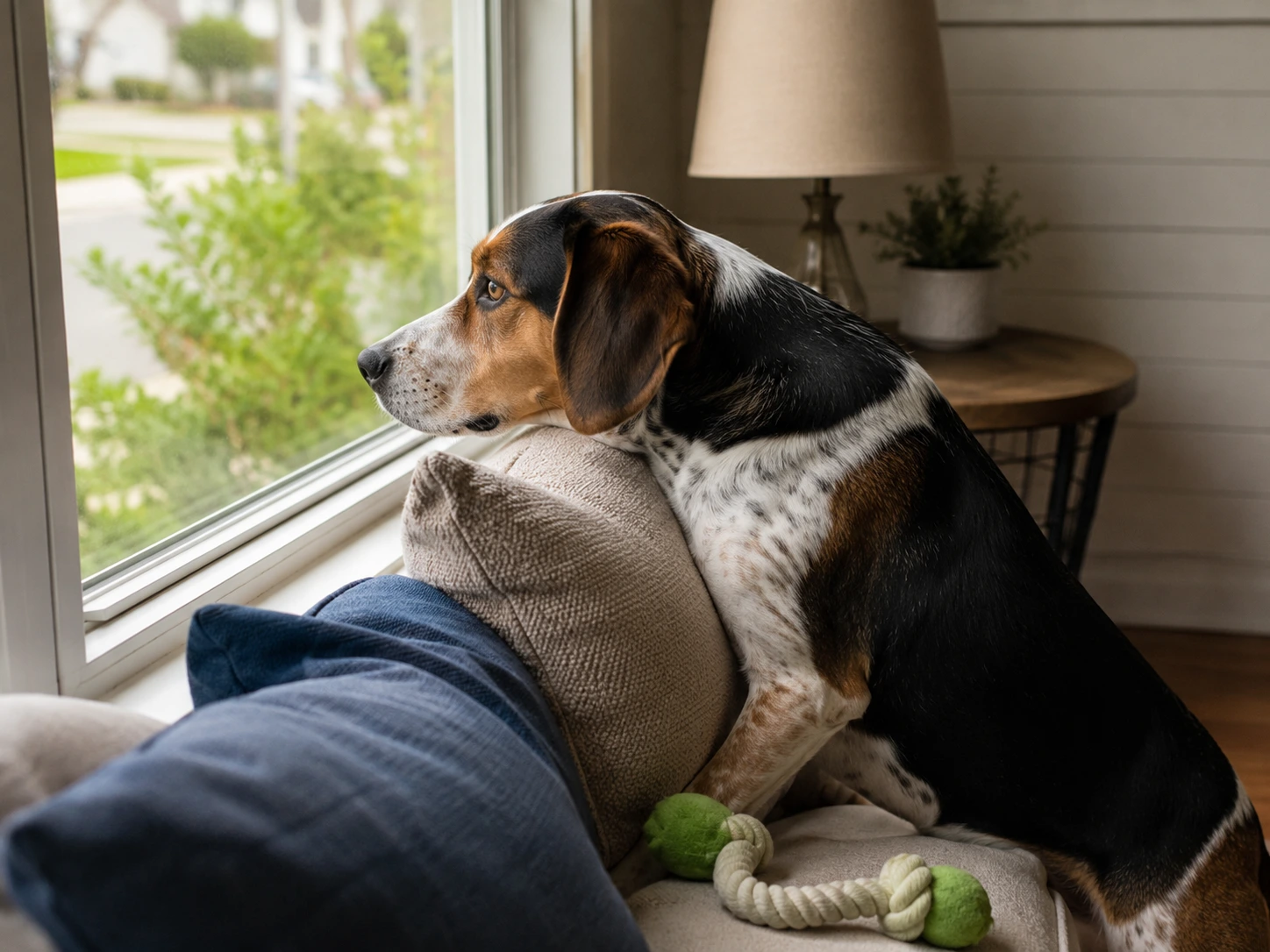
Calm in the crate until the owner leaves
The dog enters for treats and naps while the owner is home, then pants and claws after the front door closes. This pattern may make departure or being alone the larger trigger, although confinement may still amplify it.
The crate protects the home but not the dog
The dog no longer chews baseboards because they are crated, but they bend wire and damage nails. Property management has improved; animal safety has not.
Barking in an apartment or flat
A camera shows barking begins only after hallway footsteps, not immediately after departure. The plan may need to address sound exposure and the home-alone setup rather than assuming every bark is separation anxiety.
Crying at night but not during daytime departures
Night vocalization can involve toileting needs, discomfort, changes in routine, outside noise, attention-seeking, fear, or age-related changes. A different time pattern calls for a broader assessment.
Step-by-Step Solutions
Start with observation, remove any setup that creates injury risk, and build alone time in increments your dog can tolerate. Do not use a full workday as a training test.

1. Compare behavior when you are home and away
Observe the same setup in three conditions: while you sit nearby, while you move around the home, and during a very short departure. Note whether the dog can eat, rest, change position, and recover after small noises.
- Relaxed while you are home but distressed after departure: alone-time distress may be the main concern.
- Distressed whenever the barrier closes: confinement or barrier frustration may also be involved.
- Distressed in every setup only when alone: changing containers alone is unlikely to solve the problem.
2. Record short absences and keep a simple log
Use a pet camera, phone, tablet, or laptop to record the first part of a short absence. Video can reveal quiet signs that owners miss and can distinguish immediate distress from reactions to outside sounds or events. VCA recommends camera monitoring when dogs first experience crate separation, and AAHA behavior guidance also uses video and behavior logs to guide assessment.
| Observation | What to Note | What It May Mean |
|---|---|---|
| Start time | Does distress begin before departure, at the door closing, or after a later sound? | Timing helps identify departure cues, isolation, or environmental triggers. |
| Food response | Does your dog eat, pause, or ignore a familiar safe food item? | Refusing food can accompany higher arousal, but food acceptance alone does not prove calmness. |
| Body and movement | Record panting, pacing, freezing, scanning, trembling, door focus, or repeated escape behavior. | Clusters and escalation are more useful than any single sign. |
| Recovery | Does the dog settle, or does intensity continue to rise? | Failure to recover suggests the step or setup is currently too difficult. |
3. Stop using an unsafe setup for long unsupervised absences
Do not repeat the same long confinement if your dog is injuring themselves or making high-intensity escape attempts. Contact a veterinarian promptly if you find blood, damaged teeth, broken nails, mouth injuries, or another suspected injury.
Warning signs that require prompt reassessment
- Blood on the crate, bedding, door, or paws
- Broken nails, damaged teeth, or mouth injury
- Bent wires, broken doors, or repeated body-slamming
- Heavy salivation combined with frantic escape behavior
- Distress that escalates instead of settling
4. Test a controlled middle ground
When a crate appears to increase distress but full free roam is unsafe, trial a carefully dog-proofed room, gated kitchen, hallway area, or exercise pen. Use only a barrier your dog does not climb, chew, or panic against.
- Remove cords, medicines, food, rubbish, cleaning products, shoes, and swallowable objects.
- Secure windows, doors, and furniture that could tip.
- Close blinds or use background sound only when video suggests outside activity is a trigger.
- Test while nearby before attempting a short absence.
5. Practise departures below the dog’s distress point
Start with an action the dog can complete calmly, such as touching the door, stepping behind a gate, opening and closing the door, or stepping outside briefly. Return before the behavior escalates, then repeat at a difficulty the dog can handle.
Departure cues can also be practised separately: pick up keys and sit down, put on shoes without leaving, or open the front door and remain inside. Progress should follow the dog’s observed response, not a preset schedule.
The American Veterinary Society of Animal Behavior recommends reward-based methods and advises against fear, pain, intimidation, and flooding for behavior modification.
6. Make the crate optional and predictable again
If the crate has started predicting departure, rebuild calm associations while you are home. Leave the door open, offer meals or safe chews nearby, and close the door only for brief periods the dog can tolerate while you remain present.
This may improve the dog’s response to the crate, but it does not replace a plan for being alone.
7. Manage unavoidable absences while training
An eight-hour workday is management, not a suitable first training step. When possible, reduce repeated distress with temporary support such as a trusted friend, family member, pet sitter, appropriate daycare, adjusted work hours, or shorter absences.
These options do not treat the underlying problem, but they can prevent daily rehearsal of panic-like behavior while a veterinarian or qualified behavior professional develops a plan.
Article limitation: A camera log can improve decision-making, but it cannot rule out pain, illness, cognitive change, noise sensitivity, barrier frustration, or other behavior conditions. A veterinarian should assess sudden, severe, or worsening behavior.
What Not to Do
Avoid methods that suppress noise or contain damage while ignoring escalating distress. The safest plan protects both the dog and the home.
Avoid these common mistakes
- Do not assume the dog is spiteful. Destruction, house-soiling, drooling, and escape attempts may reflect fear, frustration, distress, or another unmet need.
- Do not use the crate as punishment. Forced isolation, yelling, or frightening corrections can make the crate a stronger predictor of stress.
- Do not use a fixed “cry it out” timer. Watch intensity, escalation, recovery, and injury risk instead.
- Do not rely on an indestructible crate as the whole plan. Stronger containment does not treat the emotional cause.
- Do not jump directly to full free roam. Test a limited dog-proofed space with a camera first.
- Do not punish separation-related behavior after returning home. Delayed punishment does not teach calm alone time and may add anxiety.
When to Contact a Vet or Qualified Reward-Based Trainer
Contact a veterinarian when the behavior is severe, causes injury, begins suddenly, or changes alongside health, sleep, appetite, toileting, mobility, or awareness. A behavior professional can then help build a gradual, humane plan.
Medical and safety assessment
- Sudden onset or rapid worsening
- Pain, appetite change, vomiting, diarrhea, or unusual thirst
- New house-soiling or major sleep changes
- Confusion, disorientation, restlessness, or mobility change
- Broken nails, damaged teeth, bleeding, or other injury
- Repeated panic-like behavior during every absence
Veterinarians can assess medical contributors and decide whether a broader treatment plan, referral, or medication discussion is appropriate.
Qualified, reward-based guidance
- Your dog cannot tolerate even very short departures
- Crates, gates, and rooms all trigger distress
- Neighbor, landlord, or housing pressure is increasing
- You are unsure how to progress without triggering panic
- Safety management is becoming difficult
For complex or severe cases, ask your veterinarian about referral to a board-certified veterinary behaviorist or another appropriately credentialed, reward-based professional.
Quick Summary
The right setup is the one that keeps your dog safest without intensifying distress. Crate training, free roam, and gated-room management are tools—not cures for separation anxiety.
- Observe: Compare behavior with you present and during a short camera-monitored absence.
- Protect: Stop using any setup that leads to injury or escalating escape attempts.
- Test: Compare a crate, a limited dog-proofed space, and a middle-ground barrier only at safe durations.
- Treat the underlying problem: Build gradual alone time and involve a veterinarian or qualified reward-based professional when signs are severe, sudden, or persistent.
Final decision rule: Do not choose the option that merely prevents damage. Choose the safest option in which your dog shows the best ability to remain calm and recover.
FAQs
These answers provide general guidance. They do not confirm a diagnosis or replace advice from your veterinarian.
Is it better to crate a dog with separation anxiety or leave them out?
It depends on the dog’s observed response. A crate may be suitable when the dog remains relaxed and physically safe. A controlled room or free-roam setup may be better when confinement increases distress, provided the larger space is thoroughly dog-proofed.
What are possible signs of separation distress in a crate?
Possible signs include persistent vocalizing, panting, pacing within the available space, heavy drooling, refusal of food, continuous pawing, biting bars, escape attempts, house-soiling, or injuries to paws, nails, mouth, or teeth. One sign alone does not confirm separation anxiety.
Can crate training make separation-related distress worse?
It can for some dogs when confinement adds frustration or blocks coping behaviors. Slow crate training while you are present may improve crate comfort, but severe distress during owner absence requires a broader alone-time plan.
How long should I let my dog cry in the crate?
There is no universal safe number of minutes. Mild, brief adjustment behavior is different from escalating vocalization, frantic escape attempts, heavy salivation, refusal of food, or injury risk. Base the decision on severity and recovery, not a timer.
Should I buy a heavy-duty crate for an anxious dog?
A stronger crate may reduce escape access, but it cannot make a distressed dog feel safe by itself. Discuss repeated escape attempts or self-injury with a veterinarian before relying on stronger confinement.
What if my dog destroys the house when left free?
Use a smaller dog-proofed room or gated area rather than full access. Remove swallowing hazards, secure doors and windows, and record a short test. If the dog still targets barriers or cannot settle, professional assessment is appropriate.
Is a gated room always better than a crate?
No. More space helps some dogs, while others jump gates, chew doors, or panic at any barrier. The best option is determined by monitored behavior and physical safety, not the size of the enclosure alone.
Sources and further reading
- ASPCA — Separation Anxiety
- ASPCA — Barking and Reasons Dogs Bark
- VCA Animal Hospitals — How to Crate Train Your Dog
- VCA Animal Hospitals — Crate Training and Confinement for Puppies and Dogs
- VCA Animal Hospitals — Separation Anxiety in Dogs
- RSPCA — How to Train Your Dog to Stay Home Alone
- RSPCA — Recognising Separation-Related Behaviour in Dogs
- Merck Veterinary Manual — Behavior Problems of Dogs
- Humane World for Animals — Helping a Dog With Separation Anxiety Symptoms
- American Animal Hospital Association — Separation Anxiety in Pets
- American Animal Hospital Association — Canine Separation Anxiety Case Guidance
- American Veterinary Society of Animal Behavior — Humane Dog Training Position Statement
- American College of Veterinary Behaviorists — Find a Veterinary Behaviorist
This article is educational and is not a diagnosis or a substitute for veterinary care. Seek prompt veterinary advice when a dog is injured, the behavior begins suddenly, or distress is severe or worsening.
 ✓
✓